
In the vast and often complex world of finance, certain benchmarks emerge as indispensable guides, offering clarity amidst the noise. Among these, the S&P 500 Index stands out as arguably the most recognized and influential indicator of the U.S. stock market’s health and, by extension, the broader American economy. Far more than just a simple number flashing across financial news screens, the S&P 500 is a sophisticated construct designed to capture the performance of 500 of the largest publicly traded companies in the United States. For investors, economists, and even casual observers, understanding the S&P 500 is fundamental to grasping the dynamics of wealth creation, market trends, and the underlying pulse of corporate America.

This index, curated by S&P Dow Jones Indices, serves as a crucial barometer, reflecting not only the collective fortunes of its constituent companies but also the prevailing investor sentiment and economic conditions. Its significance transcends mere stock tracking; it’s a living snapshot of innovation, industry leadership, and the capitalist engine that drives much of the global economy. Delving into its composition, methodology, and historical performance reveals why it holds such a powerful sway over financial decisions and economic discourse worldwide.
The Foundation: Deconstructing the S&P 500
At its core, the S&P 500 is an index — a theoretical portfolio of stocks whose performance is tracked. However, its design and selection process elevate it beyond a simple average, making it a robust and representative measure of the large-cap U.S. equity market.
More Than Just a Number: What the S&P 500 Represents
The S&P 500 is a market-capitalization-weighted index. This means that companies with larger market values (share price multiplied by the number of outstanding shares) have a greater impact on the index’s movement than smaller companies. This weighting methodology ensures that the index accurately reflects the true scale and influence of its largest constituents, which collectively represent approximately 80% of the total market capitalization of publicly traded U.S. stocks. Consequently, when behemoths like Apple, Microsoft, or Amazon move, their impact on the S&P 500 is significantly more pronounced than that of a smaller company within the index. This design choice makes it a broad and reliable indicator of large-cap stock performance rather than a simple arithmetic average.
A Deep Dive into the “500”: Selecting the Constituents
The “500” in S&P 500 refers to the approximately 500 leading companies included in the index. However, the selection is not arbitrary. A committee at S&P Dow Jones Indices rigorously applies a set of criteria to determine which companies make the cut. Key requirements include:
- U.S. Company: The company must be domiciled in the United States.
- Market Cap: A minimum unadjusted market capitalization threshold (which can change) must be met.
- Liquidity: The company’s stock must be highly liquid, meaning it can be easily bought and sold without significantly impacting its price.
- Public Float: A sufficient percentage of its shares must be available for public trading.
- Profitability: The company must have positive reported earnings in the most recent quarter and positive aggregate earnings over the past four consecutive quarters.
- Sector Representation: While not a strict quota, the committee aims for a balanced representation across major industry sectors to ensure the index reflects the diversity of the U.S. economy.
This meticulous selection process ensures that the S&P 500 remains a dynamic and relevant indicator, constantly evolving to reflect the current landscape of American corporate leadership.
Market Capitalization Weighting: How Influence is Determined
As mentioned, the S&P 500 employs a market-cap weighting methodology. This means that a company’s weighting in the index is directly proportional to its total market value. For instance, if Company A has a market cap of $2 trillion and Company B has a market cap of $1 trillion, Company A will have twice the impact on the index’s performance as Company B. This approach inherently gives more weight to the largest, most successful companies, leading the index to often be heavily influenced by a handful of technology and growth giants. While this provides a realistic reflection of market power, it also means that the index’s performance can be significantly driven by the fortunes of its top constituents.
Why the S&P 500 is a Cornerstone of Financial Markets
The S&P 500’s prominence stems from its multifaceted utility as a market barometer, a performance benchmark, and a historical record of economic growth.
A Leading Economic Indicator: Gauging Market Health
Many consider the S&P 500 an excellent proxy for the health of the U.S. economy. Since its components are large, multinational corporations, their collective performance—revenue growth, profitability, innovation, and expansion—often mirrors the broader economic cycles of the nation and even has global implications. A consistently rising S&P 500 can signal robust corporate earnings, strong consumer confidence, and a growing economy, while a prolonged downturn might suggest impending recessions or significant economic headwinds. It’s a forward-looking indicator, as stock prices often reflect investors’ expectations about future corporate earnings and economic conditions.
Benchmarking Performance: A Standard for Investors and Fund Managers
One of the S&P 500’s most critical functions is its role as a benchmark. Professional money managers, mutual funds, and exchange-traded funds (ETFs) frequently compare their investment performance against the S&P 500. An “active” fund manager whose goal is to “beat the market” will measure their returns against the S&P 500 to demonstrate their skill. Conversely, “passive” investment vehicles, such as S&P 500 index funds and ETFs, aim to replicate the index’s performance as closely as possible, offering investors broad market exposure with minimal effort. This benchmarking utility provides a common yardstick for evaluating investment strategies and portfolio effectiveness.
Historical Performance and Long-Term Growth Potential
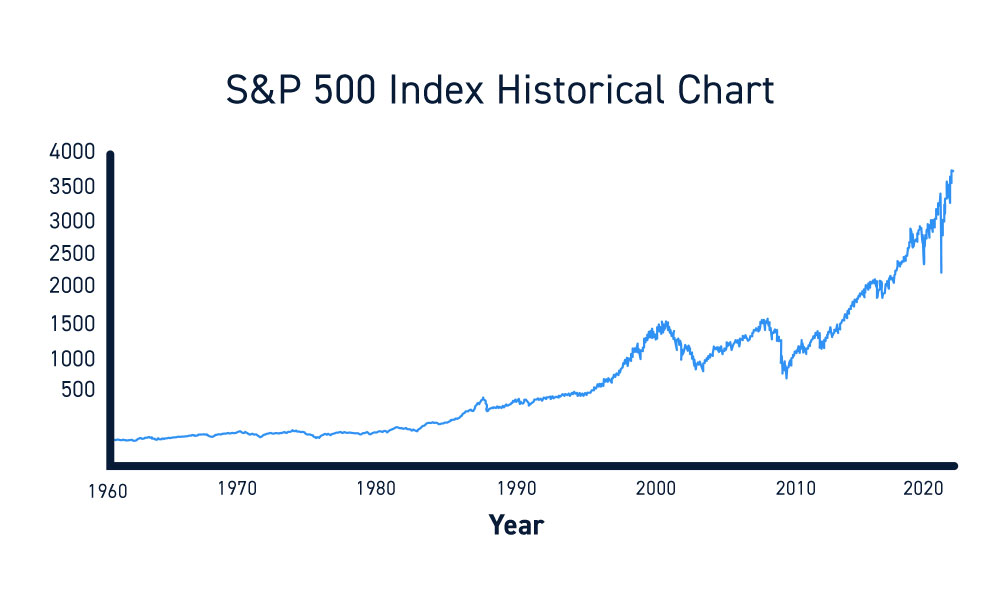
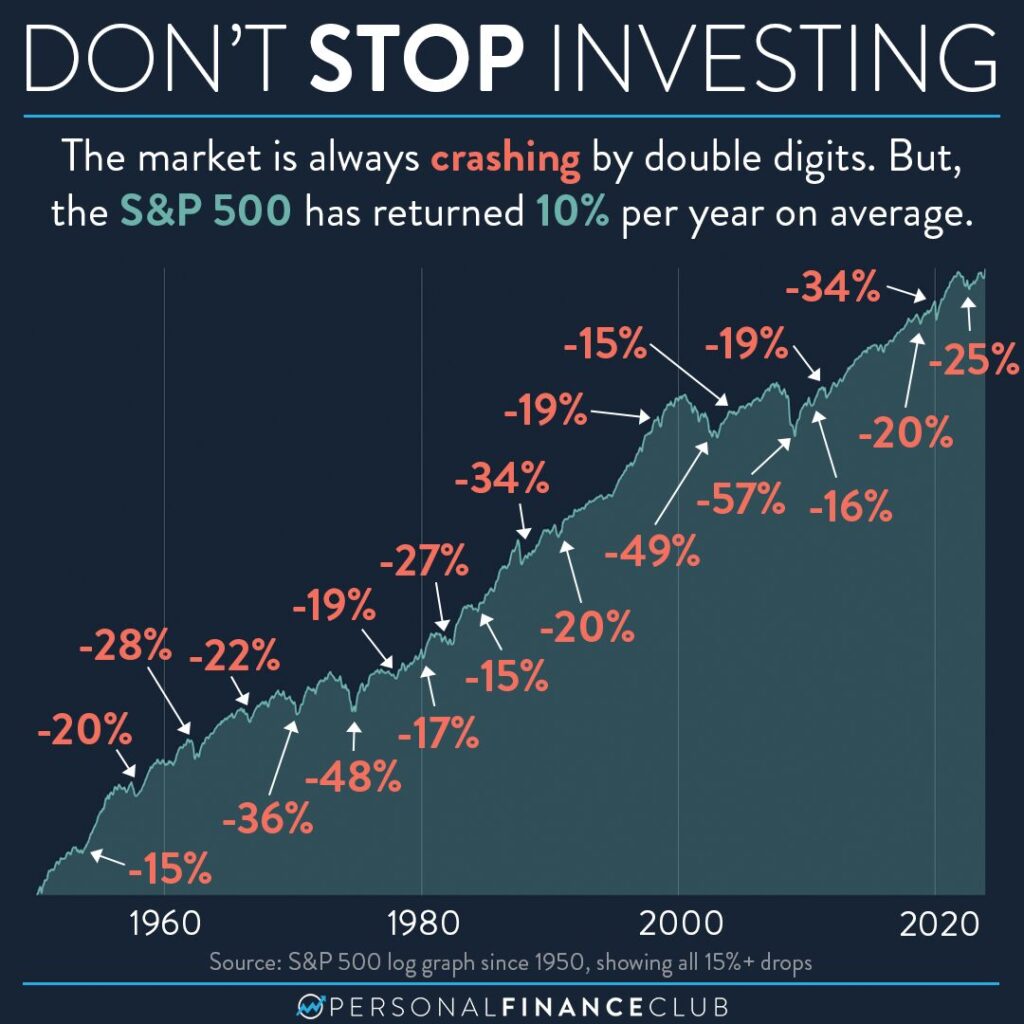
Historically, the S&P 500 has demonstrated remarkable long-term growth. Over the past several decades, its average annual return has been approximately 10-12% (including dividends), though specific periods can vary wildly. This consistent upward trend, despite numerous recessions, market crashes, and geopolitical events, underscores the resilience and innovative capacity of American corporations. For long-term investors, the S&P 500 represents a powerful engine for wealth accumulation, benefiting from the compounding effect of reinvested returns. While past performance is never a guarantee of future results, the index’s track record has cemented its reputation as a cornerstone of prudent investment strategies.
How Investors Access and Utilize the S&P 500
For individual investors, direct investment in all 500 companies is impractical. However, several accessible and cost-effective avenues allow participation in the S&P 500’s performance.
Passive Investing: ETFs and Index Funds
The most popular and efficient way for individual investors to gain exposure to the S&P 500 is through passive investment vehicles:
- S&P 500 Index Funds: These are mutual funds that aim to replicate the performance of the S&P 500 by holding all the component stocks in the same proportions as the index. They are managed passively, meaning there’s no active stock picking, leading to very low expense ratios.
- S&P 500 ETFs (Exchange-Traded Funds): Similar to index funds, ETFs also track the S&P 500. The key difference is that ETFs trade like individual stocks on an exchange throughout the day, offering greater liquidity and flexibility. Popular examples include SPY, IVV, and VOO.
Both index funds and ETFs offer instant diversification across 500 companies with a single investment, significantly reducing idiosyncratic risk associated with individual stock picking. Their low fees make them highly attractive for long-term investors focused on broad market returns.
Active Strategies: Beating the Benchmark (or Trying To)
While passive investing in the S&P 500 offers market returns, some investors and fund managers pursue active strategies, attempting to “beat” the index. This involves selecting individual stocks, sectors, or employing complex trading strategies with the aim of generating returns superior to the S&P 500. However, research consistently shows that a vast majority of active managers fail to outperform the S&P 500 over extended periods, especially after accounting for higher fees and trading costs. This reality reinforces the appeal of passive S&P 500 investing for many.
Understanding Dividends and Reinvesting for Growth
The “total return” of the S&P 500 includes not only the capital appreciation of its constituent stocks but also the dividends paid by those companies. Many S&P 500 companies regularly distribute a portion of their earnings to shareholders in the form of dividends. For long-term investors, reinvesting these dividends back into the S&P 500 (through an index fund or ETF) significantly enhances compounding power, contributing substantially to overall wealth accumulation over time. Ignoring dividends can lead to a significant underestimation of the true returns generated by the index.
Beyond the Basics: Nuances and Considerations
A deeper understanding of the S&P 500 involves recognizing its dynamic nature and the inherent risks.
Rebalancing and Evolution: Keeping the Index Relevant
The S&P 500 is not static. The S&P Dow Jones Indices committee regularly reviews its constituents, typically on a quarterly basis. Companies that no longer meet the selection criteria (e.g., due to declining market cap, acquisition, or profitability issues) are removed, and new companies that have grown sufficiently are added. This constant rebalancing ensures that the index remains a true representation of the leading U.S. companies and reflects the evolving landscape of industries and corporate dominance. It prevents the index from becoming outdated or skewed by the fortunes of fallen giants.
Risks and Volatility: What Investors Should Know
While the S&P 500 offers broad diversification, it is not immune to risks. As an equity index, it is subject to market volatility. Economic downturns, geopolitical crises, interest rate hikes, inflation, and unexpected corporate events can all trigger significant drops in the index’s value. Moreover, its market-cap weighting means that a downturn in the largest companies or sectors can have an outsized negative impact. Investors should approach S&P 500 investments with a long-term perspective, understanding that short-term fluctuations are an inherent part of stock market investing.
The Global Perspective: How the S&P 500 Connects to World Markets
Although primarily focused on U.S. companies, the S&P 500 has profound global implications. Many of its constituent companies are multinational corporations deriving a significant portion of their revenues from international operations. This means that global economic trends, currency fluctuations, and geopolitical events outside the U.S. can directly impact the S&P 500’s performance. Furthermore, the index is closely watched by investors worldwide, often influencing global market sentiment and capital flows into or out of U.S. assets.
The Enduring Legacy and Future of the S&P 500
The S&P 500 has cemented its place as more than just a financial tool; it’s a testament to the dynamism of American enterprise and a cornerstone of modern financial planning.
A Testament to American Enterprise
The index is a living chronicle of industrial evolution, technological advancement, and shifts in economic power. From the industrial giants of yesteryear to today’s tech behemoths, the S&P 500 reflects which companies are driving innovation, creating jobs, and shaping the future. Its long-term upward trajectory is a powerful narrative of economic progress and the enduring capacity for growth and adaptation within the U.S. corporate sector.
Navigating Future Trends and Challenges
Looking ahead, the S&P 500 will continue to evolve. Megatrends such as artificial intelligence, renewable energy, biotechnology, and changing consumer behaviors will undoubtedly shape its future composition. The committee will face ongoing challenges in ensuring the index remains representative in an increasingly globalized and rapidly changing technological landscape. Despite these challenges, its fundamental role as a reliable, transparent, and accessible benchmark for the U.S. large-cap equity market is unlikely to diminish. For investors committed to long-term financial growth, the S&P 500 will almost certainly remain an indispensable component of a well-diversified portfolio.
aViewFromTheCave is a participant in the Amazon Services LLC Associates Program, an affiliate advertising program designed to provide a means for sites to earn advertising fees by advertising and linking to Amazon.com. Amazon, the Amazon logo, AmazonSupply, and the AmazonSupply logo are trademarks of Amazon.com, Inc. or its affiliates. As an Amazon Associate we earn affiliate commissions from qualifying purchases.