
The humble boiled egg is a staple in countless cuisines worldwide, a deceptively simple food that forms the backbone of breakfasts, salads, and snacks. Yet, beneath its unassuming exterior lies a culinary challenge that has frustrated home cooks and professional chefs alike for generations: the elusive perfectly peelable egg. The struggle of chipping away at fragments of shell, often taking precious chunks of the pristine white with it, is a universal kitchen vexation. But what if we told you that overcoming this hurdle isn’t just about kitchen folklore or lucky guesses, but a nuanced interplay of food science and cutting-edge kitchen technology?
In an era where technology infiltrates every aspect of our lives, from communication to transportation, it’s only natural that it would also offer solutions to our culinary conundrums. The quest for the easy-to-peel boiled egg is no exception. By understanding the underlying scientific principles and leveraging smart appliances and innovative techniques, we can transform this formerly frustrating task into a consistent, satisfying experience. This article delves into the technological and scientific dimensions of egg peeling, exploring how modern advancements, from precise temperature control to advanced cooling systems, are revolutionizing the way we approach this age-old kitchen staple.
The Science of the Shell: Understanding the Adhesion Challenge
To conquer the peeling problem, we must first understand the enemy: the complex biochemical interactions that bind the shell to the egg white. It’s not magic, but rather a delicate balance of proteins, pH levels, and membranes.
pH and Age: Nature’s Influence
One of the most widely recognized factors in egg peelability is the age of the egg itself, and this is deeply rooted in pH chemistry. Fresh eggs, straight from the hen, have a relatively low pH level in their albumen (egg white), typically around 7.6-7.9. This acidity promotes a strong bond between the egg white and the inner shell membrane, making peeling a nightmare. As eggs age, however, a fascinating biochemical process occurs. Carbon dioxide slowly escapes through the porous shell, causing the egg’s pH to rise gradually, often reaching a more alkaline 8.8-9.2 within a week or so. This increase in alkalinity weakens the bond between the albumen and the inner membrane, significantly reducing adhesion.
From a technological perspective, this natural aging process can be seen as a passive “technology” for improving peelability. While we can’t instantly alter an egg’s pH, understanding this natural progression allows us to make informed choices – opting for eggs that are at least a week old for boiling purposes. Future tech could potentially involve sensors that read egg pH or “aging accelerators” that safely mature eggs for optimal peeling without compromising freshness or safety.
Membrane Dynamics: The Protein Bond
Beneath the hard outer shell are two thin membranes: the outer shell membrane and the inner shell membrane. These membranes serve as crucial protective layers, but the inner membrane, in particular, plays a significant role in peeling difficulty. This membrane is primarily composed of protein fibers (keratin and others) that, when an egg is cooked, can bind tightly to the coagulated proteins of the egg white.
During the cooking process, the heat causes the proteins in the egg white to denature and coagulate, forming a solid structure. If the conditions are such that the egg white proteins set directly against and into the porous structure of the inner membrane, a strong chemical and physical bond forms. This bond is what makes the shell so difficult to separate from the white without tearing. The goal of any successful egg boiling method, therefore, is to minimize this binding at the protein level. Technological solutions often focus on creating a micro-environment during cooking that prevents this aggressive protein-to-membrane adhesion.
Albumen Structure: Gelation and Sticking
The albumen itself is a complex mixture of proteins, primarily ovalbumin. When subjected to heat, these proteins unwind (denature) and then link up to form a gel-like matrix (coagulation). The rate and extent of this gelation process are critical. Rapid, high heat can cause the outer layer of the egg white to coagulate very quickly and aggressively, creating a firm, almost rubbery layer that adheres strongly to the inner membrane.
Conversely, a more gradual or controlled heating process allows the proteins to coagulate more gently, forming a looser bond with the membrane. This is where precise temperature control, often facilitated by modern kitchen technology, becomes paramount. Understanding the ideal temperature at which proteins denature to form a firm but not overly adhesive gel is key to developing effective cooking methods.
Precision Cooking: Leveraging Smart Kitchen Technology
The quest for the easy-to-peel egg has driven innovation in kitchen appliances, moving beyond guesswork to embrace scientific precision. Modern gadgets offer unprecedented control over the cooking environment, directly impacting peelability.
Temperature Control: The Sous Vide Advantage
Perhaps no technology exemplifies precision cooking better than the sous vide immersion circulator. Traditionally used for meats and vegetables, sous vide has proven to be a game-changer for eggs. By cooking eggs in a precisely controlled water bath, usually between 60°C and 75°C (140°F and 167°F), the proteins in the egg white coagulate slowly and evenly. This gentle, uniform cooking prevents the aggressive over-coagulation of the outer albumen that typically glues it to the membrane.
With a sous vide, you can set the temperature to the exact degree that yields the desired yolk consistency while ensuring the white is firm but tender and, crucially, less adherent to the shell. This “set it and forget it” technology removes all the guesswork, delivering consistently peelable eggs time after time, irrespective of stove variability or pot size.
Smart Egg Cookers and Multi-Cookers: Automated Solutions
Dedicated egg cookers have evolved from simple electric steamers into sophisticated smart devices. Many modern egg cookers utilize steam rather than boiling water, a method that is believed to facilitate easier peeling. The steam penetrates the shell slightly, helping to loosen the membrane. Furthermore, smart egg cookers often feature integrated sensors and pre-programmed settings for various consistencies (soft, medium, hard-boiled). These devices eliminate the need for timing and temperature monitoring, ensuring repeatable results.
Similarly, multi-cookers like the Instant Pot, with their pressure cooking and steaming functions, have become popular tools for egg boiling. Cooking eggs under pressure (steaming) can, for some users, lead to very easy-to-peel results. The uniform heat distribution and controlled environment of these appliances streamline the process, leveraging technology to mitigate human error and inconsistencies. Some models even connect to apps, allowing for remote control and recipe management, further integrating them into the smart kitchen ecosystem.
Induction Cooktops and Smart Kettles: Controlled Heating
Even seemingly simpler kitchen tools contribute to precision. Induction cooktops offer incredibly precise temperature control, allowing cooks to maintain a steady simmer without fluctuations, which is crucial for even egg coagulation. Unlike gas or traditional electric stoves, induction elements react almost instantly to changes, providing a level of control akin to a laboratory setting.
Smart kettles, often controllable via smartphone apps, can heat water to exact temperatures, allowing you to begin your egg cooking process with water already at a specific degree, rather than waiting for a full boil. This initial precision can be vital for recipes that call for starting eggs in hot, but not necessarily boiling, water, further ensuring controlled protein denaturation from the outset.
Post-Cook Innovation: Cooling Techniques and Gadgets
While cooking is crucial, the post-cooking phase is equally vital for achieving easy-to-peel eggs. Technology and scientific understanding play a significant role in optimizing the cooling process.
The Ice Bath Method: Rapid Cooling Technology
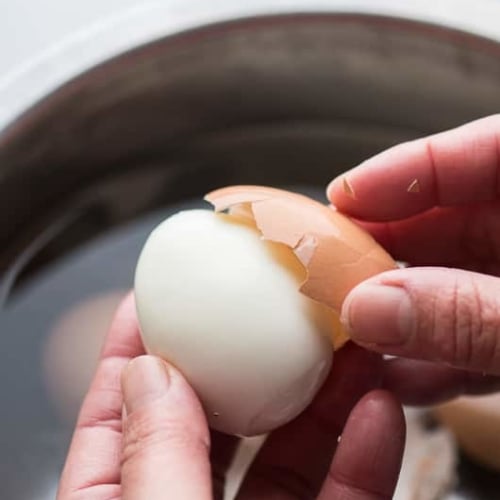
The most widely adopted and scientifically sound post-cooking technique is the immediate ice bath. This isn’t just a kitchen hack; it’s a critical application of thermodynamics. When hot eggs are plunged into an ice bath, the rapid temperature drop causes the egg white to contract quickly and significantly more than the shell. This differential contraction creates a tiny but crucial gap between the coagulated egg white and the inner shell membrane, effectively breaking the bond that formed during cooking.
This rapid cooling halts the cooking process, preventing overcooked, rubbery whites, and concurrently loosens the membrane. While an ice bath might seem low-tech, its effectiveness is rooted in fundamental physical and chemical principles, making it an essential “technology” in the pursuit of peelable eggs. For commercial operations, automated chilling systems achieve this on a larger scale, underscoring its importance.
Advanced Cooling Systems: Beyond the Basics
While an ice bath is accessible to all, the principles behind it could inspire more advanced kitchen gadgets. Imagine a smart egg cooler that uses Peltier elements for ultra-rapid and efficient chilling, or a small appliance that circulates chilled water at optimal speeds. These technologies, though not yet mainstream for home egg peeling, exist in other food processing sectors and represent the potential future of post-cook optimization. Such devices could provide even more consistent and faster cooling, further guaranteeing easy peeling.
Specialized Peeling Tools and Techniques
The market is awash with gadgets promising to make egg peeling easier. From specialized egg peelers that claim to “crack” the membrane without damaging the white, to innovative shakers that use centrifugal force to separate shell fragments, these tools aim to apply mechanical advantage to the peeling process. While their efficacy varies, they represent attempts to use design and mechanics (forms of technology) to solve the problem.
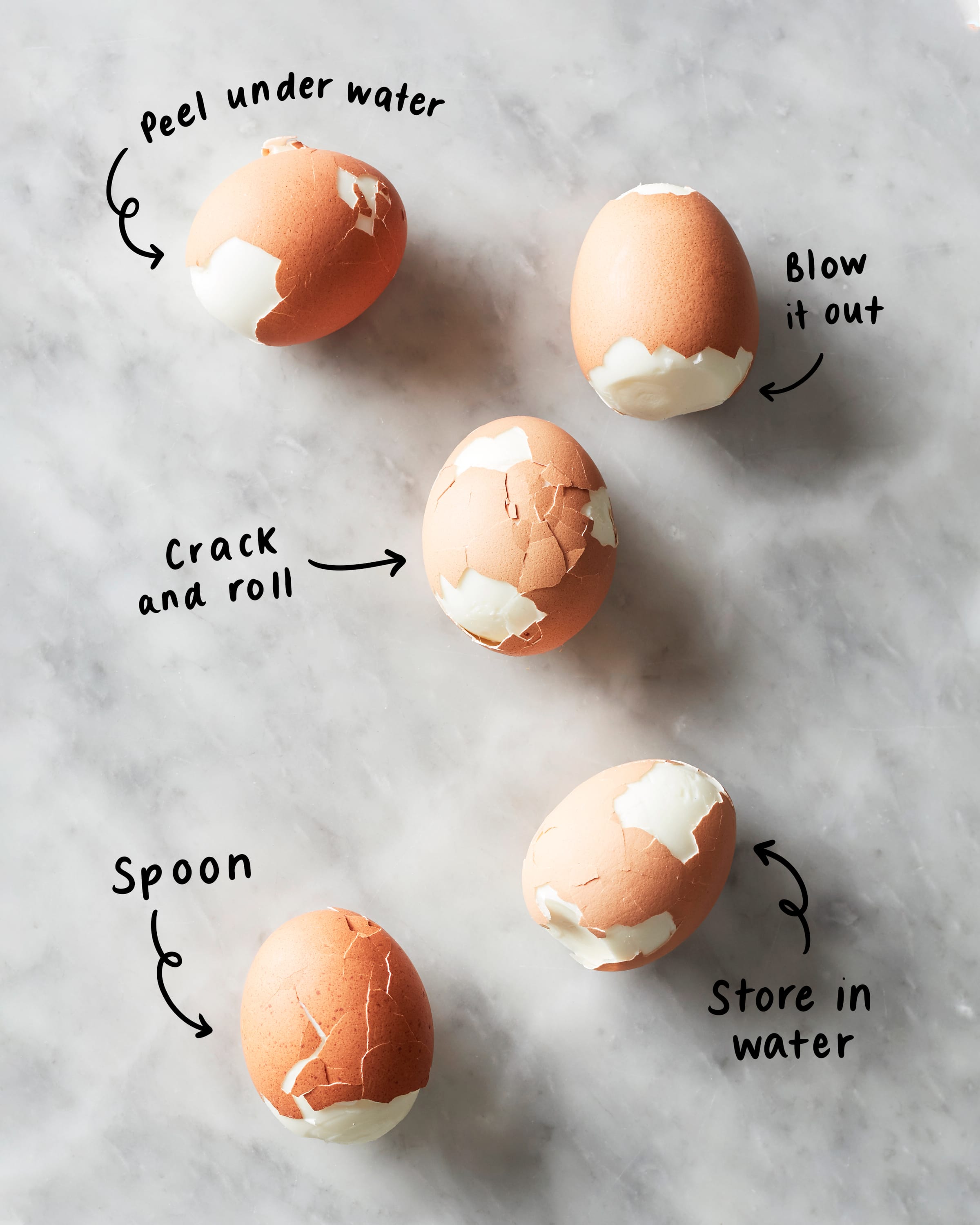
Beyond gadgets, certain techniques, like cracking the egg all around its circumference and then rolling it gently on a surface before peeling, leverage simple physics to create micro-fractures that aid in separation. These are “tutorials” on a practical application of physics. Understanding the anatomy of the egg and the forces involved allows for the development of more effective manual techniques, bridging the gap between gadgetry and skilled application.
The Future of Egg Peeling: AI and Sensor Integration
As smart kitchens become more prevalent, the potential for AI and advanced sensor technology to revolutionize even simple tasks like egg peeling is immense.
Predictive Algorithms for Optimal Peeling
Imagine an egg cooker equipped with sensors that can not only detect the exact temperature of the water and the egg but also estimate the age and pH of the eggs being cooked. By feeding this data into a predictive algorithm, the appliance could automatically adjust cooking times and cooling protocols to guarantee optimal peelability for each batch. An app could alert you when your eggs are at their prime pH for boiling, integrating with your grocery inventory. This intelligent system would remove all variables, providing a truly personalized and perfect result every time.
Robotic Assistance and Automation
While perhaps a futuristic vision for the average home kitchen, robotic assistance for egg peeling is already a reality in industrial settings. Large-scale egg processing plants utilize sophisticated machinery to crack and peel thousands of eggs per hour with minimal waste. As robotics become more compact and affordable, it’s not inconceivable that domestic kitchen robots could eventually handle delicate tasks like egg peeling, freeing up human hands for more complex culinary endeavors. This would represent the ultimate technological solution to the peeling dilemma.
Personalized Cooking Profiles
AI-driven kitchen assistants could learn user preferences for yolk consistency, shell removal ease, and even the type of eggs used (e.g., farm-fresh vs. store-bought). Based on this, they could generate personalized cooking profiles, adjusting temperature, time, and cooling methods on the fly. This level of customization, powered by machine learning, moves beyond simple automation to truly intelligent food preparation, ensuring that your perfectly peeled egg is consistently delivered according to your specific desires.
Best Practices: Integrating Tech and Technique for Consistent Success
Achieving the perfectly peelable egg is no longer a matter of luck but a combination of scientific understanding, smart appliance utilization, and refined technique.
Combining Old Wisdom with New Tech
The best results often come from a synergistic approach. While technology provides precision, traditional wisdom still holds value. Using eggs that are at least a week old (leveraging the natural pH shift) combined with a sous vide cooker for precise temperature control and an immediate ice bath for rapid cooling creates an unbeatable trifecta. The tech amplifies the benefits of the natural egg characteristics. Troubleshooting common peeling problems becomes a diagnostic exercise, much like debugging software, where each variable—egg age, cooking temperature, cooling method—can be isolated and optimized.
Troubleshooting Common Peeling Problems
When eggs stubbornly stick, applying a systematic, almost diagnostic, approach can help identify the culprit. Is the issue consistent with fresh eggs? Then, longer aging or adjusting your starting water temperature might be needed. Are they still sticking despite older eggs and an ice bath? Then evaluate your cooking time and temperature—are your smart cooker settings accurate, or is your sous vide properly calibrated? This analytical mindset, characteristic of problem-solving in tech, is invaluable in the kitchen.

The Quest for Efficiency and Enjoyment
Ultimately, the goal of integrating technology into the simple act of boiling an egg is to enhance efficiency, reduce frustration, and elevate enjoyment. No longer do we need to dread the peeling process. With the right tools and knowledge, anyone can consistently produce beautifully peeled, perfectly cooked eggs. This technological leap transforms a mundane chore into a satisfying and effortless step in preparing a nutritious and delicious meal, allowing us to truly appreciate the culinary perfection of the humble boiled egg.
aViewFromTheCave is a participant in the Amazon Services LLC Associates Program, an affiliate advertising program designed to provide a means for sites to earn advertising fees by advertising and linking to Amazon.com. Amazon, the Amazon logo, AmazonSupply, and the AmazonSupply logo are trademarks of Amazon.com, Inc. or its affiliates. As an Amazon Associate we earn affiliate commissions from qualifying purchases.