
At the very heart of existence, long before the complexities of human innovation, commerce, or communication, lies a fundamental principle: stability. This principle is most vividly demonstrated in the seemingly simple, yet profoundly intricate, structure of an atom. “What makes an atom stable?” is a question that delves into the core mechanics of the universe, uncovering truths about balance, force, and resilience. But its relevance extends far beyond the realm of quantum physics. Indeed, the very essence of atomic stability offers powerful metaphors and practical lessons for achieving lasting success in technology, building an unshakeable brand, and fostering robust financial health.
From the swirling electrons to the tightly bound nucleus, an atom’s quest for stability mirrors our own pursuits in the modern world. Just as elements strive for a perfect electron configuration or a balanced nuclear composition to avoid decay, businesses seek market equilibrium, technologies aim for faultless operation, and personal finances yearn for secure growth. In this exploration, we will dissect the scientific marvel of atomic stability and then extrapolate these profound insights into the dynamic arenas of Tech, Brand, and Money, revealing how understanding the micro can unlock macro success.
The Atomic Blueprint: A Lesson in Fundamental Stability
To grasp stability in its most elemental form, we must first look inward, to the atom itself. An atom’s stability is not a static state but a dynamic equilibrium achieved through a delicate interplay of powerful forces and quantum rules. Understanding this blueprint provides a foundational metaphor for enduring success in any field.
The Nuclear Core: Strength in Balance (Protons, Neutrons, and Internal Cohesion)
At the heart of every atom lies the nucleus, a dense bundle of protons and neutrons. Protons, carrying a positive charge, naturally repel each other. Without a counteracting force, the nucleus would fly apart. This is where neutrons come in, acting as the “glue” that binds the protons together via the strong nuclear force, the most powerful force in the universe. The key to nuclear stability often lies in the ratio of neutrons to protons. For lighter elements, a roughly 1:1 ratio is ideal. As atoms get larger, more neutrons are needed to overcome the increased electrostatic repulsion between a greater number of protons, leading to a higher neutron-to-proton ratio. Too many or too few neutrons, and the nucleus becomes unstable, leading to radioactive decay.
This nuclear equilibrium provides a profound lesson for any entity seeking stability. Consider the “core” of a Tech company: its foundational algorithms, proprietary data, or unique intellectual property. This is its nuclear core, the source of its power. Just as protons repel, competing ideas or conflicting design principles within a product can create internal tension. Neutrons, in this analogy, are the robust engineering practices, clear communication channels, and cohesive team structures that bind these elements together. A balanced team, with diverse skills (like the different roles of protons and neutrons), held together by a strong company culture and shared vision (the strong nuclear force), ensures internal cohesion. If a tech product’s core code is rushed or poorly integrated, it’s like a nucleus with an unstable neutron-to-proton ratio – prone to bugs, security vulnerabilities, and eventual collapse. Data integrity, for instance, is the cornerstone of any stable digital system. Without it, the “protons” of information become chaotic, leading to unreliable results and eroded trust.
Similarly, in Brand strategy, the “nucleus” is the brand’s core identity: its mission, vision, and values. These are the fundamental “protons” that define who the brand is. Without a cohesive internal understanding and consistent application of these values (the “neutrons” of brand culture, employee advocacy, and consistent messaging), the brand’s identity can fragment, leading to a diluted, unstable public perception. A strong brand core, built on authentic values, acts as the unyielding nucleus that resists external pressures and maintains its integrity.
In Money, the nuclear core represents your foundational financial principles and assets. For an individual, this might be a stable emergency fund, diversified long-term investments, and a clear budget. For a business, it’s strong balance sheets, healthy cash flow, and a robust risk management framework. Just as an imbalanced neutron-to-proton ratio leads to instability, an over-reliance on a single asset class or an undisciplined approach to spending can make a financial “nucleus” unstable, vulnerable to market fluctuations or unforeseen expenses.
The Electron Shells: The Pursuit of Equilibrium and Connection (Chemical Bonding, Noble Gases)
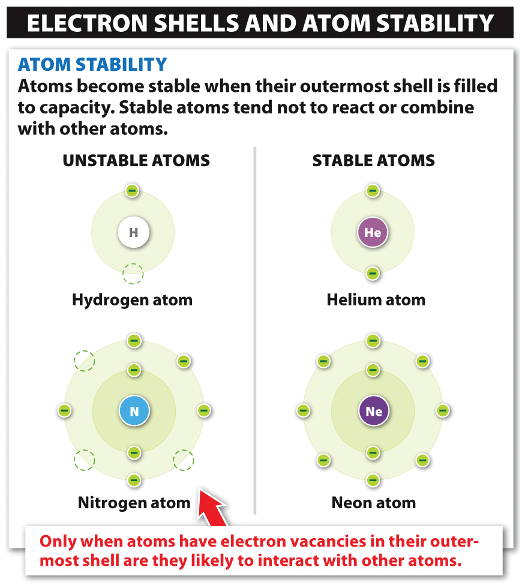
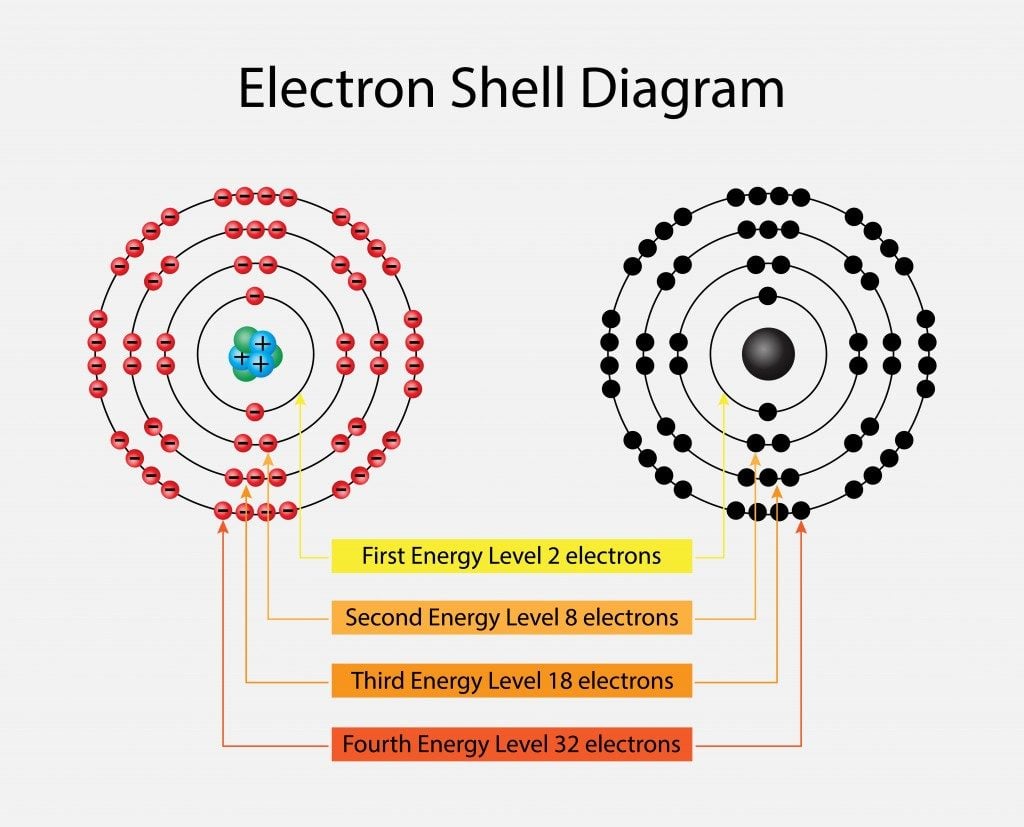
Beyond the nucleus, electrons occupy distinct energy levels or “shells.” The ultimate goal for most atoms is to achieve a full outer electron shell, a configuration that mimics the highly stable noble gases (like Neon or Argon). Atoms achieve this stability by either gaining, losing, or sharing electrons with other atoms, forming chemical bonds. This drive towards a full outer shell is what dictates an atom’s reactivity and its ability to form molecules.
This pursuit of equilibrium in the outer shells offers profound insights into external interactions and strategic positioning. In Tech, the “electron shells” represent a system’s interface, its user experience, and its integration with other platforms. A stable tech product or service is one that seamlessly connects with its environment, fulfilling user needs (gaining or sharing electrons) to create a valuable, cohesive experience. Software modularity, for instance, reflects this principle. Well-defined, stable modules (like stable atoms) interact predictably to form a larger, stable application (a molecule). Digital security, too, involves creating robust “shells” – firewalls, encryption, access controls – to protect the internal data (nucleus) from external threats, maintaining system integrity and equilibrium.
For a Brand, the electron shells symbolize its external interactions, market presence, and customer relationships. A brand strives to achieve a “full outer shell” by resonating with its target audience, building loyalty, and integrating effectively within its market ecosystem. Consistent messaging across all platforms, customer engagement strategies, and strategic partnerships are the “chemical bonds” that form strong, stable connections. A brand that is erratic in its communication or fails to understand its audience’s needs is like an atom with an unstable outer shell – reactive, unpredictable, and constantly seeking an elusive balance. Think of a brand that achieves market leadership; it has effectively completed its “outer shell” by deeply understanding its audience and delivering consistent value.
In Money, the electron shells represent the external financial environment and how an individual or business interacts with it. This includes investment strategies, market relationships, and economic trends. Achieving a “full outer shell” in finance could mean diversifying investments across various asset classes (sharing electrons), building credit (gaining trust), or establishing strong banking relationships. These external connections and strategic placements help absorb shocks and provide a stable financial footing. A balanced portfolio, for example, shares risk across different investments, much like atoms share electrons to achieve stability, making the overall financial structure more resilient to market volatility.
Engineering Stability: Atomic Principles in Tech and Digital Resilience
The lessons from atomic stability are particularly salient in the fast-paced and often volatile world of technology. Building stable systems is paramount, as instability can lead to catastrophic failures, security breaches, and loss of trust.
Building Robust Systems: From Molecular Architecture to Software Stability
Just as atoms combine to form stable molecules, technological systems are built from interconnected components. The principle of modularity in software engineering is a direct parallel. Each module, like a stable atom, should be self-contained, perform a specific function, and interact predictably with other modules. When modules are stable and well-defined, the resulting larger system (the “molecule”) is robust and less prone to cascading failures. Think of microservices architecture, where independent services communicate via APIs. If one service becomes unstable, it ideally doesn’t bring down the entire application, much like a single unstable atom might not immediately destabilize an entire molecule if the bonds are strong.
Furthermore, the pursuit of “noble gas” configuration finds its tech equivalent in the drive for highly optimized, efficient, and bug-free code. Engineers spend countless hours refactoring, testing, and debugging to achieve a state of equilibrium where the software performs reliably and predictably under various conditions. A stable operating system or a resilient network infrastructure is one where internal dependencies are well-managed, resource allocation is optimized, and potential points of failure are mitigated. The goal is to create systems that can withstand external pressures and internal stresses without collapsing. This is crucial for scalability – a stable system can grow and adapt without losing its fundamental integrity, much like a stable molecule can participate in larger chemical reactions without breaking apart.
The burgeoning field of AI also grapples with stability. Stable AI models are those that perform consistently, resist adversarial attacks, and avoid “catastrophic forgetting” when new data is introduced. Building robust AI requires careful data curation (the “protons and neutrons” of the training data), sophisticated algorithms (the “strong force” binding the model), and rigorous testing (ensuring the “electron shells” of its decision-making are stable). An unstable AI model can lead to biased outputs, unreliable predictions, and significant ethical concerns, underscoring the universal need for foundational stability.
Digital Security and Data Integrity: The Proton-Neutron Ratio of Trust
In the digital realm, maintaining the “proton-neutron ratio” of trust is critical for security. Data, in this analogy, is the nucleus of any digital operation. Its integrity and availability are paramount. Cybersecurity measures act as the “strong nuclear force” that binds and protects this data from malicious “repulsive forces” (hackers, malware, data corruption).
A stable digital environment is characterized by a balanced approach to security: robust encryption (shielding data), secure network protocols (stable pathways for data movement), access controls (regulating who can interact with the data), and continuous monitoring (detecting imbalances). An imbalance, such as weak passwords, unpatched software, or inadequate data backups, is akin to an unstable nucleus – it creates vulnerabilities that can be exploited, leading to data breaches or system failures. The recent surge in cyberattacks highlights the constant battle to maintain this digital stability, where even a slight imbalance can have far-reaching consequences.
Moreover, data integrity isn’t just about protection; it’s about the reliability and trustworthiness of the information itself. Just as stable atoms don’t spontaneously change their properties, stable data should remain consistent and uncorrupted. Technologies like blockchain, with its immutable ledger, strive for ultimate data integrity by creating a highly stable, interconnected “molecular” structure of information that is resistant to alteration. This quest for perfect digital equilibrium reflects the atomic drive for an unchangeable, predictable state.
The Brand Nucleus: Crafting Unshakeable Identity and Reputation
In the competitive landscape of business, a stable brand is a resilient brand, one that can weather market shifts, crises, and changing consumer preferences. Atomic principles offer a framework for understanding and building this enduring strength.
Core Values and Consistent Messaging: The Atomic Number of Your Brand
A brand’s “atomic number” is its unique identity, determined by its core values, mission, and vision. These are the fundamental “protons” that define what the brand stands for and differentiate it from competitors. Just as an atom’s atomic number determines its element, a brand’s core values determine its essence. If these values are unclear, inconsistent, or not genuinely embodied, the brand lacks a stable nucleus and will struggle to define itself.
Consistent messaging, both internal and external, serves as the “strong nuclear force” that binds these values together and projects a unified image. Every interaction, every marketing campaign, every employee action must align with this core identity. Inconsistency is like an unstable isotope; it creates confusion, erodes trust, and weakens the brand’s structure. A brand that constantly shifts its message or contradicts its stated values will appear unstable and untrustworthy, much like an atom whose properties seem to spontaneously change.
Think of iconic brands known for their unwavering commitment to a principle – Patagonia’s environmentalism, Apple’s design and innovation, or Disney’s magic and storytelling. Their stability isn’t accidental; it’s built on a clear, consistently communicated, and deeply integrated “atomic number” that resonates with their audience. This forms a strong, stable brand nucleus that can withstand the “repulsive forces” of market cynicism or competitive pressures.
Building Resilient Relationships: Electron Bonds of Loyalty and Community
Just as atoms form chemical bonds to achieve stability, brands build relationships with customers and communities to achieve lasting loyalty. These “electron bonds” are forged through consistent value delivery, exceptional customer service, and genuine engagement. A brand that understands its audience’s needs and consistently meets them is effectively completing its “outer electron shell,” creating strong, stable connections.
In today’s interconnected world, customer communities are vital “molecules” formed by these bonds. Brands that foster a sense of belonging and shared identity create a collective stability that reinforces individual loyalty. Conversely, neglecting customer relationships or failing to adapt to evolving expectations is like an atom with an incomplete outer shell – reactive, seeking equilibrium, and potentially forming unstable bonds with other “reactive” brands.
Reputation management is the continuous process of ensuring these bonds remain strong. In times of crisis, a brand’s stability is truly tested. A stable brand, with strong customer loyalty and a clear internal culture, can navigate these turbulent periods, much like a noble gas atom remains unreactive even amidst highly reactive elements. Their core integrity and established relationships act as buffers against negative sentiment, allowing them to rebuild trust and re-establish equilibrium.
Financial Equilibrium: Applying Atomic Principles to Wealth and Investment
The pursuit of financial stability, whether for an individual or a corporation, is perhaps the most direct and relatable application of atomic principles. The concepts of balance, force, and resilience are central to sound financial management.
Portfolio Diversification and Risk Management: Balancing Forces for Economic Stability
The principle of the neutron-to-proton ratio for nuclear stability finds a powerful parallel in financial portfolio diversification. Just as a balanced nucleus resists decay, a diversified investment portfolio resists market volatility. Over-concentration in a single asset class or industry is akin to an unstable nucleus with an imbalanced ratio – it creates disproportionate risk. If that single asset class experiences a downturn, the entire portfolio’s “nucleus” becomes unstable, leading to significant losses.
Risk management, then, is the “strong nuclear force” that binds the portfolio together, preventing its assets from “repelling” each other into chaos. This involves strategically allocating assets across different sectors, geographies, and asset types (stocks, bonds, real estate, commodities) to ensure that if one part of the portfolio is negatively impacted, others can provide a stabilizing counter-force. Understanding the inherent “reactivity” of different investments and balancing them to achieve an overall stable financial structure is key. For example, balancing high-growth (more “reactive”) stocks with stable income-generating bonds (more “inert”) creates a financial equilibrium that can weather market fluctuations.
For businesses, this translates to diversifying revenue streams, managing debt-to-equity ratios, and hedging against currency or commodity price fluctuations. A business with a single product line or a concentrated customer base is financially less stable than one with diverse offerings and a broad market presence, making it more vulnerable to external economic “forces.”
Sustainable Growth and Long-Term Value: The Half-Life of Financial Success
Atomic stability isn’t just about preventing decay; it’s about achieving a state that allows for predictable, long-term existence. In finance, this translates to sustainable growth and the creation of long-term value. Instead of chasing short-term, volatile gains (like highly reactive elements), the focus shifts to building wealth incrementally and consistently, much like stable elements have an infinite “half-life.”
Compounding, often called the “eighth wonder of the world,” is a powerful manifestation of this principle. Consistent, stable returns, reinvested over long periods, build wealth exponentially. It’s the financial equivalent of stable atoms forming increasingly complex and robust molecules. This requires discipline, patience, and a focus on fundamental value rather than speculative fads. Businesses aiming for sustainable growth invest in research and development, build strong customer relationships, and prioritize long-term profitability over quarterly earnings spikes, ensuring their “financial nucleus” remains strong and capable of sustained operation.
For personal finance, achieving financial independence or retirement security is about building a stable base of assets that generate income, managing expenses, and planning for unforeseen events. It’s about constructing a financial “atom” with a stable core of savings and investments, surrounded by “electron shells” of insurance and contingency plans, all working in harmony to secure a prosperous future. This strategic long-term view, mirroring the enduring nature of stable elements, is the bedrock of true financial resilience.

Conclusion: The Universal Pursuit of Equilibrium
From the minuscule dance of particles within an atom to the global dynamics of technology, branding, and finance, the pursuit of stability emerges as a universal constant. What makes an atom stable — the delicate balance of forces in its nucleus, the drive for equilibrium in its electron shells, and its inherent resistance to decay — provides a profound and actionable blueprint for success in our complex world.
In Tech, atomic stability teaches us to build robust systems with cohesive architectures, prioritize data integrity, and engineer resilience against digital threats. For Brands, it underscores the vital importance of a clear, consistent core identity and the cultivation of strong, loyal relationships that can withstand market turbulence. In the realm of Money, it advocates for diversified portfolios, disciplined risk management, and a long-term perspective focused on sustainable growth.
The lessons from the microcosm are clear: true stability is not merely the absence of change, but a dynamic equilibrium achieved through balance, intentional design, and continuous adaptation. By embracing these atomic principles, individuals and organizations alike can construct enduring foundations, navigate uncertainty with greater confidence, and ultimately achieve a more resilient and prosperous future. The quest for equilibrium, it seems, is woven into the very fabric of existence, from the smallest particle to the grandest aspirations.
aViewFromTheCave is a participant in the Amazon Services LLC Associates Program, an affiliate advertising program designed to provide a means for sites to earn advertising fees by advertising and linking to Amazon.com. Amazon, the Amazon logo, AmazonSupply, and the AmazonSupply logo are trademarks of Amazon.com, Inc. or its affiliates. As an Amazon Associate we earn affiliate commissions from qualifying purchases.