
The harmonica, a deceptively simple musical gadget, presents a crucial initial choice for any prospective player: its key. Far from being a mere aesthetic preference, the key of a harmonica fundamentally dictates its melodic and harmonic capabilities, making the selection process a critical technical decision for optimal performance in various musical “applications.” Understanding this core specification is paramount for anyone looking to add this versatile instrument to their personal “toolset.”
Understanding the Core Technology: Diatonic Harmonica Keys
At its heart, the standard 10-hole diatonic harmonica is an elegantly engineered acoustic device designed to play notes within a specific major scale. Unlike its chromatic counterpart, which offers every note on the musical scale, the diatonic model is pre-configured to a single key, providing a specific subset of notes optimized for blues, folk, country, and rock.
The Chromatic Scale and Harmonica Design
Music is built upon the 12 notes of the chromatic scale (A, A#, B, C, C#, D, D#, E, F, F#, G, G#). A diatonic harmonica, however, is tuned to one of these major keys (e.g., C Major, G Major, A Major). This means a harmonica in the key of C Major will naturally play all the notes found in the C Major scale (C, D, E, F, G, A, B). While this design simplifies playing within its native key, it also means certain notes outside that key are unavailable or require advanced bending techniques to produce. This focused design is a feature, not a limitation, driving its characteristic sound and playability.
Standard Diatonic Tuning and its Implications
Most diatonic harmonicas adhere to Richter tuning, a configuration that cleverly arranges notes to facilitate chords on the blow (exhale) and draw (inhale) strokes. The first three holes typically provide a major chord on the blow and a dominant seventh chord on the draw, enabling rhythmic accompaniment. The middle range (holes 4-7) offers the full major scale of the harmonica’s key, making it ideal for melodies. The upper register (holes 8-10) completes the scale, albeit with some notes omitted to maintain chordal patterns. This specific layout is a technical cornerstone, allowing players to access both single notes and chords effortlessly within its designated key.
Why ‘C’ is Often the Default Starter Key (and its Limitations)
The harmonica in the key of C is overwhelmingly recommended for beginners, and for good reason. Its pitches correspond directly to the white keys on a piano, making it easy to understand basic music theory concepts. Many beginner instruction books and online tutorials are written with the C harmonica in mind. It’s an excellent “reference model” for learning fundamental techniques like single notes, simple melodies, and basic bending. However, a C harmonica is primarily optimized for playing songs in the key of C (when using “straight harp” or 1st position playing). Its limitations become apparent when attempting to play in other keys, highlighting the need for a diverse “hardware” inventory.
Matching Your Harmonica ‘Gadget’ to its ‘Application’
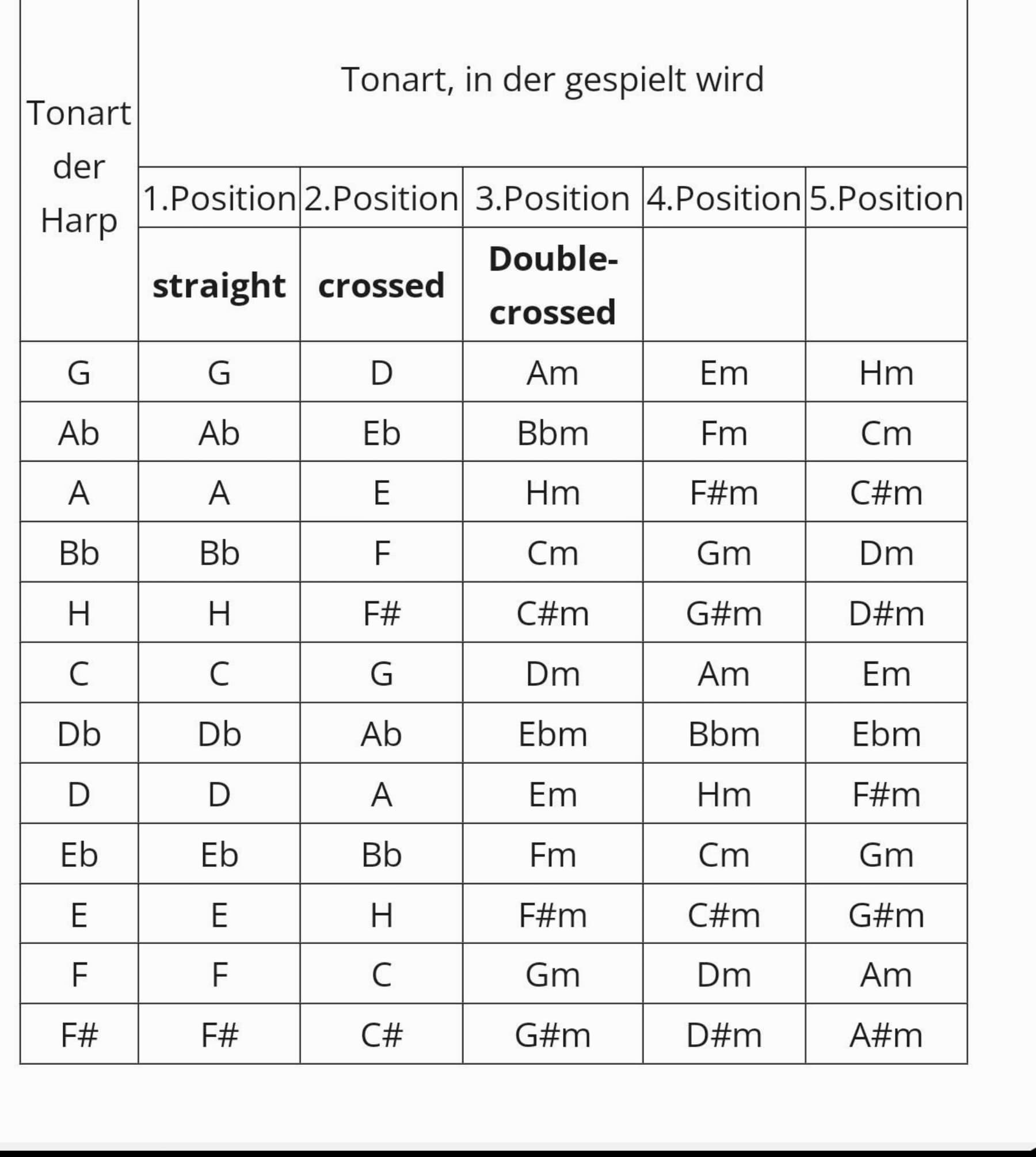
The true versatility of the harmonica emerges not from a single instrument, but from understanding how different keys function across various playing “positions.” A position refers to the musical key you are playing in relative to the key of the harmonica itself. This concept is fundamental to selecting the right “device” for your musical “task.”
Playing Straight Harp (1st Position): Melodies and Simple Accompaniment
When you play a harmonica in its own key, you’re in 1st position, often called “straight harp.” For example, playing a C harmonica in the key of C. This position is intuitive, producing bright, major-sounding melodies and clear chords. It’s ideal for folk songs, traditional tunes, and any piece where the harmonica is meant to lead melodically in the song’s native key. Many beginners start here, focusing on the accessible, straightforward melodic possibilities.
Mastering Cross Harp (2nd Position): Blues, Rock, and Expressive Playing
The most popular and arguably most powerful “application” for the diatonic harmonica is 2nd position, or “cross harp.” Here, you play a harmonica that is a perfect fifth above the song’s key. For instance, if a song is in the key of G, you would use a C harmonica (C is the fifth above G). This shifts the available notes, putting the G major scale at your fingertips, but with a crucial difference: the draw bends become incredibly expressive, allowing for the characteristic “wailing” sound of the blues. This position is technically richer, offering a more bluesy, soulful, and aggressive tonality, making it the standard for blues, rock, country, and funk harmonica.
Advanced Positions (3rd, 4th, 5th): Expanding Your Sonic Palette
Beyond 1st and 2nd positions, there are several other playing positions, each offering a distinct set of notes and expressive capabilities.
- 3rd Position: Using a harmonica a whole step above the song’s key (e.g., a D harmonica for a C song). This creates a minor key sound, excellent for minor blues, rock, and jazz. It offers different bend capabilities and melodic pathways, providing a darker, more introspective tone.
- 4th Position: Using a harmonica a half step above the song’s key (e.g., a C# harmonica for a C song). This position is less common but can be very effective for specific blues or modal sounds, often producing a somewhat melancholic or exotic feel.
- 5th Position: Using a harmonica a perfect fourth below the song’s key (e.g., an F harmonica for a C song). This position can be useful for certain country or folk styles, offering a bright, major-sounding alternative to 1st position with different note arrangements.
Exploring these advanced positions is like mastering different “modes” on your harmonica “firmware,” each unlocking unique sonic textures and expressive potential.
Navigating Common Scenarios for Key Selection

The decision of what key harmonica to use is rarely arbitrary. It’s usually dictated by the musical context, much like selecting the right software tool for a specific task.
Jamming with Guitarists: The Nashville Number System and Key Relationships
Guitarists frequently operate in common keys like E, A, D, G, C, and F. If you’re jamming with a guitarist, understanding how harmonica keys relate to these is crucial. The Nashville Number System, while primarily for chord progressions, reinforces the importance of knowing song keys. If a guitarist says “we’re in E,” and you want to play blues (2nd position), you’d reach for an A harmonica (A is the 5th of E). If you want to play straight harp melody in E, you’d need an E harmonica. A strong grasp of circle of fifths is your fundamental “algorithm” for these situations.
Performing with a Band: Adapting to Different Vocal Ranges and Instruments
When playing with a band, the song’s key is often determined by the vocalist’s range or the primary instrument (e.g., a horn section playing in Bb). You need a harmonica key that allows you to play effectively in that specific song key, usually in 2nd position for blues-rock contexts, or 1st position for straightforward melodic contributions. Having a full set of harmonicas from A to G (and often a low F, high G, and a few sharps) ensures you’re prepared for almost any scenario. This is akin to having a comprehensive “driver library” for various musical “peripherals.”
Learning Specific Songs: Decoding the Original Key
If you’re learning a specific song, the first step is always to identify the key of the original recording. Many online resources (chord charts, tablature sites) will provide this information. Once you know the song’s key, you can apply the rules of positions. For a blues song in E, you’ll need an A harmonica. For a folk song in G where you want to play a melody, a G harmonica might be your best bet. Treat the song’s key as the “operating system” and choose your harmonica “application” accordingly.
Experimentation and Building Your Harmonica ‘Toolbox’
While understanding the technical relationships is vital, don’t shy away from experimentation. Sometimes playing in an unexpected position can yield unique sounds or facilitate certain licks. The more keys you have in your collection, the more freedom you have to explore. Your harmonica “toolbox” should ideally include at least the fundamental keys required for common blues and folk applications.
Beyond the Basics: Advanced Considerations for the Discerning ‘User’
As you advance in your harmonica journey, you’ll encounter more nuanced technical aspects that can further refine your key selection and playing style.
Overblows and Overdraws: Pushing the Harmonic Envelope (Advanced Technique as a ‘Feature’)
For the technically proficient player, overblows and overdraws are advanced bending techniques that allow access to notes not natively present on a diatonic harmonica. This effectively “reprograms” the instrument, enabling chromatic playing on a diatonic device. While challenging to master, these techniques significantly expand the melodic potential of any given harmonica key, reducing the immediate need to switch instruments for every key change. This is analogous to “overclocking” your hardware for enhanced performance.
Specialized Tunings: Exploring Custom ‘Firmware’ for Unique Sounds
While Richter tuning is standard, manufacturers also offer harmonicas in specialized tunings (e.g., Paddy Richter, Harmonic Minor, Natural Minor, Country Tuning). These are like custom “firmware” installations, altering the note layout to better suit specific genres or scales. For instance, a natural minor tuned harmonica is excellent for playing directly in a minor key without resorting to 3rd position, offering a darker, more straightforward minor sound. These specialized instruments are not for beginners but become invaluable as you develop a distinct musical voice and require specific harmonic “algorithms.”
Brand and Build Quality as a ‘Hardware’ Decision
The key of the harmonica is its primary functional specification, but the brand and build quality are critical “hardware” considerations. Higher-quality harmonicas (e.g., Hohner Marine Band, Seydel 1847, Suzuki Manji) generally offer superior airtightness, more responsive reeds, better tone, and greater durability. This translates to easier playability, more stable bending, and a richer sound. Investing in quality instruments, particularly for your most frequently used keys, is a wise long-term “asset management” strategy.
Strategic Acquisition: Building Your Harmonica ‘Hardware’ Inventory
Building a functional collection of harmonicas is an ongoing process, evolving with your skill and musical demands.
The Essential Starter Set: What Keys to Prioritize
For any serious beginner, the absolute essential is a C harmonica. It’s the standard learning tool. After mastering the C, the next critical purchase should be a G harmonica and an A harmonica. These three keys (C, G, A) allow you to play in the keys of C, G, D, and E (in 2nd position), covering a vast amount of blues, rock, and folk repertoire. Many beginner “starter packs” offer these keys for good reason.

Expanding Your Collection: When and How to Invest in New Keys
As you progress, you’ll want to gradually expand your “hardware” inventory. A common next step is to acquire D, F, and Bb harmonicas. With these, you can now comfortably play in G, C, F, Bb, Eb, and Ab (in 2nd position), providing even greater versatility. Eventually, aim to acquire a full set of 12 major keys (C, C#, D, Eb, E, F, F#, G, Ab, A, Bb, B). This comprehensive “system” ensures you’re prepared for virtually any song or jam session. Prioritize buying the keys you use most frequently first, and consider upgrading those to higher-quality models as your budget allows. Treat your harmonica collection not just as instruments, but as a robust and adaptable “tool suite” for diverse musical challenges.
aViewFromTheCave is a participant in the Amazon Services LLC Associates Program, an affiliate advertising program designed to provide a means for sites to earn advertising fees by advertising and linking to Amazon.com. Amazon, the Amazon logo, AmazonSupply, and the AmazonSupply logo are trademarks of Amazon.com, Inc. or its affiliates. As an Amazon Associate we earn affiliate commissions from qualifying purchases.