
In the history of global commerce, few shifts have been as tectonic as the transformation of denim during the 1980s. What had once been a rugged, utilitarian garment designed for miners and laborers became the ultimate canvas for brand strategy, corporate identity, and aspirational marketing. The 1980s did not just popularize specific styles of jeans; it birthed the concept of the “Designer Jean,” a phenomenon that redefined how companies build value and how consumers signal status. Understanding which jeans were popular in the 80s requires looking beyond fabric and fit, focusing instead on the strategic branding maneuvers that turned blue cotton into a billion-dollar industry.
The Birth of Aspiration: From Utility to Status Symbol
Before the 1980s, the denim market was dominated by a “Big Three” mentality: Levi’s, Lee, and Wrangler. These brands focused on durability, function, and a rugged American heritage. However, as the 1980s dawned, a new wave of brand strategists realized that the market was ripe for disruption through premium positioning.
The Transition from Workwear to Labels
The shift began when fashion houses realized that the ubiquity of jeans offered a unique opportunity for brand extension. By placing a designer’s name on the back pocket, a commodity was instantly transformed into a luxury good. This was the era of Gloria Vanderbilt, often credited as one of the first “designer” jeans. The strategy was simple but revolutionary: use the prestige of a high-society name to justify a premium price point for a mass-market product. This move fundamentally changed the “Brand Identity” of denim from being “built to last” to “built to be seen.”
Creating Scarcity and Premium Positioning
Brand strategy in the 80s leaned heavily into the psychology of exclusivity. While Levi’s were available at every general store, brands like Jordache and Sergio Valente utilized selective distribution models. By controlling where their products were sold and maintaining high price floors, these companies created an aura of scarcity. They weren’t just selling pants; they were selling membership into an upwardly mobile social class. This period marked the first time that consumer “lifestyle branding” successfully penetrated the lower and middle-class demographics through the medium of denim.
Marketing the Provocative: The Calvin Klein Revolution
If Gloria Vanderbilt started the fire, Calvin Klein turned it into an inferno. The marketing campaigns for Calvin Klein jeans in the early 1980s remain some of the most studied case studies in brand history. They moved the conversation from the product’s features—such as the quality of the denim or the strength of the rivets—to the brand’s “vibe” and emotional resonance.
Celebrity Endorsements as Brand Identity
The 1980 Brooke Shields campaign, featuring the infamous line, “You want to know what comes between me and my Calvins? Nothing,” was a masterclass in provocative brand positioning. It utilized celebrity not just as a face for the product, but as an embodiment of the brand’s edgy, modern identity. This strategy bypassed the rational brain and spoke directly to the consumer’s desire for rebellion and sophistication. The popularity of Calvin Klein jeans wasn’t driven by the fit alone; it was driven by the desire to participate in the brand’s controversial narrative.
The Power of Controversial Advertising
Calvin Klein’s strategy proved that negative press could be a powerful tool for brand awareness. By pushing the boundaries of what was acceptable in television and print advertising, the brand ensured that it was the topic of conversation at every dinner table in America. From a branding perspective, this was a calculated risk that paid off by creating a distinct “Brand Voice” that was younger, sexier, and more daring than established competitors. This paved the way for modern brands to use social tension as a marketing lever.
Brand Tribalism: The Battle of the Back Pocket
As the decade progressed, the popularity of jeans became a game of visual signifiers. In a world before social media, the back pocket of a pair of jeans served as a billboard for one’s personal brand. This era saw the rise of “Brand Tribalism,” where consumers identified themselves by the logos they wore.
Iconic Logos and Visual Signifiers
Brands like Guess, with its distinctive triangle logo on the back pocket, and Jordache, with its horse head embroidery, understood that the logo was the product. In the 80s, the design of the back pocket was the most critical element of the brand’s visual identity. If a brand could make its logo recognizable from twenty feet away, it had won the marketing war. This led to a flourish of intricate stitching, leather patches, and metal tags that acted as “proof of purchase” for the consumer’s status.

Target Audience Segmentation: Guess and the Euro-Chic Aesthetic
Guess Jeans, founded by the Marciano brothers, introduced a “Euro-chic” brand identity to the American market. Their strategy involved heavy stone-washing and a slimmer, more tailored fit, marketed through high-contrast black-and-white photography. By positioning the brand as a sophisticated, international label, Guess was able to capture a different segment of the market than the traditional American heritage brands. This demonstrated the importance of “Market Segmentation”—the idea that you don’t need to appeal to everyone if you can dominate a specific, high-value niche.
Product Innovation as Brand Differentiation
While marketing and branding were paramount, the 1980s also saw significant “Product Strategy” innovations that helped brands differentiate themselves in a saturated market. The physical appearance of the jeans became a tool for brand storytelling.
The Rise of Acid Wash and Stone Wash
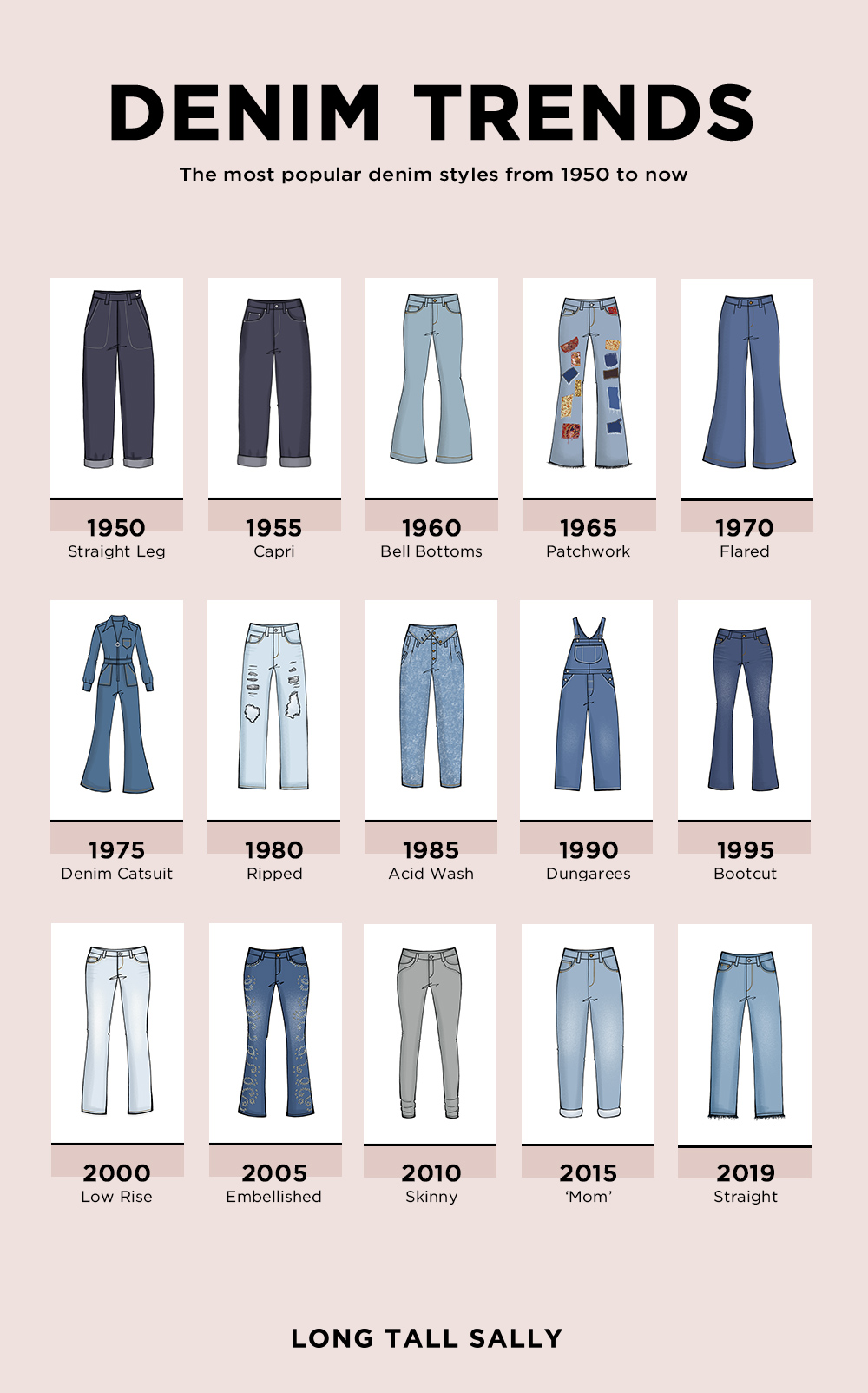
In the mid-to-late 80s, the “look” of denim underwent a radical change. Acid washing and stone washing became the dominant trends. From a brand perspective, these were not just aesthetic choices; they were proprietary processes that allowed brands to patent specific “looks.” Guess, for example, leaned heavily into stone-washing to create a soft, lived-in feel that felt more premium than the stiff, raw denim of the past. This “Tactile Branding” allowed consumers to feel the difference in the product, reinforcing the premium price point.
The Silhouette Shift: Tapered and High-Waisted
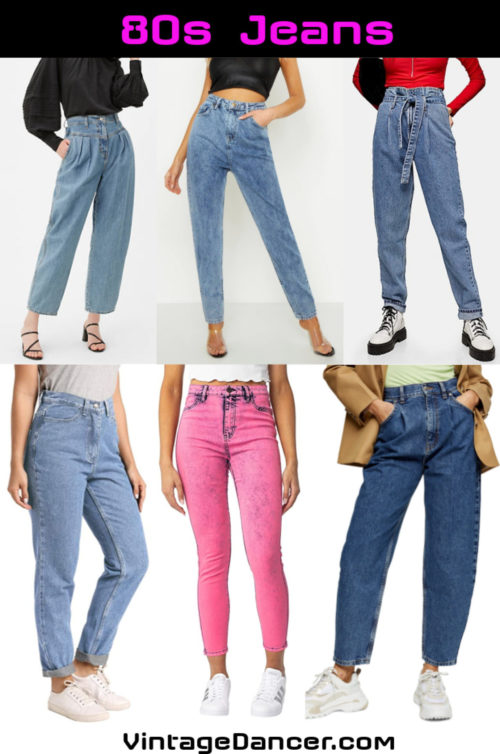
The 80s also saw the branding of the silhouette itself. The “Mom Jean” of today was the high-fashion silhouette of the 80s—high-waisted with a tapered leg. Brands like Z. Cavaricci took this to the extreme, incorporating pleats and multiple waist buttons. By creating a silhouette that was radically different from the flares of the 70s, brands were able to force a “replacement cycle” in the consumer’s wardrobe. If you weren’t wearing the new silhouette, your personal brand was instantly dated.
The Business of Denim: Licensing and Global Expansion
The popularity of 80s denim brands wasn’t just a result of clever ads; it was backed by sophisticated corporate strategies, specifically in the realms of licensing and global supply chain management.
The Licensing Model
Many of the most popular 80s brands didn’t actually manufacture their own jeans. Instead, they operated on a licensing model. A designer would license their name to a manufacturer who handled production and distribution. This allowed brands to scale at an incredible rate without the overhead of owning factories. However, it also presented a challenge for “Brand Equity.” If the manufacturer produced low-quality goods, it would tarnish the designer’s name. The 80s taught the industry that brand management and quality control must go hand-in-hand during rapid expansion.
Global Distribution and Cultural Export
The 80s saw American denim brands become one of the country’s most potent cultural exports. The brand strategy for companies like Levi’s shifted to emphasize “Americana” to international audiences, while newer brands focused on the “California Lifestyle.” By selling a piece of American culture, these brands were able to command even higher premiums in European and Asian markets. This era proved that a strong brand could transcend borders, provided it tapped into a universal desire for freedom, youth, and modernity.
The Legacy of 80s Denim Branding in the Modern Market
The strategies developed during the 1980s denim boom continue to influence the corporate world today. From the way luxury streetwear brands drop limited editions to the way tech companies use lifestyle marketing, the DNA of the 80s “Designer Jean” era is everywhere.
Heritage Branding and the “Vintage” Premium
Today, we see a massive resurgence in 80s styles, but more importantly, we see the power of “Heritage Branding.” Companies like Levi’s have successfully mined their 80s archives to create “Vintage” lines that sell for three times the price of their standard products. They are not just selling a style; they are selling the history and the brand’s longevity. This is a testament to the “Brand Equity” built during that decade.
Lessons for Contemporary Lifestyle Brands
The ultimate takeaway from the 80s denim market is that a commodity product can be transformed into a cultural icon through strategic brand positioning. Whether it was the provocative ads of Calvin Klein, the status-seeking logos of Jordache, or the lifestyle aspiration of Guess, the 1980s proved that in a competitive market, the “Brand” is often more valuable than the “Product.” For modern businesses, the 80s denim boom serves as a blueprint for how to build emotional connections, create social currency, and maintain market relevance through changing cultural tides.
aViewFromTheCave is a participant in the Amazon Services LLC Associates Program, an affiliate advertising program designed to provide a means for sites to earn advertising fees by advertising and linking to Amazon.com. Amazon, the Amazon logo, AmazonSupply, and the AmazonSupply logo are trademarks of Amazon.com, Inc. or its affiliates. As an Amazon Associate we earn affiliate commissions from qualifying purchases.