
In an age deluged with information, from fleeting social media posts to meticulously researched academic papers, the ability to effectively capture, process, and synthesize knowledge has become a critical skill. Enter the Zettelkasten, a German term meaning “slip-box,” which represents a powerful method for personal knowledge management, idea generation, and sustained learning. While its origins trace back to the analog world of index cards, the Zettelkasten system has found a vibrant resurgence in the digital realm, transforming how individuals interact with information and build their intellectual foundations. Far from being just another note-taking technique, Zettelkasten is a sophisticated framework that, when leveraged with modern technology, creates a dynamic, interconnected “second brain” capable of fostering profound insights and accelerating creative output.
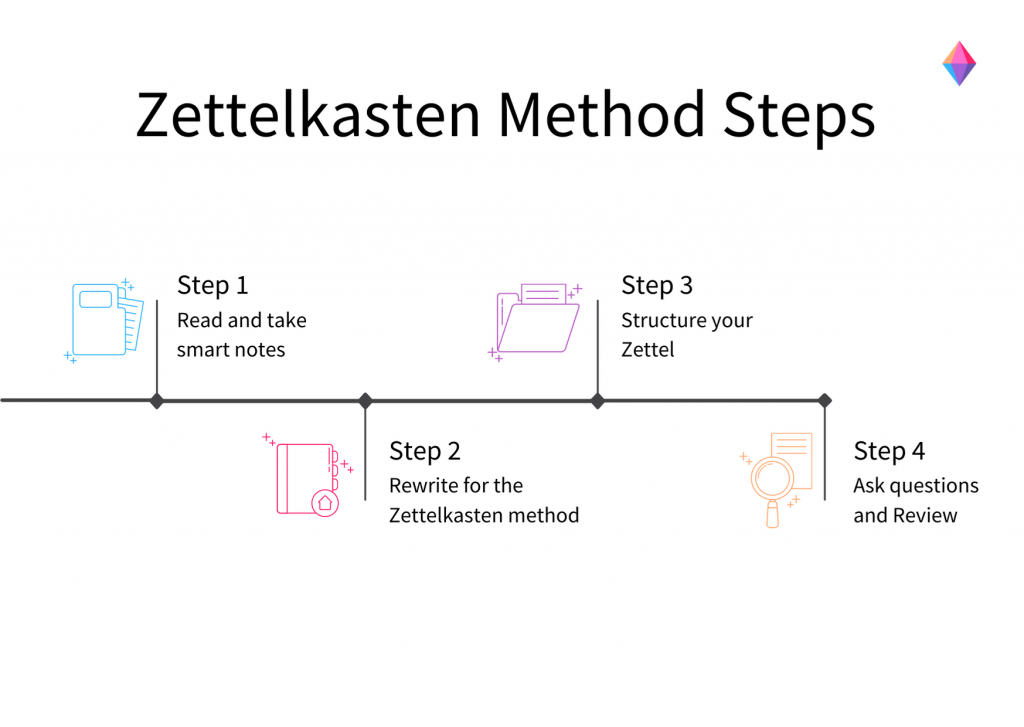
The Core Principles of the Zettelkasten Method
At its heart, the Zettelkasten operates on a few fundamental, yet incredibly potent, principles that distinguish it from conventional note-taking. Understanding these foundational ideas is crucial to appreciating its power, especially when translated into digital workflows.
Atomicity and Self-Contained Notes
The first pillar of the Zettelkasten is the concept of atomicity. Each “slip” or note in the system should contain only one distinct idea, concept, or piece of information. This isn’t just about brevity; it’s about clarity and modularity. Instead of sprawling pages filled with multiple disjointed thoughts, a Zettelkasten note is a single, concise thought unit, fully explained within itself, even if it’s only a few sentences long. This atomic structure ensures that each note can stand alone, making it easier to link, retrieve, and repurpose without ambiguity. In a digital context, this translates to creating individual files for each note, often titled descriptively to reflect its core idea.
Interconnectedness and Linkage
Perhaps the most revolutionary aspect of the Zettelkasten is its emphasis on interconnectedness. Unlike linear notebooks or isolated digital documents, Zettelkasten notes are not meant to exist in isolation. They are actively linked to other relevant notes within the system, forming a vast, non-hierarchical network of ideas. These links are not merely superficial references; they represent intellectual connections, showing how one idea relates to, supports, contradicts, or expands upon another. Luhmann, the system’s most famous practitioner, understood that true understanding emerges from the relationships between concepts, not just from the concepts themselves. Digitally, this is achieved through bidirectional linking, where creating a link from Note A to Note B automatically creates a backlink from Note B to Note A, revealing a rich web of connections that fosters serendipitous discovery and deeper synthesis.
Permanent and Immutable Notes
Zettelkasten notes are designed to be permanent and immutable. Once a note is processed, refined, and added to the system, it generally remains unchanged. This doesn’t mean the ideas are static; rather, new thoughts, elaborations, or contradictions are captured in new notes and then linked to the original. This principle ensures the integrity of the knowledge base over time. Each note acts as a stable building block. In a digital system, this translates to maintaining a stable unique identifier for each note (often its title or a unique ID), ensuring that links remain valid even if file paths change, and discouraging constant revision of existing notes in favor of creating new, linked ones.
The Fleeting and Literature Notes Workflow
The Zettelkasten method outlines a specific workflow for processing external information into these permanent, interconnected notes. It typically involves three stages:
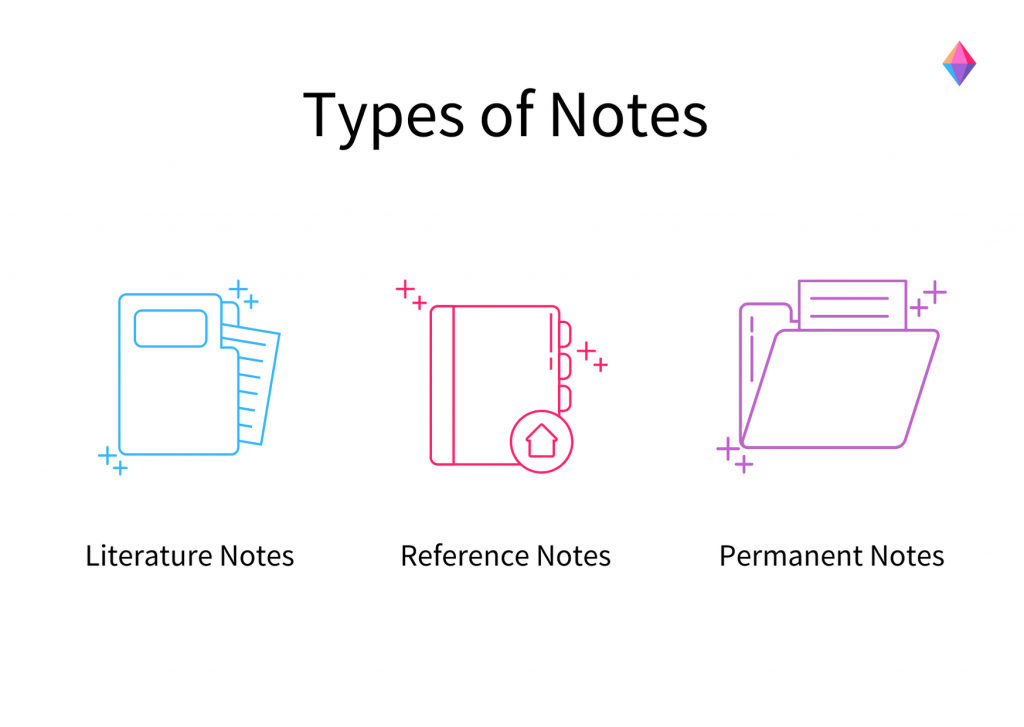
- Fleeting Notes: These are quick, temporary jottings of ideas that come to mind throughout the day. They serve as an inbox for thoughts and are meant to be processed quickly, ideally within a day or two, and then discarded. Their purpose is to capture without interrupting the flow of current activity.
- Literature Notes: When engaging with external sources (books, articles, podcasts, videos), key insights, arguments, and quotes are extracted and summarized in your own words. These “literature notes” are kept separate from the main Zettelkasten and serve as a concise record of the source material. They are usually linked back to the original source.
- Permanent Notes (Zettels): This is the crucial step. The insights from fleeting notes and literature notes are then transformed into atomic, permanent notes. These notes are written in your own words, express a single idea, and, most importantly, are linked to existing notes in your Zettelkasten. This active processing and linking is what transforms raw information into integrated knowledge.
Zettelkasten in the Digital Age: Leveraging Modern Tools
While Niklas Luhmann’s original Zettelkasten was a physical system of over 90,000 index cards, the advent of sophisticated software has democratized and amplified its power. Digital tools have removed many of the physical constraints, making the method more accessible and even more potent for modern knowledge workers.
Dedicated Zettelkasten Software
The past few years have seen an explosion of software specifically designed to facilitate the Zettelkasten method, often referred to as “networked thought” or “second brain” tools. These applications are built with Zettelkasten principles at their core:
- Obsidian: A highly popular, local-first markdown editor that focuses on interconnected notes. Its standout features include a powerful graph view that visually displays the relationships between notes, extensive plugin support for customization (e.g., daily notes, templating, task management), and robust bidirectional linking. Its use of plain text markdown files ensures future-proofing and user ownership of data.
- Roam Research: One of the pioneers in popularizing bidirectional linking and graph databases for personal knowledge management. Roam features an “outliner” interface, daily notes as a central hub, and robust block-level referencing, allowing for extremely granular connections between ideas. Its cloud-based nature facilitates collaboration and ubiquitous access.
- Logseq: An open-source, local-first alternative to Roam, also focused on outlining and block-level linking. Logseq excels in its integration with local markdown files, offering a rich querying system and a strong community for plugins and themes. It bridges the gap between structured outlining and free-form note-taking.
- Notion: While not exclusively a Zettelkasten tool, Notion’s database capabilities, inter-page linking, and customizable templates make it a versatile platform for building a Zettelkasten system. Its flexibility allows users to design their own workflows and structures, though it requires more setup to replicate dedicated Zettelkasten features.
These tools fundamentally change how users interact with their notes, moving beyond simple storage to active knowledge creation and discovery.
General Note-Taking Apps with Zettelkasten Potential
Even without dedicated Zettelkasten software, many general-purpose note-taking applications can be adapted to some degree to follow Zettelkasten principles. The key is understanding the underlying methodology and applying it consistently.
- Evernote/OneNote: These established note-taking apps allow for linking between notes, though not always bidirectionally out-of-the-box. Users can create systems of tags, notebooks, and internal links to simulate the interconnectedness. The challenge lies in enforcing atomicity and building a robust linking strategy without the inherent structural advantages of Zettelkasten-specific tools.
- Apple Notes/Google Keep: For very basic Zettelkasten adoption, these tools can serve to capture atomic notes and use tags for crude categorization. However, their linking capabilities are minimal, making it difficult to establish the deep network of connections that is central to the Zettelkasten’s power. They are better suited for the “fleeting notes” stage rather than a full-fledged permanent Zettelkasten.
The Role of Markdown and Plain Text
A significant trend in modern digital Zettelkasten implementations is the reliance on Markdown and plain text files. This choice is not arbitrary; it’s a deliberate embrace of principles that align perfectly with the Zettelkasten’s long-term vision:
- Portability: Plain text files (like Markdown) are universally readable and can be opened by virtually any text editor on any operating system, now and in the future. This eliminates vendor lock-in and ensures that your knowledge base remains accessible regardless of software obsolescence.
- Future-Proofing: Unlike proprietary file formats, plain text has an incredibly long shelf life. Your Zettelkasten, built on plain text, will likely outlive the specific applications you use today, preserving your intellectual assets for decades.
- Simplicity: Markdown syntax is simple, human-readable, and allows for basic formatting without complex menus or rich text editors. This minimalist approach reduces friction in note-taking, allowing the focus to remain on the content and connections.
- Version Control: Plain text files can be easily managed with version control systems like Git, allowing users to track changes, revert to previous versions, and even synchronize their Zettelkasten across multiple devices with robust conflict resolution.
Benefits of Adopting a Digital Zettelkasten System
Integrating the Zettelkasten method with digital tools offers a multitude of advantages for personal and professional development, transforming how individuals learn, think, and create.
Enhanced Idea Generation and Creativity
The interconnected nature of a digital Zettelkasten is a powerful engine for creativity. By actively linking disparate ideas, the system encourages users to discover novel connections that might otherwise remain unseen. The graph view in tools like Obsidian provides a visual map of intellectual territories, highlighting clusters of related ideas and revealing gaps where new insights could emerge. This organic growth of linked thoughts often leads to serendipitous breakthroughs and the formulation of entirely new concepts, going beyond mere information recall. It turns passive consumption into active, creative synthesis.
Improved Learning and Retention
The Zettelkasten method inherently promotes active learning. The process of transforming external information into atomic notes written in one’s own words, and then linking them to existing knowledge, is a deep form of engagement. It forces critical thinking, analysis, and synthesis. This active processing, rather than passive highlighting or copying, significantly improves comprehension and long-term retention. Each note becomes a neural pathway, and the links are the synapses, strengthening the overall knowledge network in the brain as well as in the digital system.
Streamlined Content Creation
For writers, researchers, students, and content creators, a digital Zettelkasten acts as an unparalleled intellectual workbench. When embarking on a new project (an essay, an article, a presentation, or even a book), the relevant notes are often already waiting, pre-processed and interconnected. Instead of starting from a blank page, one can pull together a cluster of linked notes, arrange them, and expand upon them. This dramatically reduces the friction of starting, accelerates the drafting process, and ensures that arguments are well-supported and ideas are fully developed. It’s like having a dedicated research assistant that has meticulously organized all your thoughts.
Building a Personal Knowledge Graph
Modern digital Zettelkasten tools facilitate the creation of a “Personal Knowledge Graph” – a dynamic, evolving representation of an individual’s accumulated knowledge and intellectual relationships. Unlike rigid hierarchies or folders, this graph allows for multiple entry points and fluid exploration of ideas. As the Zettelkasten grows, it becomes more than just a collection of notes; it becomes a living, breathing extension of one’s mind, a “second brain” that can be queried, explored, and expanded indefinitely. This knowledge graph isn’t static; it evolves as new notes are added and new connections are made, mirroring the growth of human understanding.
Implementing Your Own Digital Zettelkasten: Practical Steps
Embarking on your Zettelkasten journey doesn’t have to be daunting. With a clear understanding of the principles and the right digital tools, anyone can start building their personal knowledge system.
Choosing the Right Tool
The first step is selecting a digital tool that aligns with your needs and comfort level. Consider factors such as:
- Local vs. Cloud: Do you prefer data stored locally on your device for privacy and control (e.g., Obsidian, Logseq), or cloud-based for ubiquitous access and collaboration (e.g., Roam Research, Notion)?
- Interface: Do you prefer an outliner (Roam, Logseq) or a more traditional markdown editor (Obsidian)?
- Extensibility: How important are plugins, themes, and community support for customizing your workflow?
- Cost: Many tools offer free tiers or are open-source, while others are subscription-based.
Experiment with a few options to see what “clicks” for you. The chosen tool should reduce friction, not increase it.
Starting Small: Don’t Get Overwhelmed
The biggest mistake beginners make is trying to migrate all their existing notes or meticulously plan every aspect of their Zettelkasten from day one. Start small. Focus on processing new information using the Zettelkasten workflow. Create a handful of atomic notes, link them, and gradually build outward. Don’t worry about perfection; consistency is far more important than initial comprehensiveness. The system grows organically with your intellectual engagement.
Developing Your Linking Strategy
Effective linking is the lifeblood of the Zettelkasten. While dedicated tools make linking easy, developing a strategy will maximize its benefits:
- Internal Links: Always ask: “What other notes in my Zettelkasten does this idea relate to?” Create explicit bidirectional links.
- Tags: Use tags sparingly for broad categories or themes, not as a replacement for explicit links. Tags can help discover clusters of notes, but links provide specific intellectual connections.
- Folders (Use Sparingly): In a true Zettelkasten, folders are deemphasized. However, a small number of top-level folders (e.g., “Inbox,” “Projects,” “Archive”) can help manage the system without imposing rigid hierarchies that hinder new connections.
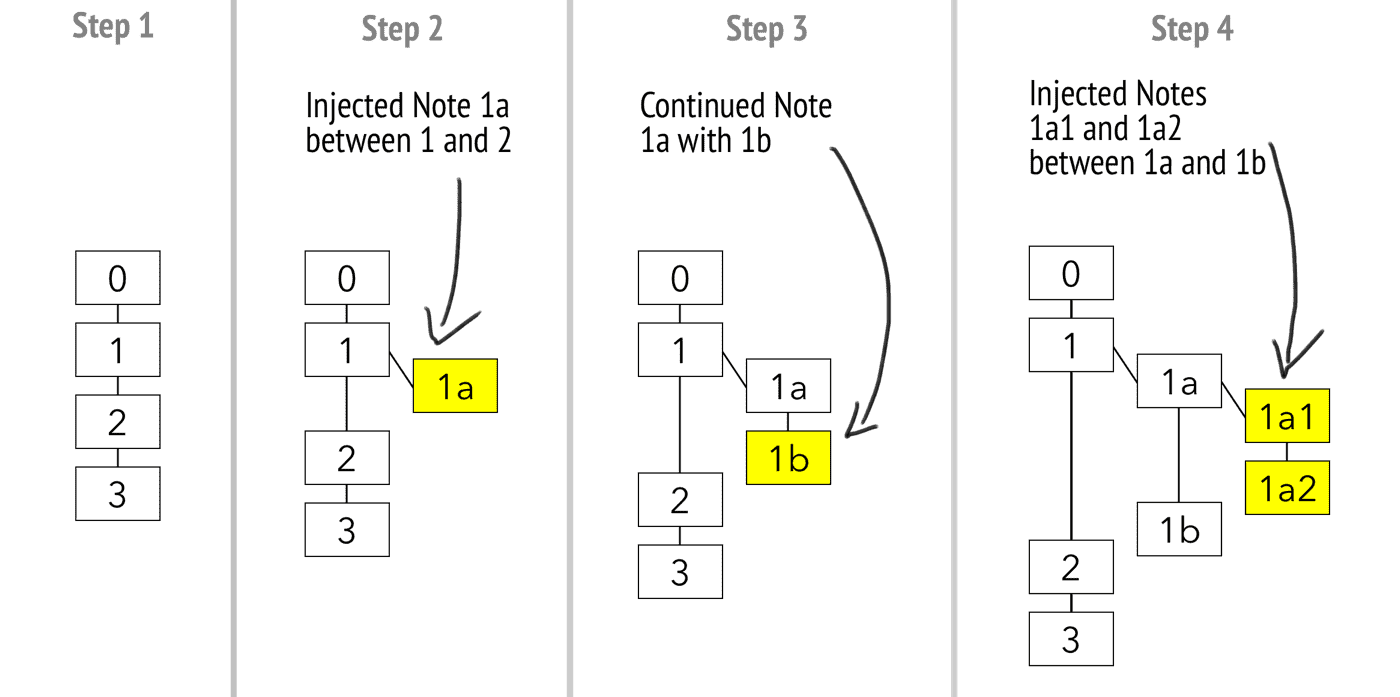
- Unique Note Identifiers: While modern tools often handle this with note titles, older Zettelkasten systems used unique IDs (like
1a1b2). This ensures links remain stable even if titles change slightly.
Consistent Engagement: The Zettelkasten Thrives on Regular Interaction
A Zettelkasten is not a static archive; it’s a dynamic system that thrives on regular interaction. Make it a habit to:
- Process daily fleeting notes: Don’t let thoughts linger unprocessed.
- Actively convert literature notes into permanent notes: This is where the real knowledge integration happens.
- Review and explore: Periodically browse your graph view, follow random links, or revisit older notes. This helps reinforce connections and spark new ideas.
- Write with your Zettelkasten: Use it as your primary source for drafting essays, articles, or even just explaining complex concepts to yourself.
The more you interact with your Zettelkasten, the more it will grow and return value. It’s an intellectual investment that compounds over time.
In conclusion, the Zettelkasten method, when amplified by the power of modern digital tools, offers a revolutionary approach to personal knowledge management. It transforms passive information consumption into active knowledge creation, fostering deeper understanding, stimulating creativity, and streamlining content generation. By embracing atomicity, interconnectedness, and consistent engagement, anyone can build a dynamic, future-proof “second brain” that serves as an indispensable partner in lifelong learning and intellectual endeavor. It’s more than a system; it’s a way of thinking that empowers you to truly master the vast oceans of information in our digital world.
aViewFromTheCave is a participant in the Amazon Services LLC Associates Program, an affiliate advertising program designed to provide a means for sites to earn advertising fees by advertising and linking to Amazon.com. Amazon, the Amazon logo, AmazonSupply, and the AmazonSupply logo are trademarks of Amazon.com, Inc. or its affiliates. As an Amazon Associate we earn affiliate commissions from qualifying purchases.