
In the rapidly shifting landscape of the digital age, language evolves at a velocity that often outpaces traditional linguistic scholarship. One of the most prominent artifacts of this high-speed evolution is the term “yeet.” While it may appear to be a simple piece of internet slang, “yeet” serves as a fascinating case study in how technology, algorithmic amplification, and social media infrastructure converge to redefine human communication. To understand “yeet” is to understand the mechanics of the modern internet—a realm where a six-second video can alter the global lexicon overnight.
The Anatomy of a Viral Term: From Vine to Global Tech Consciousness
The genesis of “yeet” is inextricably linked to the history of short-form video technology. Unlike traditional slang, which typically migrates through geographical proximity or subcultural exchange over decades, “yeet” was propelled by the specific technical constraints and distribution models of the Vine platform.
The Algorithmic Birth: How Short-Form Video Platforms Fuel Linguistic Trends
Vine, a defunct social media platform that limited users to six-second looping videos, created a unique ecosystem for linguistic experimentation. Because creators had a mere fraction of a minute to capture attention, they relied on high-energy, visceral expressions. “Yeet” emerged initially as a rhythmic exclamation accompanying a specific dance, but its utility quickly expanded.
The technical architecture of Vine—characterized by its “Revine” (sharing) feature and its algorithmic discovery page—meant that a single high-impact video could be viewed millions of times within hours. This “forced virality” is a hallmark of modern social tech. When a term like “yeet” is paired with a visual action that is universally understood (such as throwing an object or performing a high-energy movement), the technology bridges the gap between digital content and cognitive adoption.
The Mechanics of Momentum: Data Velocity and the Spread of New Vernacular
The transition of “yeet” from a niche dance term to a general-purpose exclamation of force or excitement was facilitated by the velocity of data. In the pre-digital era, words traveled at the speed of human travel; today, they travel at the speed of fiber optics. The “velocity of language” in the tech era is measured by how quickly a term moves from a “closed” network (like a specific community on Discord or Reddit) to “open” networks (like X/Twitter or TikTok). “Yeet” benefited from this multi-platform hopping, a process where tech-savvy users export culture from one app’s ecosystem to another, creating a standardized internet vernacular.
Social Media Engineering: Why Technology Accelerates Slang Adoption
The persistence of “yeet” in our digital vocabulary isn’t an accident; it is a byproduct of how social media platforms are engineered to prioritize engagement. Technology companies have designed environments where the “new” and the “novel” are rewarded by recommendation engines, leading to a constant demand for fresh linguistic markers.
Real-Time Communication Tools and the Death of Traditional Language Barriers
Modern communication software—from Slack and Microsoft Teams to WhatsApp and Telegram—has democratized the usage of informal language in professional and social settings. These tools utilize “instantaneity,” which mirrors spoken conversation more than written correspondence. In this high-speed environment, brevity is a technical requirement.
“Yeet” functions as a linguistic shortcut. Whether it is used to describe the act of discarding a file digitally or expressing excitement in a group chat, the word encapsulates a complex set of emotions and actions in four letters. The technology that supports these interactions (low-latency messaging and mobile-first interfaces) favors such compact, versatile terms. As a result, tech-driven communication has effectively flattened the traditional hierarchies of language, allowing slang to infiltrate every layer of the digital experience.
The Role of AI and Predictive Text in Formalizing Slang
Perhaps the most significant technical milestone for any piece of internet slang is its integration into predictive text and autocorrect algorithms. When Apple’s iOS or Google’s Android keyboard begins to suggest “yeet” as a legitimate word, the technology has officially codified the term.
Machine learning models, trained on trillions of data points from social media, recognize the frequency and context of “yeet.” By suggesting the word to users, the AI reinforces its usage, creating a feedback loop where the technology not only reflects our language but actively encourages its expansion. This represents a shift from “descriptive” technology (which describes how we talk) to “prescriptive” technology (which influences how we will talk in the future).
The ‘Yeet’ Phenomenon in Digital Interaction Design

Beyond mere text, “yeet” has found a permanent home in the world of software development, gaming, and interaction design. In these spaces, “yeet” is often used to describe the physics of virtual environments.
Haptic Feedback and the Physics of Virtual Throwing
In the realm of Virtual Reality (VR) and Augmented Reality (AR), developers often use “yeet” as a shorthand for the physics engines that govern projectile motion. When a user “yeets” a virtual object in a game like Half-Life: Alyx or Boneworks, they are interacting with complex code that calculates velocity, trajectory, and haptic feedback.
The term has become so synonymous with the act of throwing something with reckless abandon that it is frequently used in developer logs, patch notes, and GitHub repositories. In this context, “yeet” has transitioned from a meme to a functional descriptor of digital kinetic energy. It describes a specific user-interface (UI) experience where the user feels a sense of power and release through the hardware’s vibration motors.
Gamification and the Vocabulary of High-Energy Digital Engagement
Gaming culture is a primary driver of technological innovation, and it is also the primary incubator for slang. The “gamification” of everything—from fitness apps to investment platforms—often utilizes the high-energy, reward-based language of the gaming world. When a user completes a difficult task or “clears” a screen, the digital celebratory environment often echoes the sentiment of a “yeet.” This linguistic integration helps bridge the gap between human emotion and digital achievement, making the technology feel more “human” and responsive.
Data, Demographics, and the Future of Human-Computer Interaction
As we look toward the future, the way technology handles terms like “yeet” will serve as a benchmark for the sophistication of Natural Language Processing (NLP) and Artificial Intelligence.
Sentiment Analysis and the Semantic Shift of Internet Slang
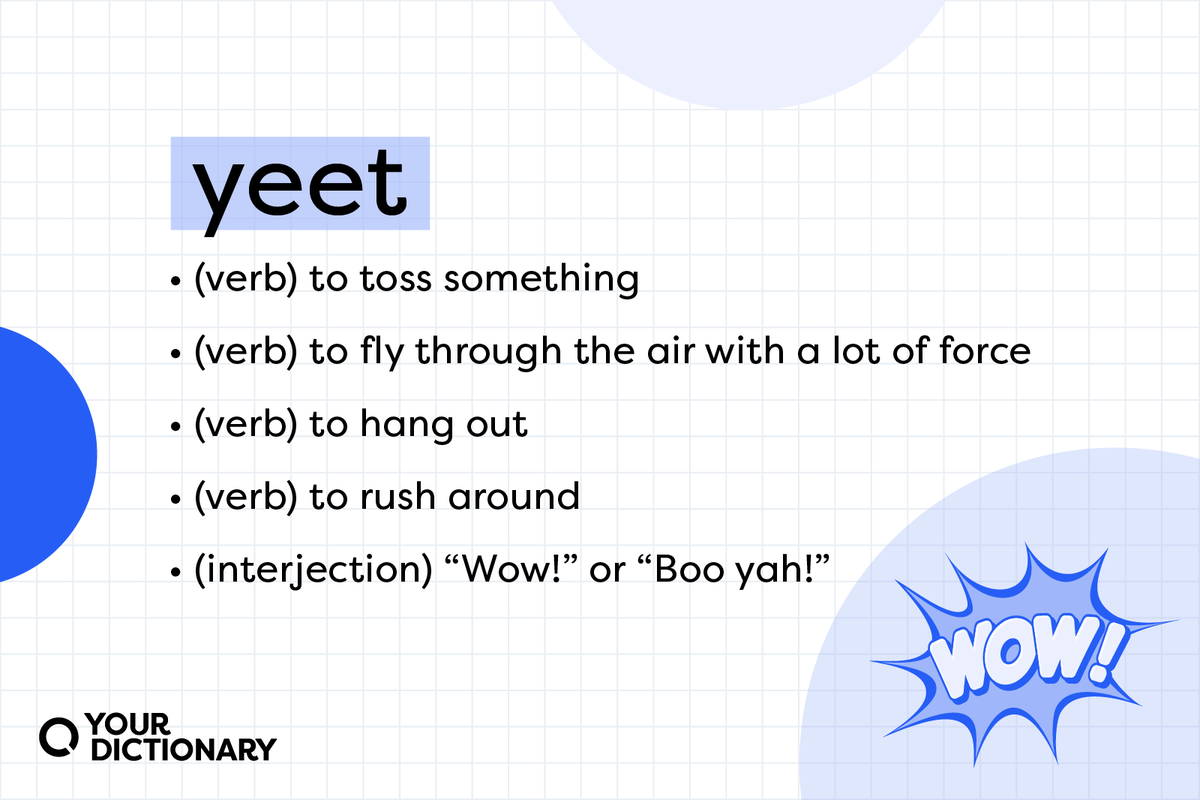
Tech companies use sentiment analysis to understand how users feel about products and services. However, internet slang like “yeet” presents a significant challenge. Depending on the context, “yeet” can be a verb (to throw), an interjection (an expression of joy), or a noun (representing the action itself).
For a sentiment analysis AI to accurately categorize a tweet saying, “I just yeeted my old phone into the ocean,” it must understand the nuance of the term to determine if the user is frustrated, happy, or simply being hyperbolic. The technological evolution required to parse this “semantic fluidity” is driving the next generation of AI development, forcing engineers to create models that understand cultural context as well as they understand syntax.
Natural Language Processing (NLP) Challenges: Can AI Truly Understand ‘Yeet’?
The ultimate goal of many tech giants is to create AI that can converse naturally with humans. To achieve this, NLP systems must go beyond formal dictionary definitions. They must be programmed to recognize “emergent language.”
The word “yeet” is a test case for these systems. If an AI can successfully use “yeet” in a joke or a casual conversation without it feeling “cringe” or forced, it demonstrates a high level of linguistic integration. This requires the AI to monitor social trends in real-time—processing vast amounts of data from TikTok, Reddit, and X to stay current with how the word’s meaning is shifting. The tech behind this is immense, involving deep learning and neural networks that can identify patterns in slang usage across different demographics.
The Cultural Hardware: How Digital Infrastructure Shapes Our Voice
The story of “yeet” is ultimately a story about the hardware and software that defines our lives. Without the high-speed internet that allows for video streaming, the mobile devices that put cameras in every pocket, and the social algorithms that curate our reality, “yeet” would likely have remained a local or ephemeral term.
Instead, the infrastructure of the 21st century has turned language into a dynamic, global, and highly technical commodity. “Yeet” is a reminder that in the digital age, our words are not just tools for thought—they are data points in a massive, interconnected system. As we move further into the era of AI and immersive tech, we can expect the line between “human slang” and “technical terminology” to blur even further, as our machines learn to speak the language of the internet as fluently as we do.
In conclusion, “yeet” is more than a passing trend; it is a linguistic milestone of the tech era. It represents the power of short-form content, the speed of algorithmic distribution, and the challenges of teaching human nuance to silicon-based minds. As technology continues to evolve, so too will our language, “yeeting” us into a future where the way we speak is as advanced as the devices we use to communicate.
aViewFromTheCave is a participant in the Amazon Services LLC Associates Program, an affiliate advertising program designed to provide a means for sites to earn advertising fees by advertising and linking to Amazon.com. Amazon, the Amazon logo, AmazonSupply, and the AmazonSupply logo are trademarks of Amazon.com, Inc. or its affiliates. As an Amazon Associate we earn affiliate commissions from qualifying purchases.