
In the rapidly evolving landscape of industrial technology, the focus has shifted significantly toward efficiency, sustainability, and high-performance materials. While much of the tech world focuses on software algorithms and semiconductor density, the physical infrastructure of our modern world—from the refrigerators in our homes to the insulation in high-density data centers—relies on advanced chemical engineering. At the heart of this physical tech revolution is a compound known as cyclopentane.
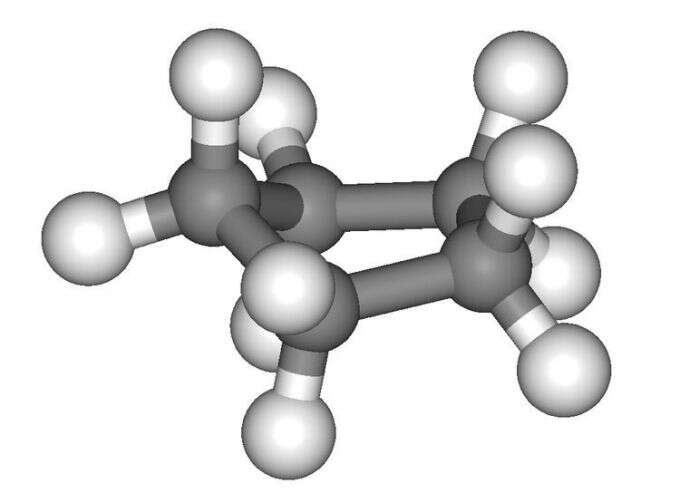
Cyclopentane is a highly flammable alicyclic hydrocarbon with the chemical formula $C5H{10}$. While it may sound like a niche laboratory substance, it is actually a cornerstone of modern green technology. As industries move away from ozone-depleting substances, cyclopentane has emerged as the premier technological solution for thermal insulation and high-performance manufacturing.

Understanding the Fundamentals of Cyclopentane Technology
To appreciate why cyclopentane is a vital component of the modern tech stack in manufacturing, one must first understand its chemical profile and why it represents a technological leap over its predecessors.
Chemical Structure and Physical Properties
Cyclopentane is a cycloalkane consisting of five carbon atoms arranged in a ring, each bonded with two hydrogen atoms. In its physical state, it is a colorless liquid with a mild, gasoline-like odor. Its technological value lies in its boiling point and vapor pressure. With a boiling point of approximately 49°C (120°F), it transitions efficiently between liquid and gas phases, a property that is exploited in the creation of specialized foams and solvents.
The Transition from Legacy Solvents to Advanced Hydrocarbons
The history of industrial chemicals is marked by a shift from functionality-only to functionality-plus-sustainability. For decades, the tech and manufacturing sectors relied on Chlorofluorocarbons (CFCs) and Hydrochlorofluorocarbons (HCFCs). While these were effective blowing agents, they were catastrophic for the Earth’s ozone layer.
The technological shift toward cyclopentane represents a “Green Tech” evolution. Unlike the halocarbons of the past, cyclopentane contains no chlorine, meaning it has zero Ozone Depletion Potential (ODP). This transition required massive re-engineering of production lines and safety systems, marking a significant milestone in industrial technology trends.
The Role of Cyclopentane in Modern Cooling and Insulation Tech
The most prominent application of cyclopentane technology is in the production of rigid polyurethane (PU) foam. This foam is the primary insulating material used in commercial and domestic refrigeration, as well as in the construction of energy-efficient buildings.
A Superior Blowing Agent for Polyurethane Foam
In the manufacturing of insulation, a “blowing agent” is the gas used to expand the liquid resin into a solid foam structure. Cyclopentane is the industry-standard blowing agent because it creates a fine, closed-cell structure within the foam. These microscopic “cells” are what trap gas and prevent heat transfer.
From a technical standpoint, the choice of cyclopentane is driven by its ability to provide structural integrity to the foam without adding excessive weight. This allows for thinner refrigerator walls with better insulating properties, directly influencing the design language of modern, sleek household appliances.
Maximizing Energy Efficiency and Thermal Conductivity
In the era of smart homes and energy-efficient gadgets, the performance of insulation is measured by its “k-factor”—a metric of thermal conductivity. Cyclopentane-blown foams offer an exceptionally low k-factor.
For the technology sector, this is crucial. High-performance insulation means that compressors and cooling units do not have to work as hard to maintain internal temperatures. This reduces electricity consumption, increases the lifespan of the mechanical hardware, and aligns with the global trend toward “Energy Star” ratings and green certifications.
Integration with IoT and Smart Cooling Systems
The synergy between chemical technology and digital technology is best seen in modern smart refrigeration. As we integrate IoT (Internet of Things) sensors to monitor food spoilage and internal temperatures, the underlying physical tech—the cyclopentane-insulated casing—provides the stable environment necessary for these digital systems to function accurately. Without high-quality thermal barriers, the energy fluctuations would render high-precision digital sensors less effective.
Cyclopentane as a Driver of Green Tech and Environmental Compliance
In the current technological climate, “Green Tech” is not just a buzzword; it is a regulatory requirement. Cyclopentane has become the primary tool for corporations looking to meet international environmental standards.

Moving Beyond HCFCs and HFCs
The Montreal Protocol and subsequent international agreements have mandated the phase-out of harmful refrigerants and blowing agents. Hydrofluorocarbons (HFCs), which were used as a middle-step solution, were found to have a high Global Warming Potential (GWP). Cyclopentane has emerged as the definitive successor.
By switching to cyclopentane-based technologies, manufacturers are future-proofing their operations against tightening environmental regulations. This is a classic example of how a shift in chemical technology can safeguard a company’s long-term operational viability.
Analyzing GWP and Environmental Impact
When evaluating the “green” credentials of a technology, engineers look at the GWP scale. CO2 has a GWP of 1. Many legacy blowing agents had GWPs in the thousands. Cyclopentane, by contrast, has a GWP of less than 11 (usually cited around 3 to 10 depending on the specific formulation).
This technological advantage allows global tech giants and appliance manufacturers to market their products as eco-friendly. It is a critical component of the “Circular Economy” where the environmental cost of a product is calculated from manufacturing through to its end-of-life disposal.
Regulatory Standards in the Digital and Industrial Age
The adoption of cyclopentane is also driven by the need for compliance with REACH (Registration, Evaluation, Authorisation and Restriction of Chemicals) and other global safety frameworks. As digital supply chain tracking becomes more sophisticated, companies are under more pressure than ever to prove that every component of their product—including the chemicals used in production—meets rigorous safety and environmental standards.
Industrial Applications: From Data Centers to Electronics Manufacturing
While refrigeration is the most common use, cyclopentane’s technological utility extends into various high-tech sectors, including data management and electronic component manufacturing.
Data Center Cooling Systems and Infrastructure
Data centers are the backbone of the modern AI and software era. These facilities generate immense amounts of heat, and managing that heat is a significant technological challenge. Cyclopentane-blown insulation is used in the construction of the specialized panels and doors that house server racks.
By creating a highly controlled thermal envelope, cyclopentane technology helps reduce the “Power Usage Effectiveness” (PUE) ratio of data centers. A lower PUE indicates a more efficient facility, which is a key competitive metric for tech giants like Google, Amazon, and Microsoft.
Specialized Solvent in Semiconductor and Electronics Manufacturing
Beyond its role as a blowing agent, cyclopentane is used as a specialized solvent in the electronics industry. It is highly effective for precision cleaning of electronic components and as a carrier in certain chemical deposition processes.
In the manufacturing of high-performance plastics and synthetic rubbers—materials used in everything from smartphone cases to wearable tech—cyclopentane serves as an essential chemical intermediate. Its high purity and low residue levels make it ideal for the sensitive environments required for tech-grade materials.
Advanced Safety Systems and Monitoring Technology
Because cyclopentane is highly flammable, its use has spurred innovation in “Safety Tech.” Facilities that use cyclopentane must implement sophisticated automated monitoring systems. This includes:
- Gas Detection Sensors: High-sensitivity infrared sensors that detect leaks in real-time.
- Automated Ventilation Systems: Smart fans that adjust speed based on gas concentration levels.
- Explosion-Proof Hardware: The development of specialized industrial gadgets and tools that can operate in volatile environments without creating sparks.
This ecosystem of safety technology is a direct result of the industrial shift toward cyclopentane.
The Future of Cyclopentane in the Circular Economy
As we look toward the future of industrial technology, cyclopentane is expected to remain a vital player, though the methods of its production and application are evolving through AI and automation.
Synthesis Improvements through AI and Molecular Modeling
Chemical engineers are now using AI-driven molecular modeling to create even more efficient blends of cyclopentane. By simulating how cyclopentane interacts with various polyurethane resins at a molecular level, tech companies can optimize the foaming process to use less raw material while achieving higher insulation values. This “Digital Twin” approach to chemical engineering is significantly shortening the R&D cycle for new materials.
Sustainable Manufacturing and the Circular Economy
The next frontier for cyclopentane technology involves the recycling of the foams it helps create. Innovations in “chemical recycling” are being developed to break down old insulation foams and recover the hydrocarbons or the polyol components for reuse.
In a world where “Tech” is increasingly defined by its environmental footprint, cyclopentane stands as a testament to how industrial chemistry can adapt. It has transitioned from a simple hydrocarbon to a critical enabler of energy efficiency, environmental protection, and sophisticated industrial safety. Whether it is keeping our food fresh or ensuring our data centers run cool, the technology of cyclopentane is an invisible but indispensable part of the 21st-century digital world.
aViewFromTheCave is a participant in the Amazon Services LLC Associates Program, an affiliate advertising program designed to provide a means for sites to earn advertising fees by advertising and linking to Amazon.com. Amazon, the Amazon logo, AmazonSupply, and the AmazonSupply logo are trademarks of Amazon.com, Inc. or its affiliates. As an Amazon Associate we earn affiliate commissions from qualifying purchases.