
In the rapidly evolving landscape of digital finance, few assets have sparked as much debate, institutional interest, and legal scrutiny as XRP. Often misunderstood by the casual observer as just another cryptocurrency, XRP represents a fundamental shift in how value is moved across borders. For the modern investor, understanding XRP is not merely about tracking a price ticker; it is about comprehending a specialized financial tool designed to bridge the gap between traditional legacy banking and the future of decentralized finance.
As the native digital asset of the XRP Ledger (XRPL), XRP was engineered to solve a specific, multi-billion-dollar problem: the inefficiency of global liquidity. While Bitcoin was envisioned as “digital gold” or a peer-to-peer cash system, XRP was built for enterprise utility, specifically targeting the frictions within the global payments industry.

Understanding XRP as a Financial Instrument
To evaluate XRP as an investment or a business tool, one must first distinguish between the asset itself and the company most closely associated with it. This distinction is critical for any financial analysis.
The Distinction Between Ripple and XRP
In the financial media, the terms “Ripple” and “XRP” are often used interchangeably, but they represent two different entities. Ripple is a private, venture-backed technology company that develops software for the banking sector. XRP, on the other hand, is an independent digital asset that exists on an open-source, decentralized blockchain called the XRP Ledger.
While Ripple uses XRP in its liquidity products, the asset functions independently of the company. From an investor’s perspective, this is vital because it means the utility of XRP is not solely dependent on Ripple’s corporate success, although the company’s adoption of the asset serves as a significant primary driver for its market valuation.
How XRP Solves Modern Liquidity Challenges
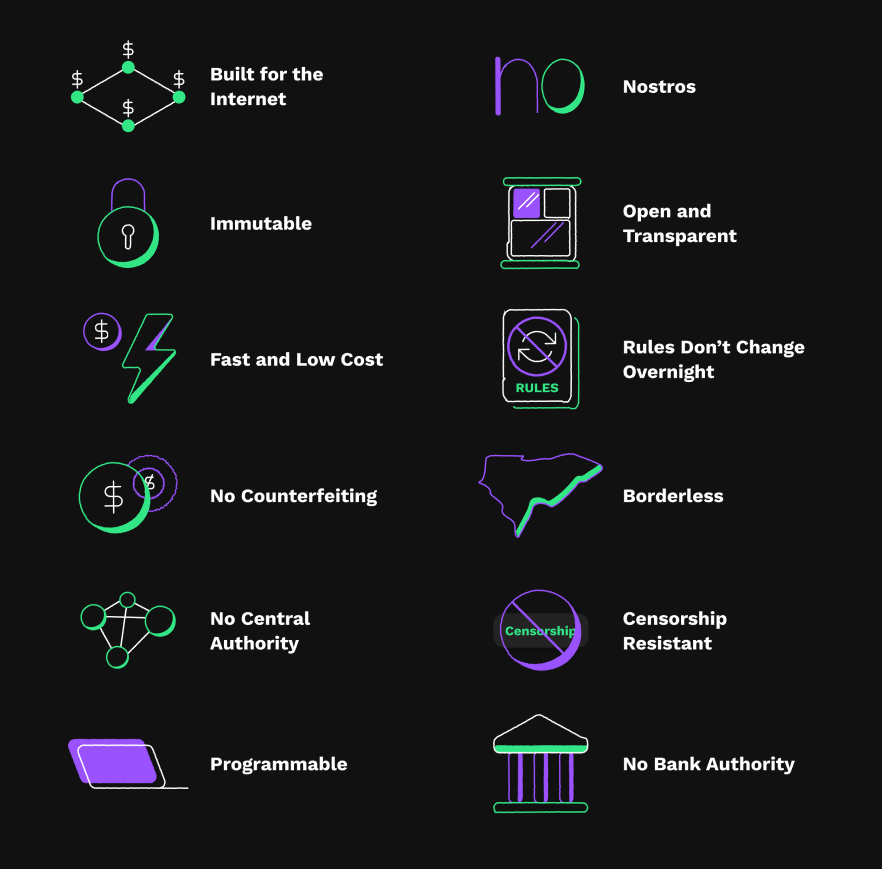
The current international banking system relies on an archaic framework known as “correspondent banking.” For a bank in the United States to send money to a bank in Southeast Asia, it must maintain pre-funded accounts (Nostro/Vostro accounts) in local currencies. This ties up trillions of dollars in dormant capital worldwide.
XRP acts as a “bridge currency.” Instead of holding dozens of different fiat currencies, a financial institution can hold XRP. When a transaction needs to occur, the origin currency is converted to XRP, sent across the ledger in seconds, and converted into the destination currency at the other end. This process, known as On-Demand Liquidity (ODL), frees up massive amounts of capital, providing a clear value proposition for corporate treasurers and institutional investors.
The Investment Case for XRP
From a personal finance and portfolio management perspective, XRP offers a unique risk-reward profile compared to other digital assets. Its utility-driven model differentiates it from speculative “meme coins” or even high-utility smart contract platforms like Ethereum.
XRP’s Role in the “Internet of Value”
The “Internet of Value” is a concept where value moves as easily as information moves today. If you send an email, it arrives instantly. If you send $10,000 to another country, it can take five days and cost 7% in fees. Investors who back XRP are essentially betting on the XRP Ledger becoming the underlying plumbing for this new financial era.
The financial logic is simple: as the volume of global transactions moving through the XRPL increases, the demand for XRP as a bridge asset should theoretically rise. Because the supply of XRP is capped at 100 billion tokens, increased demand against a fixed supply is a classic formula for long-term value appreciation.
Market Volatility and Supply Management
Like all digital assets, XRP is subject to significant market volatility. However, its supply mechanics are more transparent than many of its peers. A large portion of the XRP supply is held in a series of escrows. Each month, a set amount is released to fund operations and incentivize ecosystem growth, with the unused portion returned to escrow.
For the disciplined investor, this programmed supply provides a level of predictability. While critics argue that these holdings represent centralized control, proponents see it as a “central bank-like” stability mechanism that ensures the market isn’t suddenly flooded with tokens, preserving the asset’s long-term financial integrity.
Institutional Adoption and the Banking Sector
The true litmus test for any financial tool is its adoption by the “smart money”—banks, payment providers, and institutional holders. XRP has consistently outperformed most of the crypto market in terms of real-world enterprise partnerships.
On-Demand Liquidity (ODL) and Cost Reduction
For business finance professionals, the primary attraction of XRP is cost reduction. Traditional cross-border settlements are expensive due to intermediary fees and currency exchange spreads. By using XRP, companies can reduce operational costs by up to 40–70%.
Major payment providers, such as SBI Remit in Japan and various corridors across Africa and Latin America, have already integrated XRP-based settlement layers. These aren’t just pilot programs; they are live financial rails moving millions of dollars daily. For an investor, these use cases provide “fundamental value” that persists even when the broader crypto market is in a speculative downturn.
Strategic Partnerships with Global Financial Institutions
Beyond Ripple’s direct influence, the XRP Ledger is being explored for Central Bank Digital Currencies (CBDCs). As nations look to digitize their national currencies, they require a neutral, fast, and scalable bridge to interact with other digital currencies.
The XRPL’s ability to handle 1,500 transactions per second with near-instant finality makes it a prime candidate for this institutional infrastructure. If the XRPL becomes the “interoperability layer” for the world’s CBDCs, the financial implications for the asset’s valuation would be unprecedented.
Navigating the Regulatory Landscape
No discussion of XRP’s financial standing is complete without addressing the regulatory environment, which has been a primary driver of its price action for the better part of a decade.
The Implications of the SEC vs. Ripple Lawsuit
For several years, a cloud of legal uncertainty hung over XRP due to a lawsuit filed by the U.S. Securities and Exchange Commission (SEC), which alleged that XRP was an unregistered security. This led to many U.S.-based exchanges delisting the asset, stifling its liquidity and price performance in the American market.
In 2023, a landmark court ruling provided a significant degree of clarity, stating that XRP itself is not a security when sold on public exchanges. For the “Money” niche, this was a watershed moment. It transformed XRP from a high-risk legal gamble into a digitally regulated asset with a clearer path toward institutional adoption in the United States.
Global Regulatory Clarity and Its Impact on Valuation
While the U.S. legal battle captured headlines, other financial hubs like Singapore, the UK, the UAE, and Japan had already classified XRP as a non-security or a virtual asset. This global regulatory patchwork is slowly coalescing into a more unified framework.
As regulatory clarity increases, the “risk premium” associated with XRP decreases. For institutional investors who are mandated to avoid legal ambiguity, this newfound clarity opens the door for pension funds, hedge funds, and corporate treasuries to include XRP in their digital asset allocations.
Risk Management and Future Outlook
Investing in XRP, like any financial venture, requires a balanced understanding of both potential rewards and inherent risks. A professional approach to XRP involves seeing it as a component of a broader fintech strategy.
Portfolio Diversification with Digital Assets
XRP often moves independently of the “altcoin” market because its catalysts are frequently tied to banking news and legal milestones rather than general crypto trends. For an investor, this makes it an interesting diversification tool. It provides exposure to the “fintech” and “payments” sector of the blockchain world, which operates differently from the “decentralized finance” (DeFi) or “non-fungible token” (NFT) sectors.
However, risk management is paramount. The competition in the cross-border payment space is fierce. Competitors like SWIFT are upgrading their systems (e.g., SWIFT gpi), and other blockchains like Stellar (XLM) or even stablecoins like USDC are vying for the same market share.
The Future of Global Payments and XRP’s Market Position
The future of XRP is inextricably linked to the digitization of the global economy. As we move away from T+2 or T+3 settlement cycles (where trades take two to three days to clear) toward T+0 (instant settlement), the demand for high-speed liquidity bridges will only grow.
XRP is positioned as a first-mover in this space. Its decade-long track record of uptime, its growing list of institutional partners, and its survival through intense regulatory scrutiny have hardened its status in the financial world. Whether it becomes the global standard for liquidity remains to be seen, but for the informed investor, its role as a powerful, specialized financial tool is no longer in question.
In summary, XRP is more than a digital currency; it is a financial technology designed to optimize the movement of money. By lowering costs, increasing speed, and providing liquidity, it offers a compelling value proposition for the future of global commerce and a unique opportunity for those looking to invest in the infrastructure of the next financial revolution.
aViewFromTheCave is a participant in the Amazon Services LLC Associates Program, an affiliate advertising program designed to provide a means for sites to earn advertising fees by advertising and linking to Amazon.com. Amazon, the Amazon logo, AmazonSupply, and the AmazonSupply logo are trademarks of Amazon.com, Inc. or its affiliates. As an Amazon Associate we earn affiliate commissions from qualifying purchases.