
In the rapidly evolving landscape of digital finance, few assets have sparked as much debate, legal scrutiny, and institutional interest as XRP. Often misunderstood by the general public and occasionally conflated with the company that utilizes it, XRP stands as one of the most significant pillars of the cryptocurrency market. For the modern investor, understanding XRP is not merely about tracking a price ticker; it is about comprehending a fundamental shift in how value is moved across the globe. As a digital asset built for enterprise utility, XRP represents a bridge between the traditional world of banking and the decentralized future of finance.

Understanding XRP: The Digital Asset for Global Settlements
To evaluate XRP as a financial instrument, one must first distinguish it from the broader cryptocurrency market. Unlike Bitcoin, which was designed as a decentralized alternative to fiat currency, or Ethereum, which functions as a programmable layer for decentralized applications, XRP was engineered with a specific financial use case in mind: the optimization of cross-border payments.
The Relationship Between Ripple and XRP
A common point of confusion for those entering the “Money” niche is the relationship between Ripple and XRP. Ripple is a private, US-based technology company that develops software for the financial sector. XRP, on the other hand, is an independent digital asset that exists on the XRP Ledger (XRPL), an open-source, decentralized blockchain technology.
While Ripple utilizes XRP in its products—most notably in its On-Demand Liquidity (ODL) service—the two are distinct entities. From an investment perspective, this distinction is vital. Owning XRP does not mean you own equity in Ripple the company; rather, you hold a digital commodity that Ripple uses as a tool to facilitate instant liquidity for banks and payment providers.
Tokenomics: Supply, Burn Rate, and Scarcity
For any investor, the “tokenomics” of an asset—the economic rules governing its supply—is a primary concern. XRP has a maximum supply of 100 billion tokens, all of which were “pre-mined” at its inception. This means there is no “mining” process similar to Bitcoin.
To ensure market stability and prevent a sudden influx of supply, Ripple placed a significant portion of its XRP holdings into a cryptographically secured escrow account. This escrow releases a set amount of XRP monthly, providing transparency to the market regarding the circulating supply. Furthermore, XRP is inherently deflationary; every transaction on the network requires a small fee in XRP, which is “burned” (permanently destroyed), gradually reducing the total supply over time.
The Financial Utility of XRP in Cross-Border Payments
The true value proposition of XRP lies in its ability to solve the “pre-funding” problem that plagues the global banking system. Currently, the international movement of money relies on the outdated SWIFT (Society for Worldwide Interbank Financial Telecommunication) network, a system that hasn’t seen a fundamental technological upgrade in decades.
Solving the Liquidity Problem for Financial Institutions
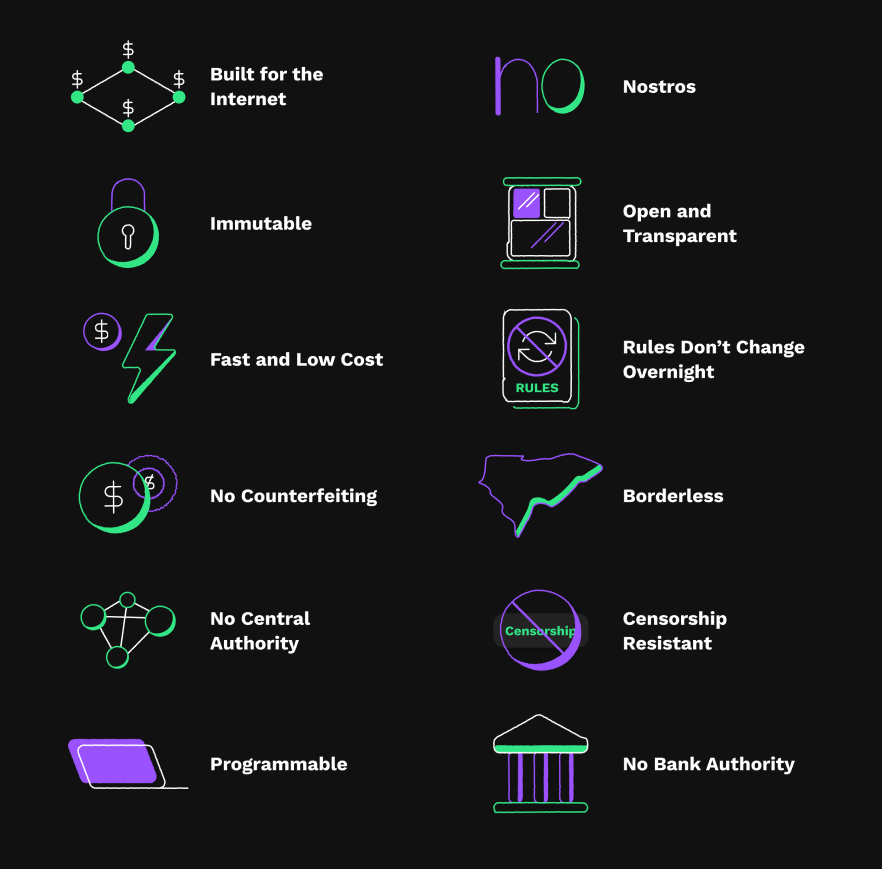
In the traditional banking model, if a bank in New York wants to send money to a bank in Tokyo, it must maintain a “Nostro” account in Japanese Yen. This requires billions of dollars in capital to sit idle in foreign accounts just to facilitate transactions. This is a massive inefficiency in global finance.
XRP acts as a “bridge currency.” Instead of holding trillions of dollars in stagnant accounts worldwide, financial institutions can hold their local currency, convert it to XRP in seconds, send it across the XRP Ledger, and convert it into the destination currency on the other side. This frees up enormous amounts of capital that businesses can then reinvest into growth, making XRP a powerful tool for corporate finance and global liquidity.
Transaction Speed and Cost Efficiency
From a financial performance standpoint, the metrics of the XRP Ledger are formidable. While a standard international bank transfer can take three to five business days and incur significant fees, an XRP transaction settles in roughly three to five seconds.
The cost is equally disruptive. The transaction fee on the XRP Ledger is a fraction of a penny ($0.0002 on average). For businesses handling high-volume, low-value payments—such as remittances or micro-payments—these savings represent a direct improvement to the bottom line. As more financial institutions seek to trim operational costs, the institutional demand for XRP as a settlement tool becomes a key driver for its long-term valuation.
Analyzing XRP as an Investment: Market Drivers and Challenges
As with any asset in the “Money” and “Investing” sector, XRP carries a unique risk-reward profile. Investors must weigh its high utility and institutional adoption against the regulatory hurdles and market volatility that define the crypto space.
Regulatory Landscape: The Impact of the SEC vs. Ripple Case
No discussion of XRP is complete without addressing the legal battle between Ripple and the U.S. Securities and Exchange Commission (SEC). In late 2020, the SEC filed a lawsuit alleging that XRP was an unregistered security. This event had a profound impact on the asset’s price and its availability on American exchanges.
In a landmark ruling in 2023, a U.S. judge determined that XRP itself is not necessarily a security, and that programmatic sales of XRP on public exchanges did not constitute investment contracts. This was a monumental victory for the XRP community and the broader digital asset market. For investors, the clarity resulting from this case is a significant “green flag,” as it provides a level of legal certainty that few other altcoins possess.
Market Volatility and Historical Performance
XRP has historically been one of the top five cryptocurrencies by market capitalization. Its price movements are often influenced by “macro” factors, such as the overall health of the crypto market and Bitcoin’s performance, but also by “micro” factors specific to the Ripple ecosystem.
Because XRP is designed for institutional use, its price is highly sensitive to news regarding bank partnerships, central bank digital currency (CBDC) developments, and regulatory milestones. While it offers the potential for high returns, it is also subject to the extreme volatility inherent in digital assets. Investors typically view XRP as a “utility play”—an investment in the future infrastructure of the global financial system.
Strategic Portfolio Allocation: How to Buy and Store XRP
For those looking to integrate XRP into their personal finance or investment strategy, a disciplined approach to acquisition and custody is essential. Because XRP is a high-liquidity asset, it is accessible, but it requires a different level of technical oversight than a traditional savings account.
Selecting the Right Cryptocurrency Exchange
To acquire XRP, investors use digital asset exchanges. When choosing a platform, focus on liquidity, security protocols, and fee structures. Since the 2023 legal rulings, most major exchanges, including Coinbase, Kraken, and Binance, have re-listed XRP.
Investors should look for platforms that offer “Limit Orders” to avoid the slippage associated with market buys, especially during periods of high volatility. Furthermore, consider whether the exchange allows for easy “off-ramping”—the ability to convert your XRP back into fiat currency (USD, EUR, etc.) and withdraw it to a traditional bank account.
Securing Your Assets: Private Keys and Custody Solutions
In the world of online income and digital investing, the mantra “Not your keys, not your coins” is paramount. Leaving XRP on an exchange exposes the investor to “exchange risk”—the possibility that the platform could be hacked or go bankrupt.
For long-term holders, a “Cold Wallet” or hardware wallet (such as a Ledger or Trezor) is the gold standard for security. These devices store the private keys to your XRP offline, making them immune to online hacking attempts. For those who prefer a balance of convenience and security, “Hot Wallets” (mobile or desktop apps) provide a middle ground. Regardless of the choice, maintaining a secure backup of your “recovery phrase” is the most critical step in protecting your financial investment.

The Future of XRP in a Digital Economy
As we move toward a “Tokenized” global economy, where everything from real estate to stocks may eventually live on a blockchain, XRP is positioned at the center of this transformation. Its ability to settle transactions with near-instant finality makes it a prime candidate for the backend of the next generation of financial apps.
For the investor, the story of XRP is one of resilience and utility. It has survived rigorous legal challenges and maintained its position as a top-tier asset by focusing on a real-world problem: the inefficiency of global money movement. While the path ahead will undoubtedly involve market cycles and regulatory shifts, the fundamental need for a fast, low-cost bridge currency suggests that XRP will remain a cornerstone of the modern financial landscape for years to come. Whether viewed as a speculative asset or a long-term hedge against the inefficiencies of traditional banking, XRP demands the attention of anyone serious about the future of money.
aViewFromTheCave is a participant in the Amazon Services LLC Associates Program, an affiliate advertising program designed to provide a means for sites to earn advertising fees by advertising and linking to Amazon.com. Amazon, the Amazon logo, AmazonSupply, and the AmazonSupply logo are trademarks of Amazon.com, Inc. or its affiliates. As an Amazon Associate we earn affiliate commissions from qualifying purchases.