
The question “what is XRP backed by?” is one of the most fundamental inquiries for anyone considering this digital asset, reflecting a common desire to understand the underlying value and stability of an investment. In the world of traditional finance, assets are often backed by tangible goods, government guarantees, or corporate earnings. However, cryptocurrencies like XRP operate under a different paradigm, where the concept of “backing” takes on a nuanced and often misunderstood meaning. This article delves into the core components that give XRP its value, utility, and market standing, addressing misconceptions and providing a comprehensive financial perspective.
Understanding the Nature of Digital Assets
To grasp what backs XRP, it’s crucial to first understand how digital assets, particularly cryptocurrencies, differ from conventional financial instruments. The traditional financial system has instilled in us specific expectations about asset valuation and stability, which don’t always translate directly to the crypto space.
The Conventional Meaning of “Backed By”
Historically, “backed by” implies a tangible reserve or a powerful entity guaranteeing an asset’s value. For instance, fiat currencies like the US dollar were once backed by gold (the gold standard), meaning you could theoretically exchange dollars for a specific amount of gold. Today, fiat currencies are backed by the full faith and credit of their issuing governments, their ability to tax, and the productivity of their economies. Corporate bonds are backed by the issuer’s assets and future earnings, while real estate is backed by a physical property. This conventional backing provides a layer of security and a clear reference point for value.
How Cryptocurrencies Differ from Traditional Assets
Cryptocurrencies, by their very design, challenge these traditional notions. They are decentralized, often permissionless, and not issued or guaranteed by a central authority like a government or central bank. This fundamental difference means that most cryptocurrencies are not “backed” in the traditional sense of a tangible asset held in reserve or a governmental promise. Instead, their value is often derived from a combination of factors, including their underlying technology, utility, network effects, scarcity, and market demand. XRP, while unique in its specific use case, largely adheres to this broader crypto framework.
The Role of Decentralization and Consensus Mechanisms
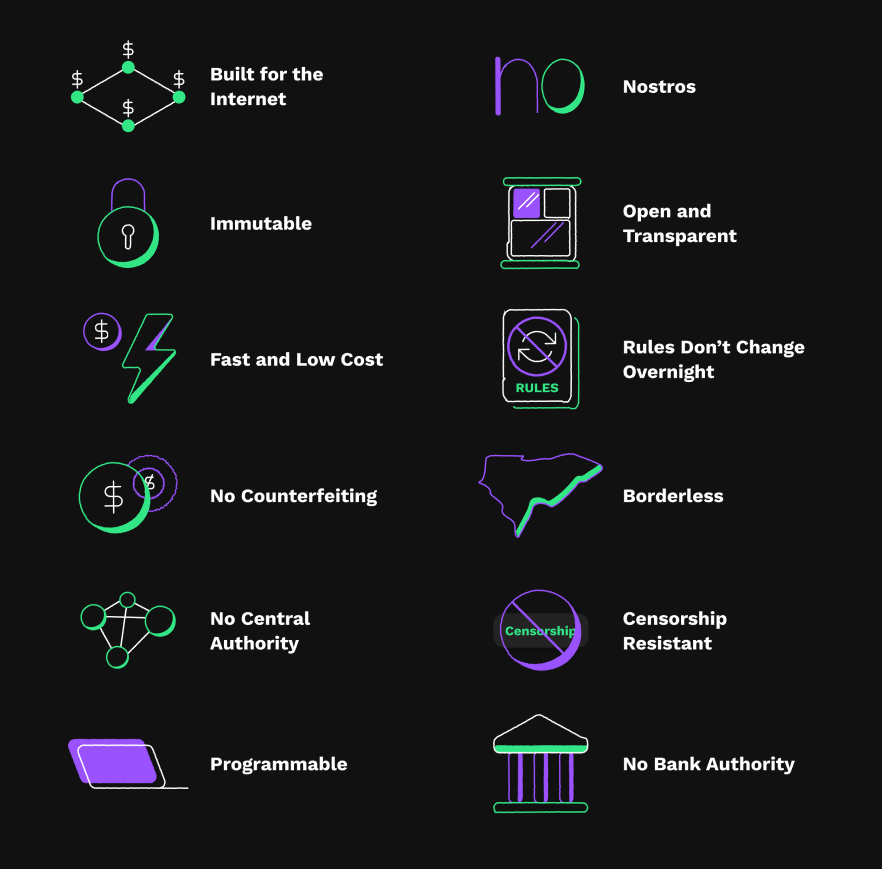
For many cryptocurrencies, the “backing” can be seen in the robustness of their underlying blockchain technology and the consensus mechanisms that secure their networks. These systems ensure the integrity of transactions, prevent double-spending, and maintain the ledger without the need for a central intermediary. While XRP’s ledger (the XRP Ledger or XRPL) has a more federated consensus mechanism compared to Bitcoin’s proof-of-work, it still relies on a distributed network of validators to maintain its security and immutability, which in turn underpins its operational reliability.
The Core Value Proposition of XRP and Ripple
Instead of a traditional backing, XRP’s value is intrinsically tied to its utility and the ecosystem built around it by Ripple Labs. It’s designed to solve a specific problem within global finance, positioning itself as a crucial tool for efficient cross-border payments.
XRP as a Bridge Currency for Cross-Border Payments
The primary utility of XRP is to act as a “bridge currency” in international money transfers. Traditional cross-border payments are often slow, expensive, and involve multiple intermediary banks holding funds in various currencies (pre-funding nostro/vostro accounts). This process ties up capital and incurs high fees. XRP aims to circumvent this by allowing financial institutions to send money internationally almost instantly and at a fraction of the cost. A financial institution can convert its local currency into XRP, send the XRP across borders, and the recipient institution can immediately convert it into their local fiat currency. This eliminates the need for pre-funded accounts in destination currencies, freeing up significant capital.
RippleNet: The Technology Driving XRP’s Utility
XRP is an integral part of RippleNet, Ripple Labs’ global payment network. RippleNet offers various products, with xRapid (now part of Ripple Payments) being the service that leverages XRP for on-demand liquidity. Financial institutions joining RippleNet can choose to use xRapid, which utilizes XRP for real-time gross settlement of cross-border payments. The value of XRP, therefore, is directly linked to the adoption and usage of RippleNet services by banks, payment providers, and other financial entities.
Speed, Cost, and Scalability Advantages
XRP boasts impressive transaction speeds, with transactions settling in 3-5 seconds. This is significantly faster than traditional banking rails, which can take days, or even other prominent cryptocurrencies. Furthermore, transaction fees on the XRP Ledger are minimal, typically fractions of a cent. The XRPL is also highly scalable, capable of processing thousands of transactions per second, making it well-suited for high-volume institutional use. These technical advantages translate directly into economic benefits for financial institutions, making XRP’s utility a core driver of its value.
Debunking Misconceptions: What XRP is Not Backed By
It’s crucial for investors to distinguish between traditional financial backing and the more dynamic value drivers of a digital asset. Misconceptions can lead to flawed investment decisions and an incomplete understanding of XRP’s risk profile.
Not Directly Backed by Gold, Fiat Currencies, or Physical Assets
Unlike stablecoins, which aim to peg their value to fiat currencies or commodities, XRP has no direct backing by gold, the US dollar, or any other physical asset. Its price is not fixed to any external benchmark. This means its market value fluctuates based on supply and demand dynamics, market sentiment, and its perceived utility within the Ripple ecosystem and the broader crypto market. Investors should be aware that XRP’s value is not anchored by traditional reserves.
The Absence of a Central Bank or Government Guarantee
As a decentralized digital asset, XRP does not benefit from the “full faith and credit” of any government or central bank. There is no central authority guaranteeing its stability or liquidity. This absence means that, in times of market stress, there is no government intervention to prop up its value, unlike sovereign currencies. This lack of governmental backing is a fundamental characteristic of most cryptocurrencies and contributes to their inherent volatility.
Distinction from Stablecoins
It’s important not to confuse XRP with stablecoins. Stablecoins, such as Tether (USDT) or USD Coin (USDC), are designed to maintain a stable value relative to a specific asset, usually a fiat currency like the US dollar, often achieved through reserves of cash, cash equivalents, or other assets. XRP is not a stablecoin; its price is volatile and fluctuates independently. Its design is to facilitate rapid value transfer, not to maintain a stable peg.

The Real “Backing”: Utility, Demand, and Ecosystem
If not backed in the traditional sense, what then underpins XRP’s market value? The answer lies in a combination of its practical utility, the strength of its network, the strategic actions of Ripple Labs, and the fundamental economic principles of supply and demand.
Utility in Real-World Use Cases (Financial Institutions, Remittances)
The most significant “backing” for XRP comes from its actual and potential utility in real-world financial applications. Its ability to solve real problems for financial institutions – namely, the inefficiency of cross-border payments – creates demand. As more banks, payment providers, and remittance companies adopt RippleNet and utilize XRP for liquidity, the demand for XRP increases, directly impacting its market value. The more widespread its adoption for these purposes, the stronger its fundamental utility thesis.
Network Effects and Adoption by Financial Players
The value of a network often increases disproportionately with the number of its participants (Metcalfe’s Law). As more financial institutions join RippleNet and integrate XRP into their operations, the network becomes more valuable and attractive to others. This network effect strengthens XRP’s position as a preferred solution for international payments, driving sustained demand for the asset. Partnerships with major financial players contribute significantly to this perceived value.
The Role of Ripple Labs and its Strategic Partnerships
While XRP itself is decentralized, Ripple Labs plays a crucial role in developing the XRP Ledger and promoting the adoption of XRP. Ripple’s strategic partnerships with financial institutions globally, its continued innovation, and its efforts to gain regulatory clarity are vital to XRP’s long-term success. The company holds a significant amount of XRP in escrow, which it strategically releases to fund its operations, incentivize partnerships, and support the ecosystem. This controlled supply management, coupled with its active role in fostering adoption, indirectly influences XRP’s market dynamics.
Market Dynamics: Supply, Demand, and Speculation
Ultimately, like any asset in an open market, XRP’s price is determined by the interplay of supply and demand. The total supply of XRP is capped at 100 billion, with a portion released by Ripple from escrow and another portion held by the company. As demand from financial institutions, retail investors, and speculators increases, and if the circulating supply remains constrained, the price tends to rise. Conversely, decreasing demand or increased selling pressure can lead to price depreciation. Speculation, driven by news, market sentiment, and broader cryptocurrency trends, also plays a significant role in its short-to-medium term price movements.
Regulatory Landscape and its Impact on XRP’s Perceived Value
The regulatory environment is a critical factor influencing the perceived stability and future prospects of any digital asset, especially one deeply integrated into the financial system. For XRP, regulatory clarity has been particularly impactful.
The SEC Lawsuit and its Implications
The lawsuit filed by the U.S. Securities and Exchange Commission (SEC) against Ripple Labs in December 2020, alleging that XRP is an unregistered security, has significantly impacted XRP’s market. The legal battle created uncertainty, leading to delistings on some exchanges and hindering institutional adoption in the US. However, partial victories for Ripple, such as the court’s ruling that programmatic sales of XRP on exchanges do not constitute investment contract offers, brought a degree of clarity and boosted investor confidence. The ongoing legal developments continue to be a major determinant of XRP’s perceived value and its path to broader adoption.
Global Regulatory Clarity and Adoption
Beyond the US, regulatory bodies globally are grappling with how to classify and regulate digital assets. Jurisdictions that provide clearer frameworks for cryptocurrencies, particularly those that recognize XRP’s utility rather than classifying it strictly as a security, can foster greater institutional adoption. A globally harmonized and favorable regulatory environment would significantly enhance XRP’s “backing” by reducing legal risks and opening up new markets for RippleNet services.
Investor Confidence and Market Sentiment
Regulatory uncertainty directly impacts investor confidence. When a clear legal framework is absent or unfavorable, it introduces risk premiums that can suppress an asset’s price. Conversely, positive regulatory developments or increased clarity can lead to renewed investor confidence, attracting more capital and strengthening market sentiment, which in turn acts as a form of “backing” through increased demand.
Investing in XRP: Considerations for Financial Planning
For individuals and institutions considering XRP as an investment, understanding its unique characteristics and the factors that drive its value is paramount for sound financial planning.
Risk Assessment and Volatility
XRP, like most cryptocurrencies, is a highly volatile asset. Its price can experience significant swings based on market sentiment, regulatory news, technological developments, and broader crypto market trends. Investors must perform a thorough risk assessment and understand that they could lose a substantial portion or all of their investment. Its speculative nature demands a careful approach, suitable only for those with a high-risk tolerance.
Diversification within a Portfolio
As a high-growth, high-risk asset, XRP should typically constitute a relatively small portion of a diversified investment portfolio. Prudent financial planning suggests not over-allocating to any single volatile asset. Diversifying across different asset classes (equities, bonds, real estate) and within the crypto space can help mitigate overall portfolio risk.
Long-Term Outlook vs. Short-Term Speculation
For many, investing in XRP is a long-term play based on the conviction that its utility in cross-border payments will eventually lead to widespread adoption and increased value. However, a significant portion of its market activity also comes from short-term speculation. Investors should clearly define their investment horizon and strategy. Long-term holders might focus on fundamental adoption metrics and regulatory clarity, while short-term traders might focus on technical analysis and market news. Both approaches require a deep understanding of the market dynamics that drive XRP’s value.
In conclusion, XRP is not backed by traditional assets, governments, or central banks. Its “backing” is a complex interplay of its unique technological utility for cross-border payments, the robust ecosystem fostered by Ripple Labs, its inherent scarcity, network effects from institutional adoption, and the ever-evolving regulatory landscape. For investors, understanding these drivers is essential to make informed financial decisions in the dynamic world of digital assets.
aViewFromTheCave is a participant in the Amazon Services LLC Associates Program, an affiliate advertising program designed to provide a means for sites to earn advertising fees by advertising and linking to Amazon.com. Amazon, the Amazon logo, AmazonSupply, and the AmazonSupply logo are trademarks of Amazon.com, Inc. or its affiliates. As an Amazon Associate we earn affiliate commissions from qualifying purchases.