
In the rapidly evolving landscape of modern technology, efficiency and automation are no longer luxuries but necessities. Businesses and organizations across every sector are grappling with increasingly complex processes, intricate data pipelines, and a multitude of interconnected systems. Managing these distributed and interdependent tasks manually quickly becomes a bottleneck, leading to errors, delays, and significant operational overhead. This is where workflow orchestration emerges as a critical discipline, transforming chaotic operations into streamlined, reliable, and observable processes.
At its heart, workflow orchestration is the art and science of automating, coordinating, and managing a series of tasks or steps within a defined business or technical process. It ensures that tasks execute in the correct order, at the right time, with appropriate handling for dependencies, retries, and failures. Far beyond simple task automation, orchestration provides a holistic view and centralized control over the entire lifecycle of a workflow, making it an indispensable tool for engineers, data scientists, and operations teams striving for operational excellence.
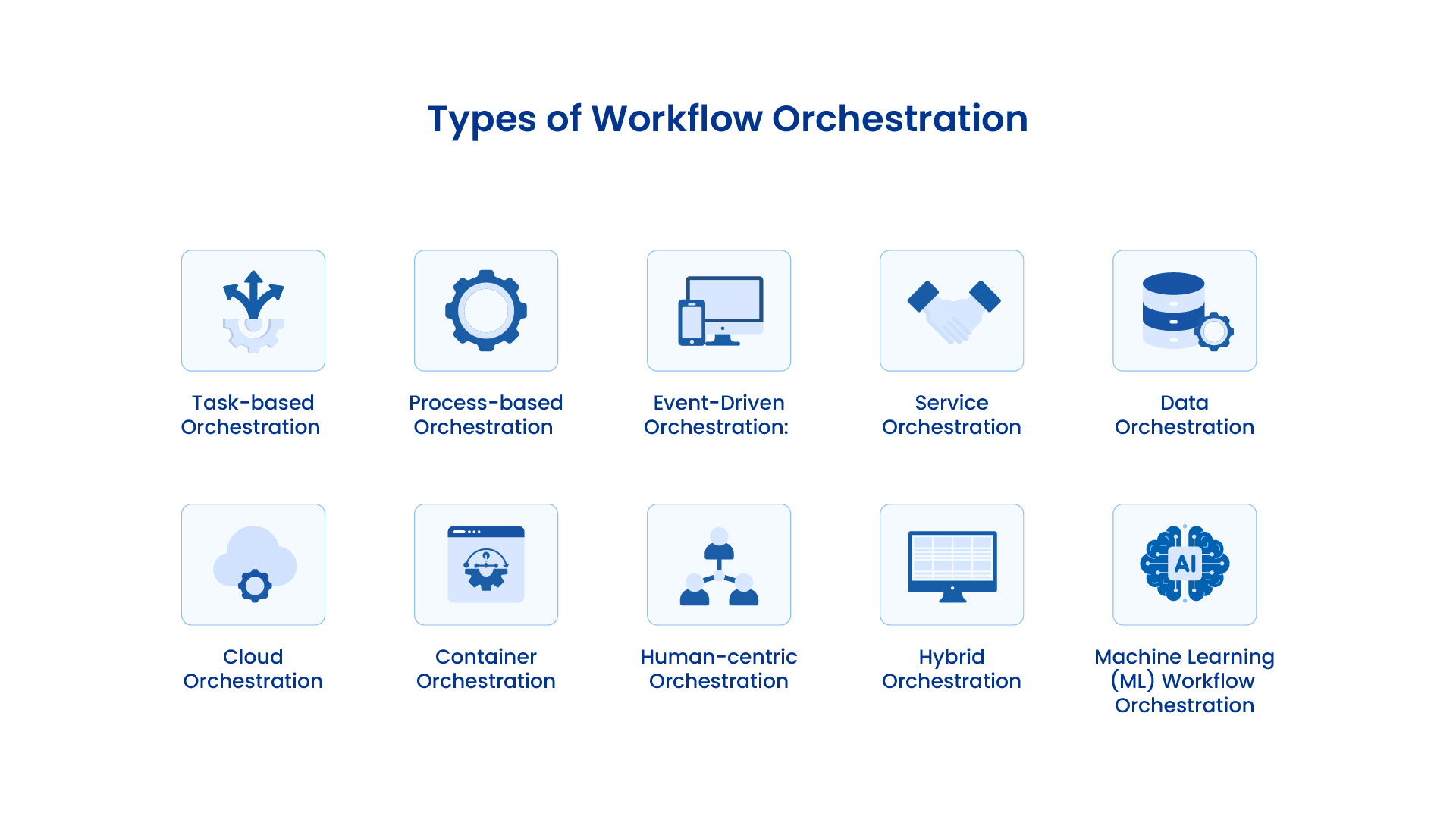
The Core Concept of Workflow Orchestration
To truly appreciate the power of workflow orchestration, it’s essential to dissect its fundamental components and understand how it elevates automation beyond mere script execution. It’s about bringing order, predictability, and resilience to complex operational sequences.
Defining Workflow vs. Orchestration
Before diving deeper, let’s clarify the distinction between a “workflow” and “orchestration.” A workflow is simply a sequence of tasks or steps required to complete a process, often with dependencies where one step must finish before another can begin. For example, in an e-commerce order fulfillment workflow, steps might include “receive order,” “check inventory,” “process payment,” “package item,” and “ship item.” Each of these is a task within the broader workflow.
Orchestration, on the other hand, is the active management and coordination of these workflows. It’s the mechanism that ensures these tasks are executed in the correct order, handles errors, scales resources as needed, and provides visibility into the process’s current state. Think of a musical orchestra: the individual musicians (tasks) play their instruments, but the conductor (orchestrator) ensures they play in harmony, at the right tempo, following the score, and responding to cues. Without the conductor, even skilled musicians might produce cacophony. Similarly, an orchestrator brings coherence and control to disparate tasks.
Why Orchestration Matters in Modern Tech
The complexity of modern applications, data systems, and cloud infrastructures makes orchestration not just useful, but vital. Consider microservices architectures, where a single user request might trigger interactions across dozens of independent services. Or vast data pipelines that ingest, transform, and load petabytes of data from various sources into analytical databases. Manually managing the execution, dependencies, error handling, and recovery for such systems is simply untenable.
Workflow orchestration addresses these challenges by providing:
- Reliability: Ensuring that tasks execute reliably, even in the face of transient failures, with built-in retry mechanisms and fault tolerance.
- Scalability: Adapting to varying workloads by dynamically provisioning and de-provisioning resources.
- Visibility: Offering a clear, real-time view into the status of all running workflows, helping identify bottlenecks and debug issues quickly.
- Consistency: Guaranteeing that processes always run in the defined order and manner, reducing human error and ensuring repeatable outcomes.
- Efficiency: Automating repetitive tasks, freeing up valuable engineering time for more strategic work.
In essence, orchestration transforms a collection of disparate scripts and services into a robust, coherent, and manageable system, dramatically improving operational efficiency and reducing technical debt.
Key Components and Principles
Effective workflow orchestration relies on several core components and adheres to fundamental principles to deliver its promised benefits. Understanding these elements is crucial for designing and implementing robust orchestrated systems.
Centralized Control Plane
At the heart of any orchestration system is a centralized control plane or scheduler. This component is responsible for defining, scheduling, and monitoring workflows. It acts as the brain of the operation, receiving instructions (workflow definitions), determining when and how tasks should run, and keeping track of their status. This centralized approach provides a single source of truth for all workflow executions, simplifying management and troubleshooting.
Task Dependencies and Sequencing
One of the most critical aspects of orchestration is the ability to define and enforce task dependencies. Workflows are rarely a linear sequence; often, task B cannot start until task A is successfully completed. Task C might require inputs from both A and B. Orchestration tools allow users to define these complex relationships, typically through Directed Acyclic Graphs (DAGs), ensuring that tasks execute in the correct, logical order. This prevents race conditions and ensures data integrity by guaranteeing that prerequisites are met.
Error Handling and Recovery
Failures are an inevitable part of any complex system. A robust orchestration solution must have sophisticated mechanisms for error detection, handling, and recovery. This includes:
- Retries: Automatically re-attempting failed tasks a specified number of times before marking them as a permanent failure.
- Notifications: Alerting relevant teams via email, Slack, or other channels when a workflow fails or encounters issues.
- Rollbacks/Compensations: Executing compensating actions to revert changes or clean up resources if a workflow segment fails mid-process, maintaining system consistency.
- Conditional Logic: Allowing workflows to branch or take different paths based on the success or failure of previous tasks.
Monitoring and Observability
Visibility into the execution status of workflows is paramount. Orchestration platforms provide dashboards, logs, and metrics that allow operators to:
- View the real-time status of all running and completed workflows.
- Inspect logs for individual tasks to diagnose issues.
- Track performance metrics, such as task duration and resource consumption.
- Identify bottlenecks and optimize workflow execution.
This observability is crucial for maintaining system health, ensuring SLAs, and quickly responding to incidents.
Scalability and Flexibility
Modern workloads can fluctuate dramatically. An effective orchestration system must be capable of scaling tasks up or down based on demand, whether by provisioning more compute resources or adjusting parallelism. Furthermore, it should offer flexibility in how tasks are defined and executed, supporting a variety of programming languages, execution environments (e.g., containers, serverless functions), and integration points with other services. This adaptability ensures that the orchestration layer can evolve with the changing needs of the business and technological landscape.
Use Cases Across Industries
The versatility of workflow orchestration makes it applicable across a broad spectrum of industries and technical domains. Its ability to bring structure to complex processes delivers significant advantages wherever automation and reliability are key.
Software Development and DevOps
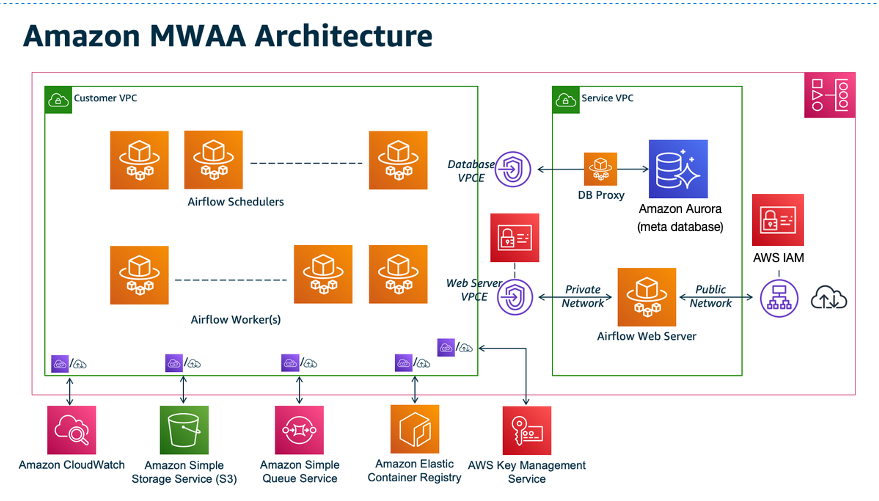
In the realm of software engineering, orchestration is fundamental to modern DevOps practices and continuous integration/continuous deployment (CI/CD) pipelines.
- CI/CD Automation: Orchestrating build, test, deployment, and release processes ensures that code changes flow smoothly and reliably from development to production. Tasks like compiling code, running unit tests, deploying to staging, and promoting to production are executed in sequence, with dependencies managed.
- Infrastructure Provisioning: Automating the provisioning and configuration of infrastructure (e.g., virtual machines, containers, networks) using tools like Terraform or Ansible can be orchestrated to ensure environments are consistently set up.
- Microservices Management: Orchestrating the deployment, scaling, and communication between hundreds or thousands of microservices within a distributed application.
Data Engineering and ETL Pipelines
Data is the lifeblood of many modern businesses, and data pipelines are notoriously complex. Orchestration is indispensable for managing the entire data lifecycle.
- ETL/ELT Workflows: Extracting data from various sources, transforming it (cleaning, aggregating), and loading it into data warehouses or data lakes is a multi-step process. Orchestration ensures these steps run in order, handles schema changes, and manages data quality checks.
- Machine Learning (ML) Pipelines: From data ingestion and feature engineering to model training, evaluation, and deployment, ML pipelines are inherently sequential and iterative. Orchestration tools manage these steps, track model versions, and facilitate retraining.
- Reporting and Analytics: Automating the generation of reports and dashboards by orchestrating data aggregation and processing tasks ensures timely and accurate business insights.
Business Process Automation (BPA)
Beyond purely technical workflows, orchestration extends to automating and streamlining core business processes that involve a mix of human and automated tasks.
- Customer Onboarding: Automating steps like identity verification, account setup, and sending welcome communications.
- Financial Reconciliation: Orchestrating the matching of transactions from different systems and flagging discrepancies.
- Supply Chain Management: Coordinating logistics, inventory updates, and order fulfillment across multiple partners and systems.
Cloud Resource Management
As organizations increasingly adopt multi-cloud and hybrid-cloud strategies, managing diverse cloud resources becomes complex.
- Resource Provisioning and De-provisioning: Automating the creation and removal of cloud instances, databases, and storage based on demand or schedules.
- Cost Optimization: Orchestrating shutdown/startup schedules for non-production environments to reduce cloud spend.
- Security and Compliance: Automating security scans, policy enforcement, and compliance checks across cloud environments.
Benefits of Implementing Workflow Orchestration
The strategic adoption of workflow orchestration brings a host of compelling advantages, translating directly into improved operational performance and business agility.
Enhanced Efficiency and Productivity
By automating repetitive, manual tasks, orchestration significantly boosts operational efficiency. This frees up skilled personnel—engineers, data scientists, and operations staff—from mundane monitoring and manual interventions, allowing them to focus on innovation, problem-solving, and more strategic initiatives. Workflows execute faster and without human delays, leading to quicker turnaround times for critical processes and data insights.
Improved Reliability and Consistency
Orchestration platforms inherently build in fault tolerance, retry mechanisms, and error handling logic. This dramatically increases the reliability of complex processes, reducing the likelihood of failures and ensuring that tasks complete successfully even in the presence of transient issues. Furthermore, by enforcing a consistent execution order and configuration, orchestration eliminates the inconsistencies and errors that often arise from manual operations or ad-hoc scripts. Every run of a workflow is standardized, leading to predictable and dependable outcomes.
Greater Visibility and Control
With a centralized control plane and comprehensive monitoring tools, organizations gain unprecedented visibility into their operations. Dashboards provide real-time status updates, execution histories, and detailed logs for every task. This transparent overview allows teams to quickly identify bottlenecks, diagnose issues, and understand the overall health of their systems. The ability to pause, resume, or restart specific tasks provides granular control over ongoing processes, enabling swift responses to unexpected events.
Reduced Operational Costs
While initial setup might involve an investment, workflow orchestration typically leads to significant long-term cost reductions. Automation minimizes the need for manual oversight, reducing labor costs. Enhanced reliability and quicker issue resolution decrease downtime, which can be incredibly expensive for critical business processes. Efficient resource utilization, particularly in cloud environments where resources can be dynamically scaled, also contributes to cost savings by ensuring you only pay for what you use, when you use it. By preventing errors and streamlining operations, orchestration acts as a powerful lever for optimizing an organization’s bottom line.
Choosing the Right Orchestration Tool
The market offers a rich ecosystem of workflow orchestration tools, each with its strengths, weaknesses, and ideal use cases. Selecting the right platform is a critical decision that impacts an organization’s long-term operational efficiency.
Open-Source vs. Commercial Solutions
The first major choice often lies between open-source and commercial offerings.
- Open-Source Tools: Examples include Apache Airflow, Kubernetes, Prefect, Temporal, and Argo Workflows. These tools often boast strong community support, flexibility, and no licensing fees. However, they typically require significant internal expertise for deployment, maintenance, and support.
- Commercial Solutions: These platforms often provide more out-of-the-box features, managed services, dedicated support, and enterprise-grade security and compliance. They can reduce the operational burden but come with licensing costs. Examples include services from cloud providers (e.g., AWS Step Functions, Azure Data Factory, Google Cloud Composer which uses Airflow), or specialized vendors.
Key Considerations for Selection
When evaluating orchestration tools, consider the following factors:
- Complexity of Workflows: How intricate are your dependencies? Do you need dynamic DAGs or simple linear sequences?
- Scalability Requirements: How many tasks will your orchestrator need to manage concurrently? What are your growth projections?
- Integration Ecosystem: Does the tool integrate seamlessly with your existing data sources, applications, and cloud services?
- Programming Language Support: What languages do your development teams primarily use (Python, Java, Go, etc.)?
- Error Handling and Monitoring: How robust are the built-in features for resilience and observability?
- Deployment Model: Do you prefer self-hosted, managed service, or serverless?
- Community and Support: How active is the community? What level of commercial support is available?
- Cost: Factor in licensing fees, infrastructure costs, and the operational overhead of managing the tool.
Popular Tools in the Landscape
- Apache Airflow: A widely adopted open-source platform known for its Python-based DAGs, extensive integrations, and vibrant community. It’s excellent for batch-oriented data pipelines and general-purpose workflow management.
- Kubernetes: While not a workflow orchestrator in the traditional sense, Kubernetes excels at container orchestration, managing the deployment, scaling, and operation of application containers. It forms the backbone for many modern microservices architectures and can be extended with tools like Argo Workflows for more complex workflows.
- Prefect: An open-source, hybrid-cloud workflow management system designed for robust data pipelines and ML workflows, emphasizing dynamic workflows, fault tolerance, and developer experience.
- Temporal: A robust open-source platform designed for long-running, fault-tolerant orchestrations, particularly strong for complex microservices coordination and business processes that require stateful execution over long periods.
- AWS Step Functions/Azure Data Factory/Google Cloud Composer: These are managed services offered by major cloud providers, often built on top of or integrating with popular open-source tools, providing a fully managed experience.
Conclusion: The Future of Automated Workflows
Workflow orchestration has cemented its position as an indispensable technology in the modern enterprise. As systems grow more distributed, data volumes swell, and the pace of business accelerates, the ability to manage complex operational sequences with precision, reliability, and visibility becomes ever more critical. From automating CI/CD pipelines and intricate data transformations to streamlining business processes and cloud resource management, orchestration empowers organizations to achieve unprecedented levels of efficiency and agility.
The continued evolution of orchestration platforms, with advancements in areas like dynamic workflows, AI-driven insights, and even more sophisticated error recovery mechanisms, promises an even brighter future. By adopting and effectively leveraging workflow orchestration, businesses can not only tame the complexity of their technological landscapes but also unlock new avenues for innovation, drive down operational costs, and build more resilient and responsive operations that are prepared for the challenges of tomorrow. It’s not just about automating tasks; it’s about orchestrating success.
aViewFromTheCave is a participant in the Amazon Services LLC Associates Program, an affiliate advertising program designed to provide a means for sites to earn advertising fees by advertising and linking to Amazon.com. Amazon, the Amazon logo, AmazonSupply, and the AmazonSupply logo are trademarks of Amazon.com, Inc. or its affiliates. As an Amazon Associate we earn affiliate commissions from qualifying purchases.