
Wolff-Parkinson-White (WPW) syndrome is a fascinating and sometimes concerning cardiac condition that affects the electrical system of the heart. While the title might sound like a complex medical term, understanding its core principles is crucial for those who experience its symptoms or have a family history of it. This article will delve into WPW syndrome, breaking down its cause, symptoms, diagnosis, and management, all through the lens of the broader topics we explore: the intricate “tech” of our bodies, how it impacts our “brand” of health and well-being, and the financial considerations that can arise from managing such a condition.
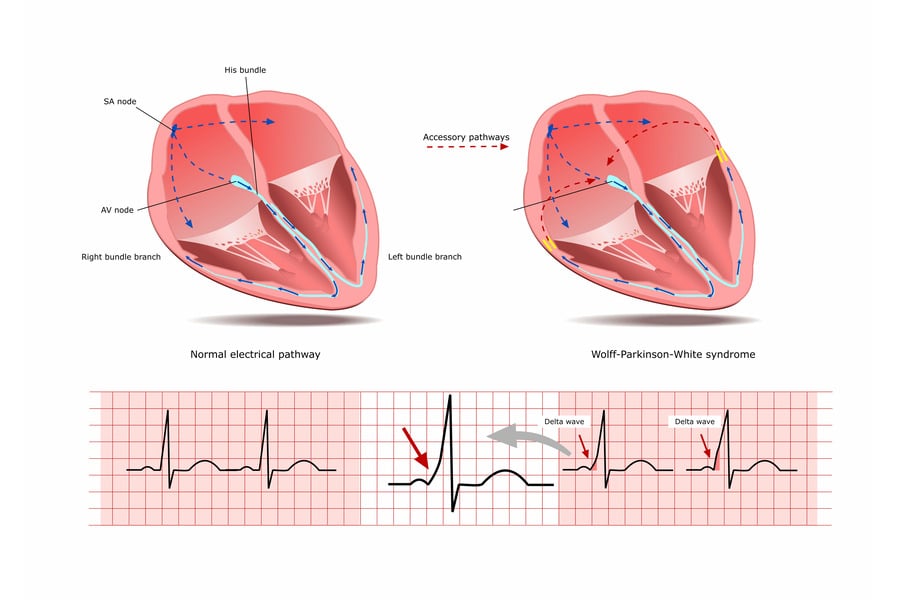
The human heart, a marvel of biological engineering, operates through a precisely timed electrical impulse system. Think of it as a sophisticated internal “tech” infrastructure, responsible for every beat. This system ensures the heart’s chambers contract in a synchronized manner, efficiently pumping blood throughout the body. In individuals with WPW syndrome, there’s an extra electrical pathway, a sort of “shortcut,” that bypasses the heart’s normal electrical circuit. This anomaly can lead to episodes of rapid heart rate, known as supraventricular tachycardia (SVT).
The Inner Workings: Understanding the “Tech” of WPW
To truly grasp WPW syndrome, we need to understand the normal electrical conduction system of the heart and how the presence of an accessory pathway disrupts it.
The Heart’s Electrical Symphony: A Normal Conduction
Normally, the electrical impulse originates in the sinoatrial (SA) node, the heart’s natural pacemaker, located in the upper right chamber (atrium). This impulse travels through the atria, causing them to contract. It then reaches the atrioventricular (AV) node, which acts as a gatekeeper, briefly delaying the impulse. This delay is critical, allowing the ventricles (the lower chambers) to fill with blood before they contract. From the AV node, the impulse travels down specialized conducting fibers (the bundle of His and Purkinje fibers) into the ventricles, triggering their contraction and pumping blood to the body and lungs. This entire process is a precisely orchestrated electrical “software update” that ensures optimal heart function.
The “Bug” in the System: The Accessory Pathway
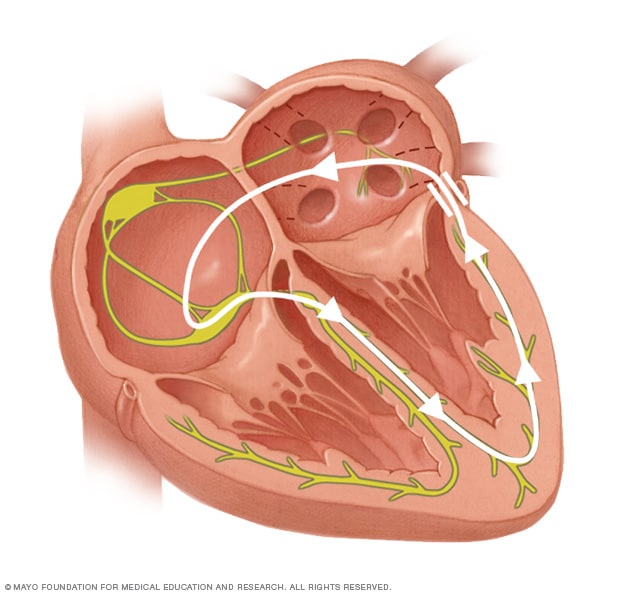
In WPW syndrome, there is an additional, abnormal electrical pathway that connects the atria directly to the ventricles, bypassing the AV node. This pathway, often called the bundle of Kent, is a congenital anomaly, meaning it’s present from birth. Imagine this as a “hardwired” shortcut in the heart’s electrical system, a deviation from the standard design.
This accessory pathway can conduct electrical impulses much faster than the normal AV node. This creates the potential for a re-entrant circuit. During a re-entrant circuit, the electrical impulse can travel down the normal pathway to the ventricles and then, instead of dissipating, can travel back up to the atria via the accessory pathway. From the atria, it can then re-enter the normal pathway again, creating a continuous loop. This rapid, repetitive firing of impulses leads to an abnormally fast heart rate.
Manifestations of the Disruption: Symptoms and Their Impact on Your “Brand” of Health
The symptoms of WPW syndrome can vary significantly from person to person, ranging from being completely asymptomatic to experiencing debilitating episodes. These symptoms directly affect an individual’s perceived “brand” of health and overall well-being.
The Palpable Signs: What to Watch For
The most common symptom of WPW syndrome is palpitations, a sensation of a rapid, pounding, or fluttering heartbeat. These episodes can feel alarming and are often the first indicator that something is amiss. Other symptoms can include:
- Dizziness or lightheadedness: The rapid heart rate can temporarily reduce blood flow to the brain.
- Shortness of breath: The heart’s inefficiency during rapid beats can lead to difficulty breathing.
- Chest pain or discomfort: Similar to other heart conditions, rapid heart rates can put a strain on the heart muscle.
- Fainting (syncope): In some cases, the rapid heart rate can be so severe that it leads to a temporary loss of consciousness.
- Anxiety: The unsettling nature of palpitations and other symptoms can trigger anxiety.
These symptoms can significantly impact an individual’s daily life, affecting their ability to exercise, work, or engage in social activities. This can, in turn, influence their personal and professional “brand” – how they are perceived by others in terms of their health and capability. Someone consistently experiencing these symptoms might be perceived as less energetic or reliable, a stark contrast to a vibrant and healthy image.
The Silent Threat: Asymptomatic WPW
It’s important to note that many individuals with WPW syndrome have no symptoms at all. The accessory pathway may simply exist without ever causing a problematic rapid heart rate. In these cases, the condition is often discovered incidentally during an electrocardiogram (ECG) performed for other reasons. Even without symptoms, an asymptomatic accessory pathway can pose a risk, particularly during certain types of arrhythmias.
Navigating the Diagnosis: The “Tech” of Detection
Diagnosing WPW syndrome involves a combination of medical history, physical examination, and specific diagnostic “tech” to identify the telltale signs of the accessory pathway.
The Electrocardiogram (ECG): The Primary Diagnostic Tool
The cornerstone of diagnosing WPW syndrome is the electrocardiogram (ECG). This non-invasive test records the electrical activity of the heart. In individuals with WPW syndrome, a characteristic pattern on the ECG, known as a pre-excitation pattern, is observed. This pattern includes a short PR interval (the time between the start of atrial depolarization and ventricular depolarization) and a delta wave (a slurred upstroke at the beginning of the QRS complex). These findings suggest that the electrical impulse is reaching the ventricles too quickly, indicating the presence of an accessory pathway.
Beyond the ECG: Further Diagnostic Investigations
While the ECG is usually sufficient for diagnosis, other tests might be employed to gain further insights or to assess the risk associated with the accessory pathway:
- Holter Monitor: This portable ECG device records the heart’s electrical activity for an extended period (typically 24-48 hours). It’s useful for capturing intermittent symptoms or arrhythmias that might not be present during a standard ECG.
- Event Monitor: Similar to a Holter monitor, but the patient activates it when they experience symptoms. This is helpful for capturing less frequent arrhythmias.
- Electrophysiology Study (EPS): This is an invasive diagnostic procedure where a cardiologist inserts thin, flexible wires (catheters) with electrodes into a blood vessel, usually in the groin, and guides them to the heart. The electrodes can then map the heart’s electrical pathways and induce arrhythmias, confirming the presence and location of the accessory pathway and assessing its electrical properties. This advanced “tech” provides the most detailed information about the heart’s electrical system.
Managing the Condition: From Lifestyle Adjustments to Financial Considerations
The management of WPW syndrome depends on the presence and severity of symptoms, as well as the risk of developing more serious arrhythmias. This can involve lifestyle changes, medication, and medical procedures, all of which can have “money” implications.
Lifestyle and Prevention: Minimizing Risk
For individuals with asymptomatic WPW or mild symptoms, lifestyle adjustments might be recommended. These can include:
- Avoiding stimulants: Caffeine, alcohol, and certain recreational drugs can sometimes trigger arrhythmias in susceptible individuals.
- Stress management: High stress levels can exacerbate symptoms. Techniques like mindfulness, meditation, or yoga can be beneficial.
- Regular exercise: While strenuous exercise might need to be approached with caution and after consultation with a doctor, regular moderate exercise is generally encouraged for overall cardiovascular health.
These proactive measures contribute to a positive health “brand” and can potentially reduce the need for more intensive medical interventions.
Medical Interventions: Treatment Options
When symptoms are present or the risk of serious arrhythmias is high, medical interventions become necessary.
1. Medications: The First Line of Defense
Antiarrhythmic medications are often prescribed to help control rapid heart rates. These drugs work by affecting the electrical signals in the heart. Examples include beta-blockers, calcium channel blockers, and specific antiarrhythmic agents. The “money” aspect here involves the recurring cost of prescriptions, which can be a significant financial consideration for some individuals, especially those with limited insurance coverage or high deductibles.
2. Catheter Ablation: The Definitive “Tech” Solution
For many individuals with symptomatic WPW syndrome, catheter ablation is the treatment of choice. This is a highly effective procedure that aims to permanently eliminate the accessory pathway. During the procedure, a cardiologist uses a catheter to deliver radiofrequency energy or cryotherapy (freezing) to the abnormal pathway, creating a small scar that interrupts its electrical conduction.
Catheter ablation is considered a curative treatment for WPW syndrome and offers several advantages:
- High success rate: The procedure has a high success rate in eliminating the accessory pathway.
- Minimally invasive: It is a less invasive alternative to open-heart surgery.
- Reduced long-term costs: While the initial cost of the procedure can be substantial, its curative nature can lead to significant long-term savings by eliminating the need for ongoing medication and reducing the risk of future medical complications.
From a “money” perspective, the upfront cost of ablation is a significant investment. However, considering the potential for a permanent cure, it can be more financially prudent in the long run compared to the continuous expenses associated with managing symptoms through medication and potential hospitalizations. It also allows individuals to reclaim their health and improve their overall financial productivity by reducing time lost to illness.
3. Pacemakers and Implantable Cardioverter-Defibrillators (ICDs)
In rare cases, if the accessory pathway leads to life-threatening arrhythmias or if other treatments are not suitable, a pacemaker or an implantable cardioverter-defibrillator (ICD) might be considered. Pacemakers help regulate a slow heart rate, while ICDs can detect and correct dangerously fast or irregular heart rhythms by delivering an electrical shock. These devices represent more advanced and costly “tech” solutions with ongoing financial implications related to device monitoring, battery replacements, and potential adjustments.

Conclusion: Embracing a Healthy “Brand” Through Knowledge and Proactive Management
Wolff-Parkinson-White syndrome, while a medical condition, is fundamentally about the intricate “tech” of our cardiovascular system and how its deviations can impact our overall health and well-being – our personal “brand.” Understanding the underlying mechanisms, recognizing the symptoms, and knowing the diagnostic and treatment options empowers individuals to take control of their health.
From the precise electrical symphony of a healthy heart to the “bug” of an accessory pathway, WPW syndrome offers a compelling illustration of how biological systems can deviate. By embracing the advanced diagnostic and treatment “tech” available, individuals can effectively manage this condition, improve their quality of life, and build a robust “brand” of health. Furthermore, a proactive approach to managing WPW, considering both medical and financial implications, can lead to greater long-term financial stability and personal well-being. Ultimately, knowledge and informed decision-making are the most valuable assets in navigating the complexities of WPW syndrome and any health challenge.
aViewFromTheCave is a participant in the Amazon Services LLC Associates Program, an affiliate advertising program designed to provide a means for sites to earn advertising fees by advertising and linking to Amazon.com. Amazon, the Amazon logo, AmazonSupply, and the AmazonSupply logo are trademarks of Amazon.com, Inc. or its affiliates. As an Amazon Associate we earn affiliate commissions from qualifying purchases.