
In the world of finance, numbers are more than just digits on a screen; they are the narrative of your wealth, the pulse of your business, and the roadmap to your future. Whether you are an individual investor tracking portfolio volatility or a business owner analyzing year-over-year revenue, one calculation remains more fundamental than almost any other: the percentage difference.
Understanding how to find the percentage difference between two numbers is a critical skill for anyone looking to navigate the complexities of money management. While it may seem like a simple arithmetic task, the implications of this calculation reach deep into investment strategy, cost-benefit analysis, and market comparison. This guide will provide a comprehensive look at how to master this formula and apply it to maximize your financial health.
What is Percentage Difference in a Financial Context?
Before diving into the mechanics, it is essential to define what we mean by “percentage difference” within a financial framework. Often, the terms “percentage change” and “percentage difference” are used interchangeably in casual conversation, but in high-level financial analysis, they serve slightly different purposes.
The Core Formula Explained
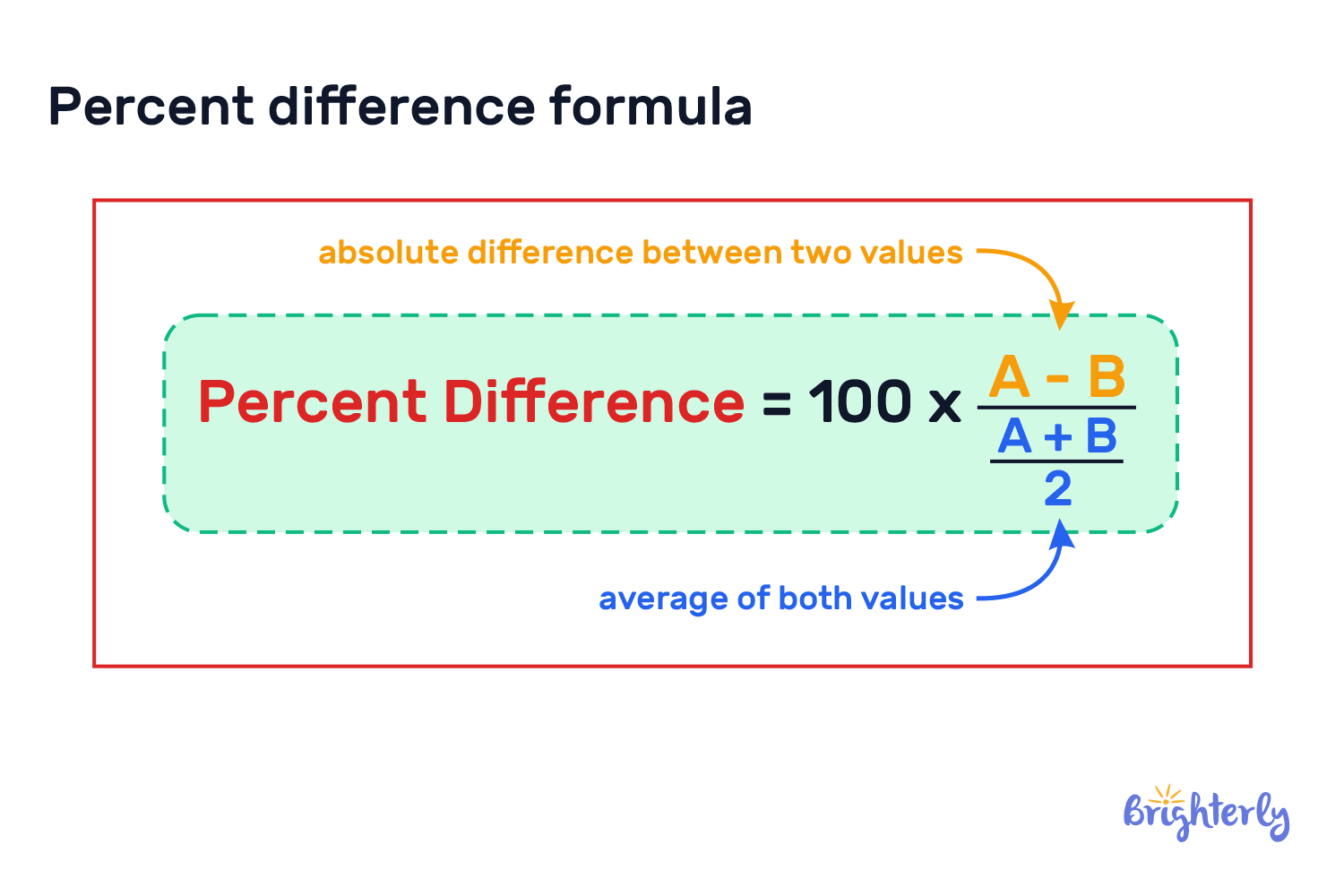
In its purest mathematical sense, the percentage difference is used when you want to compare two values that represent the same type of thing—for instance, the prices of two different stocks or the insurance premiums of two different providers. Unlike percentage change, which focuses on an old value versus a new value, percentage difference is generally used when there is no clear “starting” or “ending” point.
The formula for percentage difference is:
|Value A – Value B| / [(Value A + Value B) / 2] × 100
In this equation:
- Find the absolute difference between the two numbers (Value A – Value B).
- Calculate the average of the two numbers (Value A + Value B / 2).
- Divide the difference by the average.
- Multiply by 100 to get the percentage.
Difference Between Percentage Difference and Percentage Change
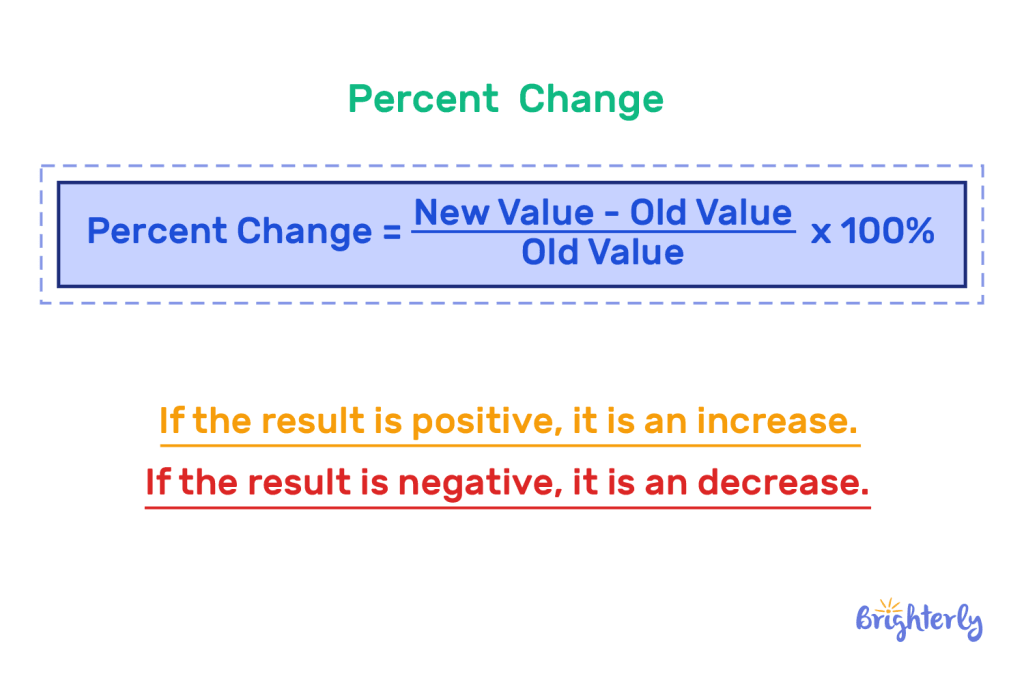
For most personal finance and business scenarios, you will actually be looking for percentage change. This is the calculation used to find how much an investment has grown or how much an expense has dropped.
The formula for percentage change is:
(New Value – Old Value) / Old Value × 100
While the “difference” formula uses the average as the denominator, the “change” formula uses the original value as the base. Understanding this distinction is vital for financial reporting. For example, if your business revenue was $100,000 last year and $150,000 this year, the percentage change is 50%. However, if you are comparing two competing $100,000 and $150,000 investment opportunities to see how far apart they are relative to their size, the percentage difference would be used.
Applying the Calculation to Your Investment Portfolio
For the modern investor, the ability to calculate and interpret percentage differences is the key to identifying market inefficiencies and balancing risk. When you look at your brokerage account, the “green” or “red” numbers you see are all rooted in these basic calculations.
Analyzing Stock Price Fluctuations
Stock market volatility is measured by how much a price moves over a period. By calculating the percentage difference between a stock’s 52-week high and its current price, an investor can determine if a stock is “on sale” or if it is overextended.
Suppose you are looking at two tech giants. Company A is trading at $200, and Company B is trading at $215. By calculating the percentage difference, you can quantify the gap between these two competitors beyond just the nominal dollar amount. This helps in “relative valuation,” allowing you to see which asset is moving more aggressively compared to the industry average.
Comparing Yields and Interest Rates
In a high-interest-rate environment, the difference between a 4.5% High-Yield Savings Account (HYSA) and a 5.2% Certificate of Deposit (CD) might seem negligible. However, when you calculate the percentage difference between these two rates, you realize the CD offers a significant relative increase in yield.
Investors also use these calculations when comparing “spreads”—the difference between the interest rate on a government bond and a corporate bond. A widening percentage difference in these yields often signals increasing economic risk, prompting savvy investors to shift their portfolios toward safer assets.
Strategic Business Growth and Margin Analysis
For business owners and corporate executives, percentage calculations are the primary tool for measuring performance. Without these metrics, it is impossible to know if a company is truly growing or simply scaling its costs alongside its revenue.
Measuring Revenue Growth Year-over-Year (YoY)
The most common application in business finance is Year-over-Year (YoY) growth. If a startup generated $500,000 in its first year and $750,000 in its second, the $250,000 increase is better understood as a 50% growth rate.
This percentage is what investors and lenders look for. A $250,000 increase is impressive for a small business but would be a rounding error for a Fortune 500 company. By converting dollar differences into percentages, you create a standardized metric that allows for a fair comparison of performance across companies of all sizes.
Profit Margin Comparisons Across Product Lines
A business may have one product that generates $1 million in sales and another that generates $100,000. At first glance, the $1 million product seems superior. However, by calculating the percentage difference between the cost of goods sold (COGS) and the sale price—otherwise known as the gross margin—the business owner might discover that the $100,000 product has an 80% margin while the $1 million product only has a 10% margin.
In this scenario, the percentage calculation reveals that the smaller product is actually more efficient and potentially more valuable to the company’s bottom line. Strategic pivoting often relies on these mathematical insights to cut low-margin products and double down on high-percentage winners.
Personal Finance: Budgeting and Cost Optimization
On a personal level, mastering the percentage difference between two numbers can save you thousands of dollars over a lifetime. It turns “vague feelings” about money into “hard data” that can drive better lifestyle choices.
Tracking Expense Variations
Budgeting is often an exercise in monitoring “variance.” If your grocery bill was $400 last month and $550 this month, the percentage difference is a staggering 31.25% (using the change formula).
When you see a double-digit percentage increase in a specific budget category, it acts as a financial “check engine light.” It forces you to ask: Is this due to inflation, or has my lifestyle shifted? By identifying these percentage spikes early, you can adjust your spending habits before they lead to debt or depleted savings.
Evaluating the Impact of Inflation on Purchasing Power
Inflation is essentially a percentage difference calculation applied to the entire economy. If the Consumer Price Index (CPI) shows a 5% increase, it means the percentage difference between the cost of a “basket of goods” today versus last year has risen by that amount.
Understanding this allows you to evaluate your income growth. If you received a 3% raise at work, but inflation is at 5%, a quick percentage calculation reveals that your “real income” has actually decreased. This insight is a powerful tool during salary negotiations; it allows you to move away from asking for “more money” and toward asking for a “cost-of-living adjustment that maintains purchasing power.”
Tools and Automation for Financial Accuracy
While knowing how to do the math by hand is vital for conceptual understanding, the modern financial landscape offers numerous tools to automate these calculations.
Leveraging Spreadsheets and Financial Software
Programs like Microsoft Excel and Google Sheets are built on the foundation of percentage calculations. Using a simple formula like =(B2-A2)/A2 can transform a raw list of monthly expenses into a dynamic dashboard of financial trends. For more complex business needs, accounting software like QuickBooks or Xero provides these percentage comparisons automatically in their Profit & Loss statements.
The Role of Financial Calculators and AI Tools
For quick comparisons—such as checking the percentage difference between two mortgage rates—online financial calculators are invaluable. Furthermore, as AI tools become more integrated into personal finance, they can proactively alert you to percentage anomalies in your spending or investment accounts.
However, the “garbage in, garbage out” rule applies. Even the most advanced AI tool is only as good as the user’s ability to understand the underlying logic. By mastering the manual calculation of percentage differences, you ensure that you can verify the data provided by your apps and make decisions based on reality rather than automated errors.

Conclusion: The Power of Quantitative Clarity
Finding the percentage difference between two numbers is more than a middle-school math problem; it is a fundamental pillar of financial literacy. It allows you to strip away the noise of raw numbers and see the relative truth of your financial situation.
Whether you are weighing the merits of two different mutual funds, assessing your business’s quarterly performance, or simply trying to get your grocery budget under control, the percentage difference provides a sense of scale that raw dollars cannot. In a world where financial data is constant and overwhelming, the ability to calculate and interpret these percentages is the ultimate tool for achieving clarity, stability, and long-term wealth.
aViewFromTheCave is a participant in the Amazon Services LLC Associates Program, an affiliate advertising program designed to provide a means for sites to earn advertising fees by advertising and linking to Amazon.com. Amazon, the Amazon logo, AmazonSupply, and the AmazonSupply logo are trademarks of Amazon.com, Inc. or its affiliates. As an Amazon Associate we earn affiliate commissions from qualifying purchases.