
In the age of hyper-connectivity, we often focus on the “last mile” of technology—the 5G signal on our smartphones, the Wi-Fi in our homes, or the low-latency connection of our gaming consoles. However, behind every seamless video stream and every instantaneous cloud upload lies a complex infrastructure known as the backhaul. While fiber optics have long been the gold standard for moving data from local access points to the central network core, a more flexible and increasingly vital player has emerged: wireless backhaul.
Wireless backhaul refers to the use of wireless communication systems to transport data between the edge of the network (like a cell tower or a remote Wi-Fi hotspot) and the core network. As 5G expands and the Internet of Things (IoT) matures, understanding wireless backhaul is essential for comprehending how the next generation of digital infrastructure will be built, maintained, and scaled.
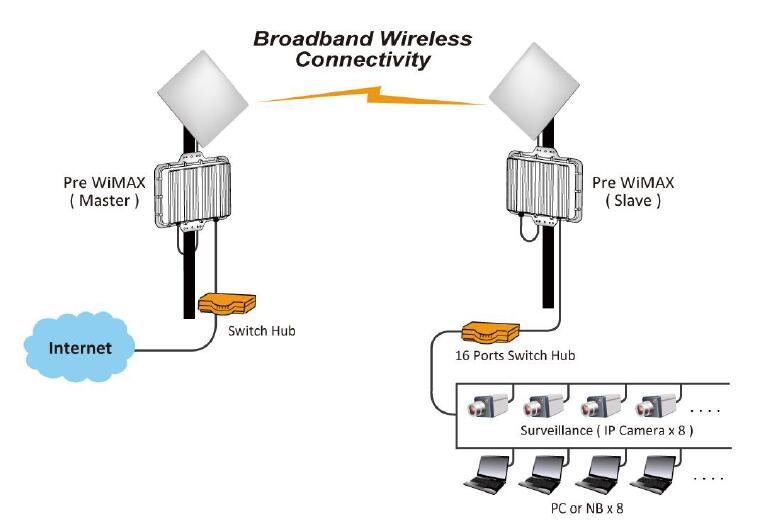
Understanding the Architecture of Wireless Backhaul
To understand wireless backhaul, one must first visualize the hierarchy of a telecommunications network. Every network is divided into three primary segments: the core network, the backhaul, and the access network. The access network is the part we interact with directly. The backhaul is the “middle mile,” acting as the bridge that carries data from these local access points back to the global internet exchange points.
From Access Points to the Core Network
In a traditional setup, a cellular tower receives data from thousands of mobile devices. That data must be sent to the core network—the “brain” of the carrier’s system—where it is processed and routed to its destination. When this connection is made via physical cables, usually fiber optics, it is known as wired backhaul. However, laying fiber is expensive, time-consuming, and often physically impossible in dense urban environments or rugged rural landscapes.
Wireless backhaul solves this by using radio waves, microwaves, or millimeter waves to transmit that data through the air. Instead of digging trenches for cables, engineers install high-capacity antennas and transceivers that “beam” data across miles of space, connecting the edge to the core without a single strand of glass or copper between them.
Line-of-Sight (LoS) vs. Non-Line-of-Sight (NLoS)
The effectiveness of wireless backhaul depends heavily on the topology and frequency used. Historically, wireless backhaul relied on Line-of-Sight (LoS) technology. This requires a clear, unobstructed path between the two antennas. If a building or a mountain sits between them, the signal is lost.
Modern advancements have introduced Non-Line-of-Sight (NLoS) capabilities, particularly in sub-6 GHz frequency bands. NLoS backhaul uses sophisticated signal processing to bounce waves off surfaces or penetrate obstacles. While NLoS provides greater flexibility in urban “canyons,” LoS remains the preferred choice for high-capacity, long-distance links because it offers the highest stability and throughput.
Key Technologies Driving Wireless Backhaul Today
Wireless backhaul is not a single technology but a suite of different frequency bands and protocols tailored for specific environments. As data demands skyrocket, the industry has shifted toward higher frequencies and more intelligent hardware.
Microwave and Millimeter Wave (mmWave)
Point-to-point microwave links have been the workhorse of wireless backhaul for decades. Operating typically between 6 GHz and 42 GHz, these systems can transmit data over several kilometers with high reliability. They are the backbone of many regional networks where fiber installation is cost-prohibitive.
However, the 5G era has introduced Millimeter Wave (mmWave) backhaul, operating at much higher frequencies (typically 60 GHz to 90 GHz, often referred to as E-band). The advantage of mmWave is massive bandwidth—it can rival fiber speeds, reaching 10 Gbps or higher. The trade-off is distance; mmWave signals are easily absorbed by atmospheric oxygen and rain, meaning they are best suited for short-distance, high-density urban “small cell” deployments.
Satellite Backhaul and LEO Constellations
For the most remote corners of the globe—maritime vessels, aircraft, and rural villages—satellite backhaul is the only viable option. Traditionally, this was handled by Geostationary (GEO) satellites, which were plagued by high latency due to the 35,000-kilometer distance from Earth.
The landscape is currently being transformed by Low Earth Orbit (LEO) constellations, such as SpaceX’s Starlink and Amazon’s Project Kuiper. Because these satellites orbit much closer to Earth (roughly 500 to 1,200 km), they offer significantly lower latency and higher speeds. This allows LEO satellites to function as a high-performance wireless backhaul solution for 4G and 5G base stations in areas where terrestrial infrastructure is non-existent.

Integrated Access and Backhaul (IAB) in 5G
One of the most innovative developments in the 5G standard (3GPP Release 16) is Integrated Access and Backhaul (IAB). In traditional networks, the “access” frequency (the signal your phone gets) and the “backhaul” frequency (the signal connecting the tower) are separate. IAB allows a 5G base station to use a portion of its 5G spectrum for backhaul purposes.
This creates a “mesh” effect where a single fiber-connected “donor” node can provide connectivity to several nearby “relay” nodes wirelessly. This drastically reduces the cost of 5G densification, as operators can install small cells on street lamps or building facades without needing to run new fiber to every single location.
Why Wireless Backhaul is Essential for 5G and Beyond
The shift toward wireless backhaul isn’t just a matter of convenience; it is a strategic necessity for the evolution of global telecommunications. As we move toward a future of autonomous vehicles, smart cities, and ubiquitous AI, the network must become more agile.
Overcoming the Limitations of Physical Fiber
While fiber optics offer nearly unlimited bandwidth, they are remarkably “brittle” in a logistical sense. Obtaining permits to dig up city streets can take years. In many developing nations or mountainous regions, the geography makes fiber deployment a multi-billion-dollar impossibility. Wireless backhaul provides a “path of least resistance,” allowing network operators to establish high-speed links in days or weeks rather than months or years.
Speed of Deployment and Scalability
Wireless systems are modular and scalable. If a specific area experiences a sudden surge in data demand—such as a music festival or a new housing development—operators can deploy mobile backhaul units (often mounted on trucks or temporary poles) to provide immediate capacity. This flexibility is vital for “disaster recovery” scenarios where physical infrastructure may have been destroyed by natural events.
Supporting Massive IoT and Edge Computing
The rise of Edge Computing requires processing data closer to the user to reduce latency. Wireless backhaul enables the proliferation of edge data centers. By linking these micro-facilities wirelessly, the network can maintain the low-latency requirements necessary for real-time applications like augmented reality (AR) and industrial automation without waiting for a massive fiber-optic overhaul.
Challenges and Technical Considerations
Despite its benefits, wireless backhaul is not without its hurdles. It is a medium subject to the laws of physics and environmental interference, requiring sophisticated engineering to maintain “five-nines” (99.999%) reliability.
Interference and Weather Attenuation
The primary enemy of wireless backhaul is the environment. High-frequency signals, particularly in the E-band and V-band, are susceptible to “rain fade.” Water droplets in the air can scatter and absorb the signal, leading to packet loss or total disconnection. To combat this, modern systems use Adaptive Modulation and Coding (AMC). When the weather turns bad, the system automatically switches to a more robust, lower-speed modulation to keep the link alive, then switches back to high-speed once the sky clears.
Latency and Jitter in High-Speed Data Transfer
Every wireless hop introduces a small amount of latency. In a daisy-chained wireless backhaul network (where data jumps from one tower to another before hitting the core), these milliseconds can add up. For 5G applications like remote surgery or autonomous driving, latency must be kept under 5-10 milliseconds. Engineers must carefully design the “hop” architecture to ensure that the wireless middle-mile doesn’t become a bottleneck for time-sensitive data.
Spectrum Availability and Regulation
Wireless backhaul requires a license to operate in most frequency bands. Spectrum is a finite resource managed by government bodies (like the FCC in the United States). The cost of licensing these bands can be high, and in crowded urban areas, the “airwaves” can become congested. Tech companies are increasingly looking toward unlicensed bands (like 60 GHz) or shared spectrum models to mitigate these costs and constraints.

The Future of Backhaul: AI and Next-Gen Solutions
As we look toward the 6G era, wireless backhaul is expected to undergo another transformation. We are moving toward a “self-healing” network architecture where AI plays a central role.
Future wireless backhaul systems will likely use AI-driven beamforming to dynamically steer signals around obstacles or interference in real-time. If a new building is erected that blocks an LoS path, an AI-managed network could automatically re-route data through an alternative wireless path without human intervention. Furthermore, the exploration of Terahertz (THz) frequencies promises even greater speeds, potentially reaching 100 Gbps or 1 Tbps, effectively erasing the speed gap between wireless and fiber.
In conclusion, wireless backhaul is the silent enabler of the digital age. By bypassing the physical constraints of cables, it allows for a more connected, responsive, and equitable world. Whether it is a mmWave small cell on a city street or a LEO satellite orbiting hundreds of miles above, wireless backhaul ensures that no matter where we are, the core of the digital world is always within reach.
aViewFromTheCave is a participant in the Amazon Services LLC Associates Program, an affiliate advertising program designed to provide a means for sites to earn advertising fees by advertising and linking to Amazon.com. Amazon, the Amazon logo, AmazonSupply, and the AmazonSupply logo are trademarks of Amazon.com, Inc. or its affiliates. As an Amazon Associate we earn affiliate commissions from qualifying purchases.