
In the dynamic landscape of operating systems, few platforms have a history as circuitous, yet ultimately impactful, as webOS. From its ambitious beginnings as a mobile challenger to its surprising resurgence as a leading smart TV interface, webOS represents a fascinating case study in technological innovation, market challenges, and adaptive reinvention. At its core, webOS is a Linux kernel-based mobile operating system that was initially developed by Palm, later acquired by Hewlett-Packard, and eventually found its enduring home as the primary smart TV platform for LG Electronics. Its unique web-centric architecture and innovative user interface set it apart, making it a subject of enduring interest for technology enthusiasts and industry analysts alike.
Conceived during an era dominated by nascent smartphones and the looming shadow of Apple’s iPhone, webOS was designed to offer a fresh perspective on mobile computing. Its emphasis on web technologies, intuitive multitasking, and a user experience that prioritized fluid interaction positioned it as a visionary platform. While it struggled to gain traction in the fiercely competitive mobile market, its underlying principles and technical prowess were too compelling to simply fade away. Its journey from a smartphone OS hopeful to a smart TV powerhouse is a testament to the versatility of its design and the strategic foresight of its eventual steward, LG, which saw in webOS the potential to redefine the home entertainment experience.
The Genesis and Evolution of webOS
The story of webOS is a narrative punctuated by bold vision, corporate acquisitions, and a remarkable ability to adapt. Its origin can be traced back to the twilight years of Palm, a company synonymous with early personal digital assistants (PDAs) and the pioneers of mobile computing.
Palm’s Vision and Early Promise
Palm introduced webOS in 2009 with the launch of the Palm Pre smartphone. At a time when iOS and Android were beginning to solidify their dominance, webOS offered a refreshing alternative. It was built from the ground up with an emphasis on a card-based multitasking system, allowing users to fluidly switch between open applications, much like shuffling a deck of cards. Its “Synergy” feature seamlessly integrated contacts, calendars, and messages from various online services into a single, unified view, a concept that was far ahead of its time. The OS also boasted an innovative gesture-based navigation system and a universal search function called “Just Type” that could search local data and the web simultaneously. These features garnered significant critical acclaim, positioning webOS as a genuine contender with a highly intuitive and powerful user experience. However, despite the innovative software, Palm struggled with hardware production, marketing, and the monumental task of competing with the growing ecosystems of its rivals.
HP’s Brief Stint and Open-Sourcing
In 2010, Hewlett-Packard (HP) acquired Palm, primarily to gain control of webOS. HP envisioned webOS as a multi-platform operating system that would power not only smartphones but also tablets, printers, and potentially even PCs, creating a unified ecosystem. This ambition led to the launch of the HP TouchPad tablet and a new line of HP Veer and Pre 3 smartphones in 2011. Unfortunately, HP’s foray into the mobile market was short-lived and ultimately unsuccessful. The TouchPad, despite positive reviews for its software, suffered from poor timing, a lack of compelling apps, and intense competition from Apple’s iPad. Just seven weeks after its launch, HP announced it was discontinuing webOS hardware and contemplating the sale of its PC division. This decision effectively pulled the plug on webOS as a mainstream mobile operating system, leaving many to wonder if this groundbreaking software would simply disappear. However, in a surprising turn, HP decided to open-source webOS, releasing its core components under the Apache 2.0 license as “Open webOS” in 2012, hoping to foster a developer community and keep the project alive.
LG’s Resurgence: Smart TV Dominance
The story of webOS took its most pivotal turn in 2013 when LG Electronics acquired webOS from HP. Recognizing the platform’s elegant design, ease of use, and web-centric architecture, LG saw immense potential to transform the smart TV experience. Instead of trying to compete in the crowded mobile phone market, LG strategically repurposed webOS for its lineup of smart televisions. This move proved to be a masterstroke. Since its reintroduction on LG’s smart TVs in 2014, webOS has become a cornerstone of LG’s home entertainment strategy, distinguishing its televisions with a user-friendly, feature-rich interface that consistently receives high praise from critics and consumers alike. LG’s commitment provided webOS with a stable home, a clear purpose, and the resources to evolve into one of the industry’s leading smart TV operating systems.
Core Features and User Experience
What truly defined webOS, regardless of the device it powered, was its commitment to an intuitive and highly engaging user experience. Its designers prioritized simplicity, fluidity, and intelligence, resulting in features that felt ahead of their time.
Card-Based Multitasking
Perhaps the most iconic and enduring feature of webOS was its card-based multitasking system. Unlike other operating systems that relied on static app icons or complex task managers, webOS represented each open application or running process as a live, interactive “card.” Users could effortlessly swipe through these cards, rearrange them, or dismiss them with a flick, making task switching and management incredibly intuitive. This visual metaphor provided a clear overview of active tasks and created a sense of spatial awareness, allowing users to pick up exactly where they left off in any application. This design philosophy was so effective that elements of it can be seen influencing modern mobile operating systems years later.
Synergy and Notifications
Another hallmark of webOS was its “Synergy” feature. This powerful integration capability allowed the OS to pull together information from disparate online services—such as Gmail, Facebook, LinkedIn, and Exchange—into unified applications like contacts, calendars, and messaging. Instead of managing separate apps for each service, webOS seamlessly merged data, presenting a single, consolidated view to the user. This provided a remarkably cohesive and convenient experience. Alongside Synergy, webOS featured a sophisticated notification system that was unobtrusive yet informative, displaying alerts subtly at the bottom of the screen without interrupting the user’s current activity, and allowing for quick actions or dismissal.
Intuitive Interface Design
The entire webOS interface was crafted with a focus on natural interaction and visual elegance. Its clean aesthetic, vibrant color palette, and smooth animations contributed to a highly polished and inviting user experience. Gestures played a significant role, particularly on mobile devices, where swiping from the bezel to the center of the screen often served as the primary navigation method, minimizing the need for physical buttons. This focus on gestural control and on-screen elements made interacting with webOS feel incredibly fluid and modern, setting a high bar for user interface design in its era.
Universal Search and Just Type
“Just Type” was webOS’s universal search capability, allowing users to simply start typing anywhere on the home screen to search for contacts, applications, settings, or even perform a web search. This predictive and comprehensive search functionality provided instant access to information and actions, significantly streamlining the user experience. It demonstrated a foresight into how users would increasingly expect immediate and aggregated search results across their digital lives, a concept that is now commonplace in modern operating systems and smart devices.
WebOS in the Smart TV Era
The transition of webOS from a mobile OS to the heart of LG’s smart TV strategy was a game-changer, breathing new life into the platform and redefining the home entertainment experience.
A New Lease on Life for LG Smart TVs
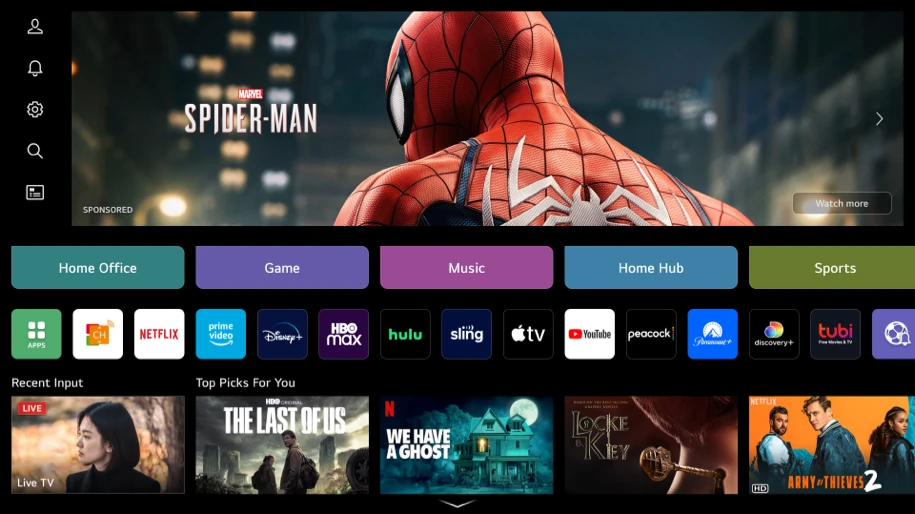
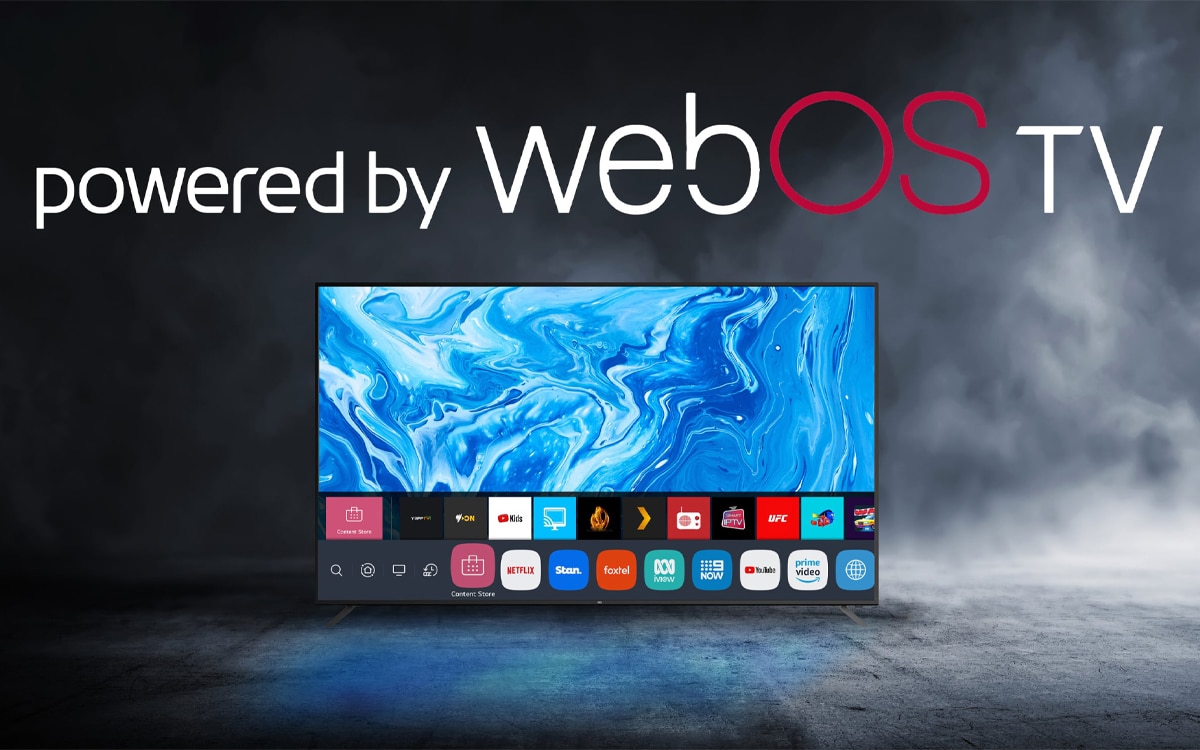
When LG adopted webOS, it transformed its smart TV lineup from a good product to an industry leader. webOS provided LG televisions with an exceptionally intuitive and visually appealing interface that simplified access to streaming services, live TV, and connected devices. Its card-based system was perfectly adapted for a television environment, presenting content, apps, and inputs as easily navigable “cards” at the bottom of the screen, preventing the user from needing to leave the current content entirely. This design allowed for seamless switching between inputs, streaming apps, and broadcast channels, making the overall TV experience far less fragmented and much more enjoyable.
Magic Remote Integration
A key component of the webOS smart TV experience is the LG Magic Remote. This innovative controller acts like a mouse for your TV, allowing users to point, click, and scroll through the webOS interface with remarkable precision and ease. It also incorporates voice commands and gesture controls, further enhancing the intuitive interaction with the webOS platform. The synergy between the Magic Remote and the webOS interface creates a highly engaging and efficient way to navigate menus, launch apps, and search for content, distinguishing LG’s smart TVs from competitors.
Streamlined Content Discovery
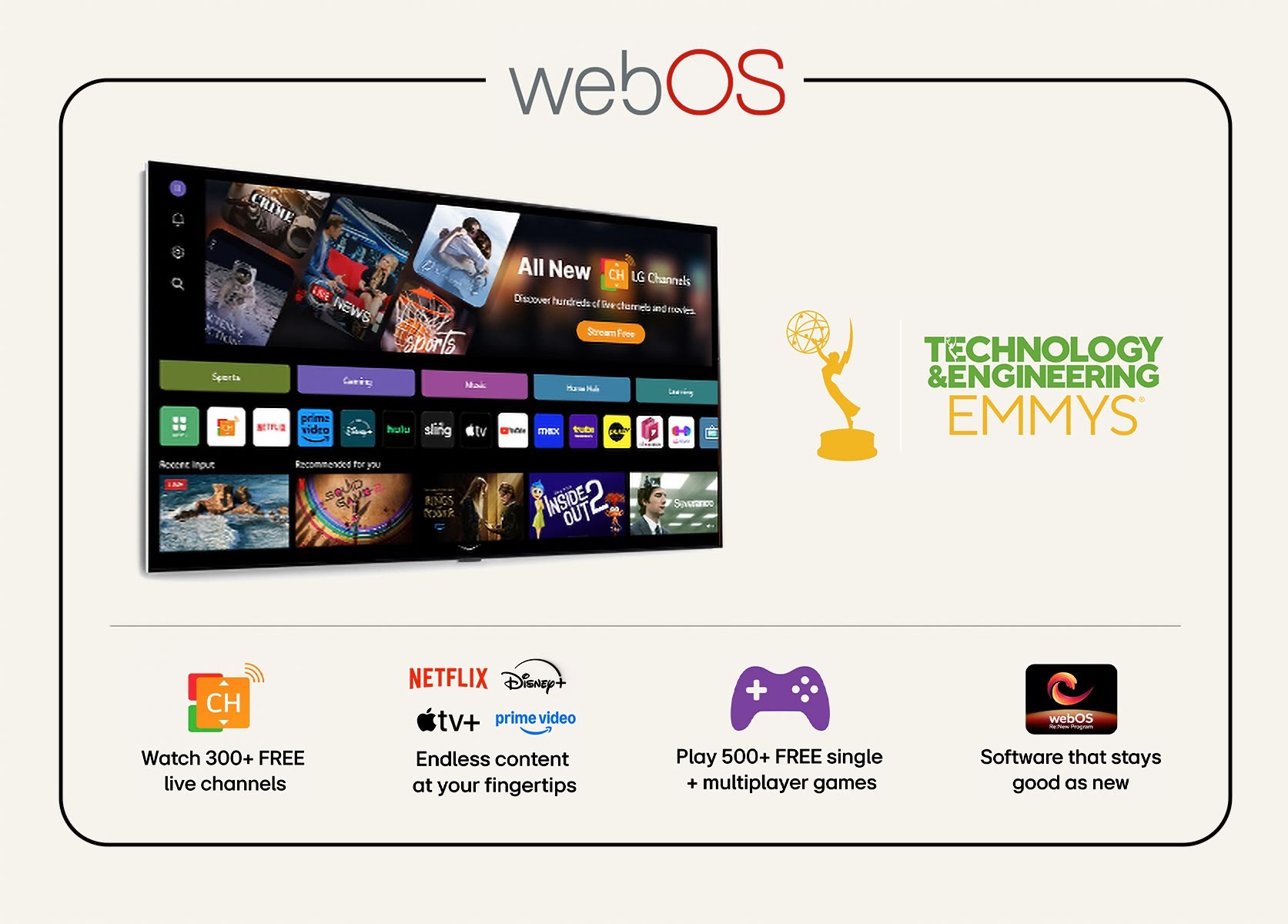
webOS excels at content discovery. Its launcher bar provides quick access to frequently used apps and recent content, while built-in search functionality aggregates results from various streaming services and live TV, making it easy to find what you want to watch. Features like “Content Store” and personalized recommendations further streamline the process, ensuring users spend less time searching and more time enjoying their entertainment. The ability to customize the launcher bar also gives users control over their most-accessed content and features.
IoT and Smart Home Hub Capabilities
As smart homes become increasingly prevalent, webOS has begun to extend its capabilities beyond pure entertainment. Modern versions of webOS allow LG smart TVs to act as central hubs for smart home devices, compatible with standards like Apple HomeKit and Google Assistant. Users can monitor and control connected devices directly from their TV screen, integrating their entertainment system more deeply into their broader smart home ecosystem. This expansion positions webOS as a foundational component for the intelligent home, further enhancing its value proposition.
Technical Architecture and Innovation
Underneath its elegant user interface, webOS boasts a robust and innovative technical foundation that leverages modern web technologies.
Web Technologies at its Core
One of the most radical aspects of webOS from its inception was its reliance on web technologies. Applications were built using standard web languages: HTML5, CSS3, and JavaScript. This approach aimed to simplify app development, making it accessible to a broader base of web developers rather than requiring specialized native coding skills. This web-centric model was forward-thinking, anticipating the shift towards web-based applications and cloud services. While it faced performance challenges in its early mobile iterations, the power of modern web engines has allowed this architecture to thrive, especially in environments like smart TVs where resource demands can be carefully managed.
Enyo Framework
To facilitate application development, Palm (and later HP) created the Enyo framework. Enyo is an open-source JavaScript application framework designed specifically for webOS (though it was later made platform-agnostic). It provided developers with a robust set of tools and components to build high-performance, cross-device applications using web technologies. Enyo helped abstract away some of the complexities of low-level system interactions, allowing developers to focus on creating rich user experiences, much like modern frameworks such as React or Vue.js do today.
Linux Kernel Foundation
At its lowest level, webOS is built upon a Linux kernel. This provides a stable, secure, and highly customizable foundation, inheriting the power and flexibility of a well-established open-source operating system. The Linux kernel handles core system functions, device drivers, and resource management, ensuring the underlying stability that the web-based user interface relies upon. This combination of a stable Linux base with a flexible web runtime environment contributes to webOS’s robustness and adaptability across different hardware platforms.
App Ecosystem Challenges
Despite its innovative architecture and developer-friendly web technologies, webOS historically faced challenges in building a robust app ecosystem, particularly during its mobile phase. The fierce competition from iOS and Android, which had massive head starts and dedicated developer communities, made it difficult for webOS to attract enough third-party developers. While this was a significant hurdle for mobile webOS, its transition to smart TVs alleviated some of these pressures. In the smart TV space, the required app selection is generally smaller and more focused on major streaming services, which LG has successfully onboarded, turning a former weakness into a manageable aspect of its platform.
Impact, Legacy, and Future Prospects
webOS, despite its tumultuous journey, has left an indelible mark on the technology landscape and continues to evolve.
Influencing Modern Mobile OS Design
Even though webOS didn’t achieve mainstream mobile success, its influence on subsequent mobile operating systems is undeniable. Its card-based multitasking, gesture navigation, unified notifications, and seamless integration of online services were pioneering features. Elements of its design philosophy can be seen reflected in the multitasking interfaces of iOS and Android, the unified inboxes of various email clients, and the intuitive gestures that have become standard on modern smartphones. webOS proved that a mobile OS could be both powerful and elegantly simple, pushing the boundaries of user experience design.
A Niche, Yet Powerful, Platform
Today, webOS thrives as a niche but highly influential platform in the smart TV market. LG’s commitment has transformed it into a stable, feature-rich, and user-friendly operating system that consistently earns top marks for its performance and usability. It has become a key differentiator for LG’s televisions, solidifying their position as leaders in the competitive home entertainment sector. The platform has demonstrated that a focused application in a specific domain can lead to significant success, even for an OS that struggled in a broader market.
The Road Ahead: Expansion and Ecosystem
The future of webOS under LG looks promising. LG is not only continuing to refine webOS for its own smart TVs but is also strategically licensing the platform to other TV manufacturers, such as Konka, Blaupunkt, and Polaroid. This expansion allows webOS to reach a broader audience, strengthen its app ecosystem, and potentially establish itself as a standard smart TV platform beyond LG’s direct hardware. Furthermore, as LG invests more in smart home technology and connected devices, webOS is poised to play an increasingly central role as an intuitive interface for managing a wide range of IoT gadgets, potentially extending its reach into other smart appliances and automotive systems.
In conclusion, webOS is far more than a footnote in mobile tech history. It is a testament to visionary design and resilient adaptability. From its innovative mobile beginnings to its current status as a leading smart TV platform, webOS has consistently championed user-centric design and web-powered flexibility. Its journey serves as a powerful reminder that technological innovation, even when facing market adversity, can find new purpose and achieve lasting impact in unexpected domains. As our homes become smarter and our entertainment experiences more integrated, webOS stands ready to continue shaping how we interact with our digital world.
aViewFromTheCave is a participant in the Amazon Services LLC Associates Program, an affiliate advertising program designed to provide a means for sites to earn advertising fees by advertising and linking to Amazon.com. Amazon, the Amazon logo, AmazonSupply, and the AmazonSupply logo are trademarks of Amazon.com, Inc. or its affiliates. As an Amazon Associate we earn affiliate commissions from qualifying purchases.