
In the intricate world of finance, few figures command as much attention and respect as Warren Buffett. Often hailed as the “Oracle of Omaha,” his investment decisions, articulated through Berkshire Hathaway, are meticulously scrutinized by individual investors, financial analysts, and even seasoned fund managers worldwide. The simple question, “What is Warren Buffett buying?” transcends mere curiosity; it often serves as a barometer for market sentiment, a lesson in value investing, and a glimpse into the enduring principles that have built one of the world’s most successful conglomerates.
Buffett’s investment philosophy, cultivated over more than half a century, is less about chasing fleeting trends and more about identifying durable businesses with strong competitive advantages at attractive prices. He famously advises investors to “be fearful when others are greedy, and greedy when others are fearful.” This counter-cyclical approach, combined with an unwavering focus on intrinsic value, dictates Berkshire Hathaway’s portfolio movements, making the answer to what he’s buying a nuanced exploration of long-term strategy rather than just a list of recent stock picks. Understanding his purchases requires delving into the timeless principles that guide his selections and observing how these principles manifest in a constantly evolving economic landscape.
The Enduring Principles Guiding Buffett’s Buys
Warren Buffett’s investment prowess is not rooted in complex algorithms or intricate market timing strategies. Instead, it’s built upon a bedrock of fundamental principles that have remained consistent throughout his illustrious career. These tenets, often articulated in his annual letters to shareholders, provide the intellectual framework for every acquisition, whether it’s a small stake in a public company or the outright purchase of an entire business.
Value Investing at its Core
At the heart of Buffett’s strategy is value investing, a philosophy pioneered by his mentor, Benjamin Graham. This approach dictates buying assets for less than their intrinsic value, often referred to as a “margin of safety.” For Buffett, a stock is not merely a ticker symbol; it represents a fractional ownership in a real business. Therefore, his focus is on evaluating the underlying business’s financial health, management quality, and future earnings power, rather than speculating on short-term price movements. He seeks to understand the true worth of a company and then acquire its shares only when the market price offers a significant discount to that calculated value. This requires patience and the discipline to resist the temptation of overvalued, popular stocks.
Economic Moats and Competitive Advantages
One of Buffett’s most famous concepts is the “economic moat.” Just as a medieval castle’s moat protected it from invaders, an economic moat protects a business from competitors. These moats are durable competitive advantages that allow a company to generate consistently high returns on capital over a long period. Examples include strong brand recognition (like Coca-Cola or Apple), cost advantages (like efficient production or distribution networks), network effects (where the value of a product or service increases as more people use it), high switching costs (making it difficult for customers to leave), or proprietary technology/patents. Buffett seeks businesses with wide, deep moats, believing these are the companies most likely to compound capital reliably for decades.
Understanding the Business
Buffett famously stated, “Never invest in a business you cannot understand.” This principle underscores his preference for simplicity and clarity. He avoids companies whose operations are opaque or whose future prospects are difficult to ascertain. This often explains his historical aversion to many high-tech firms, not because he dismisses technology, but because predicting their long-term competitive landscape and business models can be challenging. However, as demonstrated by his investment in Apple, his understanding of what constitutes a “comprehensible business” has evolved, viewing it increasingly as a consumer staples company with an unshakeable brand moat and ecosystem. His comfort with a business allows him to estimate its intrinsic value with greater confidence.
Long-Term Horizon and Patience
Buffett’s investment horizon is often measured in decades, not quarters. He views market volatility not as a risk to be avoided, but as an opportunity to acquire quality businesses at bargain prices. His mantra, “Our favorite holding period is forever,” highlights his commitment to letting good businesses compound their earnings over extended periods. This long-term perspective naturally discourages speculative trading and instead fosters a disciplined, buy-and-hold strategy. Patience is not just a virtue for Buffett; it is a fundamental pillar of his investment success, allowing his investments to fully realize their potential without the pressure of short-term market fluctuations.
A Glimpse into Berkshire Hathaway’s Portfolio
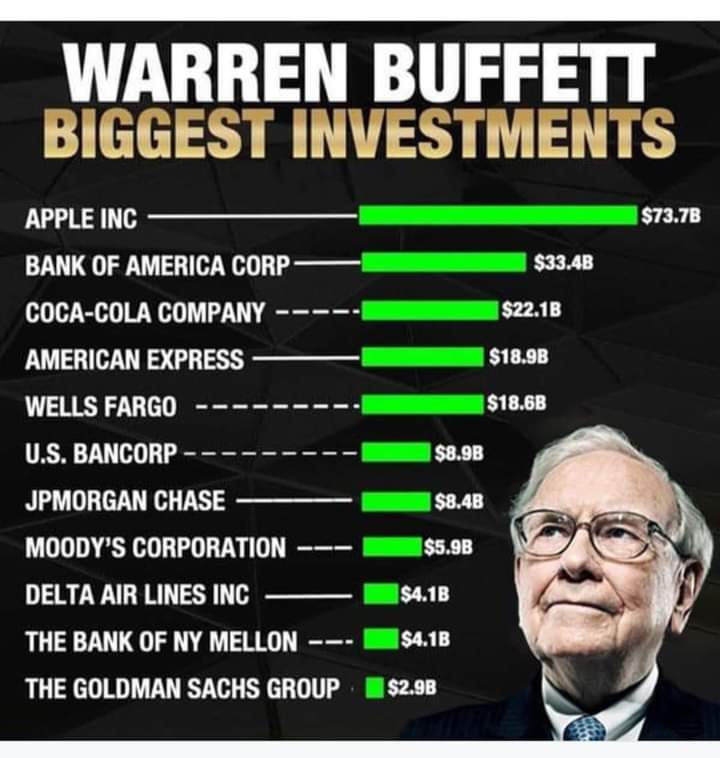
To understand what Warren Buffett is buying, one must look at the overall composition of Berkshire Hathaway’s multi-billion dollar equity portfolio. While specific purchases can change quarterly, the underlying structure often reflects the principles discussed above, featuring a mix of time-tested companies and strategic adaptations to new market realities.
Stalwart Sectors: Financials and Consumer Staples
Historically, a significant portion of Berkshire’s portfolio has been anchored in the financial sector, particularly banks and insurance companies. Companies like American Express and Bank of America have been long-term holdings, valued for their established brands, predictable cash flows, and essential roles in the economy. Insurance, a core part of Berkshire’s own operations (e.g., GEICO), provides substantial “float” – premiums collected but not yet paid out – which Buffett strategically deploys into other investments.
Consumer staples also represent a significant and consistent allocation. Brands like Coca-Cola, with its unparalleled global brand recognition and pervasive distribution, exemplify Buffett’s search for businesses with powerful, enduring economic moats. These companies offer products or services that consumers use regularly, regardless of economic cycles, providing a stable earnings base.
The Evolving Landscape: Adapting to Modern Moats
While traditionally known for shunning the tech sector, Buffett and his investment lieutenants, Ted Weschler and Todd Combs, have demonstrated a willingness to adapt. The most prominent example is Apple. Initially seen by some as a departure from his principles, Buffett views Apple not just as a technology company, but as a consumer brand with an exceptionally strong ecosystem and high customer loyalty. Its brand moat, ability to generate repeat purchases, and robust service revenues fit his criteria for a business that is understandable and possesses a formidable competitive advantage. This strategic shift highlights that while principles remain constant, their application can evolve with the market.
Diversification, Buffett-Style
Unlike many investors who preach broad diversification across numerous sectors, Buffett’s portfolio tends to be concentrated in a relatively small number of highly understood businesses. His form of diversification is not about spreading risk thinly across many average companies, but about owning different types of exceptional businesses across various industries. This includes railroads (BNSF is a wholly-owned subsidiary), energy companies, industrial giants, and consumer brands, ensuring that Berkshire benefits from a variety of economic drivers while maintaining a deep understanding of each holding.
Recent Trends and Strategic Shifts
While Buffett’s core philosophy remains unwavering, his actions reflect an ongoing adaptation to prevailing economic conditions and opportunities. Observing recent moves can provide clues to his current assessment of the market and specific industries.
Opportunistic Buys During Market Volatility
A hallmark of Buffett’s strategy is his readiness to deploy capital during periods of market distress. When uncertainty creates panic and drives down the prices of fundamentally sound companies, Buffett sees opportunity. This was evident during the 2008 financial crisis when he made significant investments in companies like Goldman Sachs and Bank of America, providing much-needed capital and signaling confidence to the market. More recently, during periods of heightened inflation or economic slowdowns, Berkshire Hathaway has often been a net buyer, selectively adding to positions in companies it believes are undervalued or will weather the storm better than others. His substantial cash reserves ensure he has the dry powder to act decisively when such opportunities arise.
Share Repurchases: An Investment in Itself
Beyond buying stakes in other companies, Berkshire Hathaway itself has become a significant buyer of its own stock. Share repurchases are a form of capital allocation that Buffett employs when he believes Berkshire’s stock is trading below its intrinsic value. By reducing the number of outstanding shares, each remaining share represents a larger slice of the company’s future earnings. For Buffett, this is often considered one of the best investments Berkshire can make, signaling strong confidence in the underlying value of the conglomerate’s diverse collection of businesses. It’s an internal “buy” that demonstrates his conviction more directly than external stock purchases.
Energy and Industrial Plays
In recent years, Berkshire Hathaway has shown a growing appetite for the energy sector, particularly through significant investments in companies like Occidental Petroleum and its robust wholly-owned Berkshire Hathaway Energy subsidiary. This reflects a strategic view on the enduring importance of traditional energy sources, as well as opportunities in renewable energy and transmission infrastructure. Furthermore, Berkshire’s ownership of BNSF Railway underscores its belief in the long-term fundamentals of industrial infrastructure and the critical role it plays in the economy. These long-duration assets often provide stable, regulated returns and are difficult for new entrants to replicate, embodying the “economic moat” concept perfectly.
Beyond Stocks: Private Acquisitions and Cash Reserves
While public stock purchases often grab headlines, a significant part of “what Warren Buffett is buying” extends beyond publicly traded shares. Berkshire Hathaway frequently acquires entire private companies and maintains substantial cash reserves for future strategic moves.
Whole Business Acquisitions
A defining characteristic of Berkshire Hathaway is its willingness and ability to acquire entire businesses, not just minority stakes. This strategy has brought a diverse array of companies under the Berkshire umbrella, ranging from insurance giants like GEICO to consumer brands like See’s Candies, industrial manufacturers like Precision Castparts, and service providers. When Berkshire buys a company outright, it often seeks well-managed businesses with strong competitive advantages, predictable earnings, and a culture that aligns with Berkshire’s decentralized operating philosophy. These acquisitions are less about financial engineering and more about integrating enduring businesses into the Berkshire family for the long haul.
The Power of a War Chest: Cash on Hand
One of the most remarkable aspects of Berkshire Hathaway’s balance sheet is its consistently large cash pile, often exceeding tens of billions of dollars. While some critics argue this cash could be better deployed, Buffett views it as strategic optionality – a “war chest” that allows him to act swiftly and decisively when truly exceptional investment opportunities arise, especially during market dislocations. This liquidity is a significant competitive advantage, providing both financial stability and the capacity to make large-scale, opportunistic investments that few other companies can execute. It means that even when he’s not actively buying public stocks, he is positioning to buy, waiting patiently for the right moment.
Key Takeaways for the Everyday Investor
Observing Warren Buffett’s buying patterns offers invaluable lessons for investors at all levels. His approach distills complex financial markets into fundamental, actionable principles.
Focus on Business Fundamentals, Not Speculation
The most critical lesson is to shift focus from fleeting market noise to the underlying quality of the business. Investors should strive to understand what a company does, how it makes money, its competitive landscape, and the quality of its management. This fundamental analysis helps differentiate between speculation and genuine investment, guiding decisions toward durable value creation rather than short-term gains.
The Virtues of Patience and Discipline
Buffett’s success is a testament to the power of a long-term mindset. Impatience often leads to poor decisions, driven by emotion rather than logic. Investors should cultivate the discipline to hold quality assets through market ups and downs, allowing the power of compounding to work its magic over extended periods. Avoiding impulsive reactions to daily market fluctuations is key.
Continuously Learning and Adapting
Even the “Oracle of Omaha” evolves. His investment in Apple, for example, demonstrates a willingness to adapt his understanding of “moats” and “understandable businesses” to a changing economic landscape. Investors should similarly commit to continuous learning, staying informed about industries and trends, and being open to re-evaluating their own investment theses in light of new information, without abandoning core principles.
In conclusion, “what Warren Buffett is buying” is rarely a simple answer. It’s an ongoing narrative of applying time-tested value investing principles to a dynamic world. His purchases reflect a deep commitment to finding high-quality businesses with strong competitive advantages, acquired at sensible prices, and held for the long term. While mirroring his specific stock picks might not always be appropriate for every investor, internalizing the philosophy behind his buys offers a robust framework for building wealth over time, emphasizing wisdom, patience, and a relentless focus on intrinsic value.
aViewFromTheCave is a participant in the Amazon Services LLC Associates Program, an affiliate advertising program designed to provide a means for sites to earn advertising fees by advertising and linking to Amazon.com. Amazon, the Amazon logo, AmazonSupply, and the AmazonSupply logo are trademarks of Amazon.com, Inc. or its affiliates. As an Amazon Associate we earn affiliate commissions from qualifying purchases.