
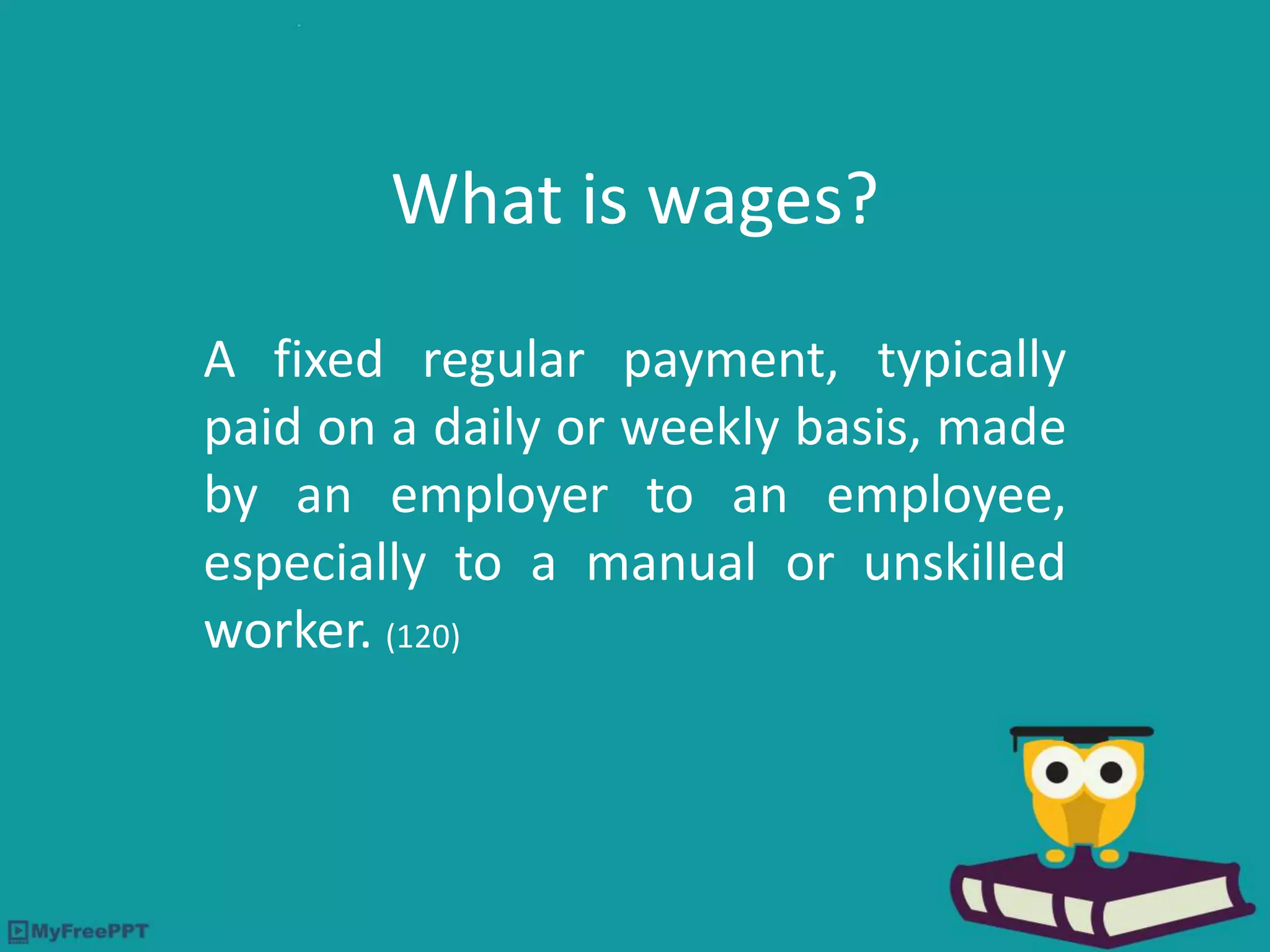
In the intricate world of finance, few terms are as fundamental yet as frequently misunderstood as “wages.” At its most basic level, a wage is the compensation paid by an employer to an employee in exchange for work performed during a specific period. However, for anyone navigating the realms of personal finance, business management, or economic investing, understanding wages requires looking far beyond a simple hourly rate. Wages represent the price of labor, the engine of consumer spending, and the primary building block of individual wealth.
This guide explores the multifaceted nature of wages, distinguishing them from other forms of income, analyzing how they are calculated, and examining their role in a modern financial strategy.

1. Defining Wages in the Modern Economy
To understand the question “what is wages,” one must first view labor through the lens of a market transaction. In this exchange, the employee provides time, skill, and effort, while the employer provides monetary value. Unlike a capital investment, which yields dividends, or a business venture, which yields profit, wages are a direct contractual return on human capital.
The Legal and Economic Framework
Economically, wages are determined by the intersection of labor supply and demand. However, unlike the price of commodities like oil or gold, wages are governed by a complex web of social and legal frameworks. Minimum wage laws, collective bargaining agreements, and labor standards ensure that wages do not fall below a floor deemed necessary for a basic standard of living. From a business finance perspective, wages are often the largest operating expense (OPEX) a company carries, making the management of “payroll” a critical factor in a firm’s profitability and long-term sustainability.
Wages vs. Salary: Understanding the Key Distinctions
In common parlance, people often use “wages” and “salary” interchangeably, but in the world of finance and accounting, the distinction is vital. Wages typically refer to compensation paid on an hourly, daily, or piece-work basis. If an employee works more hours, their total wage increases proportionally (often with overtime premiums).
A salary, conversely, is a fixed amount of compensation paid over a year, regardless of the specific hours worked in a given week. Salaried employees are often “exempt” from overtime pay, whereas wage earners are usually “non-exempt.” For a person managing their money, knowing which category they fall into is the first step in predictable budgeting and financial forecasting.
2. Types of Wage Structures and Payment Models
The method by which a worker is compensated can significantly impact their financial stability and tax obligations. Businesses choose different wage structures based on the nature of the work, the industry standards, and the desired incentives for the workforce.
Hourly vs. Piece-Rate Pay
The most common form of wages is the hourly rate. This provides a direct correlation between time spent and money earned. It is the standard for most service, retail, and manufacturing roles.
In contrast, “piece-rate” pay compensates workers based on the units they produce rather than the time they spend. For example, a freelance coder might be paid per project, or a factory worker might be paid per item assembled. From a personal finance perspective, piece-rate wages offer the potential for higher income through efficiency, but they also carry a higher risk of income volatility if work volume drops or if the worker falls ill.
Minimum Wage and the Living Wage Concept
When discussing wages, the “Minimum Wage” is a recurring topic in financial news. This is the lowest remuneration that employers can legally pay their workers. While the statutory minimum wage is set by governments, many financial analysts and activists point toward the “Living Wage”—the theoretical income level necessary to afford basic necessities like housing, food, and healthcare in a specific geographic area. For those looking to optimize their online income or side hustles, understanding the local living wage helps in setting competitive rates that ensure long-term financial health.
3. The Components of a Paycheck: Understanding Gross vs. Net
The amount an employer agrees to pay an employee is rarely the amount that ends up in the employee’s bank account. For effective business finance and personal budgeting, one must master the math behind the paycheck.
Gross vs. Net Income
“Gross wages” represent the total amount earned before any deductions are made. If you earn $25 per hour and work 40 hours, your gross wage is $1,000. However, “Net Income”—often called “take-home pay”—is what remains after taxes and other withholdings.
Understanding this gap is essential for personal finance. Many individuals make the mistake of budgeting based on their gross income, leading to a “lifestyle creep” that exceeds their actual liquidity. A disciplined financial plan always operates on net income figures.
Deductions, Taxes, and Contributions
A variety of factors shrink gross wages into net income. These typically include:
-
Income Tax Withholding: Payments made to federal, state, or local governments.
-
Social Security and Medicare: In many regions, a percentage of wages is mandatory for social safety nets.
-
Benefit Premiums: Deductions for health insurance, dental plans, or life insurance.
-
Retirement Contributions: Voluntary deductions for 401(k) or pension plans, which are crucial for long-term investing.
From a financial tool perspective, using a “payroll calculator” can help employees and small business owners anticipate these deductions, ensuring there are no surprises during tax season.
4. Strategic Financial Management of Wage Income
Once the definition and mechanics of wages are understood, the focus shifts to how to manage that income effectively. Whether you are earning a steady hourly wage or managing a fluctuating income from multiple side hustles, strategic management is the key to building wealth.
Budgeting Based on Variable vs. Fixed Wages
For those with fixed salaries, budgeting is relatively straightforward. However, for those earning wages—where hours may vary from week to week—financial planning requires a “conservative estimation” approach. Financial experts recommend budgeting based on your “base-level” hours (the minimum you expect to work) and treating any overtime or bonuses as “surplus capital” for savings or debt repayment.
The “50/30/20 rule” is a popular financial tool here: allocate 50% of your net wages to needs, 30% to wants, and 20% to savings and debt reduction. By automating these transfers from your paycheck, you ensure that your wages are working for you, rather than just passing through your hands.
Optimizing Take-Home Pay through Tax Planning
While you cannot avoid taxes, you can often optimize how they impact your wages. Contributions to tax-advantaged accounts—like Health Savings Accounts (HSAs) or traditional retirement accounts—reduce your “taxable income.” This means you pay less in taxes today, effectively increasing the value of every dollar earned in your wages. For high-wage earners, this type of financial engineering is a cornerstone of wealth preservation.
5. The Future of Wages in a Changing Business Landscape
As we look toward the future, the concept of wages is undergoing a radical transformation. Technology and shifts in corporate strategy are changing how labor is valued and compensated.
The Rise of the Gig Economy and Non-Traditional Compensation
The “Gig Economy” has introduced a shift from traditional wages to “platform-based earnings.” Companies like Uber, Upwork, and DoorDash pay for specific tasks rather than time. This blurs the line between a traditional employee earning a wage and an independent contractor earning business revenue. For the modern worker, this requires a higher level of financial literacy, as they must manage their own taxes, insurance, and retirement planning—tasks previously handled by a corporate payroll department.
Automation’s Impact on Labor Value
Artificial Intelligence and automation are recalibrating the “value” of certain types of labor. In industries where tasks are repetitive, the market value of wages is under pressure. Conversely, in fields requiring high-level soft skills, strategic thinking, or technical AI management, wages are skyrocketing.
This shift emphasizes the importance of “upskilling” as a financial strategy. In the modern economy, your wages are not just a reflection of your time, but a reflection of the scarcity and utility of your skills. Investing in your own education is often the highest-ROI move you can make to increase your lifetime wage-earning potential.

Conclusion
Understanding “what is wages” is the first step in mastering the world of money. It is more than just a number on a screen every Friday; it is a reflection of economic value, a product of legal protections, and the raw material from which you build your financial future. By distinguishing between gross and net income, understanding the impact of different wage structures, and staying ahead of labor trends like the gig economy and automation, you can transform your wages from a mere means of survival into a powerful engine for long-term wealth creation. Strategies like disciplined budgeting and tax optimization ensure that no matter how much you earn, you are making the most of every hour worked.
aViewFromTheCave is a participant in the Amazon Services LLC Associates Program, an affiliate advertising program designed to provide a means for sites to earn advertising fees by advertising and linking to Amazon.com. Amazon, the Amazon logo, AmazonSupply, and the AmazonSupply logo are trademarks of Amazon.com, Inc. or its affiliates. As an Amazon Associate we earn affiliate commissions from qualifying purchases.