
Cataracts, a clouding of the eye’s natural lens, are a leading cause of vision impairment worldwide. For those who haven’t experienced them, comprehending the profound impact on daily life can be challenging. The question, “what is vision like with cataracts?” delves into more than just a medical symptom; it explores a fundamental alteration of perception. In today’s rapidly advancing world, technology plays an increasingly crucial role not only in simulating and understanding this altered vision but also in revolutionizing its diagnosis and treatment. From sophisticated diagnostic tools to advanced surgical techniques and intraocular lens (IOL) innovations, technology is at the forefront of restoring clarity and improving lives. This article explores the technological dimensions of cataracts, from how we simulate the affected vision to the cutting-edge solutions that promise a brighter, clearer future.
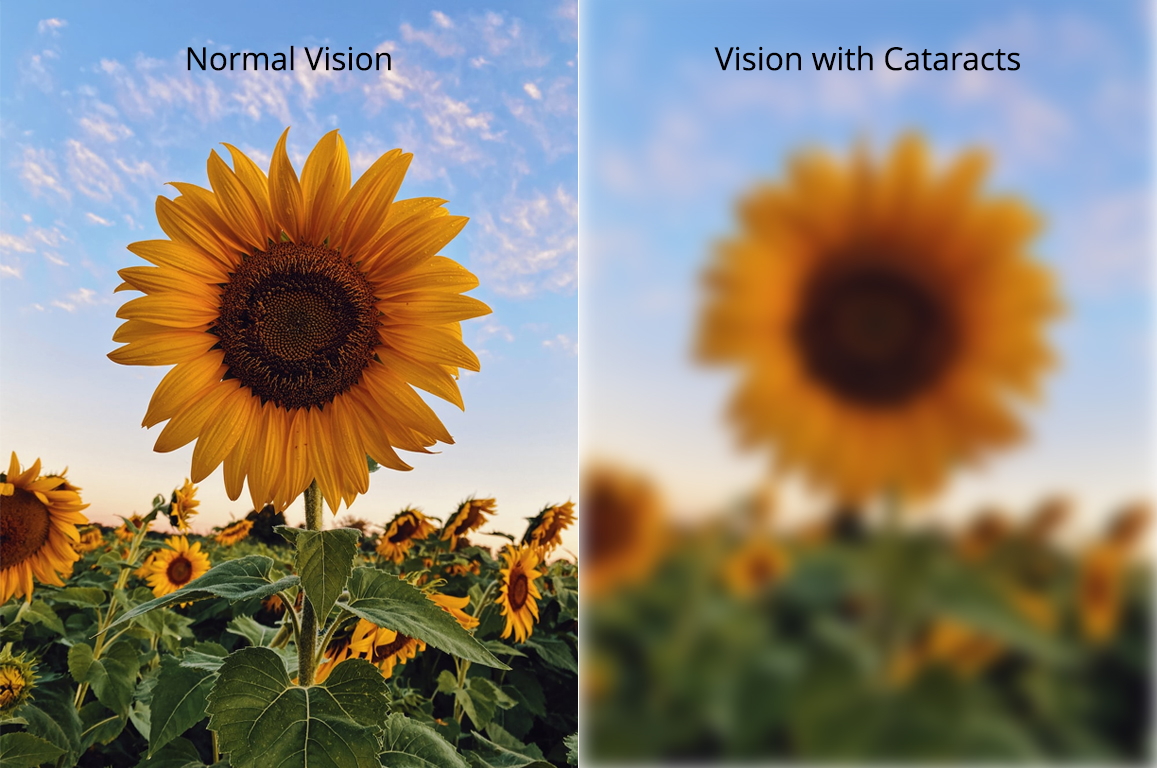
Simulating the Misted World: How Technology Replicates Cataract Vision
To truly answer the question of what vision is like with cataracts, empathy is key. Technology has emerged as a powerful bridge, allowing individuals – from medical professionals and caregivers to family members and the general public – to experience a simulated version of this impaired sight. These simulations are not mere curiosities; they are vital educational tools that foster understanding, improve communication between patient and doctor, and inform the development of assistive technologies.
Virtual and Augmented Reality for Empathy and Education
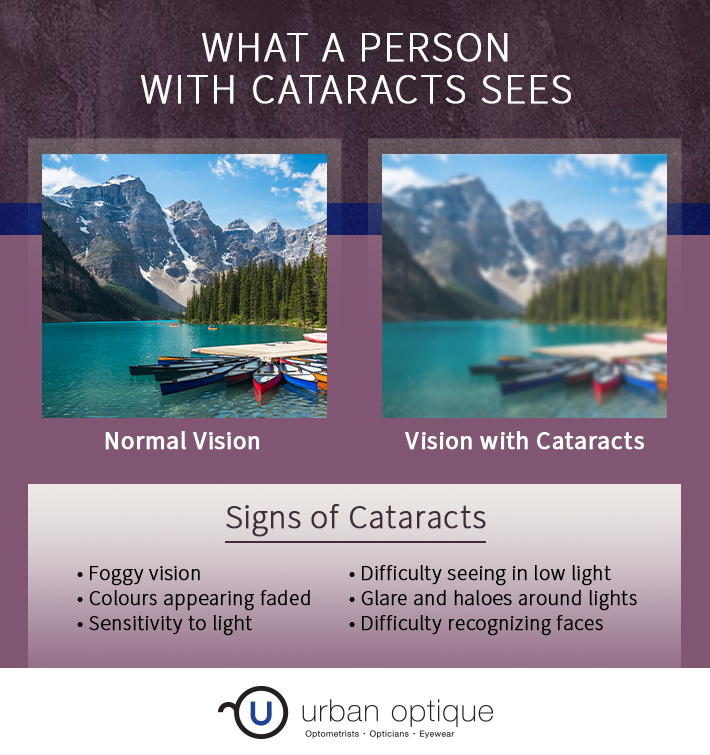
Virtual Reality (VR) and Augmented Reality (AR) platforms are transforming how we understand sensory experiences like impaired vision. Developers are creating sophisticated VR/AR applications that mimic the effects of various types and stages of cataracts. Users can don a VR headset and instantly be immersed in a world seen through a cataract-affected lens, experiencing firsthand the blurring, glare, diminished color perception, and reduced contrast. This immersive experience is invaluable for:
- Medical Training: Aspiring ophthalmologists can gain a deeper understanding of patient perspectives, enhancing their diagnostic and communication skills.
- Patient Education: Patients awaiting surgery can visualize the “before and after,” providing reassurance and setting realistic expectations. This helps them articulate their symptoms more precisely, aiding their ophthalmologist in treatment planning.
- Public Awareness: General audiences can grasp the challenges faced by those with cataracts, fostering greater empathy and support. Imagine trying to drive, read, or recognize faces in such conditions – VR makes this visceral.
Beyond mere simulation, AR applications can overlay cataract effects onto real-world views through a smartphone or tablet camera. This allows for a more contextual understanding, showing how everyday environments are altered. These digital tools serve as powerful bridges, helping the sighted population truly “see” what it’s like to live with cataracts, fostering a more inclusive and understanding society.
Digital Tools for Patient Consultation and Diagnosis
Beyond immersive VR/AR, simpler digital tools also play a significant role. Apps and software programs designed for patient consultation allow ophthalmologists to dynamically adjust parameters like blur, glare sensitivity, and color desaturation on a screen or tablet. This enables them to visually demonstrate to a patient what their specific cataract type and severity might look like, making complex medical explanations more accessible.
Furthermore, some diagnostic devices integrate features that project what the patient’s vision might improve to after surgery, based on measurements of their existing vision and the potential improvement with an intraocular lens. This helps patients make informed decisions about their treatment options, offering a clear, tangible preview of restored vision rather than just a theoretical promise. This blend of diagnostic data and visual simulation empowers patients, transforming abstract medical concepts into relatable visual experiences.
The Technological Edge in Cataract Diagnosis
Accurate and early diagnosis is paramount for effective cataract management. Gone are the days of purely subjective assessments. Modern ophthalmology relies heavily on a suite of advanced technological instruments that provide objective, precise, and detailed insights into the eye’s condition, revolutionizing the diagnostic pathway for cataracts.
Advanced Imaging Techniques: OCT and Topography
Optical Coherence Tomography (OCT) is a non-invasive imaging technique that uses light waves to capture high-resolution cross-sectional images of the retina and optic nerve. While primarily used for retinal conditions, OCT is invaluable in cataract assessment to rule out or identify co-existing retinal pathologies that might affect visual outcomes post-surgery. Before removing a cloudy lens, it’s crucial to ensure the “film” (retina) behind it is healthy. OCT provides this detailed information, allowing surgeons to set appropriate expectations for visual recovery.
Corneal topography, on the other hand, maps the curvature of the cornea – the transparent front part of the eye. This technology is critical for identifying corneal astigmatism, a common refractive error. By precisely measuring corneal irregularities, surgeons can select specialized intraocular lenses (IOLs), such as toric IOLs, that correct astigmatism simultaneously with cataract removal, providing superior post-operative vision without the need for additional glasses. These imaging technologies provide a comprehensive “blueprint” of the eye, guiding tailored treatment plans.
AI-Powered Diagnostics: Precision and Early Detection
Artificial Intelligence (AI) and machine learning are rapidly transforming the landscape of medical diagnostics, and ophthalmology is no exception. AI algorithms can be trained on vast datasets of eye scans and patient information to identify subtle patterns indicative of cataract formation, often before they are clinically apparent to the human eye.
AI-powered diagnostic tools offer several advantages:
- Enhanced Precision: AI can analyze imaging data with a level of detail and consistency that surpasses human capabilities, reducing inter-observer variability in diagnosis.
- Early Detection: By identifying pre-symptomatic changes, AI can facilitate earlier intervention, potentially slowing progression or allowing for timely surgical planning before vision is severely impacted.
- Increased Efficiency: Automated analysis can significantly speed up the diagnostic process, allowing ophthalmologists to focus more on patient interaction and complex cases.
- Accessibility: In the future, AI-driven screening tools could extend access to remote populations, enabling early identification and referral for treatment where specialist care is scarce.
These intelligent systems are not replacing ophthalmologists but rather augmenting their capabilities, providing an invaluable second opinion and streamlining the diagnostic workflow, making cataract detection more robust and accessible than ever before.
Restoring Clarity: Innovations in Cataract Surgery and Lens Technology
The ultimate answer to “what is vision like with cataracts?” is often found in cataract surgery – one of the most common and successful surgical procedures performed globally. Decades of technological innovation have transformed this procedure from a risky undertaking into a safe, routine, and highly effective outpatient treatment that dramatically restores vision.

Laser-Assisted Cataract Surgery (LACS): A New Era of Precision
Traditional cataract surgery, phacoemulsification, relies on a surgeon’s manual skill to make incisions and break up the cloudy lens with ultrasound. While highly effective, Laser-Assisted Cataract Surgery (LACS) introduces an unprecedented level of precision and automation. Femtosecond lasers, guided by sophisticated imaging, perform several critical steps of the surgery:
- Corneal Incisions: The laser creates precise, self-sealing incisions in the cornea with exact dimensions and locations.
- Capsulotomy: It creates a perfectly circular opening in the anterior capsule of the lens, which is crucial for stable placement of the intraocular lens (IOL). The laser’s consistency far exceeds manual techniques.
- Lens Fragmentation: The laser pre-treats and softens the cataractous lens, breaking it into smaller, manageable pieces. This reduces the amount of ultrasound energy needed during the phacoemulsification step, potentially leading to a gentler procedure and faster recovery.
This enhanced precision can lead to better visual outcomes, particularly with advanced IOLs, as the accurate positioning of the lens is critical for their optimal performance. LACS represents a significant technological leap, improving safety, predictability, and potentially outcomes for cataract patients.
The Evolution of Intraocular Lenses (IOLs): From Monofocal to Multifocal and Toric
The removal of the natural, clouded lens necessitates its replacement with an artificial intraocular lens (IOL). The evolution of IOL technology has been monumental, moving far beyond simple monofocal lenses that provided clear distance vision but still required glasses for reading.
- Monofocal IOLs: These are the standard, providing excellent vision at a single focal point, typically distance. Patients usually still need glasses for near vision or intermediate tasks.
- Toric IOLs: For patients with astigmatism, toric IOLs have specific optics to correct this refractive error, leading to sharper vision across distances without significant reliance on glasses. Their precise alignment, often guided by digital marking systems and intraoperative aberrometry, is critical for optimal performance.
- Multifocal and Extended Depth of Focus (EDOF) IOLs: These advanced IOLs are designed to provide a range of vision, from near to intermediate to distance, significantly reducing or even eliminating the need for glasses after surgery. Multifocal IOLs achieve this through concentric rings that simultaneously focus light from different distances, while EDOF IOLs create a single elongated focal point, offering a continuous range of clear vision. Their sophisticated optical designs are a testament to advanced material science and optical engineering.
- Light Adjustable Lenses (LALs): Representing a new frontier, LALs allow for post-operative adjustment of the lens power using UV light. This means the surgeon can fine-tune the patient’s vision after the eye has healed, optimizing the outcome to an unprecedented degree. This technology addresses the challenge of predicting the exact refractive outcome before surgery, offering unparalleled customization.
These IOL advancements enable surgeons to offer personalized vision solutions, moving beyond merely treating cataracts to actively correcting other refractive errors, thus significantly improving patients’ quality of life.
Minimally Invasive Procedures and Rapid Recovery Technologies
Modern cataract surgery is an outpatient procedure, largely due to technological advancements that allow for minimally invasive techniques. Small incisions (typically 2-3mm) mean less tissue disruption, faster healing, and a reduced risk of complications.
- Micro-incisional surgery: This technique further minimizes incision size, sometimes requiring less need for sutures.
- Improved Phacoemulsification Systems: These systems offer more efficient energy delivery and fluidics, further reducing the invasiveness of the procedure and improving safety.
- Advanced Anesthesia: Topical or local anesthesia, often administered as drops, has largely replaced injections, making the procedure more comfortable and recovery quicker.
These technological refinements collectively contribute to a patient experience characterized by minimal discomfort, rapid visual recovery, and a swift return to daily activities, fundamentally transforming the perception and reality of cataract treatment.
Beyond Surgery: Assistive Tech and Future Outlooks
While surgery is the primary treatment for cataracts, technology continues to play a vital role in supporting those with low vision and pushing the boundaries of future vision restoration. Even after successful surgery, some individuals might benefit from assistive technologies, and the horizon for completely new treatments is constantly expanding.
Digital Accessibility Tools for Low Vision
For individuals experiencing significant vision impairment due to cataracts who may be awaiting surgery or for whom surgery is not an option, technology offers an array of assistive tools. These tools are designed to maximize remaining vision and improve accessibility in daily life:
- Magnification Software and Apps: Digital magnifiers on smartphones, tablets, and computers can enlarge text and images, making reading and screen navigation easier. Specialized apps can also enhance contrast and invert colors for better readability.
- Screen Readers: For severe impairment, screen readers convert on-screen text into synthesized speech, allowing users to interact with digital content audibly.
- Smart Glasses and Wearable Devices: These devices can use built-in cameras and AI to enhance vision, magnify objects, read text aloud, recognize faces, or provide navigation assistance. They can often adjust brightness, contrast, and color to optimize viewing conditions for individuals with specific visual deficits.
- Voice Control and AI Assistants: Increasingly, voice-activated smart home devices and personal assistants like Siri, Alexa, and Google Assistant reduce the reliance on visual interfaces, providing hands-free control over devices and access to information.
These technologies aim to reduce barriers, enhance independence, and improve the quality of life for individuals navigating the challenges of low vision, offering practical solutions in the interim or as a permanent aid.
Emerging Technologies: Gene Therapy and AI-Enhanced Vision Restoration
The future of understanding and treating cataracts, and vision impairment in general, is brimming with promising technological avenues.
- Gene Therapy: While currently more focused on genetic retinal diseases, research into gene therapy holds potential for preventing or slowing cataract formation in cases linked to specific genetic mutations. If we could modify genes to produce healthier lens proteins, the need for surgery might be reduced or eliminated for certain types of cataracts.
- Advanced AI for Personalized Treatment: AI is expected to become even more sophisticated in predicting individual cataract progression, optimizing surgical parameters, and even guiding robotic surgery with unparalleled precision. Imagine an AI system that analyzes every aspect of a patient’s eye and health profile to recommend the perfect IOL and surgical approach with near-perfect accuracy.
- Biomimetic Lenses: Research is ongoing into “smart” IOLs that can mimic the accommodative (focusing) abilities of a healthy natural lens, potentially offering truly natural vision across all distances without any optical compromises. This could involve deformable materials, liquid optics, or electronically adjustable lenses.
- Stem Cell Research: While still nascent for lens regeneration, stem cell research holds long-term potential to regenerate clear lens cells, theoretically reversing cataract formation without surgical removal.
These burgeoning fields represent the next frontier in ophthalmic technology, pushing beyond treatment to prevention, personalized optimization, and even biological regeneration. The trajectory of technological advancement suggests that the experience of vision with cataracts – and the journey to restore it – will continue to be transformed in increasingly profound and beneficial ways.
In conclusion, the question “what is vision like with cataracts?” is answered not only by clinical descriptions but increasingly by the immersive simulations that technology provides. Furthermore, the relentless march of technological innovation in diagnostics, surgical techniques, and intraocular lens design is continuously refining how we overcome this common visual impairment. As AI, advanced optics, and precision engineering continue to evolve, the future promises even more sophisticated solutions, ensuring that the journey from blurred vision to crystal clarity is safer, more effective, and more personalized than ever before.
aViewFromTheCave is a participant in the Amazon Services LLC Associates Program, an affiliate advertising program designed to provide a means for sites to earn advertising fees by advertising and linking to Amazon.com. Amazon, the Amazon logo, AmazonSupply, and the AmazonSupply logo are trademarks of Amazon.com, Inc. or its affiliates. As an Amazon Associate we earn affiliate commissions from qualifying purchases.