
In the early days of cloud computing, the primary concern for many enterprises was security. The idea of hosting sensitive data on a “public” infrastructure seemed antithetical to the controlled environment of an on-premises data center. Amazon Web Services (AWS) addressed this fundamental concern by introducing the Amazon Virtual Private Cloud (VPC).
A VPC is a logically isolated section of the AWS Cloud where you can launch AWS resources in a virtual network that you define. Think of it as your own private data center within the AWS ecosystem. It provides complete control over your virtual networking environment, including the selection of your own IP address range, the creation of subnets, and the configuration of route tables and network gateways. This article explores the architecture, components, and security mechanisms that make AWS VPC the backbone of modern cloud engineering.
1. The Fundamental Architecture of AWS VPC
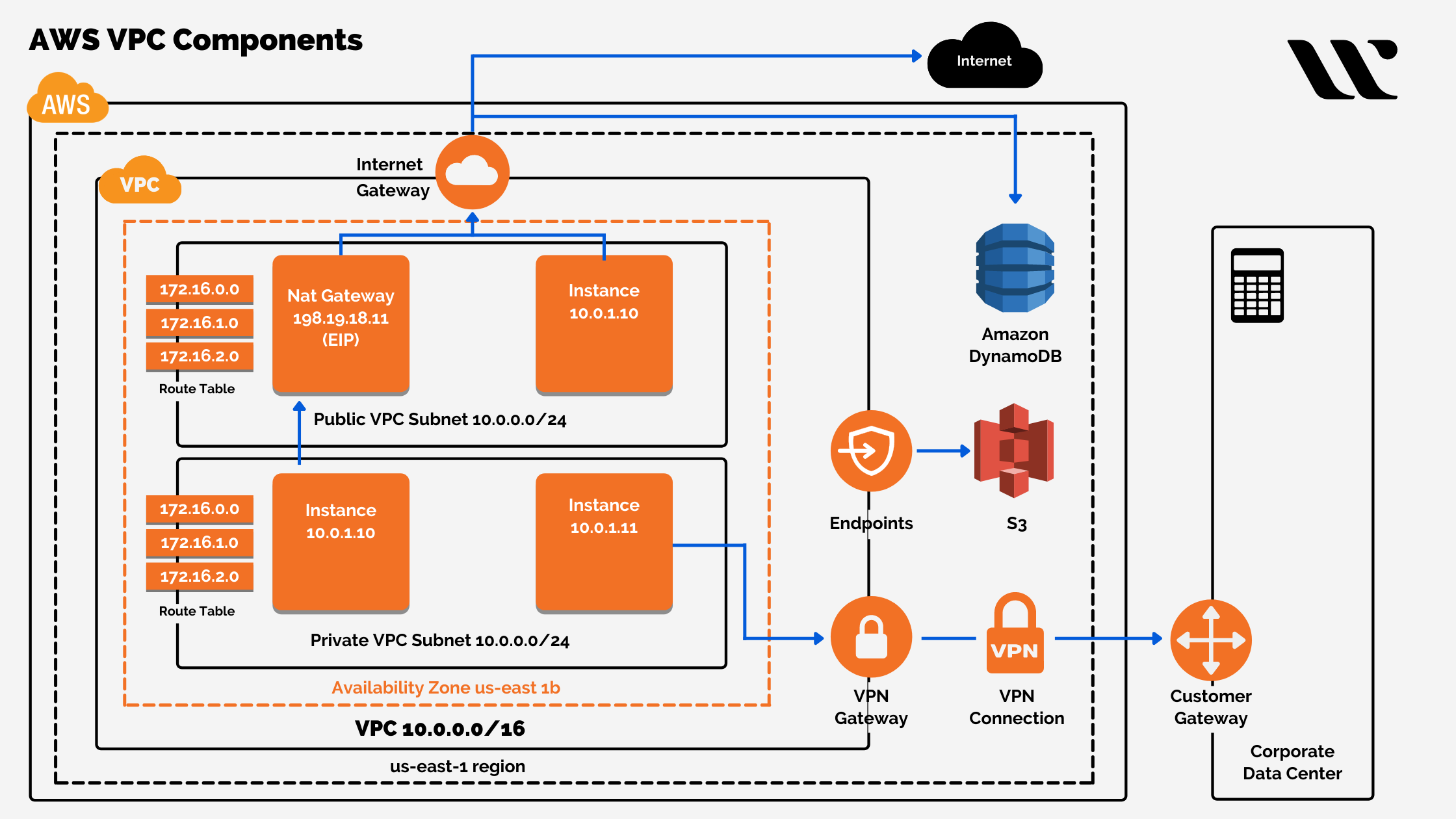
At its core, a VPC provides the networking layer for Amazon EC2 and many other AWS services. When you create a VPC, you are essentially carving out a private space in the cloud that is invisible to other AWS users unless you explicitly grant access.
Understanding CIDR Blocks and IP Addressing
The foundation of any VPC is its IP address range, defined using Classless Inter-Domain Routing (CIDR) notation. When you create a VPC, you assign it an IPv4 CIDR block (such as 10.0.0.0/16). This defines the total number of internal IP addresses available within your network. AWS also supports IPv6, allowing for modern, scalable addressing schemes. The choice of CIDR block is critical; it must be large enough to accommodate future growth but should not overlap with other networks (like your corporate office) if you plan to connect them later.
Subnets: Segmenting Your Network
Within a VPC, you divide your IP range into smaller segments called subnets. Subnets are defined at the Availability Zone (AZ) level, which is a crucial detail for designing high-availability systems.
-
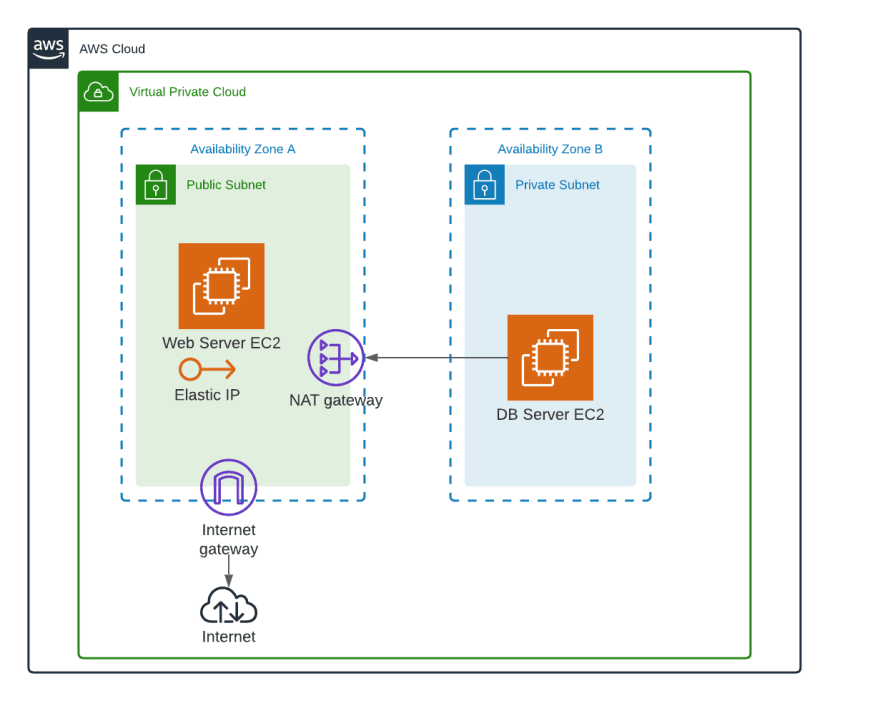
Public Subnets: These are subnets that have a direct route to the Internet via an Internet Gateway. They are typically used for resources that must be web-facing, such as load balancers or web servers.
-
Private Subnets: These subnets do not have a direct route to the Internet. They are used for sensitive components like databases, application servers, or internal logic units that should never be directly accessible from the outside world.
Route Tables: The Traffic Directors
Route tables contain a set of rules, called routes, that determine where network traffic from your subnet or gateway is directed. Every VPC has a main route table, but you can create custom route tables for specific subnets to control traffic flow with granular precision. For example, a public subnet’s route table will have a destination of 0.0.0.0/0 pointing to an Internet Gateway, while a private subnet’s route table might point to a NAT Gateway for outbound-only internet access.
2. Connectivity Components: Bridging the Virtual and Physical Worlds
A VPC in isolation is secure, but it is rarely useful if it cannot communicate with other services, the internet, or on-premises environments. AWS provides several components to manage these connections.
Internet Gateways (IGW) and NAT Gateways
The Internet Gateway is a horizontally scaled, redundant, and highly available VPC component that allows communication between your VPC and the internet. It performs network address translation (NAT) for instances that have been assigned public IPv4 addresses.
Conversely, instances in a private subnet often need to download software updates or access external APIs without being exposed to incoming connections. This is where the NAT (Network Address Translation) Gateway comes in. It sits in a public subnet and allows private instances to initiate outbound traffic to the internet while preventing the internet from initiating a connection with those private instances.
VPC Endpoints and PrivateLink
Not all traffic needs to traverse the public internet. AWS VPC Endpoints allow you to privately connect your VPC to supported AWS services and VPC endpoint services powered by PrivateLink. This ensures that traffic between your VPC and services like Amazon S3, DynamoDB, or SageMaker stays within the AWS network, reducing exposure to the public internet and often improving performance. There are two types:
-
Interface Endpoints: These are elastic network interfaces with a private IP address from the IP address range of your subnet.
-
Gateway Endpoints: These are targets specified in your route table for traffic destined to S3 or DynamoDB.
Virtual Private Gateways and Customer Gateways
For organizations operating in a hybrid cloud model, connecting an on-premises data center to an AWS VPC is a common requirement. A Virtual Private Gateway (VGW) is the VPN concentrator on the Amazon side of the Site-to-Site VPN connection. On the customer side, a Customer Gateway (CGW) represents the physical device or software application. This setup creates an encrypted tunnel, effectively making the AWS VPC an extension of the local corporate network.
3. Security Mechanisms: Protecting the Cloud Perimeter
Security in an AWS VPC is implemented through a “defense in depth” strategy, utilizing multiple layers of protection to ensure that only authorized traffic reaches your resources.
Security Groups: Stateful Instance-Level Firewalls
A Security Group acts as a virtual firewall for your EC2 instances to control incoming and outgoing traffic. They are “stateful,” meaning if you send a request from your instance, the response traffic for that request is allowed to flow in regardless of inbound security group rules. Security Groups operate at the instance level (the Network Interface level), allowing you to define rules based on protocols (TCP, UDP), ports, and source/destination IP ranges or even other Security Groups.
Network Access Control Lists (NACLs): Stateless Subnet-Level Firewalls
While Security Groups protect the instance, Network ACLs provide a layer of security at the subnet level. NACLs are “stateless,” which means they do not “remember” the state of a connection. If you allow inbound traffic on port 80, you must also explicitly allow outbound traffic for the response (usually on high-numbered ephemeral ports). NACLs act as a second line of defense, allowing you to “Deny” specific IP ranges—a feature that Security Groups do not support.
VPC Flow Logs
To maintain a high security posture, visibility is key. VPC Flow Logs enable you to capture information about the IP traffic reaching and leaving network interfaces in your VPC. This data can be published to Amazon CloudWatch Logs or Amazon S3. Flow logs are instrumental in troubleshooting connectivity issues, performing security audits, and detecting anomalous patterns that might indicate a breach or a misconfiguration.
4. Advanced Networking: Peering and Global Connectivity
As organizations grow, they often manage multiple VPCs across different AWS accounts or regions. Managing the interconnectivity between these networks requires advanced routing strategies.
VPC Peering
VPC Peering is a networking connection between two VPCs that enables you to route traffic between them using private IPv4 or IPv6 addresses. Instances in either VPC can communicate with each other as if they are within the same network. It is important to note that VPC Peering does not support transitive routing; if VPC A is peered with VPC B, and VPC B is peered with VPC C, VPC A cannot communicate with VPC C through VPC B.
AWS Transit Gateway
For complex architectures involving dozens or hundreds of VPCs, VPC Peering becomes difficult to manage. AWS Transit Gateway acts as a regional network transit hub, connecting VPCs and on-premises networks through a central point. This simplifies network management and significantly reduces the complexity of maintaining multiple point-to-point peering connections. It supports transitive routing and provides a highly scalable way to manage cross-account networking.
AWS Direct Connect
For workloads that require consistent, high-bandwidth, and low-latency connections, standard VPNs over the public internet may not suffice. AWS Direct Connect establishes a dedicated network connection from your premises to AWS. This bypasses the public internet entirely, providing a more reliable and predictable networking experience, which is essential for massive data transfers or real-time application synchronization.
5. Best Practices for Architecting a VPC
Building a VPC is easy, but building a well-architected VPC requires adherence to certain technical standards to ensure scalability, resilience, and security.
Designing for High Availability
Always deploy your resources across multiple Availability Zones. By creating subnets in at least two AZs, you ensure that your application remains operational even if one AZ experiences a service disruption. This is a fundamental tenet of the AWS Well-Architected Framework.
Implementing the Principle of Least Privilege
Apply the principle of least privilege to your network rules. Only open the ports that are absolutely necessary for your application to function. Use Security Groups to allow traffic only from specific sources (like an Application Load Balancer) rather than opening your web servers to the entire internet.
Efficient IP Address Planning
Plan your CIDR blocks carefully. Avoid using the same IP ranges that you use in your on-premises environment or other VPCs. If IP ranges overlap, you will face significant challenges when trying to peer VPCs or connect them via VPN. Many architects choose to use the 10.x.x.x private range because of its massive scale and flexibility.
Conclusion
The AWS Virtual Private Cloud is much more than just a “network in the cloud.” It is a sophisticated, software-defined networking environment that provides the isolation, security, and flexibility required by modern digital enterprises. By mastering the components of VPC—from subnets and route tables to Transit Gateways and NACLs—engineers can build robust infrastructures that are capable of supporting everything from small startups to global, multi-region corporations. As cloud technology continues to evolve, the VPC remains the essential foundation upon which secure and scalable digital transformation is built.
aViewFromTheCave is a participant in the Amazon Services LLC Associates Program, an affiliate advertising program designed to provide a means for sites to earn advertising fees by advertising and linking to Amazon.com. Amazon, the Amazon logo, AmazonSupply, and the AmazonSupply logo are trademarks of Amazon.com, Inc. or its affiliates. As an Amazon Associate we earn affiliate commissions from qualifying purchases.