
In our increasingly interconnected world, where digital communication spans continents and data flows across borders at lightning speed, seemingly simple identifiers play a foundational role. Among these, the “country code” stands out as a critical, yet often overlooked, component of our technological infrastructure. Far more than just a prefix for phone numbers, country codes are fundamental to how we identify locations, route communications, and manage data in a globalized digital landscape. This article delves into the technical intricacies, applications, and strategic importance of country codes within the realm of technology.
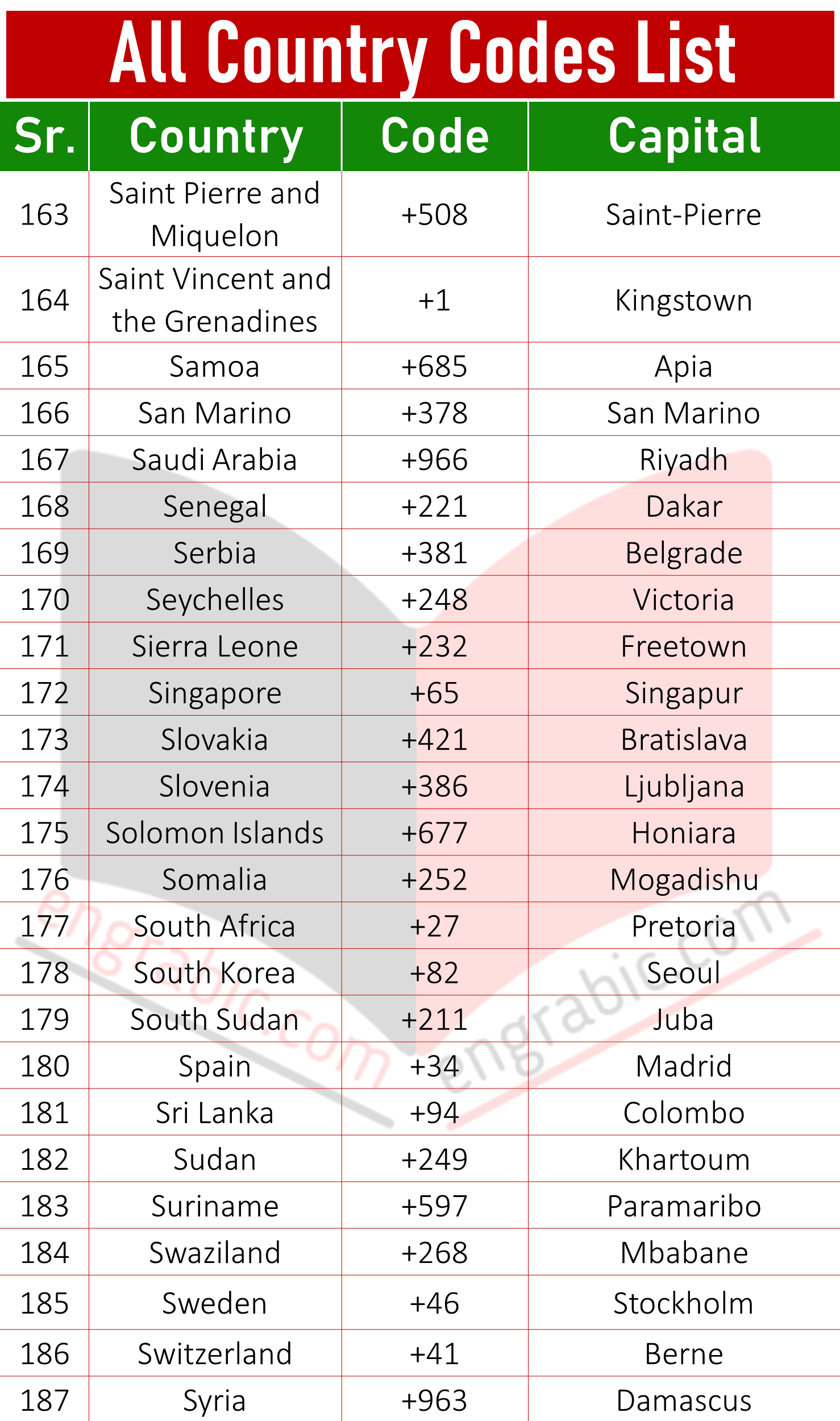
At its core, a country code serves as an alphanumeric or numeric identifier for a specific country or geographical area. While most commonly associated with international telephone dialing, its utility extends profoundly into software development, data management, digital security, and user experience across countless applications and systems. Understanding the various types of country codes and their technical underpinnings is crucial for anyone navigating or building within the modern digital ecosystem.
The Dual Nature of Country Codes: Telephony vs. Digital Data
The term “country code” often conjures a single image, but in the technological sphere, it represents two distinct yet equally vital categories: those used for international telecommunication and those employed for standardizing geographic data in software systems. Each serves a unique purpose, guided by different standards and applied in diverse contexts.
International Dialing Codes (E.164 Standard): Bridging Global Communications
The most familiar manifestation of a country code is the prefix used when making an international telephone call. These codes, formally standardized by the International Telecommunication Union (ITU-T) under the E.164 recommendation, are essential for routing calls across the global public switched telephone network (PSTN) and increasingly, Voice over Internet Protocol (VoIP) systems.
An E.164 compliant number can have a maximum of 15 digits and is structured as: [Country Code] [National Destination Code] [Subscriber Number]. For example, in the United States, the country code is +1, followed by a three-digit area code and a seven-digit subscriber number. When you dial +44 for the United Kingdom or +81 for Japan, you are directly leveraging this intricate global numbering plan.
The technical mechanism behind these codes is fundamental to international telecommunications. When a call is initiated, the dialing code tells the originating switch which international gateway to use. From there, the call is routed through a network of international carriers, which might be submarine fiber optic cables, satellite links, or a combination thereof, until it reaches the destination country’s telecommunications network. The destination network then uses the remaining digits (national destination code and subscriber number) to connect the call to the specific recipient.
In the era of VoIP, applications like Skype, Zoom, and WhatsApp still rely on the E.164 standard, even if the underlying transport mechanism is the internet. When you call a traditional phone number from one of these apps, the VoIP service provider performs the necessary translation and routing, often by peering with traditional carriers or using specialized gateways, ensuring seamless interoperability between internet-based and traditional phone networks. This reliance highlights the enduring importance of the E.164 standard as the universal language for identifying telephone numbers globally, irrespective of the underlying technology transmitting the voice data. Challenges include managing number portability, allocating new codes for emerging regions, and combating issues like robocalls and spam, where the origin country code can sometimes be spoofed or used to mask intent.
ISO 3166 Codes: Standardizing Geographic Data for Software
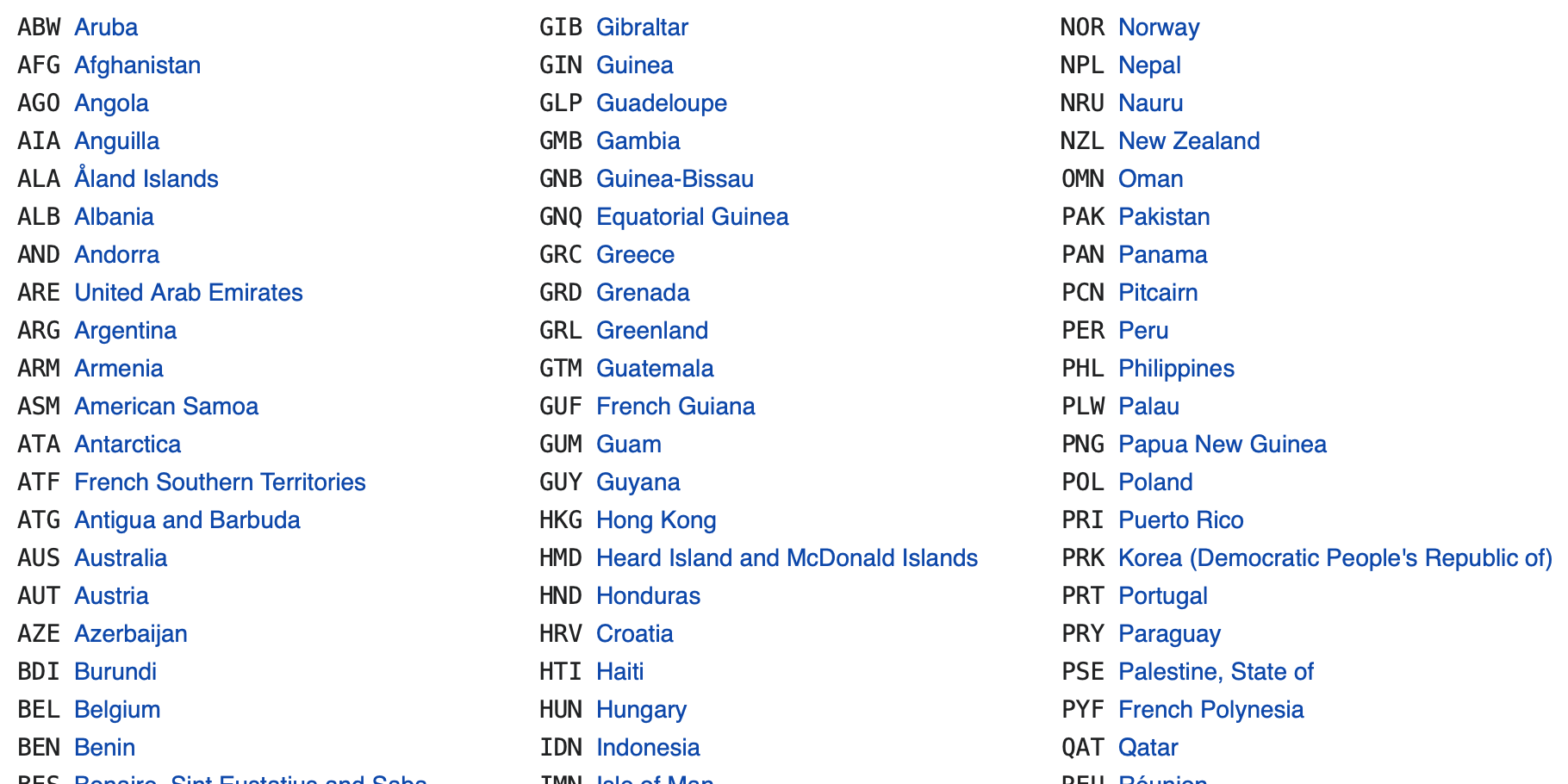
Beyond telephone calls, country codes play an equally critical role in standardizing geographic information for digital systems and databases. This is where the International Organization for Standardization (ISO) steps in with its ISO 3166 standard, which defines codes for the names of countries, dependent territories, and special areas of geographical interest.
ISO 3166 comes in three main parts, each serving slightly different technical applications:
-
ISO 3166-1 Alpha-2: These are two-letter country codes, like
USfor the United States,GBfor Great Britain, orJPfor Japan. These are the most widely used codes in web development, databases, and APIs due to their conciseness and readability. They are commonly found in URL structures for country-specific domains (e.g.,.uk,.jp), language localization settings, and shipping address forms. -
ISO 3166-1 Alpha-3: These are three-letter country codes, such as
USA,GBR, orJPN. While less common in user-facing interfaces than Alpha-2, they are frequently used in more complex data analysis, financial systems, and specialized APIs where a slightly longer, more descriptive code might be preferred for clarity or to avoid potential collisions with other two-character codes. -
ISO 3166-1 Numeric: These are three-digit numeric codes, like
840for the United States,826for the United Kingdom, or392for Japan. These codes are particularly useful in environments where only numeric data is processed, such as some legacy systems or statistical applications, offering an unambiguous numerical identifier.
The primary purpose of ISO 3166 codes is to provide an internationally recognized and unambiguous way to represent countries, thereby facilitating data exchange and reducing errors in a global context. In e-commerce, these codes are vital for processing orders, calculating shipping costs, applying correct taxes, and managing international payment gateways. For data analytics, they allow for precise geographical segmentation and comparison of statistics across different regions. In software development, consistency in using ISO 3166 codes ensures that applications can correctly interpret, store, and display country-specific information, contributing significantly to localization efforts and a seamless global user experience.
The Technical Infrastructure Behind Country Codes
The seamless operation of country codes, whether for a phone call or a database entry, relies on sophisticated underlying technical infrastructure. This infrastructure ensures that these identifiers are correctly interpreted, routed, and managed across diverse systems.
How Dialing Codes Route Calls: A Look Under the Hood
When you dial an international number, the process is far more complex than simply connecting two points. It involves a hierarchical system of switches, signaling protocols, and international agreements. Initially, the local exchange recognizes the international dialing prefix (e.g., 00 or + followed by the country code). This triggers the call to be routed to an International Gateway Switch.
These gateway switches are equipped to handle calls destined for other countries. They interpret the country code and then, using complex routing tables, determine the most efficient path to the destination country’s international gateway. This path might involve multiple intermediate carriers and submarine fiber optic cables that crisscross oceans. Signaling protocols, such as Signaling System 7 (SS7) for traditional networks or Session Initiation Protocol (SIP) for VoIP, manage the setup, maintenance, and teardown of these calls, transmitting information like caller ID, billing data, and call status.
Modern telecommunication networks also employ techniques like Least Cost Routing (LCR), where carriers dynamically choose routes based on real-time costs and network congestion, often routing calls through third-party operators in various countries to minimize expenses. This backend complexity, hidden from the end-user, underscores the engineering marvel that allows a simple country code to facilitate instant global communication. The robustness and redundancy built into these systems ensure high availability, even in the face of outages or heavy traffic.
Integrating ISO Codes in Software Development and Databases
For software developers and database architects, ISO 3166 codes are fundamental for structuring and managing geographical data. In database schema design, it’s common practice to store country information using ISO Alpha-2 codes in a VARCHAR(2) field, as this is compact, standardized, and easily indexed. For applications requiring more detail, a separate countries table might store Alpha-3, numeric codes, full country names, and other metadata, linked by the Alpha-2 code.
In API design, country codes are frequently used as parameters for requests (e.g., fetching country-specific data) or included in responses to indicate the origin or target of data. For instance, an e-commerce API might require an iso_country_code parameter to calculate sales tax accurately, or a weather API might return forecasts based on a provided country (Alpha-2) and city combination.
Localization frameworks heavily rely on ISO codes. When an application needs to display content in a specific language, currency, or date format based on a user’s geographical location, the country code (often combined with a language code, e.g., en-US, es-MX) serves as the primary determinant. This ensures that users receive a culturally and legally appropriate experience, from currency symbols to legal disclaimers. Input validation is another critical area; developers implement server-side and client-side checks to ensure that users input valid country codes, often by providing dropdown lists populated with official ISO codes or auto-suggest features that validate against a known list, preventing data integrity issues and improving user experience.
Security, Privacy, and the Future of Country Codes in Tech
As technology evolves, the role of country codes extends beyond mere identification and routing into critical areas of digital security, data privacy, and the future of digital identity.
Enhancing Digital Security: Two-Factor Authentication (2FA) and Fraud Prevention
Country codes play an implicit but vital role in digital security, particularly in the widespread adoption of Two-Factor Authentication (2FA) via SMS. When a service sends a one-time password (OTP) to your phone number for login verification, the system uses the country code to identify the correct network for message delivery, helping to confirm your identity based on your registered phone number. This reliance on a known country code provides an additional layer of verification that a user is indeed who they claim to be, especially when coupled with geographic information (e.g., if a login attempt comes from an IP address in one country but the associated phone number belongs to another, it might flag suspicious activity).
However, this reliance also presents challenges. Issues like SIM-swapping fraud, where attackers convince mobile carriers to transfer a victim’s phone number to a SIM card they control, exploit the system’s trust in phone numbers. Technical solutions to mitigate this include using app-based authenticators (like Google Authenticator) that don’t rely on SMS, or implementing stronger identity verification processes by carriers before SIM transfers. Country codes can also aid in fraud detection for online transactions, as a discrepancy between the billing address country code and the IP address’s geographical location can be a red flag.
Data Privacy and Compliance Considerations
The collection and storage of country codes, alongside other personal data, bring significant data privacy and compliance considerations. Regulations like the General Data Protection Regulation (GDPR) in Europe or the California Consumer Privacy Act (CCPA) mandate how personal data, including geographical identifiers, must be handled. Businesses must be transparent about why they collect country codes, how they use them, and for how long they retain them.
Jurisdictional data residency requirements often stipulate that certain types of data, particularly personal data, must be stored within the borders of the country from which it originated. Country codes become crucial in implementing and enforcing these policies, guiding where data should be stored physically (e.g., in a data center within the EU for EU citizens’ data). The ethical use of geographic data derived from country codes also extends to avoiding discrimination or unfair practices based on location, ensuring that technological implementations are both compliant and responsible.
The Evolving Landscape: eSIMs, Global IDs, and Beyond
The future of country codes in technology is dynamic. The advent of eSIM technology, which allows users to switch network providers without physically changing SIM cards, potentially blurs the traditional link between a phone number, a country code, and a fixed physical location. An eSIM can host multiple profiles from different countries, offering unprecedented flexibility for global travelers and businesses. This might lead to a more abstract or dynamic relationship with country codes for individual users, though the underlying numbering plans will likely remain.
Furthermore, discussions around global digital identities or decentralized identity solutions (e.g., based on blockchain) might eventually offer alternatives to current country-based identification systems. However, even in such a future, the need to categorize and reference geographical locations for legal, logistical, and historical purposes will likely ensure the continued relevance of country codes, albeit perhaps in different technical forms or layers of abstraction. They remain a foundational element for structuring the global digital commons.
Best Practices for Developers and Businesses Leveraging Country Codes
Effectively utilizing country codes in technological applications requires adherence to best practices, ensuring accuracy, usability, and compliance.
Implementing Robust Country Code Selection in UIs
For user interfaces (UIs), especially in forms requiring phone numbers or addresses, a well-designed country code selection mechanism is paramount.
-
User Experience (UX): Instead of a simple text field, provide a dropdown list of countries, often accompanied by their respective dialing codes (e.g.,
United States (+1)). This reduces user error and ensures correct input. Auto-detection based on IP address can pre-fill the country, but users should always have the option to change it. -
Search Functionality: For long lists of countries, implement a search or auto-suggest feature within the dropdown to quickly find a country by typing its name.
-
Validation: Implement both client-side (JavaScript) and server-side (backend code) validation. Client-side validation offers immediate feedback to the user, while server-side validation is crucial for security and data integrity, preventing malicious or malformed data from entering the system. This validation should check against official ISO and E.164 lists.
Data Management and API Integration Strategies
Consistent and accurate data management of country codes is vital for the health of any global application.
-
Standardization: Always store country codes in a consistent format, preferably ISO Alpha-2, as this is the most common and versatile. If you receive data in other formats (Alpha-3, numeric, or full names), convert them to Alpha-2 upon ingestion.
-
Handling Legacy Data: For existing systems with inconsistent country code storage, plan a migration strategy to standardize the data. This might involve mapping old codes to new ISO standards.
-
Using Reliable Libraries/Services: Instead of maintaining your own list of country codes, leverage well-established, regularly updated external libraries or APIs (e.g.,
libphonenumberby Google for phone numbers, or various open-source ISO country code libraries) that handle country names, codes, and associated metadata. This reduces maintenance overhead and ensures accuracy. -
Impact on Analytics and Reporting: Standardized country codes greatly enhance the value of analytics and reporting. They allow for accurate geographical segmentation of user data, sales figures, and other metrics, providing actionable insights for business strategy, marketing, and product development.

Conclusion: The Unsung Heroes of Our Connected World
Country codes, in their various forms, are the unsung heroes of our digital age. They are the silent enablers of global telecommunication, the bedrock for structuring international data, and critical components in the ongoing quest for digital security and privacy. From facilitating a simple international phone call to driving complex software localization and fraud detection systems, their impact permeates nearly every facet of modern technology.
As our world becomes even more interconnected, the underlying standards and technical implementations of country codes will continue to evolve. Yet, their fundamental role in providing unambiguous geographical identification and connectivity will remain indispensable. For developers, businesses, and indeed, anyone interacting with global digital platforms, a clear understanding of what a country code is, how it works, and its far-reaching implications is not just beneficial, but essential in building and navigating the technologies of tomorrow.
aViewFromTheCave is a participant in the Amazon Services LLC Associates Program, an affiliate advertising program designed to provide a means for sites to earn advertising fees by advertising and linking to Amazon.com. Amazon, the Amazon logo, AmazonSupply, and the AmazonSupply logo are trademarks of Amazon.com, Inc. or its affiliates. As an Amazon Associate we earn affiliate commissions from qualifying purchases.