
The Geometric Foundation in Digital Systems
The concept of a vertex, particularly within the context of a triangle, is often first encountered in fundamental geometry. However, its significance transcends theoretical mathematics, forming an indispensable cornerstone for nearly every aspect of modern technology, from intricate software development to immersive digital experiences. Understanding what a vertex is, and how it is represented and manipulated in digital systems, is crucial for anyone delving into fields like computer graphics, artificial intelligence, or data visualization.
Defining the Vertex: From Abstract Concept to Digital Data
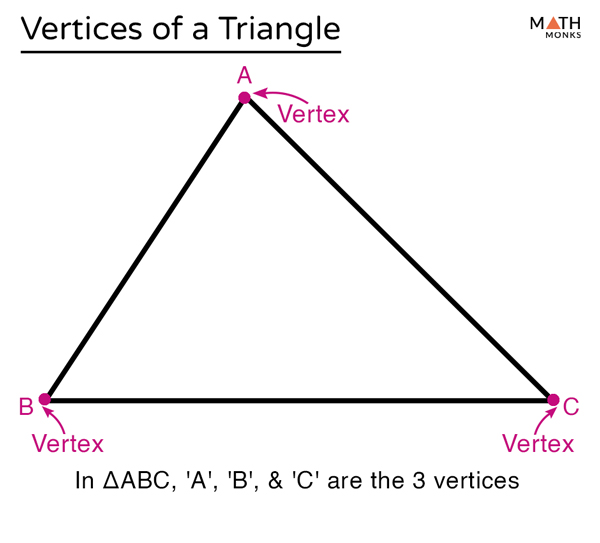
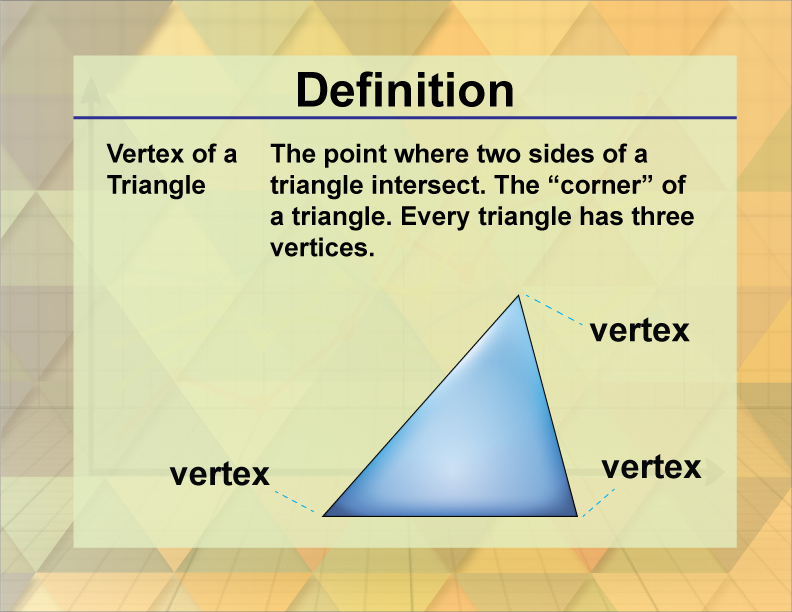
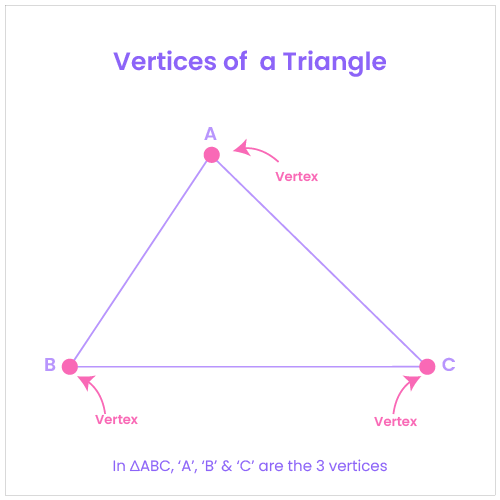
At its most basic, a vertex of a triangle is a point where two sides of the triangle meet, forming an angle. A triangle, by definition, has three vertices. While geometrically an abstract point, in the digital realm, a vertex is concretely represented by a set of coordinates. In two-dimensional (2D) space, this is typically an (x,y) pair. For three-dimensional (3D) environments, it expands to an (x,y,z) triplet. These coordinates serve as the most granular data points, precisely locating and defining every shape, object, and boundary within a digital environment. Without this fundamental numerical representation, the complex structures and dynamic simulations we experience in software would simply be impossible. The precise digital definition of a vertex underpins the accuracy and fidelity of all computational geometry.
Triangles as Universal Primitives in Digital Environments
While complex curves and organic shapes define much of our visual world, the triangle reigns supreme as the universal primitive in digital environments. This might seem counterintuitive, but its simplicity is its strength. Any complex 3D surface, no matter how intricate, can be decomposed or “triangulated” into a vast mesh of interconnected triangles. This process is vital because triangles are inherently planar (all three vertices lie on the same plane) and rigid, meaning they cannot be deformed without changing their side lengths, making them computationally stable and predictable. The vertices of these triangles collectively form the skeletal structure of any digital object, from a character model in a video game to an architectural blueprint in CAD software. This triangulation allows for efficient processing by graphics hardware and simplifies complex calculations for physics engines and rendering algorithms, making triangles, and by extension their vertices, the silent workhorses of our digital landscapes.
Vertices in Computer Graphics, 3D Modeling, and Interactive Experiences
The impact of vertices is perhaps most immediately apparent in the realm of computer graphics and 3D modeling, where they are the fundamental building blocks for creating visual reality. Every object rendered on a screen, every character animated, and every environment explored in a digital space owes its existence to precisely defined vertices.
Building and Rendering Visual Worlds
In computer graphics, 3D objects are typically constructed from polygonal meshes, with triangles being the most common polygon. Each vertex in these meshes carries not only its spatial coordinates (position) but also other vital information: a normal vector (indicating the surface’s direction for lighting calculations), UV coordinates (for texture mapping), and often color data. This comprehensive vertex data is fed into the Graphics Processing Unit (GPU), which then processes it through a series of stages known as the rendering pipeline. Vertex shaders, a programmable part of this pipeline, manipulate these vertex attributes to perform transformations, lighting calculations, and other effects, ultimately determining how the object is displayed on screen. The efficiency and accuracy of vertex processing are paramount for achieving high-fidelity graphics and smooth performance in applications ranging from cinematic visual effects to real-time interactive games.
Animation, Deformation, and Real-Time Interaction
Vertices are the core components that enable dynamic motion and realistic deformation in digital models. In animation, objects come to life by subtly altering the positions of their constituent vertices over time. Skeletal animation, a common technique, involves a virtual “skeleton” that influences groups of vertices, allowing animators to pose characters by moving bones, which in turn deform the mesh. Beyond animation, physics simulations calculate forces and collisions that directly impact vertex positions, leading to realistic cloth simulations, fluid dynamics, and object interactions. Furthermore, in 3D modeling software, artists and designers directly manipulate vertices, edges (connections between vertices), and faces (triangles formed by vertices) to sculpt and refine digital objects. This direct interaction with vertex data empowers creators to build complex and visually rich digital assets that respond dynamically to their environment or user input.
CAD, Engineering, and Scientific Visualization
The meticulous precision afforded by vertices makes them indispensable in Computer-Aided Design (CAD), engineering, and scientific visualization. In CAD systems, vertices define the exact points, lines, and surfaces of architectural blueprints, mechanical parts, and product designs. This precision is critical for manufacturing, ensuring that physical objects accurately reflect their digital counterparts. In engineering analysis, such as Finite Element Analysis (FEA), complex structures are discretized into a mesh of elements, each defined by nodes—which are essentially vertices. These nodes are where forces, stresses, and displacements are calculated, providing critical insights into material behavior and structural integrity. Similarly, in scientific visualization, vertices are used to represent data points, construct isosurfaces, or create digital terrain models, allowing researchers to explore and understand complex datasets from various scientific disciplines in an intuitive, visual manner.
Beyond Graphics: Vertices in AI, Data Science, and Network Architectures
The utility of vertices extends far beyond visual representations, proving crucial in abstract data structures and computational models that power artificial intelligence, data science, and network design. Here, the concept might be generalized from a purely geometric point to a more abstract ‘node’ or ‘point of interest.’
Computer Vision and Machine Learning for Geometric Understanding
In computer vision, algorithms often seek to understand the geometry of a scene or object. This frequently involves identifying ‘keypoints’ or ‘corners’ in images, which function much like abstract vertices. For instance, feature detection algorithms (like SIFT or SURF) locate these salient points that are robust to changes in scale, rotation, and illumination. These detected ‘vertices’ are then used for tasks such as object recognition, image stitching, or 3D reconstruction, where multiple 2D images are analyzed to infer the 3D positions of points in space, effectively creating a 3D cloud of vertices (a “point cloud”). Machine learning models leverage these vertex-like features to interpret visual information, enabling autonomous vehicles to perceive their environment or medical imaging software to identify anomalies.
Graph Theory and Complex Systems Modeling
One of the most powerful extensions of the vertex concept lies in graph theory, where a vertex is simply a ‘node’ in a network. In this context, vertices don’t necessarily have geometric coordinates but represent entities (e.g., people, computers, cities, data points) and edges represent relationships or connections between them. This abstract framework is used to model a vast array of complex systems: social networks (people as vertices, friendships as edges), transportation networks (cities as vertices, routes as edges), communication systems, and even the internet itself. Algorithms that operate on these graphs analyze properties of vertices (e.g., centrality, connectivity) to find shortest paths, identify communities, detect anomalies, or optimize resource allocation. The robustness and versatility of graph theory, built upon the fundamental concept of a vertex/node, make it indispensable for understanding and managing intricate digital ecosystems.
Geospatial Information Systems (GIS) and Digital Mapping
In Geographic Information Systems (GIS), vertices are the foundational elements for digitally mapping and analyzing geographical features. They define the precise locations of points of interest, the boundaries of administrative regions (countries, states, properties), and the contour lines of elevation models. Polylines, which are sequences of connected vertices, represent roads, rivers, or utility lines, while polygons, formed by closed loops of vertices, depict land parcels, lakes, or forest areas. Digital Terrain Models (DTMs) and 3D cityscapes are constructed from vast networks of elevation vertices, enabling accurate simulations of water flow, urban planning, and environmental impact assessments. Vertices in GIS provide the spatial accuracy needed for navigation apps, urban development, disaster management, and a myriad of other location-based services that permeate our daily lives.
Optimizing Digital Performance Through Vertex Management
The sheer volume of vertex data required to render complex digital environments poses significant challenges for performance. Efficient management and optimization of vertices are critical for delivering smooth, responsive, and visually rich user experiences across all tech platforms.
Efficiency in Rendering: Vertex Budgets and Level of Detail (LOD)
Every vertex processed by a GPU contributes to the computational load. Consequently, developers and artists operate within “vertex budgets” to balance visual fidelity with performance constraints. Techniques like Level of Detail (LOD) are employed, where objects further from the camera or less critical to the scene are represented by simplified meshes with fewer vertices. As an object moves closer or becomes more prominent, a higher-detail mesh with more vertices is seamlessly swapped in. Algorithms like mesh decimation or simplification actively reduce vertex counts while attempting to preserve visual integrity. Furthermore, rendering pipelines incorporate culling techniques (e.g., frustum culling, occlusion culling) that prevent vertices of objects outside the camera’s view or hidden behind other objects from being processed, drastically reducing unnecessary computations and maximizing rendering efficiency.
Data Structures and Memory Management
Optimizing how vertex data is stored and accessed is equally important. Modern GPUs are designed to process large batches of vertex data efficiently. “Vertex buffers” are dedicated memory regions on the GPU where vertex attributes (position, normal, UVs) are stored, allowing the GPU to access them rapidly for rendering. “Indexed drawing” is a crucial optimization where a single vertex can be defined once and then referenced multiple times by an index buffer. This avoids redundant storage of vertex data, saving significant memory and reducing the bandwidth required to transfer data between the CPU and GPU. The continuous evolution of graphics APIs (like DirectX, OpenGL, Vulkan) and hardware architectures is driven by the imperative to streamline vertex processing, allowing for ever more complex and detailed digital worlds to be rendered in real-time with increasing performance efficiency.
aViewFromTheCave is a participant in the Amazon Services LLC Associates Program, an affiliate advertising program designed to provide a means for sites to earn advertising fees by advertising and linking to Amazon.com. Amazon, the Amazon logo, AmazonSupply, and the AmazonSupply logo are trademarks of Amazon.com, Inc. or its affiliates. As an Amazon Associate we earn affiliate commissions from qualifying purchases.