
Valence Bond Theory (VBT) is one of the two foundational theories of quantum chemistry, providing a mathematical and conceptual framework for understanding how atoms bond to form molecules. While it originated in the early 20th century, its relevance has exploded in the digital age. Today, VBT is not just a textbook concept for chemists; it is a critical component of high-performance computing (HPC), software engineering for drug discovery, and the burgeoning field of quantum computing. To understand what valence bond theory is in a modern context is to understand the algorithms that allow us to simulate the physical world with pinpoint accuracy.

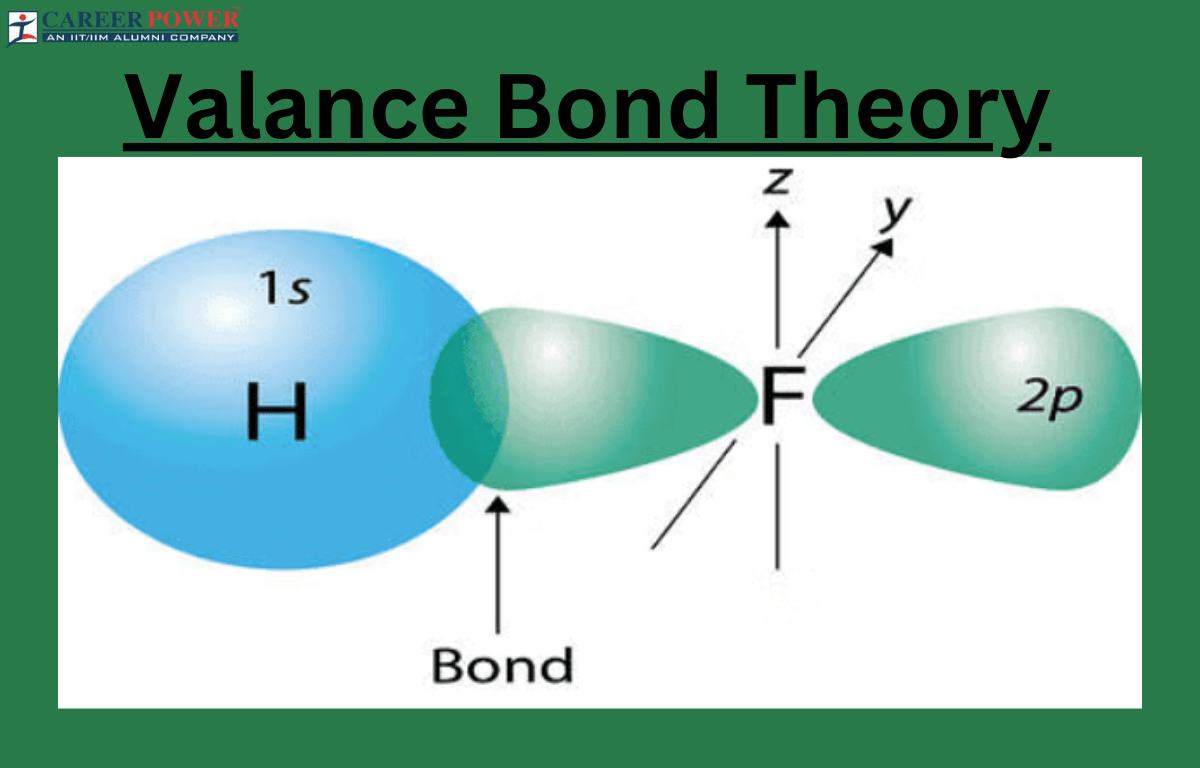
At its core, Valence Bond Theory describes the formation of a chemical bond as the overlap of individual atomic orbitals. When the electrons of two different atoms occupy the same region of space, their wave functions interfere constructively, creating a stable, lower-energy state. For technology professionals, VBT can be viewed as a “localized” model of computing molecular structures, contrasting with the “delocalized” approach of Molecular Orbital (MO) Theory.
Understanding the Fundamentals: From Atomic Orbitals to Digital Models
To grasp the technological application of Valence Bond Theory, one must first understand its scientific logic. VBT posits that a chemical bond forms when two valence electrons with opposing spins are shared between two atoms through the overlap of their atomic orbitals. This theory provides a highly intuitive “localized” view of bonding, which makes it an ideal candidate for certain types of computational modeling.
The Core Principles of Valence Bond Theory
In VBT, the focus remains on the individual atom even as it joins a molecule. The theory utilizes the concept of the “Heitler-London” model, which was the first quantum mechanical treatment of the hydrogen molecule. In a software environment, this translates to assigning specific coordinates and wave function parameters to individual nuclei.
The three primary tenets of VBT are:
- Orbital Overlap: The strength of a bond is directly proportional to the amount of overlap between atomic orbitals.
- Spin Pairing: For a bond to form, the electrons in the overlapping orbitals must have opposite spins.
- Hybridization: To explain molecular geometries that simple atomic orbitals cannot, VBT introduces “hybrid” orbitals—mathematical recombinations of s, p, and d orbitals.
Hybridization in a Virtual Environment
In the realm of computer-aided design (CAD) for molecules, hybridization is a vital algorithm. When developers build software to visualize methane ($CH_4$), they cannot simply use standard s and p orbitals. The software must calculate the $sp^3$ hybridization to correctly render the tetrahedral shape at $109.5$ degrees. Without the mathematical rigor of VBT, molecular modeling apps would fail to accurately predict the spatial orientation of complex organic compounds, rendering them useless for precision engineering in pharmacology or materials science.
The Technological Evolution of VBT: Simulation Software and Algorithms
The transition of Valence Bond Theory from a chalkboard derivation to a digital simulation tool required massive leaps in processing power. Early VBT calculations were notoriously difficult to scale because the complexity of the equations grows exponentially with the number of electrons. However, modern software architecture has revitalized VBT, making it a “niche but powerful” alternative to the more common density functional theory (DFT).
High-Performance Computing (HPC) and Quantum Chemistry
Simulating VBT requires significant “compute” because it involves solving the Schrödinger equation for multi-electron systems. This is where High-Performance Computing enters the fray. Modern research facilities utilize clusters of GPUs (Graphics Processing Units) to handle the parallel processing required for valence bond self-consistent field (VBSCF) methods. Unlike standard business applications, chemistry simulations are “compute-bound,” meaning their performance is limited by the speed of the processor and the efficiency of the underlying algorithm.
Key Software Suites: Gaussian, GAMESS, and XMVB
Several industry-standard software packages are designed to implement VBT calculations. Programs like Gaussian and GAMESS (General Atomic and Molecular Electronic Structure System) allow researchers to toggle between different theoretical frameworks. More specialized tools, such as XMVB, are dedicated specifically to valence bond methods.

These software tools serve several purposes in the tech industry:
- Semiconductor Research: Predicting the electronic properties of new silicon-alternative materials.
- Nanotechnology: Designing molecular machines that require precise localized bond understanding.
- Battery Tech: Simulating the flow of ions and the breaking of bonds in lithium-ion and solid-state batteries.
AI and Machine Learning: Accelerating Molecular Discovery
One of the most exciting intersections of science and technology is the application of Artificial Intelligence (AI) to Valence Bond Theory. Traditionally, calculating the electronic structure of a large molecule could take weeks of supercomputer time. Today, Machine Learning (ML) is being used to bypass these bottlenecks.
Predictive Modeling of Chemical Bonds
By training neural networks on massive datasets of previously calculated VBT wave functions, AI developers are creating “surrogate models.” These models can predict the outcome of a valence bond overlap in milliseconds rather than days. For a biotech startup, this means they can screen millions of potential drug candidates digitally before ever stepping into a wet lab. The AI essentially “learns” the rules of VBT hybridization and overlap, allowing it to estimate molecular stability and reactivity with high confidence.
Neural Networks in Valence Bond Simulations
Deep learning architectures, specifically Graph Neural Networks (GNNs), are uniquely suited for VBT. Since VBT emphasizes localized bonds between specific atoms, a molecule can be represented as a graph where atoms are nodes and valence bonds are edges. This structural synergy allows AI to optimize the geometry of new materials, such as catalysts for hydrogen fuel cells, by predicting which “orbital overlaps” will result in the most efficient energy transfer.
Quantum Computing: The Future of Simulating Complex Bonding
Perhaps the most natural fit for Valence Bond Theory is the emerging field of quantum computing. Classical computers—even the world’s fastest supercomputers—struggle with VBT because they represent data in binary (0s and 1s). Nature, however, operates on quantum probabilities.
Overcoming the Limitations of Classical Hardware
The “many-body problem” in VBT—the challenge of calculating how multiple electrons interact—is a barrier for classical hardware. Quantum computers use qubits, which can exist in multiple states simultaneously, mirroring the “superposition” of electron wave functions. Leading tech firms like IBM, Google, and IonQ are actively developing algorithms that use VBT as a roadmap for quantum chemistry simulations. On a quantum processor, VBT equations that would take 1,000 years to solve on a classical desktop can theoretically be solved in minutes.
Real-Time Visualization and VR in Molecular Engineering
As hardware becomes more capable, we are seeing the rise of Virtual Reality (VR) interfaces for VBT. Engineers can now put on a VR headset and manually “tug” on the valence bonds of a digital protein. The software uses real-time VBT calculations to provide haptic feedback, showing the user where the bond is most likely to break or where an orbital overlap is most favorable. This “Gamification” of high-level physics is accelerating the design of new polymers and synthetic materials.
Why Valence Bond Theory Matters in the Digital Economy
Valence Bond Theory is no longer just a subject for academics; it is a driver of the digital economy. The insights provided by VBT allow for “rational design”—the process of creating a product from the molecular level up to meet specific technical requirements.
In the tech industry, this translates to:
- More Efficient Hardware: By understanding the valence bonds in 2D materials like graphene, engineers can design faster, cooler-running microprocessors.
- Sustainable Tech: VBT helps in designing biodegradable plastics and more efficient solar cells by modeling how light interacts with specific localized bonds.
- Digital Security: Quantum-resistant encryption often relies on complex mathematical problems. Some of these are inspired by the hard-to-calculate nature of multi-electron wave functions found in VBT.
In conclusion, Valence Bond Theory serves as a bridge between the abstract world of quantum mechanics and the tangible world of technological innovation. By providing a localized, intuitive, and mathematically rigorous description of how atoms connect, VBT informs the software that designs our medicines, the AI that discovers our materials, and the quantum computers that will define the next century of tech. As we continue to push the boundaries of what is possible at the atomic scale, the principles of VBT will remain the source code for our physical reality.
aViewFromTheCave is a participant in the Amazon Services LLC Associates Program, an affiliate advertising program designed to provide a means for sites to earn advertising fees by advertising and linking to Amazon.com. Amazon, the Amazon logo, AmazonSupply, and the AmazonSupply logo are trademarks of Amazon.com, Inc. or its affiliates. As an Amazon Associate we earn affiliate commissions from qualifying purchases.