
The concept of a “sovereign wealth fund” (SWF) often conjures images of oil-rich nations or fast-growing economies channeling vast surpluses into global investments. These funds are state-owned investment vehicles designed to manage and grow national assets, typically derived from non-renewable natural resources, balance of payment surpluses, or privatization proceeds. However, when we ask “what is a US sovereign wealth fund,” the answer isn’t as straightforward as identifying a single, monolithic entity. Unlike many other major economies, the United States does not operate a single, centralized federal sovereign wealth fund in the conventional sense. This unique position merits a deeper dive into what SWFs entail, why the US approach differs, and what structures exist that might approximate or fulfill similar roles within its financial landscape.
Understanding Sovereign Wealth Funds (SWFs)
To grasp the US context, it’s essential first to understand the fundamental nature and global prevalence of sovereign wealth funds. These powerful financial instruments have become significant players in the global economy, influencing everything from real estate to technology startups.
Definition and Purpose
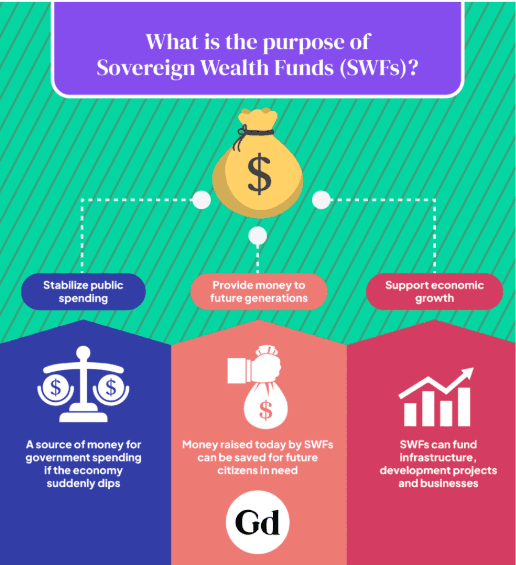
A sovereign wealth fund is a state-owned investment fund comprised of money derived from a country’s surplus reserves. These funds typically invest globally in a broad range of assets, including stocks, bonds, real estate, private equity, and hedge funds. Their primary purposes vary but generally include:
-
Stabilization: Cushioning the national economy against volatility, especially from commodity price fluctuations (e.g., oil and gas).
-
Saving for Future Generations: Converting non-renewable resource wealth into a diversified asset base for long-term national benefit.
-
Economic Development and Diversification: Investing in strategic industries or projects to promote economic growth and reduce reliance on a single sector.
-
Fiscal Management: Managing budget surpluses effectively to generate returns rather than letting funds sit idle.
The long-term investment horizon and substantial capital make SWFs unique and influential entities, often taking stakes in critical infrastructure and innovation worldwide.
Global Landscape of SWFs
Globally, SWFs manage trillions of dollars. Countries like Norway (Government Pension Fund Global), Saudi Arabia (Public Investment Fund), China (China Investment Corporation), Singapore (GIC and Temasek Holdings), and the UAE (ADIA, Mubadala) are prominent examples. These funds vary significantly in their mandates, transparency, and investment strategies. Some are highly active, taking direct stakes in companies, while others focus on passive, broad-market investments. Their growth over the past few decades reflects a global trend towards more sophisticated management of national wealth beyond traditional central bank reserves.
Funding Sources and Investment Strategies
The capital for SWFs typically originates from a few key sources:
-
Commodity Exports: Nations rich in oil, gas, or minerals often establish SWFs to manage the revenues from these finite resources, ensuring long-term prosperity beyond their depletion.
-
Budget Surpluses: Countries with consistent fiscal surpluses may allocate a portion to an SWF for strategic investment.
-
Foreign Exchange Reserves: Some nations convert excess foreign currency reserves, traditionally held in low-yielding assets, into higher-return investments through an SWF.
-
Privatization Proceeds: Funds generated from selling state-owned enterprises can also seed an SWF.
Investment strategies are diverse, ranging from conservative allocations to highly aggressive alternative investments. They often leverage their long-term horizon to invest in illiquid assets like infrastructure and private equity, which can yield higher returns over extended periods.
The US Context: A Unique Approach to Public Wealth
While the United States possesses immense wealth and economic power, it famously lacks a singular federal sovereign wealth fund akin to Norway’s. This absence is not accidental but a reflection of the US’s distinct economic philosophy, historical development, and federal-state structure.
Absence of a Centralized Federal SWF
The primary reason for the absence of a federal US SWF lies in its strong tradition of private sector dominance and a preference for direct fiscal policy and taxation rather than state-led investment vehicles for surplus wealth. The US government typically manages its finances through annual budgeting, taxation, and borrowing, with surpluses often used for debt reduction or increased spending rather than being sequestered into an investment fund for future generations.
Historically, the US has also had less reliance on a single commodity for its national wealth compared to many SWF-rich nations. While the US is a major producer of oil and gas, revenues are often collected through taxes and royalties and integrated into the general budget rather than funneled into a separate, long-term investment fund. The political landscape also plays a role, with strong ideological divides regarding the government’s role in direct investment and the potential for political interference in managing such a large fund.
State-Level Precedents: Alaska Permanent Fund
While there isn’t a federal SWF, the concept isn’t entirely alien to the US. The most prominent example, and often cited as the closest thing to a US sovereign wealth fund, is the Alaska Permanent Fund (APF). Established in 1976, the APF is a constitutionally dedicated trust fund that invests Alaska’s oil revenue. Its primary goal is to preserve and grow the state’s natural resource wealth for the benefit of current and future generations of Alaskans. A unique feature of the APF is its annual dividend payment to eligible residents, making it a tangible example of a resource-backed SWF directly impacting citizens. The APF operates with an explicit long-term mandate, investing globally across various asset classes, much like international SWFs.
Other Quasi-SWF Structures
Beyond the Alaska Permanent Fund, other entities in the US bear some resemblance to SWFs in their function or structure, though they are not typically classified as such:
-
State Pension Funds: Many US states operate massive pension funds for public employees (e.g., CalPERS, CalSTRS in California, New York State Common Retirement Fund). These funds manage trillions in assets, invest globally, and have long-term horizons. While their mandate is specifically to fund pension liabilities, their scale and investment sophistication mirror those of traditional SWFs.
-
Federal Trust Funds: Funds like the Social Security Trust Fund or the Highway Trust Fund collect dedicated revenues (e.g., payroll taxes, fuel taxes) and invest them, primarily in government bonds, to meet future obligations. While they manage substantial assets, their investment mandate is typically very conservative and highly restricted compared to a typical SWF.
-
University Endowments: Institutions like Harvard or Yale manage multi-billion dollar endowments that invest globally across diverse asset classes with an extremely long-term horizon. While private entities, their investment strategies and scale can be compared to SWFs.
These examples illustrate that while a consolidated federal SWF is absent, the US has a robust ecosystem of large, long-term investment funds managing public or quasi-public assets, albeit with distinct mandates and governance structures.

Drivers for a Potential Federal US SWF
Despite the historical absence, discussions occasionally emerge about the potential benefits of establishing a federal US sovereign wealth fund. Such proposals often align with specific economic or fiscal objectives, particularly during periods of substantial resource revenue or budget surpluses.
Harnessing Natural Resource Revenues
The US is rich in natural resources, including oil, natural gas, and various minerals. While revenues from these resources flow into the general treasury, some argue that creating a dedicated federal SWF could more effectively manage this finite wealth. A fund could convert these non-renewable assets into a diversified, perpetual income stream, mirroring the Alaska model on a national scale. This approach could provide long-term fiscal stability, insulate the budget from commodity price swings, and ensure that resource extraction benefits future generations beyond immediate consumption.
Managing Budget Surpluses and Fiscal Stabilisation
In periods of significant budget surpluses, the US government often faces choices: reduce national debt, increase spending, or cut taxes. An alternative could be to allocate a portion of these surpluses to a federal SWF. Such a fund could act as a fiscal stabilization mechanism, building reserves during good times to be drawn upon during economic downturns, much like a national rainy-day fund. It could also provide an avenue for saving for major long-term national challenges, such as infrastructure modernization or climate change adaptation.
Strategic Investments and Economic Diversification
A federal SWF could be tasked with making strategic investments in areas critical for future US competitiveness and security. This might include funding cutting-edge research and development, investing in emerging technologies (e.g., AI, biotechnology, green energy), or strengthening critical supply chains. By acting as a patient, long-term investor, such a fund could help diversify the US economy, foster innovation, and ensure the nation’s leadership in key industries, potentially addressing market failures where private capital might be too risk-averse or short-sighted.
Challenges and Criticisms of Establishing a US SWF
While the arguments for a federal US SWF can be compelling, significant challenges and criticisms would need to be addressed for such a fund to materialize.
Political Will and Bipartisan Consensus
The most significant hurdle is political. Establishing a fund of this magnitude would require substantial bipartisan consensus, which is often elusive in Washington D.C. Debates would inevitably arise over its funding sources, investment mandate, governance, and the fundamental question of whether the government should play such a direct role in investment. Fears of “crony capitalism” or political influence over investment decisions are potent criticisms.
Investment Mandate and Governance Concerns
Defining a clear, non-political investment mandate would be crucial. Would the fund prioritize financial returns, social objectives, or a blend of both? How would its independence from political interference be guaranteed? The selection of its board, the criteria for investment, and mechanisms for transparency and accountability would be subject to intense scrutiny. Without robust governance structures, there’s a risk that a federal SWF could become a tool for political patronage or inefficient allocation of capital.
Impact on Capital Markets and Private Sector
Critics might also argue that a massive federal SWF could distort US capital markets by crowding out private investment or creating unfair competition. The scale of capital it would control could give it undue influence over companies and sectors, potentially undermining the free market principles that underpin the US economy. Careful consideration would be needed to ensure that such a fund complements, rather than competes with, the existing robust private investment landscape.
The Future Outlook: A Shifting Financial Landscape
The global financial landscape is constantly evolving, and so too are the ways nations manage their wealth. While a traditional federal US sovereign wealth fund remains hypothetical, the discourse around it highlights important questions about long-term fiscal planning and national asset management.
Lessons from International SWFs
The US can draw valuable lessons from the successes and failures of international SWFs. Countries like Norway have demonstrated how a well-governed, transparent fund can effectively convert finite resources into lasting national wealth, while others have faced challenges with political interference or opaque operations. Best practices in governance, risk management, and ethical investing from global SWFs could inform any future US discussions.
The Role of State-Level Funds in the US
The existing state-level funds, particularly the Alaska Permanent Fund, offer a practical domestic model. Their continued operation and success demonstrate that the SWF concept can be adapted to the American federal system. As states continue to face fiscal challenges and seek innovative ways to manage resources, the creation or expansion of state-level quasi-SWFs might become more common.

Potential Evolution of US Fiscal Policy
In an era of increasing national debt, demographic shifts, and significant investment needs (e.g., climate change, infrastructure), the US may eventually need to reconsider its traditional approaches to fiscal management. While a “US sovereign wealth fund” in the classic sense might not emerge soon, the underlying principles—long-term saving, strategic investment, and intergenerational equity—could increasingly influence future US fiscal policy debates and the evolution of its public financial institutions. The question of how the US best secures its long-term economic prosperity and manages its national wealth remains a crucial one, even without a single federal SWF at its helm.
aViewFromTheCave is a participant in the Amazon Services LLC Associates Program, an affiliate advertising program designed to provide a means for sites to earn advertising fees by advertising and linking to Amazon.com. Amazon, the Amazon logo, AmazonSupply, and the AmazonSupply logo are trademarks of Amazon.com, Inc. or its affiliates. As an Amazon Associate we earn affiliate commissions from qualifying purchases.