
Understanding how to calculate percentage increase is a fundamental skill that underpins sound financial decision-making, whether for personal wealth management or business growth. In an increasingly data-driven world, the ability to quantify growth, assess performance, and project future trends using percentage changes is indispensable. This mathematical concept provides a clear, standardized way to compare changes over time, offering insights far beyond simple absolute figures. For investors tracking portfolio gains, business owners analyzing revenue spikes, or individuals evaluating salary increases, mastering this calculation is a direct pathway to greater financial literacy and control.
Why Understanding Percentage Increase is Crucial for Your Finances
The power of percentage increase lies in its ability to normalize data, allowing for meaningful comparisons regardless of the base values. A raw increase of $1,000 might seem significant, but if it’s an increase from $10,000, it’s a 10% gain. If it’s an increase from $100,000, it’s only a 1% gain. This context is vital in financial analysis.
Tracking Investment Growth
For investors, calculating percentage increase is the primary method to assess the performance of assets, portfolios, and individual investments. It allows you to understand the true return on your capital, compare different investment opportunities, and measure your progress toward financial goals. Whether you’re looking at stocks, bonds, mutual funds, or real estate, expressing growth as a percentage provides a standardized metric that cuts through the noise of fluctuating dollar values. A 7% annual return on an investment is a concrete benchmark, regardless of whether your initial investment was $1,000 or $1,000,000. It helps in evaluating the effectiveness of investment strategies and making informed adjustments.
Analyzing Business Performance
In the realm of business finance, percentage increase is a core metric for evaluating operational success and strategic effectiveness. Companies regularly analyze percentage increases in revenue, profit margins, customer acquisition, market share, and operational efficiency. A business might report a 15% increase in quarterly sales, a 10% rise in net profit year-over-year, or a 5% improvement in production efficiency. These figures provide clear indicators of growth trajectories, highlight areas of strength, and pinpoint where improvements are needed. They are essential for internal reporting, stakeholder communication, and making critical decisions about resource allocation, expansion, and marketing strategies.
Understanding Cost and Income Fluctuations
Beyond investments and business operations, percentage increase helps individuals understand changes in their personal financial landscape. It allows you to quantify a raise in your salary, compare it against the rate of inflation, or track the increasing cost of living. For instance, if your rent increases by 8% this year, understanding that percentage helps you assess its impact on your budget more accurately than just looking at the dollar amount. Similarly, understanding the percentage increase in your utilities or grocery bills over time allows for better budgeting and financial planning, helping you anticipate future expenses and adjust spending habits accordingly.
The Core Formula: A Simple Breakdown
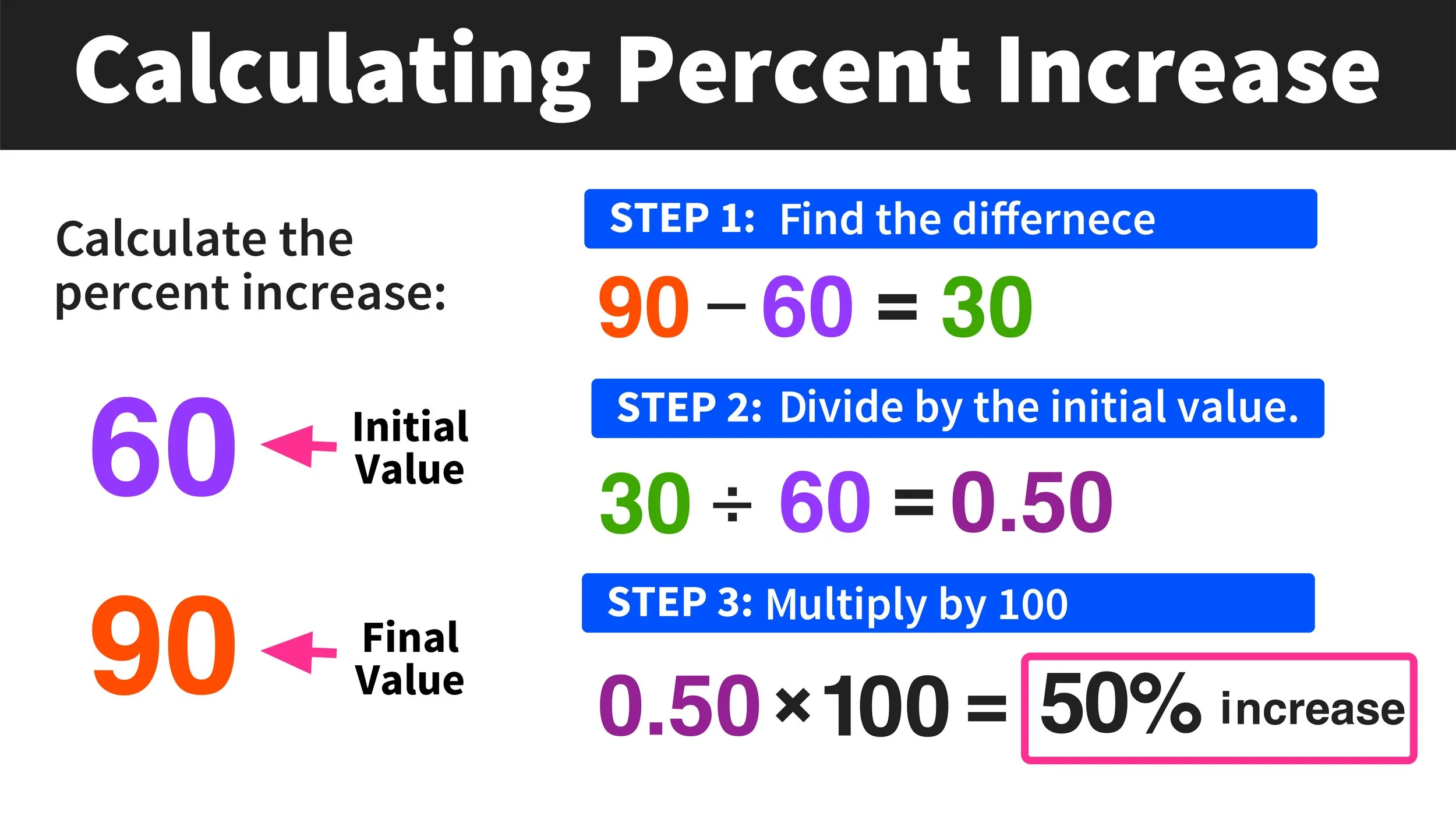
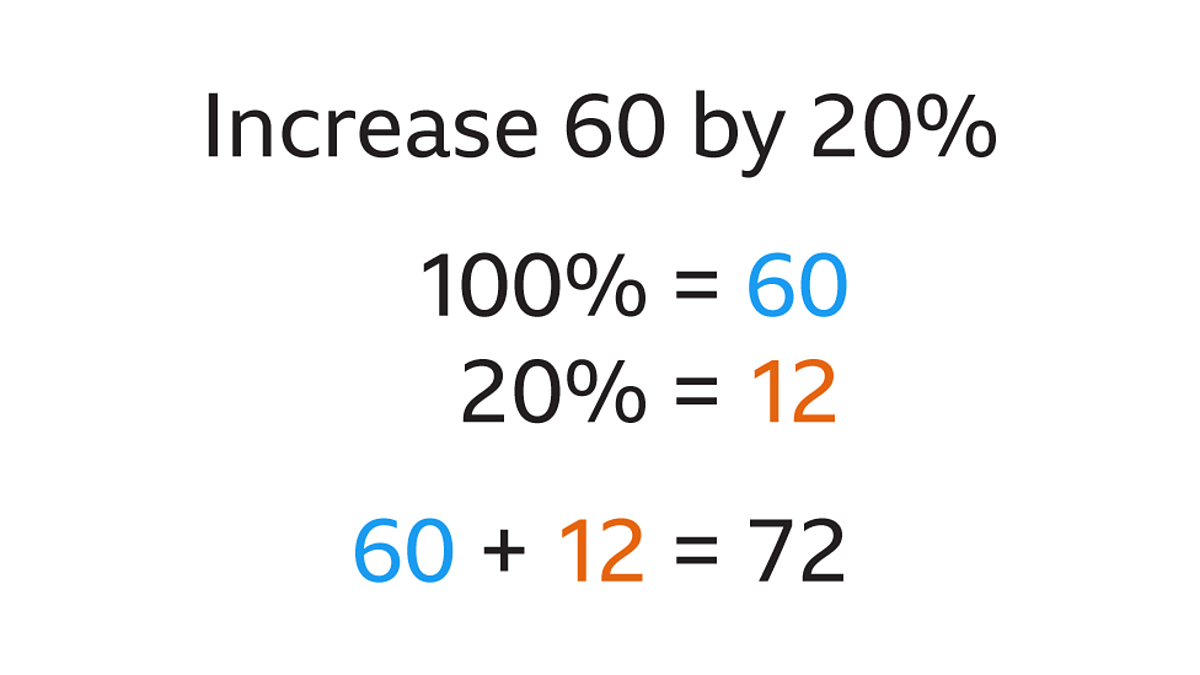
The formula for calculating percentage increase is straightforward, yet incredibly powerful in its applications. It involves comparing a new value to an original value and expressing that change as a proportion of the original, then multiplying by 100 to get a percentage.
The formula is:
$$ text{Percentage Increase} = left( frac{text{New Value} – text{Original Value}}{text{Original Value}} right) times 100 $$
Let’s break down each component:
-
Original Value: This is the starting point, the baseline figure you are measuring against.
-
New Value: This is the ending point, the figure after the change has occurred.
-
Difference (New Value – Original Value): This calculates the absolute amount of change.
-
Division by Original Value: This converts the absolute change into a relative change, showing what proportion of the original value the increase represents.
-
Multiplication by 100: This converts the decimal proportion into a percentage, making it easier to interpret.
Step-by-Step Calculation Guide
Let’s walk through an example. Suppose an investment portfolio was valued at $50,000 at the beginning of the year and grew to $55,000 by the end of the year.
-
Identify the Original Value: Original Value = $50,000
-
Identify the New Value: New Value = $55,000
-
Calculate the Difference: Difference = $55,000 – $50,000 = $5,000
-
Divide the Difference by the Original Value: $frac{$5,000}{$50,000} = 0.10$
-
Multiply by 100 to get the Percentage Increase: $0.10 times 100 = 10%$
So, the investment portfolio experienced a 10% increase.
Another example: A business had monthly revenue of $200,000 last quarter and increased to $230,000 this quarter.
-
Original Value = $200,000
-
New Value = $230,000
-
Difference = $230,000 – $200,000 = $30,000
-
$frac{$30,000}{$200,000} = 0.15$
-
$0.15 times 100 = 15%$
The business saw a 15% increase in revenue.
Common Pitfalls to Avoid
While the formula is simple, several common mistakes can lead to incorrect results:
-
Swapping Original and New Values: Always ensure the “Original Value” is the denominator. Reversing them will yield an incorrect percentage or even a percentage decrease if values are mixed up.
-
Confusing Percentage Increase with Percentage Point Increase: If an interest rate goes from 5% to 7%, that’s a 2 percentage point increase. However, the percentage increase in the rate itself is $left(frac{7-5}{5}right) times 100 = 40%$. These are distinct concepts, and financial discussions often mix them. Always be clear about which metric is being used.
-
Using Absolute Change Instead of Percentage: Reporting an increase of “$5,000” without context can be misleading. A $5,000 increase on a $10,000 base is far more significant than on a $1,000,000 base. Percentages provide the necessary context.
-
Ignoring Negative Numbers (Percentage Decrease): While this article focuses on increase, it’s important to note that if the new value is less than the original value, the formula will yield a negative percentage, indicating a decrease.
Practical Applications in Personal Finance
The ability to calculate percentage increase extends far beyond theoretical exercises; it is a vital tool for managing and understanding your personal financial landscape.
Monitoring Your Portfolio’s Performance
For investors, regularly calculating the percentage increase of your investments is paramount. This isn’t just about tracking the total dollar value of your portfolio but understanding its true growth rate.
-
Individual Stock Performance: Did Stock A increase by 12% while Stock B increased by 8%? This insight guides decisions on whether to hold, buy more, or sell.
-
Mutual Fund/ETF Returns: Comparing the percentage returns of different funds against their benchmarks helps you assess if your chosen investments are meeting expectations.
-
Overall Portfolio Growth: Calculating the percentage increase of your entire portfolio over different periods (monthly, quarterly, annually) provides a holistic view of your wealth accumulation strategy’s effectiveness. This is crucial for rebalancing, setting new targets, and evaluating risk-adjusted returns.
Evaluating Salary Raises and Income Growth
When you receive a salary raise, quantifying it as a percentage increase allows for a more meaningful assessment. A $3,000 raise on a $30,000 salary is a 10% increase, which is substantial. The same $3,000 raise on a $100,000 salary is only a 3% increase. This distinction helps you:
-
Negotiate Better: Understanding typical percentage raises in your industry and role empowers you during salary negotiations.
-
Compare Job Offers: Evaluating job offers based on the percentage increase from your current salary provides a clearer picture than just comparing absolute dollar amounts, especially when considering benefits and other compensation components.
-
Track Career Progression: Over time, monitoring the percentage growth of your income helps you assess your career trajectory and financial advancement.
Understanding Inflation’s Impact
Inflation, the rate at which the general level of prices for goods and services is rising, and consequently, the purchasing power of currency is falling, is often expressed as a percentage increase. If your investments are growing at 5% annually but inflation is at 3%, your real return (the actual increase in purchasing power) is only 2%. If inflation is 5% and your salary increase is 3%, your real income has actually decreased.
-
Protecting Purchasing Power: By comparing your income and investment growth percentages against inflation rates, you can assess whether your financial strategies are adequately protecting and growing your purchasing power.
-
Cost of Living Adjustments (COLAs): Understanding how to calculate percentage increase helps you interpret COLAs and evaluate if they are truly keeping pace with the rising cost of living in your area.
Business Finance Scenarios
For businesses, percentage increase calculations are not just useful but essential for strategic planning, operational analysis, and stakeholder reporting. They provide a common language to discuss performance and forecast future trends.
Measuring Revenue and Profit Growth
The growth of a business is fundamentally measured by percentage increases in key financial metrics:
-
Revenue Growth: A year-over-year or quarter-over-quarter percentage increase in revenue indicates market acceptance, sales effectiveness, and overall business expansion. For instance, a 25% increase in annual revenue is a strong indicator of success.
-
Gross Profit Margin Increase: Monitoring the percentage increase in gross profit (revenue minus cost of goods sold) shows how efficiently a business is producing its goods or services. An increasing margin suggests better cost control or pricing power.
-
Net Profit Increase: The percentage increase in net profit (the bottom line) is perhaps the most critical indicator of a company’s financial health and profitability, directly impacting shareholder value and reinvestment capacity.
Assessing Market Share Expansion
Businesses operate in competitive environments. Understanding market share, and specifically its percentage increase, helps a company evaluate its position against competitors. If a company’s market share grows from 10% to 12%, that’s a 20% increase in market share itself, demonstrating successful competitive strategies and customer acquisition efforts. This metric is crucial for strategic planning, marketing budget allocation, and investor relations.
Projecting Future Performance
Financial forecasting heavily relies on understanding historical percentage increases. If a company has consistently achieved a 10% annual revenue growth over the past five years, this historical percentage increase can be a basis for projecting future revenue, albeit with adjustments for market conditions, new initiatives, and potential disruptions. This forward-looking application of percentage increase is vital for setting budgets, planning investments, and securing financing.
Leveraging Financial Tools for Efficiency
While the manual calculation of percentage increase is straightforward, financial professionals and individuals managing complex financial data often turn to tools that automate these calculations, enhancing efficiency and reducing errors.
Spreadsheets and Online Calculators
Microsoft Excel, Google Sheets, and similar spreadsheet programs are invaluable for calculating percentage increases, especially when dealing with large datasets or multiple periods. Functions can be set up to automatically compute percentage changes, allowing users to quickly analyze trends.
-
Excel/Sheets Formula: If your original value is in cell A2 and your new value is in cell B2, the formula for percentage increase would be
=(B2-A2)/A2. Formatting the cell as a percentage will display the result directly (e.g., 0.10 becomes 10%). For multiple rows of data, this formula can be easily dragged down, applying the calculation across an entire range. -
Online Calculators: Numerous free online percentage increase calculators are available for quick, one-off calculations, perfect for those who don’t frequently use spreadsheets or need a rapid check.

Integrated Financial Platforms
Modern financial management tools, budgeting apps, and investment platforms often integrate percentage increase calculations directly into their dashboards and reports.
-
Investment Platforms: Many brokerage accounts and investment tracking apps automatically display the percentage gain or loss for individual holdings and the overall portfolio, often over various timeframes (day, week, month, year, inception).
-
Business Accounting Software: Accounting software like QuickBooks, Xero, or SAP generates reports that show percentage increases in revenues, expenses, and profits over customizable periods, providing real-time insights for business owners and financial controllers.
-
Personal Finance Apps: Budgeting apps often allow users to track spending categories and income streams, showing percentage changes month-over-month or year-over-year, helping individuals identify trends and manage their finances more effectively.
By mastering the calculation of percentage increase and leveraging available financial tools, individuals and businesses can gain a deeper, more accurate understanding of financial performance, enabling smarter decisions and more effective strategies for growth and wealth accumulation.
aViewFromTheCave is a participant in the Amazon Services LLC Associates Program, an affiliate advertising program designed to provide a means for sites to earn advertising fees by advertising and linking to Amazon.com. Amazon, the Amazon logo, AmazonSupply, and the AmazonSupply logo are trademarks of Amazon.com, Inc. or its affiliates. As an Amazon Associate we earn affiliate commissions from qualifying purchases.