
The financial world often communicates in shorthand, and few abbreviations are as widely recognized, or as frequently misunderstood, as “US 30.” For many, it’s merely a number flashed across news tickers, a seemingly arbitrary barometer of the stock market’s daily whims. Yet, to those who delve deeper, the US 30, more formally known as the Dow Jones Industrial Average (DJIA), represents far more than just a figure. It is a historical cornerstone of American capitalism, a window into the performance of some of the nation’s most iconic companies, and a significant, albeit imperfect, indicator of economic sentiment.
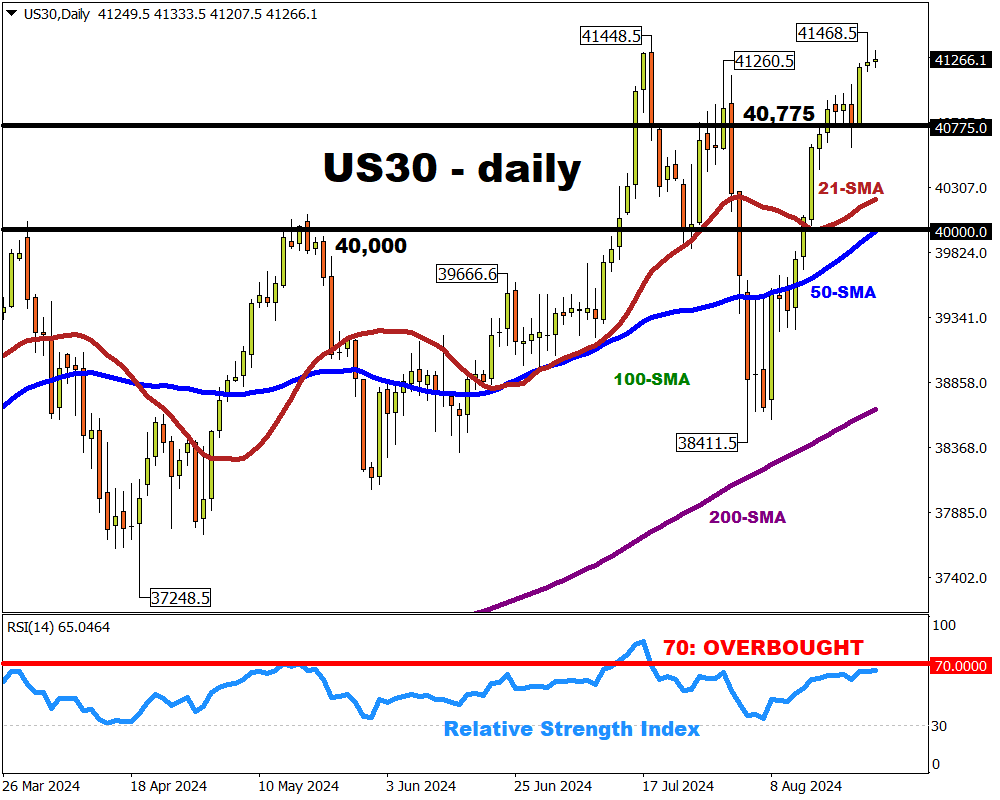
In an increasingly complex financial landscape, understanding core indices like the DJIA is crucial for investors, economists, and anyone seeking to comprehend the forces shaping global markets. This article will demystify the US 30, exploring its origins, its unique methodology, its enduring significance, and the nuances that every astute observer should consider.
Defining the US 30: More Than Just a Number
At its core, the US 30 refers to the Dow Jones Industrial Average, one of the oldest and most frequently quoted stock market indices in the world. Established over a century ago, it was designed to provide a snapshot of the health and direction of the U.S. industrial sector. While its composition has evolved dramatically, its fundamental role as a market bellwether persists.
The Dow Jones Industrial Average (DJIA) Explained
The DJIA is a stock market index that measures the stock performance of 30 large companies listed on stock exchanges in the United States. Unlike broader indices like the S&P 500, which tracks 500 companies, the Dow’s selective nature means it focuses on a highly curated group of businesses. These are generally “blue-chip” companies – established, financially sound, and leaders within their respective industries. The index itself is not a direct investment vehicle but rather a benchmark, reflecting the average performance of its constituent stocks. When the “Dow is up,” it means the combined value of these 30 companies has increased; when it’s down, their value has decreased.
A Historical Perspective: From Charles Dow to Global Benchmark
The story of the Dow Jones Industrial Average begins in 1896, with its creation by Charles Dow, co-founder of Dow Jones & Company and editor of The Wall Street Journal. Initially, the index comprised just 12 predominantly industrial companies, a reflection of the burgeoning industrial era in America. Railroads, sugar, tobacco, and general electric were among its first components, painting a vivid picture of the economy at the turn of the 20th century.
Over the decades, as the U.S. economy diversified and evolved, so too did the Dow. It expanded to 20 stocks in 1916 and then to its current 30 in 1928. It has weathered countless economic storms, including the Great Depression, World Wars, the dot-com bubble, and the 2008 financial crisis, consistently serving as a daily pulse check on the nation’s corporate health. This longevity and resilience have cemented its status as a trusted, albeit often debated, global benchmark.
Why “Industrial”? An Evolving Representation
The term “Industrial” in its name is perhaps the most anachronistic aspect of the DJIA today. While its roots are firmly planted in heavy manufacturing, mining, and railroads, the modern Dow reflects a much broader spectrum of the American economy. Major tech giants, financial institutions, healthcare companies, and retail powerhouses now dominate its ranks. Companies like Apple, Microsoft, Goldman Sachs, and UnitedHealth Group are prime examples, illustrating the shift from smoke stacks to silicon chips.
Despite this evolution, the name persists, serving as a reminder of its heritage while its composition continually adapts to reflect the contemporary economic landscape. This constant re-evaluation ensures the index remains relevant, even as the nature of “industry” itself transforms.
How the US 30 is Constructed and Calculated
The method by which the DJIA is calculated is one of its most distinctive, and sometimes controversial, features. Unlike market-capitalization-weighted indices, where companies with larger total market values have a greater impact, the Dow employs a unique price-weighted approach.
The Price-Weighted Methodology: A Unique Approach
The Dow is a price-weighted index, meaning that stocks with higher share prices have a greater influence on the index’s value than stocks with lower share prices, regardless of their market capitalization. To calculate the index, the sum of the prices of its 30 constituent stocks is divided by a special number known as the “Dow Divisor.”
This contrasts sharply with the S&P 500, which is market-capitalization weighted. In the S&P 500, a company like Apple (with a massive market cap) will inherently have a much larger impact on the index’s movement than a smaller company, even if their individual stock price changes are similar in percentage terms. The Dow’s price-weighted system means that a $1 move in a stock trading at $300 will have three times the impact of a $1 move in a stock trading at $100, even if the lower-priced stock represents a larger overall company.
The Dow Divisor: Maintaining Consistency Amidst Changes
The “Dow Divisor” is a critical component of the index’s calculation. It is a constantly adjusted figure that ensures the index remains comparable over time, despite changes to its constituent stocks. Without the divisor, events like stock splits, company mergers, or the replacement of one company with another would drastically and artificially alter the index’s value.
For example, if a stock in the Dow undergoes a 2-for-1 split, its price would halve. To prevent the index from instantly dropping by a significant amount due to this non-market event, the divisor is adjusted downwards. This mathematical constant ensures that the only changes reflected in the index’s value are those attributable to the actual market movements of its constituent companies. The divisor, often a number far less than one, is published daily by S&P Dow Jones Indices.
The Selection Criteria: Who Makes the Cut?
The selection of companies for the Dow is not governed by a rigid, formulaic set of rules, but rather by a committee from S&P Dow Jones Indices. The primary criteria are broad and qualitative:
- Reputation: The company must have an excellent reputation and a history of sustained growth.
- Size: It should be a large, established company, typically a leader in its industry.
- Investor Interest: The stock should be widely held by a significant number of investors.
- Industry Representation: The committee aims for adequate sector representation within the U.S. economy, although this is secondary to the overall quality and reputation of the company.
Changes to the Dow’s components are relatively infrequent, occurring only when a company’s core business significantly changes, its market share dwindles, or if there’s a merger or acquisition that alters its profile. Such changes are closely watched, as inclusion in or removal from the Dow can significantly impact a company’s prestige and stock performance.
The Significance and Role of the US 30 in Financial Markets
Despite its methodological quirks and occasional criticisms, the Dow Jones Industrial Average maintains a powerful presence in financial markets and public consciousness. Its significance stems from its history, its visibility, and its role as a quick reference point for market trends.
A Barometer of US Economic Health
For many, the DJIA serves as a quick barometer of the overall health of the U.S. economy. Because its 30 companies are often industry leaders, their collective performance is seen as a proxy for broader corporate profitability and economic activity. A rising Dow can suggest economic growth, strong corporate earnings, and investor confidence, while a falling Dow might signal economic contraction, declining profits, or uncertainty.

While it’s important to remember that 30 companies cannot fully represent the entirety of the vast U.S. economy, the Dow’s components are so influential that their performance often correlates with wider economic trends. It’s a quick, high-level indicator, even if it lacks the granular detail of more comprehensive economic reports.
Investor Sentiment and Market Psychology
The Dow plays a significant role in shaping investor sentiment and market psychology. Its movements are widely reported in the media, often as the first and most prominent piece of financial news. This constant exposure means that its daily fluctuations can influence public perception about the stock market and the economy.
A strong rally in the Dow can create a sense of optimism, encouraging further investment, while a steep decline can trigger fear and prompt investors to pull back. This psychological impact, sometimes leading to self-fulfilling prophecies, underscores the Dow’s power not just as a reflection of market activity, but as a driver of it.
A Benchmark for Performance
For portfolio managers and individual investors alike, the Dow Jones Industrial Average serves as a common benchmark against which to measure investment performance. If an investor’s portfolio of U.S. large-cap stocks outperforms the Dow, they might consider it a successful strategy. Conversely, underperformance could prompt a re-evaluation of their holdings or approach.
While more sophisticated investors might use broader benchmarks like the S&P 500 for a more comprehensive comparison, the Dow’s ubiquity makes it an accessible and frequently cited standard.
Investing in the US 30: Options for Every Investor
While the Dow itself is an index and not directly tradable, investors can gain exposure to its performance through several avenues, catering to different risk appetites and investment goals.
Directly Owning Constituent Stocks
The most direct way to invest in the “US 30” is to purchase shares of the individual companies that make up the index. This approach offers the highest degree of control, allowing investors to select specific companies they believe will perform well. However, it also requires significant capital to buy shares in all 30 companies and demands ongoing monitoring of each stock. Diversification would also be limited to just these 30 companies, which might not be sufficient for many investors.
Exchange-Traded Funds (ETFs) and Mutual Funds
For most investors, the most practical and cost-effective way to gain exposure to the Dow is through Exchange-Traded Funds (ETFs) or mutual funds that track the index.
- ETFs: ETFs like the SPDR Dow Jones Industrial Average ETF (DIA), often referred to as “Diamonds,” are popular choices. These funds hold shares of all 30 companies in the Dow in the same proportion as the index, aiming to replicate its performance. ETFs trade like individual stocks on an exchange, offering liquidity and intraday trading capabilities. They typically have low expense ratios, making them an efficient way to gain diversified exposure.
- Mutual Funds: Some mutual funds also aim to track the Dow, though they are generally less common for this specific index compared to ETFs. They operate similarly, holding the constituent stocks, but are typically bought and sold at the end of the trading day based on their Net Asset Value (NAV).
These funds provide instant diversification across the 30 companies, eliminating the need to buy and manage individual stocks.
Derivatives and Advanced Strategies
More experienced investors and traders can use derivatives, such as futures and options contracts, to speculate on the movement of the Dow.
- Futures Contracts: Dow futures (like the Mini-Dow futures) allow traders to lock in a price for the future delivery of the underlying index. They are used for both speculation and hedging and involve significant leverage, meaning both potential gains and losses can be magnified.
- Options Contracts: Options on Dow-tracking ETFs or the index itself provide the right, but not the obligation, to buy (call option) or sell (put option) the index at a specific price by a certain date. These are complex instruments primarily used by sophisticated investors for advanced strategies like hedging, income generation, or highly leveraged speculation.
These advanced instruments carry higher risks and are not suitable for novice investors.
Critiques and Limitations of the US 30
While the Dow’s historical significance and widespread recognition are undeniable, it is not without its critics. Understanding its limitations is just as important as appreciating its strengths.
The Price-Weighted Bias: Large-Cap Dominance
The most significant criticism leveled against the DJIA is its price-weighted methodology. As discussed, a higher-priced stock has a greater impact on the index’s movement than a lower-priced stock, irrespective of the companies’ actual market capitalization. This means that a relatively smaller company with an expensive stock price can influence the Dow more than a larger, more impactful company with a lower stock price.
Critics argue that this creates a distorted view of the market, as it doesn’t accurately reflect the economic weight of its constituent companies. It can also lead to situations where a single stock’s major price swing can disproportionately move the entire index.
Limited Scope: Only 30 Companies
Another key limitation is the sheer smallness of its sample size. The U.S. economy boasts tens of thousands of publicly traded companies, but the Dow only tracks 30. This makes it a very narrow representation of the broader market. While these 30 companies are giants, they cannot capture the full breadth of economic activity, including the performance of small and mid-cap companies, or emerging industries that might not yet meet the Dow’s criteria for inclusion.
For a more comprehensive view of the U.S. stock market, investors often turn to broader indices like the S&P 500 or the Russell 3000, which encompass a much larger segment of public companies.

Not a True Economic Indicator?
Some economists and analysts argue that the Dow, while useful as a historical benchmark and sentiment indicator, is not a true or leading economic indicator. Its movements reflect the performance of a select group of established companies, which may not always align with the underlying health or future trajectory of the broader economy. For instance, robust performance from a few tech giants might lift the Dow, even if other sectors of the economy are struggling.
Furthermore, economic indicators like GDP growth, employment figures, and inflation rates provide a more direct and accurate picture of economic conditions. While the Dow can offer insights, it should always be considered alongside a wider array of economic data for a holistic understanding.
In conclusion, “US 30” is far more than just a number; it is the enduring legacy of the Dow Jones Industrial Average, a storied index that has for over a century served as a prominent voice in the narrative of American commerce. While it has evolved significantly from its industrial roots and faces valid critiques regarding its construction, its role as a market bellwether, a gauge of sentiment, and a historical touchstone remains firmly entrenched in the financial world. For investors and enthusiasts alike, understanding the Dow is not just about comprehending a market index, but about connecting with a powerful symbol of economic history and progress.
aViewFromTheCave is a participant in the Amazon Services LLC Associates Program, an affiliate advertising program designed to provide a means for sites to earn advertising fees by advertising and linking to Amazon.com. Amazon, the Amazon logo, AmazonSupply, and the AmazonSupply logo are trademarks of Amazon.com, Inc. or its affiliates. As an Amazon Associate we earn affiliate commissions from qualifying purchases.