
In the rapidly evolving landscape of automotive technology, few innovations have had as profound an impact on daily driver safety and vehicle efficiency as the Tire Pressure Monitoring System (TPMS). Once a luxury feature reserved for high-end European imports, TPMS is now a standardized, sophisticated electronic system designed to monitor the air pressure inside pneumatic tires on various types of vehicles. At its core, TPMS is a perfect synergy of hardware engineering and software integration, representing a critical node in the modern vehicle’s internal data network.
Understanding the “what” and “how” of a TPMS system requires diving into the intersection of sensor technology, wireless communication, and real-time data processing. This article explores the technical architecture of TPMS, the distinction between direct and indirect systems, and why this tech remains a cornerstone of automotive health.

The Mechanics Behind Tire Pressure Monitoring Systems
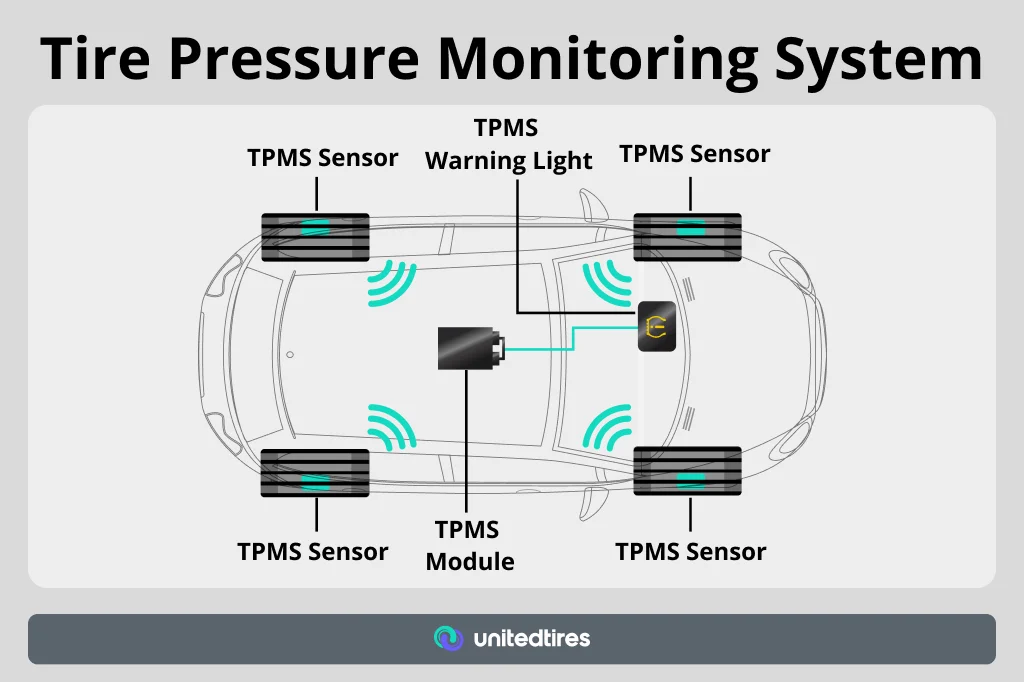
A Tire Pressure Monitoring System is not a singular device but a network of components working in tandem to relay information from the road to the driver’s dashboard. The primary goal is to provide early warning of under-inflation, which can lead to tire failure, compromised handling, and increased fuel consumption. To achieve this, the industry utilizes two distinct technological approaches: Direct and Indirect systems.
Direct TPMS (dTPMS): Hardware and Precision
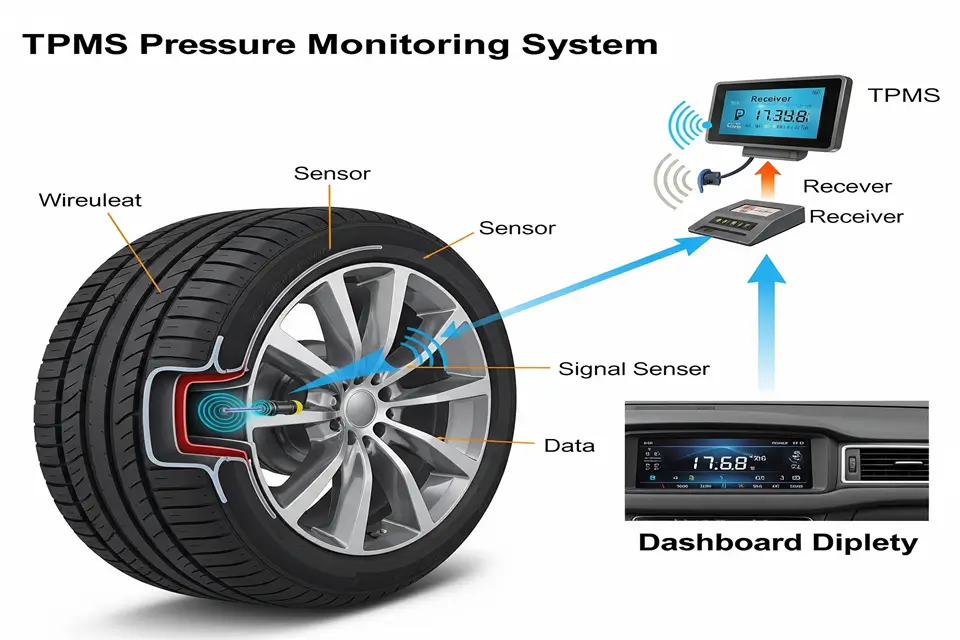
Direct TPMS is the more hardware-intensive approach. It utilizes physical pressure sensors mounted inside each wheel, typically integrated with the tire valve stem. These sensors measure the actual internal pressure and, in many high-tech configurations, the temperature of the air inside the tire.
The technical workflow of a dTPMS is a marvel of miniaturization. Each sensor contains a small battery, a pressure transducer, a thermistor (for temperature), and a radio frequency (RF) transmitter. As the wheel rotates, the sensor captures data and transmits it via a wireless signal to a central receiver module located within the vehicle. This module then translates those RF signals into digital data that the vehicle’s On-Board Diagnostics (OBD) system can interpret. If the pressure drops below a pre-programmed threshold—usually 25% below the manufacturer’s recommended “cold” inflation pressure—the system triggers a warning light.
Indirect TPMS (iTPMS): Software-Driven Monitoring
In contrast to the hardware-heavy direct system, Indirect TPMS is a triumph of software engineering. It does not use physical pressure sensors inside the tires. Instead, it leverages the existing technology of the vehicle’s Anti-lock Braking System (ABS) and Electronic Stability Control (ESC).
The logic behind iTPMS is rooted in physics: an under-inflated tire has a smaller diameter than a correctly inflated one. This means that to cover the same distance, the under-inflated tire must rotate at a slightly higher angular velocity. The ABS wheel speed sensors track these revolutions. The vehicle’s onboard computer runs algorithms to compare the relative speeds of each wheel. If one wheel is spinning faster than the others consistently, the software calculates that the tire is losing pressure and alerts the driver. While less precise than direct systems, iTPMS is a cost-effective solution that highlights the power of using existing data points to derive new safety metrics.
Why TPMS is a Crucial Component of Modern Vehicle Architecture
The integration of TPMS into vehicles was accelerated by the TREAD (Tire Recall Enhancement, Accountability, and Documentation) Act in the United States, following a series of high-profile tire-related accidents in the late 1990s. Today, it is a global standard that serves as a vital bridge between mechanical performance and digital monitoring.
Enhanced Safety and Preventive Maintenance
From a technical standpoint, the safety benefits of TPMS cannot be overstated. Tire failure often occurs due to “heat soak,” where under-inflation causes the tire sidewalls to flex excessively, generating internal heat that eventually causes the rubber and internal belts to delaminate.
TPMS serves as a real-time diagnostic tool that prevents these catastrophic failures before they occur. By providing a digital interface for tire health, it removes the human error associated with manual pressure checks. In the context of “Active Safety Systems,” TPMS works alongside traction control and emergency braking. A vehicle’s computer can actually adjust its braking force distribution more effectively if it knows the exact state of tire inflation, as pressure directly influences the tire’s “contact patch” with the road.
Fuel Efficiency and Environmental Impact
Beyond safety, TPMS is a key player in the “Green Tech” space within the automotive industry. There is a direct correlation between tire pressure and rolling resistance. Under-inflated tires require more energy to roll, which forces the engine to work harder and consume more fuel.
Data from the Department of Energy suggests that for every 1 psi drop in pressure across all four tires, fuel economy can decrease by roughly 0.2%. While that sounds small, across millions of vehicles, the cumulative effect on carbon emissions is massive. By utilizing TPMS to maintain optimal inflation, software systems help vehicles operate within their peak aerodynamic and mechanical efficiency windows, illustrating how a small sensor can have a significant environmental footprint.
Navigating TPMS Alerts and Troubleshooting
As with any sophisticated electronic system, TPMS is not immune to technical glitches or environmental interference. Understanding how to interpret and troubleshoot these signals is essential for maintaining vehicle uptime.
Interpreting the TPMS Warning Light
The TPMS dashboard icon—a yellow horseshoe shape with an exclamation point—has two primary states that convey different technical messages.
- Solid Light: This indicates that one or more tires have reached a low-pressure state. This is a data-driven alert requiring immediate physical inspection.
- Flashing Light: If the light flashes for approximately 60 to 90 seconds upon startup and then remains solid, it indicates a “System Malfunction.” This is not a pressure issue but a technical failure within the system itself. It usually suggests that the receiver module is not picking up a signal from one of the sensors, or a sensor has reached the end of its operational life.
Common Technical Issues: Battery Life and Sensor Interference
The most common point of failure in Direct TPMS is the sensor battery. These are lithium-ion coin cells sealed within the sensor housing. They are designed to last between 5 and 10 years, but once they die, the entire sensor unit must be replaced.
Another technical challenge is “RF Interference.” Since TPMS sensors operate on specific radio frequencies (commonly 315MHz or 433MHz), they can occasionally be disrupted by other electronic gadgets, such as certain aftermarket dash cams or power inverters. Furthermore, the “Relearn Procedure” is a critical technical step. Whenever tires are rotated or sensors are replaced, the vehicle’s central computer must be taught the new “ID” and location of each sensor. This is often done using a handheld TPMS scan tool that triggers the sensors to transmit their unique ID to the car’s ECU (Engine Control Unit).
The Future of TPMS: Smart Tires and IoT Integration
We are currently transitioning from reactive TPMS to proactive “Smart Tire” ecosystems. As vehicles become more connected, the TPMS is evolving from a simple warning light into a sophisticated data hub.
Integration with Autonomous Driving Systems
In the realm of autonomous vehicles (AVs), TPMS data is critical. An AI driver needs to know the exact grip levels available to it. If a tire is losing pressure, the AV’s central processing unit can adjust its driving profile—reducing speed or increasing following distance—to compensate for the change in handling characteristics. Future TPMS tech will likely include “load sensing,” where sensors can detect if a vehicle is overloaded based on tire deformation, providing another layer of data for the vehicle’s stability algorithms.
Data-Driven Tire Management
The next generation of TPMS is moving toward Internet of Things (IoT) integration. We are seeing the emergence of “intelligent tires” equipped with RFID tags and sensors that track tread wear, road surface conditions, and even the “structural health” of the tire carcass. This data won’t just live on the dashboard; it will be uploaded to the cloud. For fleet managers, this means predictive maintenance—knowing exactly when a tire needs to be replaced before a technician even looks at it. This shift from simple pressure monitoring to comprehensive “Tire Intelligence” marks the next frontier in automotive sensor technology.
In conclusion, the TPMS system is far more than a convenience feature. It is a sophisticated blend of RF communication, sensor physics, and algorithmic processing. Whether it’s through the precision of direct hardware or the clever software logic of indirect systems, TPMS remains one of the most successful implementations of safety tech in history, ensuring that as our cars become smarter, they also stay firmly and safely planted on the road.
aViewFromTheCave is a participant in the Amazon Services LLC Associates Program, an affiliate advertising program designed to provide a means for sites to earn advertising fees by advertising and linking to Amazon.com. Amazon, the Amazon logo, AmazonSupply, and the AmazonSupply logo are trademarks of Amazon.com, Inc. or its affiliates. As an Amazon Associate we earn affiliate commissions from qualifying purchases.