
In the world of alternative investments, timberland has long been regarded as a cornerstone for institutional portfolios, family offices, and savvy individual investors. Unlike traditional stocks or bonds, timber is a biological asset that grows in volume and value regardless of market volatility. However, to treat timberland as a serious financial asset, one must have a precise method for quantifying its worth. This is where timber cruising comes into play.
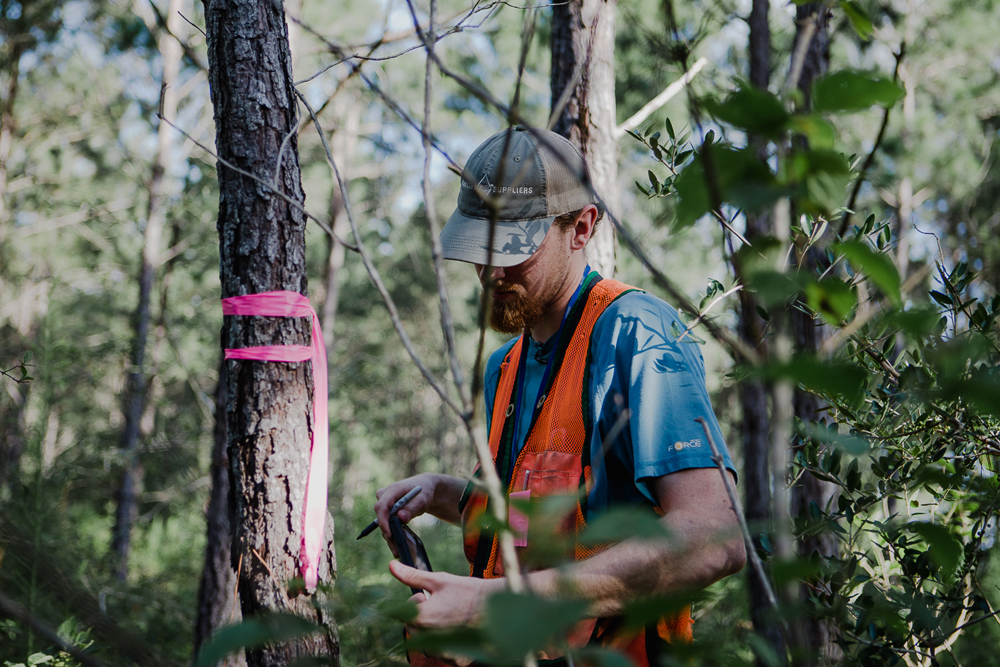
At its core, timber cruising is the professional process of surveying a forest to estimate the quantity, quality, and species composition of the standing timber. For a financial stakeholder, a timber cruise is the equivalent of an inventory audit or a due diligence report. It transforms a vast landscape of trees into a structured spreadsheet of data, allowing for accurate valuation, tax planning, and harvest scheduling. Without a cruise, buying or selling timberland is essentially a gamble; with a cruise, it becomes a strategic investment.
The Financial Significance of Timber Cruising
In any real estate or commodity-based investment, the “basis” is everything. For timberland investors, timber cruising serves as the primary tool for establishing the cost basis of the standing inventory. When a tract of land is purchased, the total price is usually split between the land itself and the timber growing on it. By conducting a timber cruise at the time of acquisition, an investor can allocate a specific dollar value to the merchantable timber.
Valuation for Acquisition and Divestiture
The most common reason for a timber cruise is the transfer of ownership. Just as a homebuyer requires an appraisal, a timberland investor requires a cruise to ensure the asking price aligns with the biological reality of the forest. Cruisers provide data on “stumpage value”—the market price of standing trees. This value fluctuates based on local mill demand, logging costs, and international export markets. A detailed cruise report allows a buyer to calculate the potential Return on Investment (ROI) by modeling future growth against current inventory.
Tax Advantages and Depletion
From a business finance perspective, timber cruising is essential for tax efficiency. In many jurisdictions, timber is treated as a capital asset. As trees are harvested, the investor can deduct the “depletion” of their original cost basis from the harvest revenue, significantly reducing the taxable income. For example, if a cruise determines that $100,000 of the purchase price was allocated to pine sawtimber, and half of that timber is cut five years later, the investor may be able to offset their revenue with a $50,000 depletion allowance. Accurate cruising at the onset of the investment is the only way to legally and effectively utilize these tax benefits.
Asset Liquidity and Collateral
Timberland is often used as collateral for large-scale agricultural or commercial loans. Financial institutions require a certified timber cruise to verify the value of the asset before issuing credit. Because timber can be harvested and sold quickly in a “forced liquidation” scenario, it is considered a highly liquid biological asset. However, that liquidity is only as good as the data supporting it. A professional cruise provides banks with the confidence that the asset possesses the merchantable volume claimed by the borrower.
The Mechanics of the Cruise: How Assets are Quantified
A timber cruise is not a simple walk through the woods. It is a statistical exercise rooted in biometrics. Since it is physically and economically impossible to measure every single tree on a 1,000-acre tract, cruisers use sampling methods to reach a high degree of statistical confidence.
Sampling Methods: Plots and Strips
The most common method is “plot sampling.” A cruiser uses a grid system to identify specific points throughout the property. At each point, they establish a circular plot (often a 1/10th or 1/20th acre) and measure every tree within that radius. Alternatively, “strip cruising” involves measuring all trees within a certain width along a predetermined line. These samples are then extrapolated to represent the entire acreage. For an investor, the “sampling intensity” is a key metric; a 10% cruise (where 10% of the total area is measured) provides much higher confidence than a 2% cruise, though it comes at a higher service cost.
Key Metrics: DBH, Height, and Grade
During the cruise, several critical data points are collected for each sampled tree:
- Species: Different species carry vastly different price points. Hardwoods like White Oak or Black Walnut may be destined for high-end furniture, while softwoods like Loblolly Pine are usually used for construction lumber or pulp.
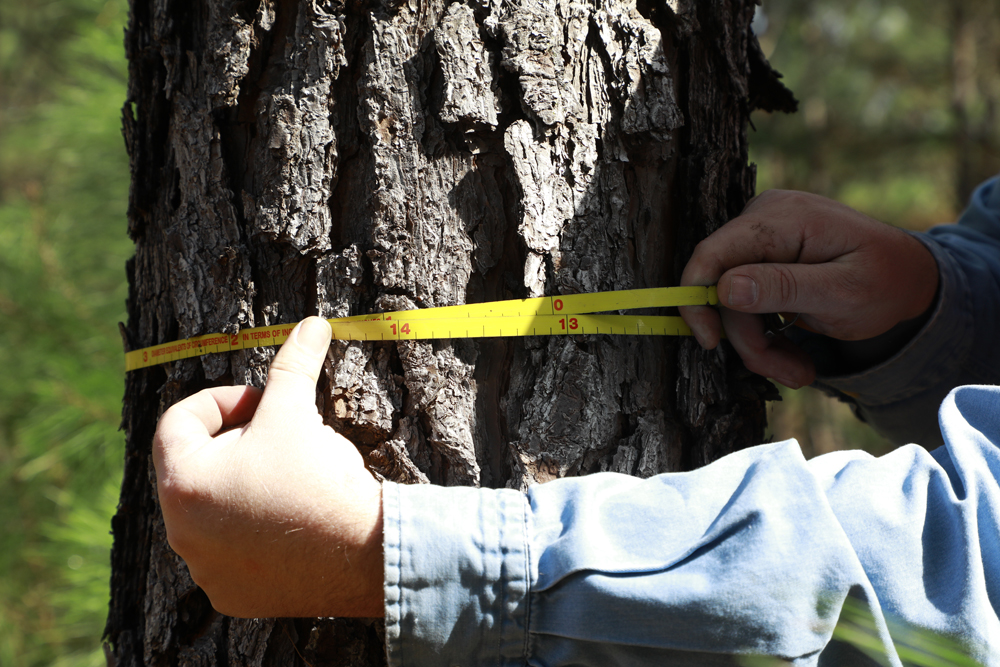
- Diameter at Breast Height (DBH): Measured at 4.5 feet above the ground, this is the most critical measurement for determining volume.
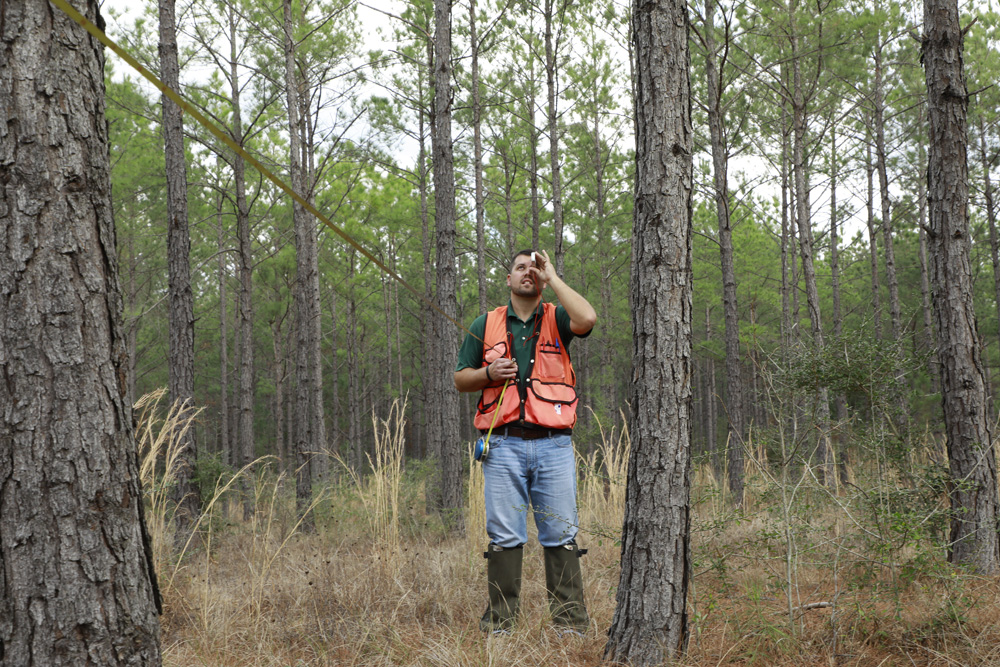
- Merchantable Height: This measures how much of the tree can actually be processed into products. A tree may be 100 feet tall, but if it has heavy branching or defects after 40 feet, its merchantable height is much lower.
- Grade: This refers to the quality of the wood. A “clear” log with no knots or scars is worth significantly more than a “pallet” grade log.
Volume and Product Categories
The raw measurements are converted into volume estimates using mathematical formulas (such as the Doyle, Scribner, or International 1/4-inch scales). The cruise report will then categorize the inventory into product classes:
- Sawtimber: Large, high-quality trees used for lumber. This is the highest-value category.
- Chip-and-Saw: Mid-sized trees that produce both small lumber and wood chips.
- Pulpwood: Smaller or lower-quality trees used for paper, cardboard, and biomass.
For the investor, understanding the “product mix” is vital. A forest dominated by sawtimber is a mature asset ready for immediate cash flow, while a forest dominated by pulpwood is a long-term growth play that requires patient capital.
Risk Management and ROI in Timber Investing
Investing in timber involves unique risks that are not present in traditional financial markets. Timber cruising acts as the primary risk-mitigation tool by providing a baseline for the health and viability of the investment.
Assessing Biological Health
During a cruise, foresters look for signs of pest infestations (like the Southern Pine Beetle), fungal diseases, or storm damage. These factors can devalue an asset overnight. An investor who relies on an outdated cruise may find that the “value” on their balance sheet has been hollowed out by a biological threat. Regular cruises every 3 to 5 years allow an investor to monitor the vigor of the forest and adjust their management plan accordingly.
Market Timing and Harvest Scheduling
Timber is one of the few assets where the investor has near-total control over the timing of the sale. If lumber prices are low, the investor can simply leave the trees in the ground, where they will continue to grow in volume—a concept known as “stumpage storage.” A cruise provides the data needed to create a “harvest schedule.” By knowing the growth rate of the trees (determined through increment boring or site index modeling), an investor can calculate the optimal time to harvest for maximum Internal Rate of Return (IRR). If the cruise shows that the forest is currently in a high-growth phase, it may be financially wiser to delay the harvest to capture future volume gains.
Environmental and Regulatory Compliance
In the modern ESG (Environmental, Social, and Governance) investing landscape, timberland is increasingly valued for its carbon sequestration capabilities. Timber cruising is now being adapted to measure “carbon biomass” in addition to board feet. Investors looking to sell carbon offsets on the voluntary market must have precise cruise data to verify the amount of carbon being stored by their forest. This adds a new layer of “online income” or “carbon credit revenue” to the traditional timberland business model.
Advanced Valuation Tools and Future Trends
The field of timber cruising is undergoing a technological revolution that is making valuation faster, cheaper, and more accurate. This shift is attracting a new generation of tech-forward investors to the asset class.
LiDAR and Remote Sensing
Light Detection and Ranging (LiDAR) technology uses laser pulses from aircraft or satellites to create 3D maps of the forest canopy. While it does not entirely replace the “boots on the ground” cruiser, LiDAR allows for “precision forestry.” It can provide high-resolution data on tree height and density across thousands of acres in a fraction of the time. For large-scale institutional investors managing portfolios across continents, LiDAR-enhanced cruising is becoming the industry standard for annual reporting.
Digital Security and Data Management
As timber cruises move from paper tally sheets to mobile apps and cloud-based GIS (Geographic Information Systems), the security of this data has become a business priority. A cruise report is a proprietary financial document. If a competitor or a timber buyer gains access to a private cruise report, they have an unfair advantage in negotiations. Modern timberland management firms now employ digital security protocols to protect their inventory data, treating it with the same level of confidentiality as a corporate trade secret.
AI and Predictive Analytics
The integration of Artificial Intelligence (AI) into timber cruising software is allowing investors to run complex “what-if” scenarios. By feeding cruise data into AI models, investors can predict how a forest will respond to different thinning regimes, fertilization treatments, or climate change patterns. This level of predictive analytics is transforming timberland from a “buy and hold” asset into a highly optimized industrial operation.
In conclusion, timber cruising is the bridge between the chaotic natural world and the structured world of high finance. For anyone involved in the business of land—whether as a side hustle for a small woodlot owner or as a multi-billion dollar portfolio for a REIT—the cruise is the ultimate source of truth. It defines the asset, mitigates the risk, and unlocks the true financial potential of the forest. In the realm of money and investing, timber cruising proves that you cannot manage what you do not measure.
aViewFromTheCave is a participant in the Amazon Services LLC Associates Program, an affiliate advertising program designed to provide a means for sites to earn advertising fees by advertising and linking to Amazon.com. Amazon, the Amazon logo, AmazonSupply, and the AmazonSupply logo are trademarks of Amazon.com, Inc. or its affiliates. As an Amazon Associate we earn affiliate commissions from qualifying purchases.