
When people think of Houston, Texas, the mind often drifts toward the iconic images of the Apollo missions or the sprawling refineries of the energy sector. However, for the modern technologist, entrepreneur, or investor, the question of “what is there to see” in Houston has shifted. Today, Houston is emerging as the “Silicon Bayou,” a massive, multifaceted tech hub that is quietly leading the world in aerospace, life sciences, and energy transition technologies.
To see Houston now is to witness a city pivoting from its traditional industrial roots toward a future defined by artificial intelligence, deep tech, and complex engineering. It is a city where the world’s largest medical complex meets the epicenter of human spaceflight, creating a unique cross-pollination of innovation that is hard to find anywhere else on the planet.

The Frontier of Aerospace: NASA and the Future of Space Exploration
The most famous technological landmark in Houston is undoubtedly the Lyndon B. Johnson Space Center (JSC). While tourists flock here for the history, the real value for tech enthusiasts lies in the future-facing operations currently driving the Artemis program and the commercialization of Low Earth Orbit (LEO).
Johnson Space Center and the Artemis Program
At the heart of Houston’s tech landscape is the ongoing development of the Artemis mission, which aims to return humans to the Moon and eventually reach Mars. What is there to see here isn’t just hardware; it is the integration of advanced AI and machine learning into mission control systems. The JSC is the testing ground for the next generation of lunar gateways and sustainable life-support systems. Seeing the Neutral Buoyancy Lab or the Mission Control Center provides a masterclass in high-stakes systems engineering and real-time data processing.
The Rise of Commercial Space: Axiom and Intuitive Machines
Beyond the gates of NASA, Houston has birthed a massive commercial space sector. Companies like Axiom Space are building the world’s first commercial space station, while Intuitive Machines is leading the charge in autonomous lunar landings. This sector represents a shift in aerospace technology—from government-funded exploration to a vibrant, private-market economy. For those interested in the “new space” tech stack, Houston offers a glimpse into how modular hardware and agile software development are disrupting an industry that was once the exclusive domain of national superpowers.
The Texas Medical Center: The World’s Largest Life Sciences Hub
If aerospace is Houston’s most famous tech sector, the Texas Medical Center (TMC) is its most formidable. Spanning over 50 million square feet, the TMC is larger than the central business districts of many major cities. It is a concentrated ecosystem where medical technology (MedTech) and biotechnology are being redefined.
TMC Innovation (TMCi) and Bio-design
To truly see the tech side of Houston’s medical scene, one must visit TMC Innovation. This accelerator and incubator space is housed in a repurposed Nabisco cookie factory and serves as the nexus for global health-tech startups. Here, the focus is on biodesign—using engineering principles to solve clinical problems. Visitors can see the development of wearable health monitors, AI-driven diagnostic tools, and new methodologies in telemedicine that were accelerated by the global shift toward remote care.
Breakthroughs in Robotics and Genomic Research
Houston is also a global leader in surgical robotics. The integration of haptic feedback and 5G connectivity into surgical suites allows for remote procedures with sub-millimeter precision. Furthermore, the genomic research happening at institutions like the MD Anderson Cancer Center utilizes massive high-performance computing (HPC) clusters to sequence tumors and personalize treatment plans. This is where “Big Data” meets “Big Medicine,” providing a roadmap for the future of personalized healthcare.
The Energy Transition: From Oil Capital to Clean-Tech Leader
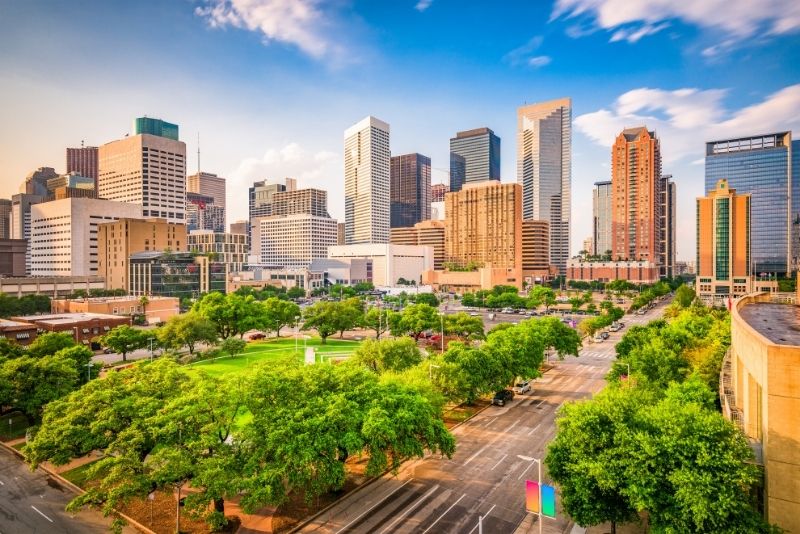
Houston has long been known as the “Energy Capital of the World,” but the technological landscape is shifting toward the energy transition. The city is leveraging its century of engineering expertise to lead the global move toward decarbonization, hydrogen, and carbon capture.
Greentown Labs and the Climate-Tech Revolution
A pivotal site in Houston’s tech evolution is Greentown Labs, the largest climate-tech incubator in North America. Located in the Midtown Innovation District, Greentown Labs is where startups are developing hardware-based solutions for the climate crisis. Seeing this facility offers insight into the “Tough Tech” sector—innovations in long-duration battery storage, carbon sequestration membranes, and sustainable materials. It marks Houston’s commitment to being the “Energy Transition Capital,” proving that the same city that perfected the internal combustion supply chain can also lead the way in green hydrogen production.
Digital Twins and AI in Industrial Operations
The traditional energy sector in Houston is also undergoing a digital transformation. Major players like Shell, ExxonMobil, and Chevron are heavily invested in “Digital Twin” technology. By creating virtual replicas of massive offshore rigs or refineries, these companies use AI to predict equipment failure, optimize energy consumption, and increase safety. This application of the Industrial Internet of Things (IIoT) is one of the most sophisticated uses of edge computing in the world today. Seeing the control rooms where these digital twins are managed provides a look at the future of autonomous industrial operations.
The Digital Infrastructure and Startup Landscape
The physical transformation of Houston is perhaps most evident in its dedicated innovation districts. These areas are designed to foster the kind of spontaneous collaboration that fueled Silicon Valley, but with a distinctly Texan focus on scale and diversity.
The Ion and the Midtown Innovation District
The Ion is the centerpiece of Houston’s 16-acre Midtown Innovation District. A 266,000-square-foot structure, it serves as a hub for entrepreneurs, corporate innovators, and academic researchers. What is unique about the Ion is its corporate residency program, where giants like Microsoft and Google Cloud work alongside local startups. To see the Ion is to see the democratization of tech—where workforce development programs and coding bootcamps operate in the same building as venture capital firms and high-tech labs.
Cybersecurity and Data Management in the Energy Sector
Because Houston manages so much of the world’s critical infrastructure—from power grids to global shipping lanes—it has become a focal point for cybersecurity. The city’s tech scene is heavily focused on “Operational Technology” (OT) security. Unlike traditional IT security, OT security protects the physical machines that keep society running. Exploring Houston’s cybersecurity firms reveals a deep focus on protecting the industrial cloud and ensuring the resilience of decentralized energy systems against sophisticated cyber threats.
Why Houston is the Next Great Tech Destination
The technological landscape of Houston is characterized by its “real-world” applications. While other tech hubs might focus on social media or consumer apps, Houston is focused on the technologies that sustain human life and expand its boundaries: energy, medicine, and space.
The Convergence of Sectors
What makes Houston’s tech scene truly remarkable is the convergence of these disparate fields. We are seeing NASA’s life-support researchers collaborating with TMC’s surgeons to develop better remote healthcare for astronauts—technology that then trickles down to rural hospitals on Earth. We see energy companies using NASA’s materials science to build more durable wind turbines. This cross-pollination is the city’s greatest asset.
A Global Tech Gateway
With two international airports and the Port of Houston—one of the busiest in the world—Houston is also a leader in logistics and supply chain technology. The integration of blockchain for tracking global shipments and the use of autonomous drones for port security are just two examples of how the city is automating the backbone of global commerce.
When asking what there is to see in Houston, the answer lies in the massive, complex systems that power our world. It is a city of builders, engineers, and scientists who are less concerned with the next viral app and more focused on the next great leap in human capability. From the mission control desks at NASA to the bio-labs of the Texas Medical Center and the climate-tech workshops of Greentown Labs, Houston is a living laboratory for the future of technology. For anyone looking to understand where the next generation of industrial and scientific innovation is coming from, Houston is the place to watch.
aViewFromTheCave is a participant in the Amazon Services LLC Associates Program, an affiliate advertising program designed to provide a means for sites to earn advertising fees by advertising and linking to Amazon.com. Amazon, the Amazon logo, AmazonSupply, and the AmazonSupply logo are trademarks of Amazon.com, Inc. or its affiliates. As an Amazon Associate we earn affiliate commissions from qualifying purchases.