
The Epistemological Roots of Digital Understanding
The pursuit of knowledge has been a cornerstone of human endeavor for millennia, deeply explored within philosophy as the “Theory of Knowledge,” or epistemology. This fundamental branch of philosophy investigates the nature, origin, and scope of knowledge itself: What does it mean to know something? How do we acquire knowledge? What are its limits? While traditionally a philosophical domain, these questions resonate with profound significance in the digital age, particularly within the realm of technology. As we construct increasingly complex systems, from artificial intelligence to vast data networks, the theoretical underpinnings of what constitutes “knowledge” become not just academic curiosities but critical design and ethical considerations.
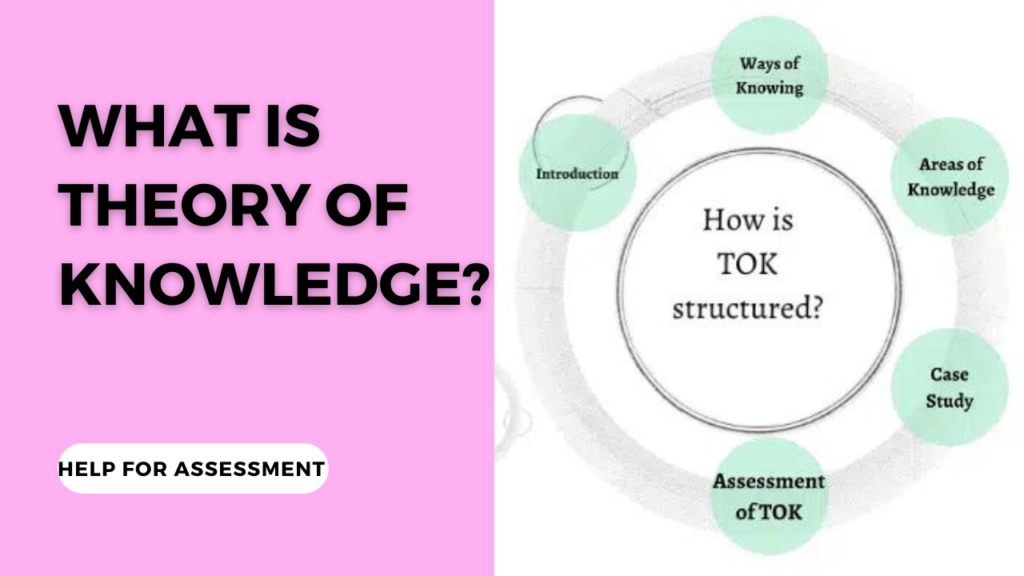
In a world awash with information, differentiating between raw data, processed information, and genuine knowledge is paramount. Epistemology provides a framework for this discernment. It prompts us to scrutinize the sources of digital information, to question the veracity of online claims, and to understand the mechanisms by which algorithms generate their “insights.” When a search engine provides an answer, or a recommendation system suggests a product, what is the epistemological basis of that output? Is it merely pattern recognition, statistical correlation, or something approaching understanding? The philosophical inquiry into human knowledge acquisition—through reason, sensory experience, testimony, or intuition—offers valuable parallels and contrasts to how machines “learn” and “process” information, shaping our expectations and the responsible development of technology.
Navigating the Data-Information-Knowledge Hierarchy
The famous DIKW (Data-Information-Knowledge-Wisdom) hierarchy, though sometimes debated, offers a practical lens for understanding the transformation of raw digital elements into something meaningful. Data points are mere symbols or facts. Information emerges when data is contextualized and organized. Knowledge, however, requires a deeper level of understanding, often involving patterns, relationships, and the ability to apply information to specific situations. For technology, especially in big data analytics and machine learning, the goal is often to ascend this hierarchy. How do we design systems that don’t just store data or present information, but genuinely derive and utilize knowledge? This question is inherently epistemological, requiring us to define what “knowledge” looks like in a computational context and how its validity can be assessed.
Knowledge Representation and AI Systems
The concept of “theory of knowledge” finds one of its most compelling modern applications in the field of Artificial Intelligence. For AI to truly emulate or augment human intelligence, it must be capable of representing, acquiring, and reasoning with knowledge. This is not a trivial task, as human knowledge is vast, nuanced, context-dependent, and often implicit. The philosophical theories concerning the structure and validation of knowledge directly inform the architectural decisions behind various AI paradigms.
Defining “Knowing” in AI
What does it mean for an AI system to “know” something? Unlike humans, AI doesn’t possess consciousness or subjective experience. Instead, its “knowledge” is typically embedded in its data, algorithms, and models. Early AI systems, often referred to as “expert systems,” attempted to encode human expert knowledge explicitly through rules and ontologies. These systems faced the “knowledge acquisition bottleneck,” highlighting the immense difficulty of formalizing common-sense human knowledge.
Modern AI, particularly machine learning and deep learning, approaches knowledge differently. It “learns” patterns and relationships from vast datasets, often without explicit programming. A neural network “knows” how to classify an image because it has detected complex features and correlations during training. However, this “knowledge” is often opaque, residing in the weights and biases of the network, making it difficult to inspect or explain—a challenge known as the “black box problem.” The epistemological question here shifts from “how do we formalize knowledge?” to “how do we understand and trust knowledge derived from complex statistical patterns?”
Epistemology in Machine Learning Validation
The validation of machine learning models is an inherently epistemological process. When we evaluate a model’s performance, we are essentially asking: Does this model “know” enough to make accurate predictions or classifications? The metrics we use (accuracy, precision, recall, F1-score) are measures of its apparent “knowledge” based on observed data. Cross-validation, regularization, and robust testing methodologies are all practices designed to ensure that the knowledge acquired by the model is generalizable and not merely an artifact of the training data. From an epistemological standpoint, these techniques are analogous to the scientific method’s emphasis on empirical verification and falsification, seeking to establish the reliability and scope of the model’s derived knowledge.

Furthermore, the problem of bias in AI is deeply rooted in epistemology. If the training data reflects societal biases, the “knowledge” acquired by the AI will perpetuate and amplify those biases. Understanding the origin and impact of such biases requires an epistemological critique of the data sources and the learning processes, questioning the fairness and completeness of the “knowledge” imparted to the system.
The Human Element in Algorithmic Understanding
Despite the incredible advancements in AI, the theory of knowledge reminds us that true understanding often transcends purely computational processes. Human knowledge is enriched by context, intuition, empathy, and a capacity for abstraction that current AI largely lacks. This isn’t to diminish AI’s capabilities but to define its role and limitations in the broader landscape of knowledge.
Explaining AI’s “Knowledge”: The XAI Imperative
The demand for Explainable AI (XAI) is a direct response to epistemological concerns. If an AI system makes a critical decision—in healthcare, finance, or law enforcement—stakeholders need to understand why. How did the AI arrive at that conclusion? What factors influenced its “knowledge”? XAI aims to make the “black box” more transparent, allowing humans to audit, understand, and trust the AI’s processes. This pursuit is fundamentally about bridging the gap between algorithmic processing and human comprehension of knowledge, ensuring that AI’s insights can be integrated responsibly into human decision-making frameworks. From an epistemological perspective, XAI seeks to provide not just results, but also the justification and warrant for those results, much like a philosopher seeks to provide reasons for holding a belief as knowledge.
The Limits of Algorithmic “Truth”
The sheer volume of data and the sophisticated algorithms processing it can sometimes create an illusion of infallible knowledge. However, as theory of knowledge teaches, all knowledge is provisional and subject to revision. AI systems, despite their power, operate within defined parameters and datasets. They can identify correlations but do not inherently grasp causation in the human sense. They can generate text that mimics understanding but do not possess subjective experience or consciousness.
For instance, generative AI models can produce highly coherent and seemingly knowledgeable texts or images. But their “knowledge” is statistical; they predict the next most probable token or pixel based on patterns observed in vast training data. This differs fundamentally from human understanding, which involves semantic comprehension, reasoning, and connection to a broader worldview. The philosophical question of whether such systems truly “understand” or merely “simulate understanding” is central to distinguishing between advanced computation and genuine intelligence. Acknowledging these epistemological limits is crucial for setting realistic expectations for AI and ensuring that human judgment remains paramount, especially in domains requiring ethical reasoning, creativity, or nuanced social understanding.
Ensuring Trustworthy and Ethical AI Knowledge
The increasing integration of AI into critical societal functions necessitates a strong ethical framework, which itself is informed by epistemological considerations. How do we ensure that the “knowledge” AI wields is not only accurate but also fair, unbiased, and beneficial?
Addressing Bias and Fairness
Bias in AI is an epistemological flaw in its “knowledge.” If the data used to train an AI is skewed, incomplete, or reflects societal prejudices, the AI will learn these biases and perpetuate them in its outputs. This is a direct challenge to the very notion of reliable knowledge. Developing ethical AI requires not just technical fixes but a deep understanding of how biases are embedded in data and algorithms, and how they can lead to unjust or inaccurate “knowledge.” Techniques for bias detection, mitigation, and fairness-aware machine learning are therefore direct applications of an epistemological imperative: to ensure the derived knowledge is robust and impartial.
The Responsibility of Knowledge in the Digital Age
Ultimately, the theory of knowledge in the digital age reminds us that technology is a powerful tool for generating, disseminating, and applying knowledge, but it does not absolve us of the human responsibility to critically evaluate that knowledge. As AI systems become more autonomous and their “knowledge” increasingly impacts our lives, understanding the philosophical underpinnings of what knowledge is, how it’s acquired, and its inherent limitations becomes more urgent than ever. It’s about ensuring that the pursuit of technological advancement is coupled with a profound respect for the integrity and ethical implications of the knowledge we create and deploy. The future of technology hinges not just on what we can build, but on how wisely we understand and manage the knowledge it generates.
aViewFromTheCave is a participant in the Amazon Services LLC Associates Program, an affiliate advertising program designed to provide a means for sites to earn advertising fees by advertising and linking to Amazon.com. Amazon, the Amazon logo, AmazonSupply, and the AmazonSupply logo are trademarks of Amazon.com, Inc. or its affiliates. As an Amazon Associate we earn affiliate commissions from qualifying purchases.