
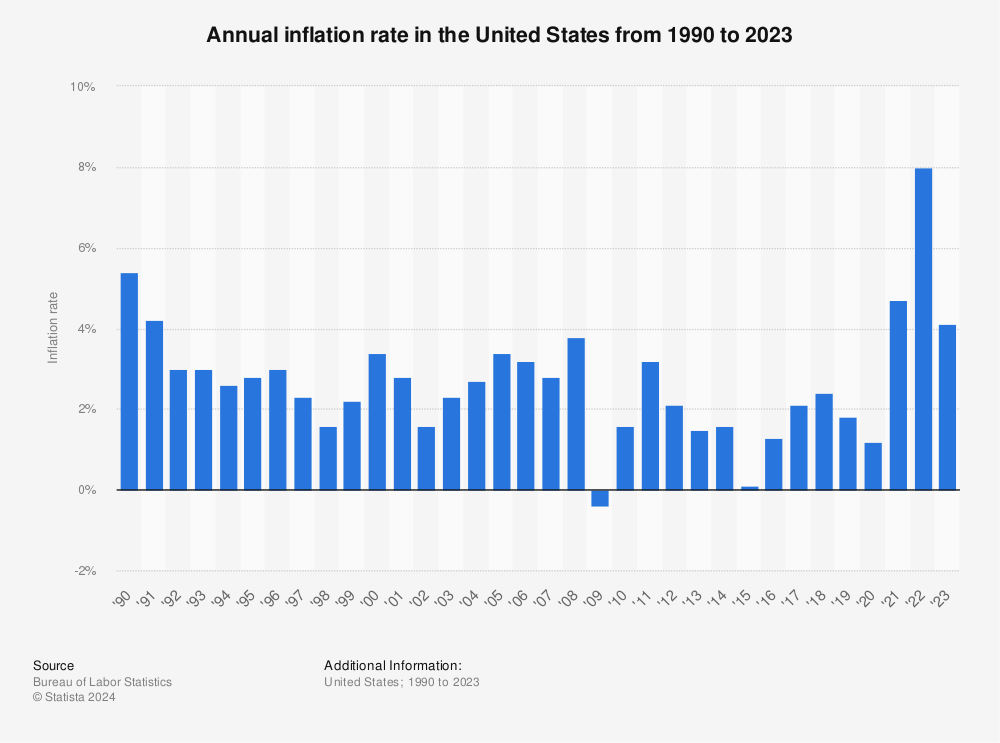
The yearly rate of inflation is one of the most critical metrics in the world of finance, serving as a pulse check for the health of an economy and a primary driver of central bank policy. At its core, the yearly inflation rate represents the percentage increase in the price of a specific basket of goods and services over a twelve-month period. For the individual investor, the business owner, and the average consumer, this number dictates everything from the interest rates on a mortgage to the real value of a savings account. Understanding how this rate is calculated, what drives its fluctuations, and how it shapes the financial landscape is essential for navigating the complexities of modern wealth management.
Understanding the Mechanics of the Yearly Rate of Inflation
To grasp what the yearly rate of inflation truly represents, one must look at how it is measured and reported by government agencies. In the United States, the primary gauge is the Consumer Price Index (CPI), managed by the Bureau of Labor Statistics. The CPI tracks the changes in prices paid by urban consumers for a representative “basket” of goods and services, which includes everything from food and energy to medical care and transportation.
The Consumer Price Index (CPI) Explained
The CPI is more than just a list of prices; it is a weighted index. This means that items consumers spend more on, such as housing and gasoline, have a greater impact on the final inflation figure than items like apparel or recreational toys. When the media reports that the yearly rate of inflation is 3.5%, they are stating that the weighted average of this entire basket has risen by that percentage compared to the same month one year prior. This “year-over-year” (YoY) perspective is favored because it smooths out seasonal volatility, such as the predictable rise in heating costs during winter or travel costs during summer.
PCE vs. CPI: The Preferred Metric of the Fed
While the CPI is the most recognized figure by the public, professional investors and the Federal Reserve often look closer at the Personal Consumption Expenditures (PCE) price index. The PCE is considered more comprehensive because it captures a broader range of expenses and accounts for “substitution effects.” For instance, if the price of beef rises significantly, the PCE assumes consumers might switch to chicken. This makes the PCE a more dynamic, albeit often lower, reflection of how inflation affects actual spending habits.
Core vs. Headline Inflation
Financial analysts frequently distinguish between “headline” inflation and “core” inflation. Headline inflation includes all items in the basket, including volatile sectors like food and energy. Core inflation strips these two categories out to reveal the underlying long-term trend. For a personal finance strategist, core inflation is often the more reliable indicator of where the economy is headed, as it removes the “noise” created by temporary oil supply shocks or seasonal crop failures.
Factors That Drive Yearly Inflation Fluctuations
The yearly rate of inflation is rarely static; it is the result of a delicate tug-of-war between various economic forces. Economists generally categorize these drivers into three main types: demand-pull, cost-push, and monetary policy.
Demand-Pull Inflation
This occurs when the demand for goods and services exceeds the economy’s ability to produce them. It is often described as “too much money chasing too few goods.” When consumer confidence is high and unemployment is low, people spend more. Businesses, seeing high demand, raise their prices to maximize profit and manage inventory. This is usually a sign of a growing, robust economy, but if it accelerates too quickly, it can lead to an overheated market where the cost of living outpaces wage growth.
Cost-Push Inflation
In contrast to demand-driven growth, cost-push inflation happens when the costs of production increase, forcing companies to pass those costs on to consumers. A classic example is a spike in crude oil prices. Since almost every product requires transportation or petroleum-based plastics, an increase in oil prices creates a ripple effect throughout the entire supply chain. Similarly, a tight labor market can lead to wage-push inflation, where companies raise prices to cover the higher salaries they must pay to attract and retain talent.
The Role of Monetary Policy and the Money Supply
The amount of money circulating in an economy is a fundamental driver of the inflation rate. When central banks, such as the Federal Reserve, lower interest rates, they make borrowing cheaper for businesses and individuals. This injects liquidity into the system, encouraging spending and investment. However, if the money supply grows too rapidly relative to economic output, the value of each individual dollar decreases, leading to a rise in the yearly inflation rate. This relationship is why central banks are tasked with the “dual mandate” of maintaining price stability and maximum sustainable employment.
How Yearly Inflation Impacts Personal Finance and Investing

For the individual, the yearly rate of inflation is not just a statistical abstraction; it is a direct tax on purchasing power. If your savings account is earning 1% interest while the yearly inflation rate is 4%, you are effectively losing 3% of your wealth’s value every year.
Purchasing Power and Cash Erosion
The most immediate impact of inflation is the erosion of purchasing power. This is particularly dangerous for those holding large amounts of cash or fixed-income investments. Over a decade, even a moderate inflation rate of 2% or 3% can significantly diminish the real-world value of a retirement nest egg. Consequently, financial planning must account for the “real” rate of return—which is the nominal return minus the inflation rate—to ensure that future wealth can actually cover future costs.
Inflation-Hedged Assets: Real Estate and Commodities
Savvy investors often pivot toward assets that have an intrinsic value or the ability to adjust prices in real-time. Real estate is a traditional inflation hedge because as prices for goods and services rise, property values and rental income typically follow suit. Similarly, commodities like gold, oil, and agricultural products often see their prices climb during inflationary periods because they represent the “raw materials” of the economy.
The Impact on the Stock and Bond Markets
The relationship between inflation and the stock market is complex. Moderate inflation is generally seen as a sign of a healthy economy and can be good for equities, as it allows companies to grow their nominal earnings. However, high and unpredictable inflation creates uncertainty, which markets hate. Furthermore, high inflation leads central banks to raise interest rates. Higher rates make borrowing more expensive for corporations and make bonds more attractive relative to stocks, often leading to a contraction in stock market valuations. In the bond market, existing bonds with lower fixed rates become less valuable as new bonds are issued with higher yields to keep up with inflation.
Strategies for Managing Wealth in High-Inflation Environments
When the yearly rate of inflation begins to climb, investors and households must adapt their financial strategies to preserve their standard of living and protect their portfolios.
Reevaluating Fixed Income and TIPS
In a high-inflation environment, traditional fixed-rate bonds may fail to provide adequate returns. One alternative is Treasury Inflation-Protected Securities (TIPS). These are government bonds where the principal value is adjusted based on changes in the CPI. When inflation rises, the principal increases, and the interest payments—which are a percentage of that principal—also rise. This provides a direct, low-risk hedge against the eroding power of inflation.
Diversifying into International Markets
Inflation rates are rarely uniform across the globe. By diversifying a portfolio into international markets, investors can mitigate the risk of high inflation in their home country. If the domestic currency is losing value due to high internal inflation, holding assets denominated in stronger, more stable foreign currencies can act as a buffer.
Income Protection and Negotiation
On the personal finance side, managing the yearly rate of inflation requires a proactive approach to income. For employees, this means negotiating for Cost of Living Adjustments (COLAs) that are at least equal to the yearly inflation rate. For entrepreneurs and freelancers, it involves periodically raising rates to reflect the increased cost of doing business. Failing to adjust one’s income in line with inflation is equivalent to taking a voluntary pay cut every year.
The Long-Term Outlook: Targeting the 2% Standard
Most modern central banks, including the Federal Reserve and the European Central Bank, aim for a yearly inflation rate of approximately 2%. This target is chosen because it is high enough to avoid the dangers of deflation (a general decline in prices) but low enough to maintain stable purchasing power.
Why Deflation Is Worse Than Inflation
While a 0% inflation rate might sound ideal for consumers, it can be economically disastrous. Deflation encourages consumers to delay purchases in hopes of lower prices in the future, which leads to reduced business revenue, layoffs, and a downward economic spiral. A steady 2% yearly rate of inflation provides a “buffer” that encourages spending and investment while allowing for gradual price adjustments across the economy.

Forecasting and Economic Stability
Predicting the yearly rate of inflation is a cornerstone of economic forecasting. Large corporations use these forecasts to set their budgets, and government agencies use them to adjust Social Security payments and tax brackets. For the modern investor, staying informed about the yearly rate of inflation is not about predicting the future with absolute certainty, but about building a resilient financial strategy that can withstand the inevitable fluctuations of the market. By understanding the mechanics of inflation, one can shift from being a victim of rising prices to a proactive manager of wealth, ensuring that their financial goals remain within reach regardless of the economic climate.
aViewFromTheCave is a participant in the Amazon Services LLC Associates Program, an affiliate advertising program designed to provide a means for sites to earn advertising fees by advertising and linking to Amazon.com. Amazon, the Amazon logo, AmazonSupply, and the AmazonSupply logo are trademarks of Amazon.com, Inc. or its affiliates. As an Amazon Associate we earn affiliate commissions from qualifying purchases.