
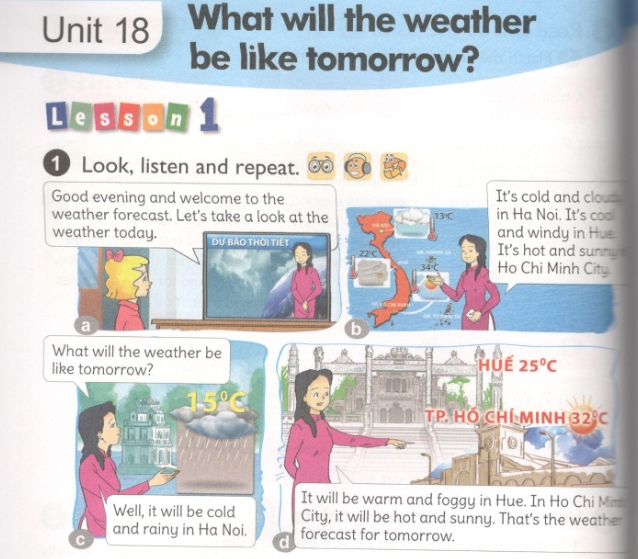
For most people, the question “what will the weather be like tomorrow?” is answered with a quick glance at a smartphone or a brief command to a voice assistant. While the output is a simple icon of a sun or a rain cloud, the process behind that information represents one of the most significant triumphs of modern technology. We are currently living in a golden age of meteorological science, where the intersection of supercomputing, satellite innovation, and artificial intelligence has transformed weather forecasting from a best-guess scenario into a high-precision digital discipline.
To understand the tech behind tomorrow’s forecast, we must look beyond the screen and into the complex ecosystem of global data networks, machine learning models, and the infrastructure that monitors every cubic meter of our atmosphere.
The Foundation of Forecasting: Numerical Weather Prediction and Supercomputing
At the heart of every weather forecast is Numerical Weather Prediction (NWP). This is the process of using mathematical models of the atmosphere and oceans to predict the weather based on current conditions. These models are built upon the laws of physics, fluid dynamics, and thermodynamics, translated into complex differential equations.
The Role of High-Performance Computing (HPC)
Solving these equations is a monumental task that requires some of the most powerful supercomputers on Earth. National agencies like the National Oceanic and Atmospheric Administration (NOAA) in the United States and the European Centre for Medium-Range Weather Forecasts (ECMWF) utilize massive HPC clusters to run these simulations.
These supercomputers divide the Earth’s atmosphere into a 3D grid. The finer the grid, the more accurate the forecast, but the more computational power is required. In the past, these grids might have been 50 kilometers wide; today, high-resolution models can zoom down to 1–3 kilometers. This allows meteorologists to predict hyper-local events, such as a single thunderstorm over a specific neighborhood, rather than a broad forecast for an entire county.
Satellite Infrastructure and Real-Time Data
Supercomputers are only as good as the data fed into them. This is where the Global Observing System comes in. A fleet of geostationary and polar-orbiting satellites provides a continuous stream of multispectral imagery and atmospheric sounding data.
Newer generations of satellites, such as the GOES-R series, have revolutionized our view of the planet. These satellites carry instruments like the Advanced Baseline Imager (ABI), which can track lightning, monitor smoke from wildfires, and measure sea surface temperatures with unprecedented precision. This “big data” stream is transmitted in real-time to ground stations, providing the initial conditions necessary for the NWP models to begin their calculations.
The AI Revolution: Machine Learning in Meteorology
While NWP has been the standard for decades, a paradigm shift is occurring. Artificial Intelligence (AI) and Machine Learning (ML) are beginning to outperform traditional physics-based models in both speed and accuracy.
Neural Networks and Pattern Recognition
Traditional models simulate physics, which is computationally “expensive” and slow. AI models, conversely, use pattern recognition. By training on decades of historical weather data—a dataset known as reanalysis—AI systems can learn the complex relationships between atmospheric variables without needing to solve every physics equation from scratch.
When you ask your phone about tomorrow’s weather, there is an increasing likelihood that an AI model helped generate that answer. Systems like Google DeepMind’s GraphCast and Nvidia’s FourCastNet have demonstrated the ability to produce 10-day forecasts in under a minute on a single workstation, a task that would take a traditional supercomputer hours to complete.
DeepMind’s GraphCast and the Efficiency Gap
The entry of big tech into meteorology has accelerated the pace of innovation. GraphCast, for instance, uses a graph neural network to model the Earth’s atmosphere as a complex web of interconnected points. In recent benchmarks, it has shown superior accuracy over the ECMWF’s High-Resolution 10-day forecast—long considered the “gold standard” of weather modeling.
The tech advantage here is twofold: accuracy and energy efficiency. Because AI models require significantly less power to run once they are trained, they offer a more sustainable way to generate high-frequency updates, allowing for “nowcasting”—forecasts that update every few minutes to track fast-moving extreme weather events.
The Internet of Things (IoT) and Hyper-Local Accuracy
Even with the best satellites and AI, the “last mile” of weather forecasting remains a challenge. The atmosphere is chaotic, and small changes at the surface can lead to massive shifts in weather patterns. This is where the Internet of Things (IoT) and crowdsourced data are filling the gaps.
Smart Sensors and Urban Weather Nets
Modern cities are becoming dense networks of sensors. Connected vehicles, smart streetlights, and even the barometers built into millions of smartphones provide a massive, distributed network of ground-level data. This “opportunistic sensing” allows tech companies to fill in the blind spots between official government weather stations.
For example, a car’s windshield wipers turning on can signal the exact moment a rain cell hits a specific street. When thousands of cars share this data, a weather app can provide a hyper-local notification: “Rain starting in 4 minutes at your current location.” This level of granularity was impossible just a decade ago.
Bridging the Gap with Edge Computing
The challenge with IoT data is the sheer volume. Processing millions of sensor inputs in real-time requires edge computing—processing the data closer to where it is collected rather than sending it all to a central cloud. By filtering and analyzing weather data at the “edge,” service providers can deliver instantaneous updates to users, making the “tomorrow” forecast more reliable than ever before.
Challenges in the Digital Atmosphere: Resilience and Complexity
As our reliance on technology for weather prediction grows, so do the challenges. The tech sector is currently grappling with how to maintain accuracy in a rapidly changing climate and how to protect the integrity of meteorological data.
Extreme Weather and Predictive Resilience
Climate change is creating “unprecedented” weather events that have no historical parallel. Because many AI models rely on historical data to make predictions, an event that has never happened before can confuse the algorithm.
To solve this, developers are working on “Physics-Informed Neural Networks” (PINNs). These hybrid models combine the speed of AI with the rigid constraints of physical laws. If an AI suggests a weather pattern that violates the laws of thermodynamics, the physics-based component of the model corrects it. This ensures that even as the climate changes, our tech remains grounded in reality.
The Security of Global Data Streams
Weather data is a matter of national security and economic stability. From aviation to agriculture, the “tomorrow” forecast dictates billions of dollars in economic activity. As forecasting becomes more tech-dependent, protecting these data pipelines from cyber threats and ensuring the sovereignty of satellite networks is a top priority for digital security experts. Encryption and blockchain-based data verification are being explored as ways to ensure that the weather data fed into our models has not been tampered with.
The Next Decade: Quantum Computing and Personalized Weather
Looking further ahead, the technology used to determine tomorrow’s weather will likely move into the realm of quantum computing. The atmosphere is perhaps the ultimate “complex system,” characterized by the “butterfly effect” where tiny changes lead to vast differences.
Quantum Simulation of Atmospheric Chaos
Traditional computers struggle with the inherent randomness and complexity of chaotic systems. Quantum computers, which use qubits to represent multiple states simultaneously, are theoretically perfect for simulating the fluid dynamics of the atmosphere. Once quantum hardware matures, we could see the elimination of “forecast uncertainty,” providing 100% accurate predictions weeks in advance.
The Personalization of Weather Data
We are also moving toward a future of personalized meteorology. Instead of a general forecast for a city, your personal AI assistant will integrate weather data with your schedule and health profile. It might suggest leaving for a meeting ten minutes early to avoid a localized downpour or warn you of high pollen counts on your specific jogging route based on real-time sensor data from local parks.
The question “what will the weather be like tomorrow?” is no longer just a query about the sky; it is a query about the state of our global technological infrastructure. From the massive silicon chips in supercomputing centers to the tiny barometers in our pockets, technology has turned the chaotic atmosphere into a readable, predictable, and actionable digital map. As AI and IoT continue to evolve, our ability to anticipate the elements will only become more seamless, integrated, and precise.
aViewFromTheCave is a participant in the Amazon Services LLC Associates Program, an affiliate advertising program designed to provide a means for sites to earn advertising fees by advertising and linking to Amazon.com. Amazon, the Amazon logo, AmazonSupply, and the AmazonSupply logo are trademarks of Amazon.com, Inc. or its affiliates. As an Amazon Associate we earn affiliate commissions from qualifying purchases.