
The 1922 Peace Dollar represents a fascinating intersection of American history, fine art, and hard-asset investing. For the modern collector or the individual looking to diversify their financial portfolio with tangible assets, understanding the nuances of this specific coin is essential. While the 1922 issue is the most common date in the Peace Dollar series, its value is far from uniform. Depending on its condition, mint mark, and specific die characteristics, a single coin could be worth anywhere from the price of its silver content to tens of thousands of dollars.
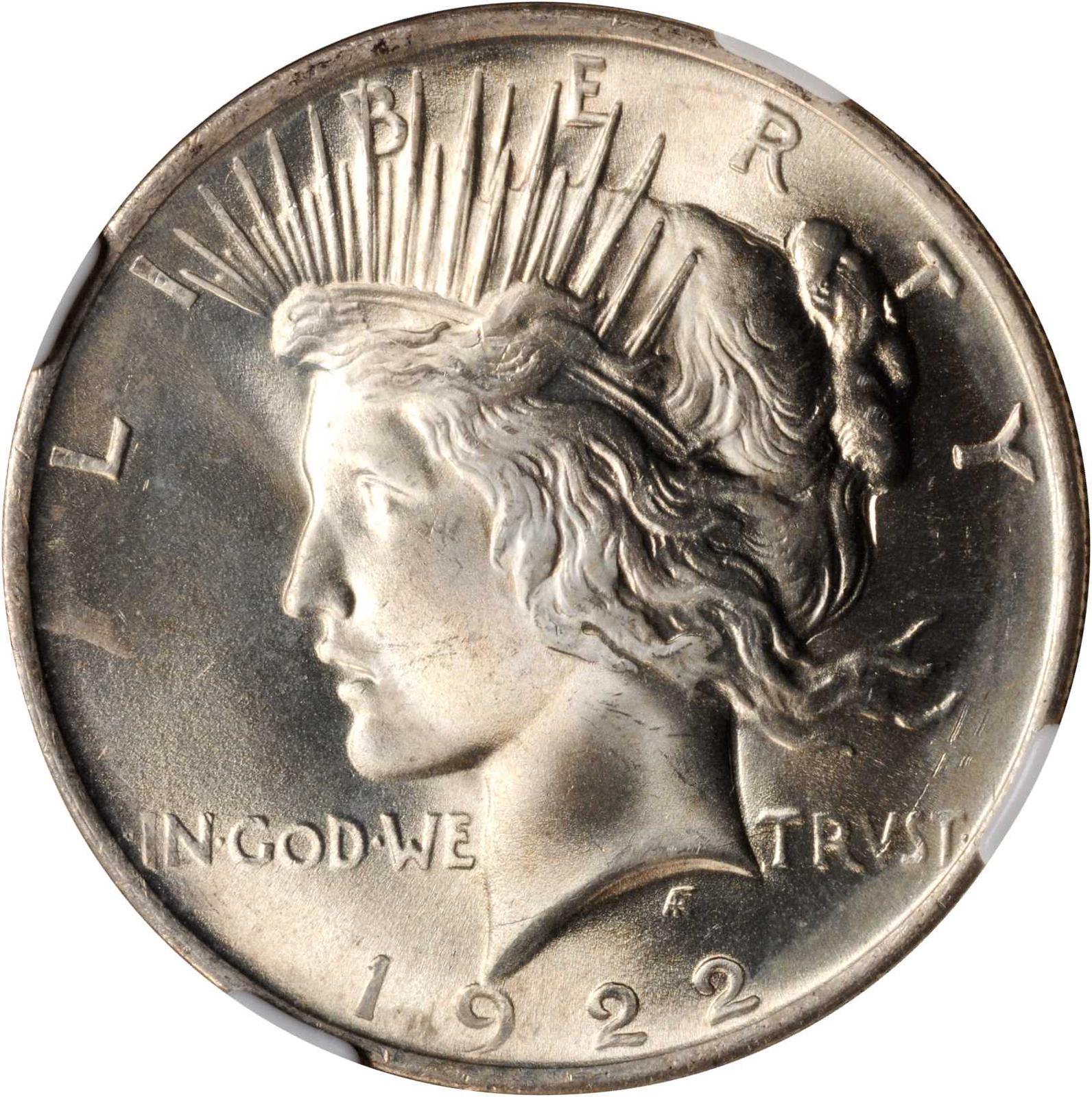
To accurately assess the value of a 1922 Peace Dollar, one must look beyond the surface. This coin was minted during a pivotal era of American economic recovery following World War I, and its massive mintage numbers tell a story of a nation striving for stability. Today, that stability is reflected in the coin’s status as a staple of the numismatic market and a popular entry point for silver investors.
The Historical Context and Economic Significance of the 1922 Peace Dollar
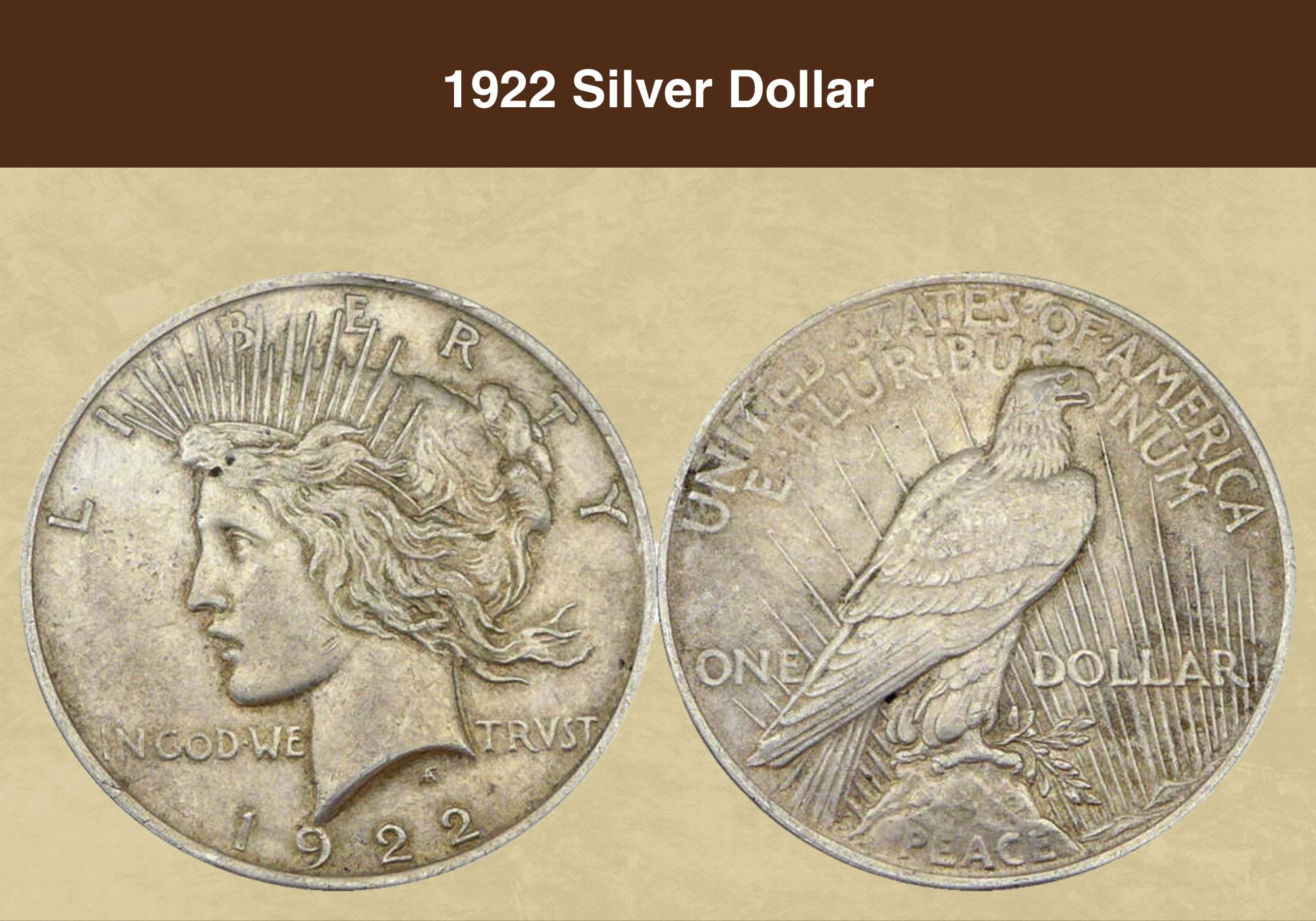
The Peace Dollar series was conceived as a commemorative gesture to celebrate the restoration of peace following the Great War. Designed by Anthony de Francisci, the coin features a youthful Liberty on the obverse and a perched eagle looking toward a new dawn on the reverse. While the series began in 1921, the 1922 issue is significant because it was the first year the United States Mint moved from “High Relief” strikes to “Low Relief” strikes to improve the durability of the dies and the stackability of the coins.
The 1922 Mintage: A Record-Breaking Year
In 1922, the United States was under pressure to replace millions of silver dollars that had been melted down under the Pittman Act of 1918. As a result, the mints in Philadelphia, Denver, and San Francisco went into overdrive. The 1922 Philadelphia mintage alone exceeded 51 million coins, which remains the highest mintage for any single year and mint in the entire Peace Dollar series.
From an investment perspective, this high mintage means that the 1922 Peace Dollar is incredibly liquid. It is easily found in the marketplace, making it a “common date” coin. However, “common” does not mean “valueless.” Because so many were produced, the 1922 dollar serves as a primary vehicle for those investing in bulk silver or those seeking to complete a high-grade set of American coinage.
The Shift from High Relief to Low Relief
Collectors often search for the rare “High Relief” 1922 Peace Dollars. Originally, the 1922 coins were meant to mirror the deep, sculptural aesthetic of the 1921 issue. However, after striking approximately 35,401 high-relief coins, the Mint realized they were impractical for commercial use. Almost all of these were melted down, though a handful of proof-like specimens survived. If you ever encounter a 1922 Peace Dollar with the deep, concave features of the 1921 strike, you are looking at a coin worth potentially six figures. For the standard low-relief coins that circulate today, the value is determined by more conventional market factors.
Determining Condition: The Role of Numismatic Grading
In the world of coin collecting and precious metals investing, “condition is everything.” The value of a 1922 Peace Dollar is dictated primarily by its state of preservation, measured on the Sheldon Scale from 1 to 70. A coin that has spent decades in a cash register will have a significantly lower valuation than one that has been tucked away in a bank vault since the day it was minted.
Circulated vs. Uncirculated Grades
Most 1922 Peace Dollars found in old jars or inherited collections fall into the “Circulated” categories:
- Good (G-4) to Very Fine (VF-20): These coins show significant wear. Liberty’s hair is flat, and the eagle’s feathers are smoothed over. At this level, the coin’s value is largely tied to its silver content (roughly 0.7734 troy ounces of pure silver).
- Extremely Fine (EF-45) to About Uncirculated (AU-58): These coins retain much of their original detail but show light wear on the highest points of the design. They carry a small numismatic premium over the spot price of silver.
The Lure of Mint State (MS) Coins
The real financial opportunity lies in “Uncirculated” or “Mint State” (MS) coins. An MS-60 coin has no wear but may have many “bag marks” (nicks from hitting other coins in a canvas bag). As the grade climbs to MS-63, MS-65, and beyond, the price increases exponentially.
- MS-63: A choice uncirculated coin with good eye appeal.
- MS-65: A “Gem” quality coin with high luster and very few marks. This is the threshold where the 1922 Peace Dollar moves from a silver play to a serious numismatic investment.
- MS-67 and higher: These are museum-quality specimens. Because 1922 coins were produced in such high quantities and moved roughly through the minting process, finding a perfect, mark-free survivor is rare. A 1922 Philadelphia Peace Dollar graded MS-67 can command prices upwards of $10,000 to $15,000 at auction.
The Impact of Mint Marks on Market Price
While the Philadelphia Mint produced the lion’s share of 1922 dollars, the branch mints in Denver and San Francisco also contributed to the supply. Identifying the mint mark is a critical step in determining the value of your coin. The mint mark—either a small “D” for Denver or “S” for San Francisco—is located on the reverse side, just above the eagle’s tail feathers and below the word “ONE.”
Philadelphia (No Mint Mark)
The Philadelphia coins are the most abundant. They generally offer the most affordable entry point for collectors. Because they were minted at the “mother mint,” the quality of the strike is often quite sharp, though they are prone to contact marks.
Denver (1922-D)
The Denver Mint produced about 15 million Peace Dollars in 1922. Generally, the 1922-D is harder to find in higher grades than the Philadelphia version. An MS-65 1922-D will typically carry a higher price tag than a 1922 Philadelphia in the same grade because the survival rate of high-quality Denver strikes was lower.
San Francisco (1922-S)
With a mintage of roughly 17.4 million, the San Francisco 1922 dollar is common in circulated grades. However, San Francisco strikes from this era are notorious for having “weak” strikes. This means that even an uncirculated coin might look slightly blurry in the details of Liberty’s hair or the eagle’s wings. Because of this, a 1922-S with a “sharp” strike and a high grade (MS-65 or better) is highly coveted by investors and can fetch a significant premium.
Investing in Peace Dollars: Strategies for Collectors and Investors
If you are looking at a 1922 Peace Dollar as a financial asset, you must approach it with the same rigor you would apply to a stock or real estate investment. The coin market is influenced by both the intrinsic value of the metal and the extrinsic value of the coin’s rarity and history.
Authentication and Professional Grading
The most important rule in high-value numismatics is “buy the holder, not the coin.” For any 1922 Peace Dollar that appears to be in Mint State condition, professional grading by the Professional Coin Grading Service (PCGS) or the Numismatic Guaranty Company (NGC) is essential. A “raw” or uncertified coin will almost always sell for less than a certified one because the buyer assumes the risk of the coin being cleaned, altered, or over-graded. Certification provides a “floor” for the coin’s value and ensures its authenticity in a market where counterfeits exist.
The Role of Silver Spot Price vs. Numismatic Premium
The value of a 1922 Peace Dollar is bifurcated. For lower-grade coins, the value moves in lockstep with the global spot price of silver. If silver rises by 20%, your “junk” silver dollars will likely rise by a similar margin.
However, high-grade 1922 dollars (MS-65+) operate on a different supply-and-demand curve. Their value is driven by the number of collectors trying to complete “Registry Sets” (competitively ranked collections). These investors are often willing to pay prices that have little to do with the silver content of the coin, making high-grade Peace Dollars a unique hedge against both inflation and market volatility.

Storage and Preservation
If you own a 1922 Peace Dollar, maintaining its current state is vital for protecting your investment. Silver is a reactive metal; exposure to humidity, sulfur, or PVC-containing plastic holders can cause “toning” or corrosion. While some collectors pay a premium for “rainbow toning” (a natural oxidation that creates beautiful colors), most investors prefer “white” coins with original mint luster. Storing coins in a cool, dry place within archival-quality holders is the best way to ensure their value does not degrade over time.
The 1922 Peace Dollar is more than just a piece of old money. It is a tangible link to a transformative period in American history and a versatile financial instrument. Whether you are holding a single coin found in a relative’s estate or managing a curated portfolio of MS-67 specimens, the 1922 Peace Dollar remains one of the most significant and actively traded assets in the numismatic world. Understanding its grade, its origin, and its place in the market is the key to unlocking its true value.
aViewFromTheCave is a participant in the Amazon Services LLC Associates Program, an affiliate advertising program designed to provide a means for sites to earn advertising fees by advertising and linking to Amazon.com. Amazon, the Amazon logo, AmazonSupply, and the AmazonSupply logo are trademarks of Amazon.com, Inc. or its affiliates. As an Amazon Associate we earn affiliate commissions from qualifying purchases.