
In an era defined by rapid technological advancements, from quantum computing to cutting-edge material science, the fundamental principles governing the interactions of atoms and molecules remain as crucial as ever. At the heart of understanding how matter behaves and how new materials can be engineered lies a cornerstone of chemical physics: the Valence Bond Theory (VBT). While often discussed in academic chemistry circles, VBT’s implications profoundly impact the design, development, and functionality of technologies that power our modern world. Far from being a mere abstract concept, it offers invaluable insights into the very nature of chemical bonds that underpin everything from semiconductor performance to the efficiency of battery technologies.

The Chemical Foundation of Modern Technology
Technology, at its core, is an application of scientific knowledge for practical purposes. Many of today’s most exciting technological innovations are rooted in material science, which in turn relies heavily on a deep understanding of chemical bonding. Valence Bond Theory provides one of the earliest and most intuitive frameworks for visualizing how atoms join together, forming the molecules and solid-state structures that constitute our devices and systems. Without comprehending these atomic-level interactions, the development of faster processors, more durable composites, or more efficient energy storage would be significantly hampered.
Bridging the Microscopic to the Macro-Technological
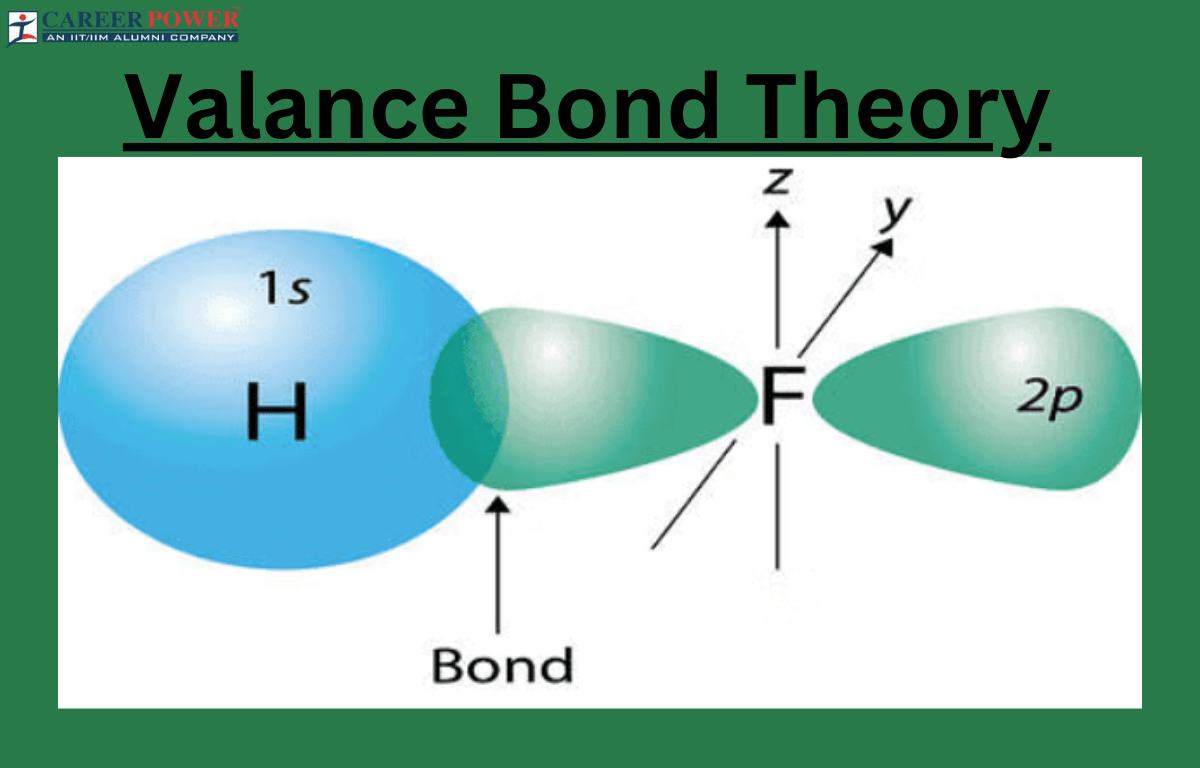
Valence Bond Theory emerged in the early 20th century, notably developed by Linus Pauling, as a quantum mechanical description of chemical bonding. It posits that chemical bonds form when atomic orbitals of different atoms overlap, and the electrons within these overlapping orbitals are shared. This sharing is not random; it occurs in specific orientations and with particular types of orbitals (s, p, d, hybridized orbitals like sp3, sp2, sp), leading to directional bonds.
For technologists, this microscopic understanding is critical. Consider the macroscopic properties of a material – its strength, conductivity, optical transparency, or thermal resistance. These properties are direct consequences of the types of bonds present and their spatial arrangements. For instance, the tetrahedral sp3 hybridization in silicon dictates its crystal structure and, consequently, its semiconducting properties crucial for transistors. Carbon’s ability to form sp, sp2, and sp3 bonds allows for an incredible diversity of materials, from the super-hard diamond (sp3) to the electrically conductive graphene (sp2), each with distinct technological applications. VBT helps us bridge the gap between an atom’s electron configuration and the observable, usable properties of the materials we engineer.
Electron Behavior and Material Properties
The essence of VBT lies in understanding the behavior of valence electrons – those outermost electrons that participate in chemical reactions. According to VBT, a covalent bond forms when two atomic orbitals, each containing a single electron, overlap in phase. The electrons then pair up, creating a region of high electron density between the nuclei. The extent of this overlap directly correlates with the strength of the bond. Furthermore, VBT introduces the concept of hybridization, where atomic orbitals mix to form new, equivalent hybrid orbitals that allow for stronger bonds and specific geometries.
This focus on electron behavior is paramount for technology. For example:
- Conductivity: In metals, the “sea” of delocalized electrons, though not strictly described by VBT’s localized bonds, is a macroscopic consequence of how atomic orbitals interact across many atoms. In semiconductors, the precise arrangement of valence electrons in localized bonds, as explained by VBT and extended by band theory, determines their band gap and thus their electrical properties.
- Mechanical Strength: Materials like ceramics and advanced polymers derive their strength from strong, directional covalent bonds, whose formation and orientation are explicable through VBT. The sp3 bonds in diamond make it the hardest known natural material.
- Optical Properties: The way materials interact with light (absorbing, transmitting, reflecting) is fundamentally linked to their electronic structure and the energy levels associated with their bonds, which VBT helps to describe. For instance, the strong sigma bonds in transparent glasses are stable and do not absorb visible light.
By providing a visual and conceptual framework for these electronic interactions, VBT empowers engineers and material scientists to predict, and ultimately manipulate, the properties of materials for specific technological applications.
Valence Bond Theory in Action: Shaping Tech Innovations
The theoretical underpinnings of VBT are far from confined to textbooks; they are actively applied in various fields of technological innovation, driving progress in everything from microelectronics to sustainable energy.
Designing Advanced Materials for Electronics
The relentless pursuit of faster, smaller, and more efficient electronic devices demands novel materials with precise electrical, thermal, and optical properties. VBT is an invaluable tool in this endeavor:
- Semiconductors: Understanding the sp3 hybridization and crystal structure of silicon and germanium is fundamental to semiconductor device physics. VBT helps explain why these elements form stable covalent networks and how doping them with elements like phosphorus or boron (which disrupt the perfect sp3 bonding network) creates n-type or p-type semiconductors, respectively. This knowledge is directly applied in designing transistors, integrated circuits, and photodiodes.
- Spintronics: An emerging field, spintronics, aims to utilize the spin of electrons in addition to their charge. Designing materials that can manipulate electron spin often involves understanding complex orbital interactions and magnetic properties, where VBT provides a qualitative starting point for analyzing localized electron spins.
- Organic Electronics: The development of flexible displays, organic light-emitting diodes (OLEDs), and organic solar cells relies on conjugated organic molecules. VBT, particularly the concept of pi (π) bonds formed by the overlap of unhybridized p-orbitals, is crucial for explaining the delocalization of electrons across these molecules, which gives them their semiconducting and light-emitting properties. Engineers use this understanding to synthesize molecules with tailor-made electronic structures for specific device functionalities.
Catalysis and Energy Technology
Valence Bond Theory’s insights into bond formation and stability are also pivotal in developing efficient catalysts and advancing energy technologies.
- Catalyst Design: Catalysts are substances that speed up chemical reactions without being consumed. Many industrial processes, from petroleum refining to pharmaceutical synthesis, depend on highly selective and efficient catalysts. VBT helps in understanding how transition metal complexes, a common class of catalysts, interact with reactant molecules. It explains the formation of d-orbital hybridizations and coordination bonds, shedding light on how catalysts bind to reactants, lower activation energies, and facilitate specific reaction pathways. This knowledge is used to design new catalysts for more sustainable and efficient industrial processes.
- Battery Technology: The performance of batteries, from their energy density to their charging cycles, is intimately linked to the chemical reactions occurring at their electrodes. While complex, the underlying principles of ion movement and electron transfer involve the making and breaking of chemical bonds. VBT provides a foundational understanding of the stability of these bonds in electrode materials (e.g., lithium-ion compounds) and how they change during charge and discharge cycles. This understanding guides the search for new electrode materials with improved energy storage capabilities and longer lifespans.
- Fuel Cells: Similar to batteries, fuel cells convert chemical energy directly into electrical energy. The efficiency of these devices depends on the catalytic activity at their electrodes. VBT helps interpret how reactants like hydrogen and oxygen interact with catalyst surfaces, forming transient bonds and facilitating electron transfer, thus enabling the design of more durable and efficient fuel cell components.
Computational Chemistry: VBT and AI Tools
The complexity of many real-world molecular systems often exceeds what can be fully grasped through conceptual models alone. This is where computational chemistry, increasingly augmented by AI tools, comes into play, utilizing and extending the principles of Valence Bond Theory.
Simulating Molecular Interactions
Computational chemistry employs algorithms and software to model molecular structures, properties, and reactions. While more advanced quantum mechanical methods (like Molecular Orbital Theory and Density Functional Theory) are often used for quantitative predictions, the intuitive insights of VBT often serve as a conceptual guide or a starting point for more complex calculations.
- Software Development: Many computational chemistry software packages incorporate algorithms that, directly or indirectly, derive from VBT principles. These tools allow researchers to visualize orbital overlaps, calculate bond strengths, and predict molecular geometries for novel compounds before they are synthesized in the lab. This virtual experimentation significantly accelerates the material discovery process, reducing time and cost.
- Drug Discovery: In pharmaceuticals, understanding how drug molecules bind to target proteins is paramount. While molecular docking and dynamics simulations are primarily used, the principles of specific, directional binding, as laid out by VBT, help in designing molecules that can selectively interact with biological targets. Computational tools can analyze potential bond formation and predict binding affinities, thus aiding in the design of new therapeutic agents.
AI-Driven Material Discovery
The convergence of VBT’s principles with artificial intelligence represents a powerful frontier in material science. AI and machine learning algorithms can analyze vast datasets of chemical structures and properties, learning patterns that might be too complex for humans to discern.
- Predictive Models: AI models can be trained on datasets where VBT-derived descriptors (e.g., bond types, hybridization states, bond energies) are inputs. These models can then predict the properties of entirely new, unstudied materials. For instance, AI could predict the optimal catalytic activity of a new transition metal complex based on its predicted orbital interactions and bond strengths.
- Automated Synthesis Planning: AI can also assist in planning the synthesis pathways for novel materials. By understanding the energetics and mechanisms of bond formation and breakage (informed by quantum chemical principles like VBT), AI can suggest optimal reaction conditions and precursors, streamlining the journey from theoretical concept to tangible technological component.
- High-Throughput Screening: For complex systems like battery electrolytes or advanced polymers, where countless molecular configurations are possible, AI can perform high-throughput virtual screening. It can identify promising candidates by rapidly evaluating their potential based on fundamental bonding characteristics described by VBT, dramatically narrowing down the experimental search space.
Challenges and Future Directions in Tech Applications
Despite its fundamental importance and widespread conceptual utility, Valence Bond Theory is not without its limitations and continues to evolve, often in conjunction with other theoretical frameworks, to meet the demands of advanced technological development.
Limitations and Complementary Theories
While VBT provides an excellent intuitive picture for many simple molecules, it faces challenges with more complex systems. For instance:
- Delocalized Systems: For molecules with extensive electron delocalization (e.g., aromatic compounds, conjugated polymers, or metals), VBT’s emphasis on localized two-electron bonds becomes less straightforward. Here, Molecular Orbital Theory (MOT), which treats electrons as delocalized across the entire molecule, often provides a more accurate quantitative description.
- Excited States and Spectroscopy: Describing electronically excited states or interpreting complex spectroscopic data often requires the more advanced framework of MOT or Density Functional Theory (DFT), as VBT primarily focuses on the ground state and localized bonding.
- Quantitative Accuracy: For precise quantitative predictions of bond lengths, angles, and energies in complex molecules, computational methods based on DFT or ab initio MOT are generally preferred. However, VBT still provides a qualitative framework that often informs the interpretation of these quantitative results.
In essence, VBT frequently serves as a foundational mental model, helping scientists and engineers develop an initial understanding, which is then refined and quantified by more sophisticated computational and theoretical tools. The integration of these various theories provides a comprehensive toolkit for technological innovation.

The Road Ahead: VBT’s Enduring Relevance
As technology pushes the boundaries into areas like quantum materials, bio-integrated electronics, and advanced sustainable energy systems, the role of fundamental chemical theories like VBT will only deepen. Future directions involve:
- Developing Intuitive AI Interfaces: Leveraging VBT’s intuitive visual nature to create AI tools that not only predict but also explain their predictions in chemically meaningful ways, making complex material design more accessible to engineers.
- Bridging Scales: Further integrating VBT’s atomic-level insights with mesoscale and macroscopic modeling techniques to understand complex hierarchical materials, from self-assembling nanostructures to robust composites.
- Educating Future Innovators: Ensuring that future generations of engineers and scientists are well-versed in foundational theories like VBT, as these provide the critical thinking framework necessary to innovate and troubleshoot the next generation of technologies.
In conclusion, “What is the Valence Bond Theory?” is more than a question for a chemistry exam; it’s an inquiry into a fundamental principle that silently underpins much of the technological world we inhabit. By unraveling the intricate dance of electrons and the formation of chemical bonds, VBT continues to equip us with the knowledge to design, discover, and deploy the advanced materials and systems that define our technological progress. Its enduring relevance, particularly when complemented by modern computational and AI approaches, ensures its place as a cornerstone in the ongoing revolution of science and technology.
aViewFromTheCave is a participant in the Amazon Services LLC Associates Program, an affiliate advertising program designed to provide a means for sites to earn advertising fees by advertising and linking to Amazon.com. Amazon, the Amazon logo, AmazonSupply, and the AmazonSupply logo are trademarks of Amazon.com, Inc. or its affiliates. As an Amazon Associate we earn affiliate commissions from qualifying purchases.