
In the vast and intricate world of finance, where every digit can represent real-world value, understanding the fundamental building blocks of numbers is not just helpful—it’s absolutely critical. One such foundational concept is the tenths place in a decimal. Far from being an abstract mathematical concept relegated to school classrooms, the tenths place, and indeed all decimal places, forms the bedrock of accurate financial calculations, smart investment decisions, and sound personal money management.
From calculating interest rates on a mortgage to tracking stock prices, budgeting your daily expenses, or analyzing complex financial reports, decimals are ubiquitous. A solid grasp of what the tenths place signifies—its position, its value, and its implications—empowers individuals and businesses alike to navigate the financial landscape with greater precision, confidence, and ultimately, success. In an environment where a mere tenth of a percentage point can translate into thousands or even millions of dollars over time, dismissing the importance of decimal precision is a luxury no one in finance can afford. This article will demystify the tenths place, illustrate its vital role across various financial contexts, and highlight why its mastery is an indispensable skill for anyone dealing with money.
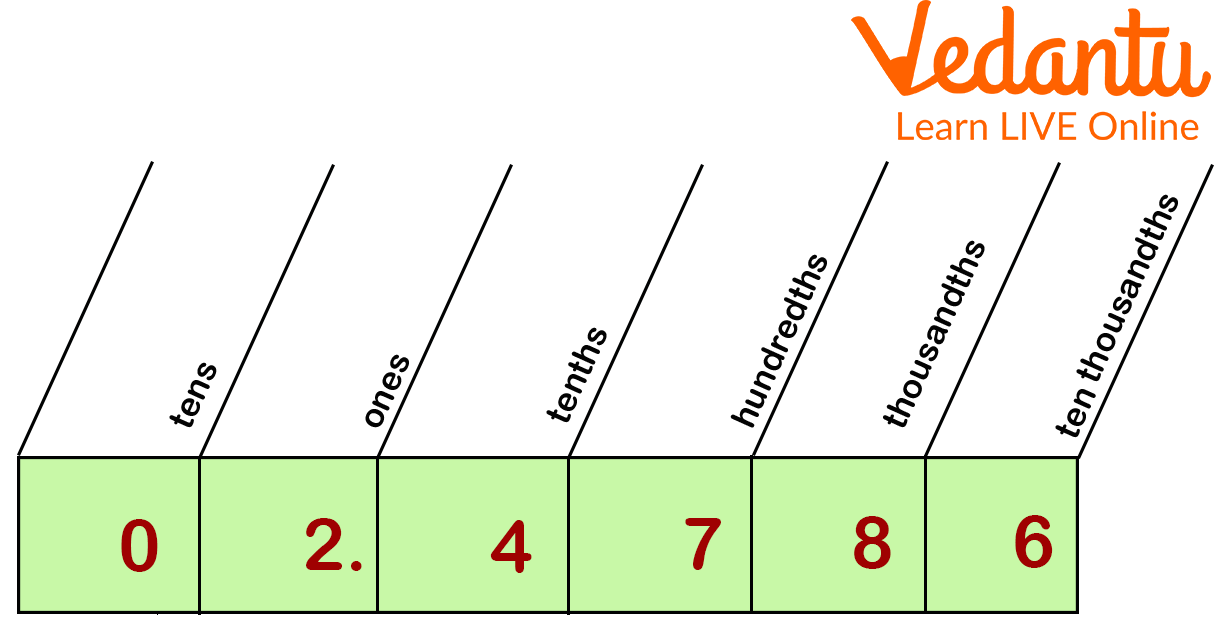
The Fundamentals of Decimal Place Value
Before delving into the financial implications, it’s essential to solidify our understanding of what decimals are and where the tenths place fits within this numerical system. Decimals are a way of representing numbers that are not whole, extending the concept of place value beyond the ones digit.
Deconstructing the Decimal System
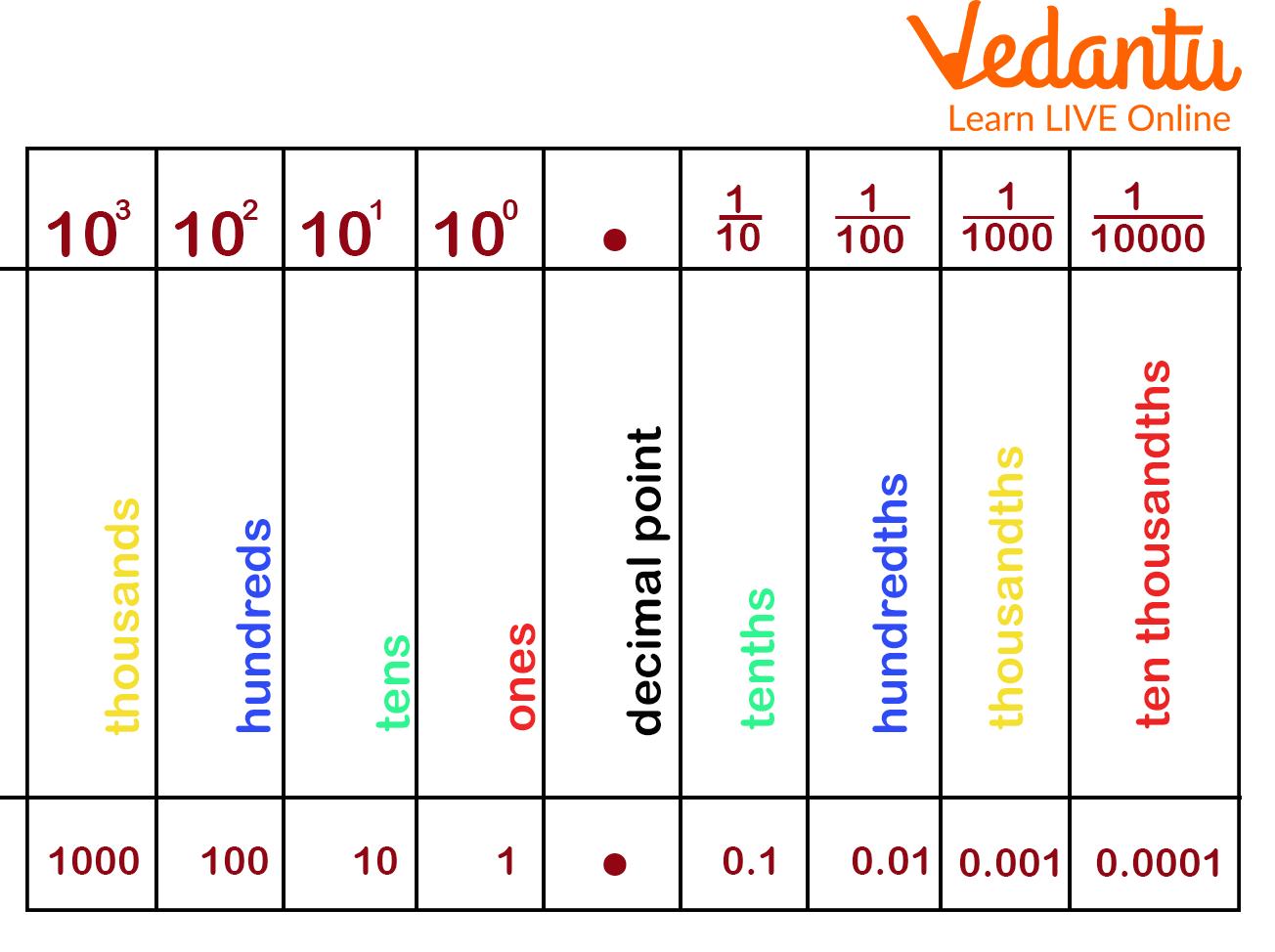
Our standard number system is based on powers of ten. To the left of the decimal point, we have whole numbers: ones, tens, hundreds, thousands, and so on. Each position represents ten times the value of the position to its right. The decimal point acts as a separator, indicating where the whole number portion ends and the fractional (or decimal) portion begins.
To the right of the decimal point, the system continues with fractions of whole numbers, also based on powers of ten. Instead of multiplying by ten for each step to the left, we divide by ten for each step to the right. This means that each place value to the right of the decimal point represents a decreasing fraction of one.
Pinpointing the Tenths Place
The tenths place is the very first digit immediately to the right of the decimal point. It represents fractions of a whole number in units of one-tenth (1/10).
For example:
- In the number 0.5, the ‘5’ is in the tenths place, meaning five-tenths (5/10).
- In the number 3.7, the ‘7’ is in the tenths place, meaning seven-tenths (7/10).
- In the number 12.0, the ‘0’ is in the tenths place, indicating zero tenths.
This position is crucial because it’s the largest fractional component of a number. While other decimal places follow (hundredths, thousandths, etc.), the tenths place holds the most significant non-whole value. Understanding its position and value is the first step towards accurately interpreting and manipulating decimal numbers in any financial context.
Beyond the Tenths: Hundredths and Thousandths
While our focus is primarily on the tenths place, it’s beneficial to briefly acknowledge the subsequent decimal places, as they too play a substantial role in financial calculations.
- Hundredths Place: The second digit to the right of the decimal point. It represents units of one-hundredth (1/100). For example, in 0.05, the ‘5’ is in the hundredths place. Many currencies, like the U.S. dollar, are typically quoted to the hundredths place (cents).
- Thousandths Place: The third digit to the right of the decimal point. It represents units of one-thousandth (1/1000). While less common in everyday transactions, the thousandths place becomes critical in high-precision financial calculations, such as exchange rates or highly detailed interest rate computations.
A comprehensive understanding of all these decimal places ensures accuracy, which is paramount in managing and interpreting financial data.
Why the Tenths Place Matters Immensely in Personal Finance
In personal finance, every penny—and indeed, every fraction of a penny—can contribute to your overall financial health. The tenths place plays an understated yet critical role in many aspects of your daily financial life, from simple transactions to major long-term commitments.
Budgeting and Everyday Transactions
Consider your daily spending. A cup of coffee might cost $3.75. The ‘7’ in the tenths place represents 70 cents, a significant portion of the price. When you’re tracking expenses, miscalculating or rounding prematurely, especially on small items, can throw off your budget over time. If you consistently underestimate costs by just a tenth of a dollar on multiple items daily, those small errors accumulate quickly. For instance, saving $0.10 on five items a day means $0.50 daily, which is $15 per month, or $180 per year. Conversely, overspending by that amount has the same negative impact. Understanding the tenths place ensures you accurately account for every part of a dollar, leading to more realistic and effective budgeting.
Interest Rates and Loan Calculations
Perhaps one of the most impactful areas where the tenths place holds sway is in interest rates. Whether you’re looking at a mortgage, a car loan, a credit card APR, or the yield on a savings account, interest rates are almost always quoted with decimal precision, often extending to the hundredths or even thousandths of a percentage point.
Imagine two mortgage offers: one at an interest rate of 4.5% and another at 4.6%. That seemingly small difference of 0.1% (one-tenth of a percent) might appear negligible. However, over the lifespan of a 30-year, $300,000 mortgage, this difference can translate into thousands of dollars in additional interest paid. A 0.1% increase in an interest rate means your monthly payment might be just a few dollars higher, but compounded over 360 payments, the total cost can be substantial. Similarly, for savings accounts or investments, a slightly higher return in the tenths or hundredths place can significantly boost your earnings over time due thanks to the power of compound interest. Being acutely aware of these fractional differences is key to making financially optimal choices.
Understanding Percentages and Proportions
Percentages are ubiquitous in finance, used for discounts, taxes, tips, growth rates, and more. A percentage is simply a way of expressing a fraction of 100, and when converted to a decimal, the tenths place often becomes highly relevant. For example, a 15% tip is 0.15 of the bill. A “10% off” sale means you save 0.10 of the original price. Accurately converting and calculating with these percentages requires a firm understanding of decimal place values. Without it, you might miscalculate how much you’re truly saving, how much tax you owe, or the actual proportion of a budget allocated to a specific category.
Decimals in the World of Investing and Business
Beyond personal finance, the precision afforded by decimal places is absolutely indispensable in the broader financial markets and business operations. Here, transactions are larger, margins are often tighter, and the impact of even minute differences in value can be enormous.
Stock Prices and Market Fluctuations
When you look at stock prices, they are almost universally quoted in dollars and cents, meaning two decimal places (hundredths). However, within the dynamics of trading, even smaller fractions can be crucial. High-frequency trading algorithms, for instance, operate on milliseconds and fractional price movements. While a regular investor sees a stock price of $150.25, the underlying market mechanics might involve bids and asks that differ by a mere tenth or hundredth of a cent, driving the spread between buying and selling prices. Understanding how these fractional movements impact your total investment, especially in large portfolios, is vital. A stock moving from $150.20 to $150.30 represents a $0.10 gain per share. Multiply that by thousands of shares, and the tenths place directly translates to hundreds or thousands of dollars in profit or loss.
Currency Exchange Rates
In foreign exchange (forex) markets, currency pairs are quoted with extremely high precision, often to four or even five decimal places. For example, the EUR/USD pair might be quoted as 1.1045. Here, the ‘1’ in the tenths place means one-tenth of a dollar. Even movements in the fourth decimal place (pips, or “percentage in point”) are significant due to the sheer volume of money exchanged daily. A shift from 1.1045 to 1.1055 represents a change in the tenths of a cent in value per Euro. For banks, corporations, or large investors converting millions or billions of dollars, even a small difference in the tenths, hundredths, or thousandths place of an exchange rate can mean a difference of hundreds of thousands or even millions in the value of their transactions. Precision down to the smallest decimal is not just preferred; it’s an absolute necessity.
Business Analytics and Profit Margins
For businesses, financial health often hinges on narrow profit margins and detailed performance metrics. Profit margins are typically expressed as percentages, which convert to decimals (e.g., a 10.5% margin is 0.105). Tracking these margins down to the tenths or hundredths of a percentage point is crucial for strategic decision-making. A slight decrease in a product’s profit margin from 12.3% to 12.2% might seem negligible, but across millions of units sold, that 0.1% difference can represent significant revenue loss or gain. Similarly, return on investment (ROI), cost per acquisition (CPA), and other key performance indicators (KPIs) often rely on decimal precision to accurately reflect a company’s efficiency and profitability. Businesses use this granular data to identify trends, optimize operations, and maintain a competitive edge.
Financial Ratios and Reporting
Financial analysts and investors rely heavily on financial ratios (e.g., debt-to-equity ratio, current ratio, P/E ratio) to assess a company’s performance, health, and valuation. These ratios are almost always expressed with decimal precision. For instance, a debt-to-equity ratio of 0.85 indicates that the company has 85 cents of debt for every dollar of equity. Differences in the tenths or hundredths place of these ratios can significantly alter an investor’s perception of a company’s risk profile or growth potential. Accurate reporting down to the necessary decimal place is critical for transparency, compliance, and informing sound investment decisions.
Avoiding Costly Errors: Practical Applications and Tools
Given the pervasive and critical role of the tenths place and other decimals in finance, avoiding errors through careful application and leveraging appropriate tools is paramount.
The Perils of Rounding Too Soon
One of the most common and potentially costly mistakes in financial calculations is premature rounding. While rounding may seem harmless for simplifying numbers, doing so before the final calculation, especially in scenarios involving compounding interest or large sums, can lead to significant discrepancies. For example, if an interest rate is 4.125% and you round it to 4.1% early in a complex calculation, the final loan payment or investment return could be substantially off. Banks and financial institutions rely on exact decimal calculations; individuals should too. It’s always best to carry as many decimal places as possible throughout your calculations and only round at the very end to the required precision (e.g., two decimal places for currency).
Leveraging Financial Software and Calculators
Fortunately, modern financial software, spreadsheets (like Excel), and calculators are designed to handle decimal precision with great accuracy. Understanding how to correctly input decimal numbers, specify the number of decimal places for display, and use functions that preserve precision is essential. For instance, when using a spreadsheet to calculate loan amortizations or investment growth, ensuring that interest rates and payment schedules are entered with full decimal precision allows the software to perform its complex calculations without error. While these tools automate the arithmetic, the user’s understanding of the underlying decimal structure, including the tenths place, remains crucial for interpreting the output and verifying its reasonableness. They are tools for calculation, but not substitutes for understanding.
Developing Financial Literacy Through Decimal Mastery
Ultimately, a solid grasp of decimal places, starting with the tenths place, is a cornerstone of financial literacy. It’s not just about knowing where the digit sits, but understanding its real-world impact. This understanding empowers individuals to:
- Evaluate loan offers more effectively: Distinguish between a truly better rate and one that only appears slightly different.
- Budget with greater accuracy: Ensure that every fractional expense is accounted for.
- Interpret investment performance: Understand the nuances of returns, yields, and price changes.
- Avoid hidden fees and charges: Many fees are percentage-based, requiring decimal understanding for full transparency.
- Make informed decisions: Whether saving for retirement, investing in stocks, or running a business, precision leads to better outcomes.

Conclusion
The tenths place in a decimal is far more than a simple mathematical position; it is a critical component of financial accuracy and decision-making across all scales. From managing personal budgets and understanding interest rates on loans to navigating the intricate world of stock markets, currency exchange, and corporate finance, the precision afforded by decimal places, beginning with the tenths, underpins almost every monetary transaction and analysis.
Neglecting the importance of this seemingly small fractional value can lead to significant financial miscalculations, missed opportunities, or avoidable losses. By embracing a detailed understanding of decimal place values and applying this knowledge diligently in all financial dealings, individuals and businesses can foster greater financial literacy, enhance their analytical capabilities, and ultimately, build a more secure and prosperous financial future. In finance, every tenth counts.
aViewFromTheCave is a participant in the Amazon Services LLC Associates Program, an affiliate advertising program designed to provide a means for sites to earn advertising fees by advertising and linking to Amazon.com. Amazon, the Amazon logo, AmazonSupply, and the AmazonSupply logo are trademarks of Amazon.com, Inc. or its affiliates. As an Amazon Associate we earn affiliate commissions from qualifying purchases.