
The exosphere, the outermost layer of Earth’s atmosphere, represents a fascinating frontier where our planet gradually merges with the vacuum of space. Often described as the “edge of space,” this region, extending from roughly 600 kilometers (370 miles) above the Earth’s surface outwards for many thousands of kilometers, plays a critical role in our understanding of planetary atmospheres, space weather, and the long-term viability of orbital assets. When we ask, “what is the temperature for the exosphere,” we are not merely seeking a simple numerical value, but rather delving into a complex technological challenge involving cutting-edge sensor development, advanced data processing, and sophisticated computational modeling. From a technological standpoint, comprehending the exosphere’s thermal characteristics is paramount for everything from designing resilient satellites to ensuring the safety of astronauts and predicting the behavior of space debris.
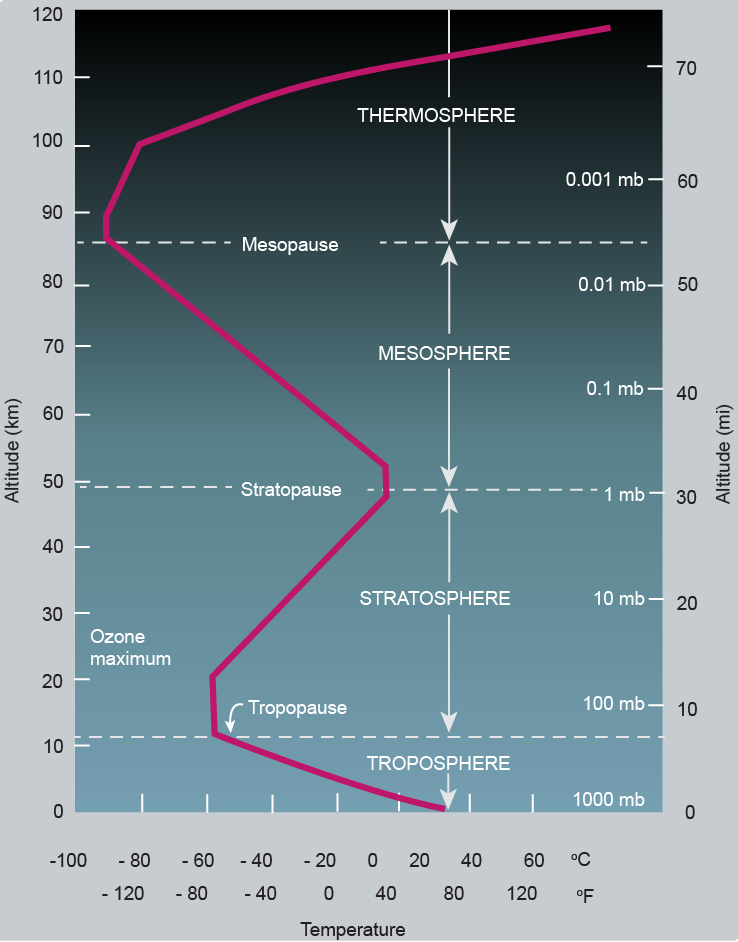
The Paradox of Exospheric Temperature: A Challenge for Sensing Technology
Defining and measuring “temperature” in the exosphere presents a unique technological conundrum, fundamentally different from our terrestrial experience. This region is characterized by an extremely low density of particles, creating conditions that defy conventional thermodynamic principles. Understanding this paradox is the first step in appreciating the technological ingenuity required to study it.
Defining “Temperature” in Near-Vacuum
On Earth’s surface, temperature is intuitive: it’s a measure of how hot or cold something feels, related to the average kinetic energy of a large number of interacting molecules. Heat transfer primarily occurs through conduction and convection. In the exosphere, however, the air is so thin that particles rarely collide with one another. A “particle” in the exosphere—primarily hydrogen and helium atoms—can travel hundreds or even thousands of kilometers without encountering another particle. This near-vacuum means that traditional heat transfer mechanisms are largely absent.
Consequently, “temperature” in the exosphere refers primarily to the kinetic temperature of individual particles. These particles, energized by solar radiation (especially extreme ultraviolet, or EUV), can achieve very high individual velocities, corresponding to kinetic energies that would translate to thousands of degrees Celsius (or Kelvin) in a dense atmosphere. Yet, because there are so few of them, they transfer very little actual heat energy. A thermometer placed in the exosphere would not register these high kinetic temperatures; instead, it would radiate its own heat into space, likely showing a very cold reading. The technological challenge, therefore, is not to measure a bulk property but to characterize the energetic state of incredibly sparse, fast-moving particles. This requires specialized sensors capable of directly measuring particle velocities and energies, rather than inferring temperature from bulk heat exchange.
Early Measurement Attempts and Limitations
The initial forays into understanding the exosphere began with indirect observations and theoretical models, followed by direct measurements using sounding rockets and early satellite missions. These pioneering efforts, while foundational, faced significant technological limitations. Sounding rockets could only provide brief snapshots of a limited altitude range, suffering from short flight times and the difficulty of separating atmospheric effects from instrument readings. Early satellites, such as Explorer 7 (1959), carried basic sensors like thermistors and pressure gauges, but these were primarily designed for lower atmospheric layers.
A major limitation was the “contaminant atmosphere” surrounding the spacecraft itself. Outgassing from the satellite’s materials could create a local, albeit tenuous, atmosphere that interfered with the measurement of the ultra-thin natural exosphere. Furthermore, early sensor technology lacked the sensitivity and precision to accurately detect and characterize the extremely low densities and high energies of exospheric particles. These early attempts underscored the need for cleaner spacecraft designs, more sophisticated vacuum technology for instrumentation, and novel approaches to distinguish between ambient conditions and spacecraft-induced effects. The quest for accurate exospheric temperature data pushed the boundaries of vacuum engineering, materials science, and sensor miniaturization.
Remote Sensing vs. In-Situ Measurement Technologies
To overcome the challenges of exospheric measurement, scientists and engineers developed two primary technological approaches: in-situ measurement and remote sensing. Both have evolved significantly, leveraging advancements in electronics, optics, and data processing.
In-situ measurement technologies involve direct sampling of particles by instruments carried on spacecraft. These instruments are designed to interact with the individual particles of the exosphere. Examples include:
-
Mass Spectrometers: These devices ionize and then sort particles by their mass-to-charge ratio, identifying the composition (e.g., hydrogen, helium, atomic oxygen) and density of different atmospheric constituents. By measuring the distribution of particle velocities, kinetic temperatures can be inferred.
-
Ion Traps/Energy Analyzers: These instruments directly measure the kinetic energy of charged particles, providing a more direct assessment of the “temperature” based on particle motion.
-
Accelerometers: While not directly measuring temperature, highly sensitive accelerometers can detect minute drag forces on a satellite. Since drag is proportional to atmospheric density, and density is inversely related to temperature at a given altitude (assuming an isothermal atmosphere), these can provide an indirect measure of changes in exospheric temperature and density.
Remote sensing technologies, on the other hand, observe the exosphere from a distance, typically by analyzing electromagnetic radiation (light) emitted or absorbed by exospheric gases. Key technologies include:
-
Ultraviolet (UV) Spectrometers and Imagers: Exospheric atoms and molecules, particularly hydrogen and helium, scatter and emit UV light after being excited by solar radiation. Instruments like those on NASA’s ICON and GOLD missions observe these UV emissions to map the density and temperature profiles of the thermosphere and exosphere across vast regions, providing a global perspective that in-situ measurements cannot achieve alone.
-
Lidar (Light Detection and Ranging) Systems: Though more commonly used for lower atmospheric layers, advanced space-based lidar could theoretically probe the exosphere by detecting the scattering of laser pulses by atmospheric particles, offering precise altitude resolution.
The combined use of both in-situ and remote sensing technologies, each with its own strengths and limitations, provides a more comprehensive and accurate picture of the exosphere’s complex thermal environment, highlighting the need for a multi-instrument, multi-mission approach in space exploration.
Advanced Sensor Technologies for Exospheric Analysis
The pursuit of a deeper understanding of the exosphere has continuously pushed the boundaries of sensor technology, leading to increasingly sophisticated instruments deployed on various space missions. These advancements are crucial for both scientific discovery and practical applications in space operations.
Satellite-Based Instrumentation
Modern satellites are veritable flying laboratories, equipped with an array of instruments specifically designed to probe the exosphere.
-
Neutral Atom Mass Spectrometers: Building on early designs, current mass spectrometers offer improved sensitivity, mass resolution, and temporal resolution. Missions like those on the International Space Station (ISS) and dedicated atmospheric research satellites utilize these to precisely determine the composition and velocity distributions of neutral atoms in the exosphere. This directly informs calculations of kinetic temperature.
-
Plasma Analyzers and Ion Drifters: For the charged particles (plasma) also present in the upper exosphere, instruments like ion drifters and retarding potential analyzers measure ion velocities, densities, and temperatures. Missions such as ESA’s Swarm constellation provide high-resolution data on the ionosphere-exosphere coupling.
-
High-Resolution Accelerometers: Satellites like GRACE (Gravity Recovery and Climate Experiment) and CHAMP (CHAllenging Minisatellite Payload) carried ultra-sensitive accelerometers to measure non-gravitational forces, primarily atmospheric drag. By precisely measuring how quickly a satellite’s orbit decays due to drag, scientists can infer the density of the very thin atmosphere it passes through. As exospheric density is highly variable and inversely correlated with kinetic temperature (given solar input), these drag measurements are critical for modeling the dynamic thermal state of the exosphere.
-
Far Ultraviolet (FUV) Spectrometers and Imagers: Missions like NASA’s ICON (Ionospheric Connection Explorer) and GOLD (Global-scale Observations of the Limb and Disk) employ FUV instruments to observe Earth’s upper atmosphere from geosynchronous orbit. These instruments capture the emissions of atomic oxygen and nitrogen, which are excited by solar UV radiation. By analyzing the intensity and spectral characteristics of these emissions, scientists can deduce the temperature, composition, and dynamics of the thermosphere and lower exosphere on a global scale, providing crucial context for exospheric behavior.
Ground-Based Remote Sensing Techniques

While space-based instruments provide direct and global coverage, ground-based observatories offer long-term, continuous measurements from specific locations, complementing satellite data.
-
Incoherent Scatter Radar (ISR): Powerful ground-based radars, such as those at Arecibo (before its collapse), Millstone Hill, and Poker Flat, transmit radio waves into the ionosphere and exosphere. By analyzing the scattered signals from free electrons, ISR can determine electron and ion densities, temperatures, and velocities. These measurements are crucial for understanding the energetic processes driving the exosphere, particularly during geomagnetic storms.
-
Airglow and Aurora Photometers/Spectrometers: These instruments observe faint emissions of light (airglow) from the upper atmosphere, caused by chemical reactions and solar excitation. While primarily focused on lower altitudes, some airglow features originate from the very top of the thermosphere and into the exosphere. During auroral events, triggered by solar wind particles interacting with Earth’s magnetic field, ground-based cameras and spectrometers capture stunning light displays that provide insights into the energy deposition processes affecting exospheric particles.
The Role of CubeSats and Small Satellites
The advent of CubeSats and other small satellite platforms has revolutionized exospheric research by enabling more frequent, lower-cost missions. These smaller satellites can carry specialized, miniaturized sensors, allowing for:
-
Constellations for Spatial-Temporal Coverage: Instead of a single large satellite, multiple CubeSats can be deployed to provide simultaneous measurements from different locations, offering better spatial and temporal resolution of exospheric phenomena.
-
Riskier Orbits and Mission Concepts: The lower cost of CubeSats allows for deployment in orbits that might be too risky for larger, more expensive missions, or for testing novel sensor technologies.
-
Focused Scientific Objectives: CubeSats can be tailored to specific, narrow scientific questions, such as measuring a particular type of particle or observing a specific interaction, leading to highly targeted data collection. This democratizes access to space for universities and smaller research institutions, fostering innovation in exospheric sensor development.
Data Processing, Modeling, and AI in Unraveling Exospheric Dynamics
The sheer volume and complexity of data generated by advanced exospheric sensors necessitate sophisticated data processing, robust computational models, and increasingly, the application of artificial intelligence (AI) and machine learning (ML) to transform raw observations into actionable insights and predictive capabilities.
From Raw Data to Actionable Insights
The journey of exospheric data begins with raw telemetry from satellites and ground stations. This raw data is then subjected to a rigorous processing pipeline:
-
Calibration: Sensor readings must be calibrated to account for instrument biases, degradation over time, and environmental factors (e.g., spacecraft charging). This often involves complex algorithms and cross-referencing with known standards.
-
Validation: Processed data is validated against theoretical models and observations from other instruments to ensure accuracy and consistency.
-
Fusion: Data from different instruments (e.g., mass spectrometers, accelerometers, FUV imagers) and different missions are often fused to create a more comprehensive picture of the exospheric state. This is a computationally intensive process requiring advanced interpolation and integration techniques.
-
Derivation: Finally, physical parameters like density, composition, and importantly, temperature, are derived from the validated and fused data using established physical models. This step translates instrument readings (e.g., particle counts, energy spectra) into meaningful scientific quantities.
Computational Models and Simulations
Given the difficulty and expense of direct measurement across the entire exosphere, computational models and simulations play an indispensable role. These models integrate our understanding of solar physics, atmospheric chemistry, and fluid dynamics to predict exospheric behavior:
-
General Circulation Models (GCMs): Models like the Thermosphere-Ionosphere-Mesosphere Electrodynamics General Circulation Model (TIEGCM) simulate the global dynamics, thermodynamics, and composition of Earth’s upper atmosphere, including the exosphere. They take into account energy inputs from solar radiation, geomagnetic activity, and lower atmospheric waves. These models are crucial for understanding how energy is transferred throughout the upper atmosphere and for predicting changes in exospheric temperature and density.
-
Exospheric Specific Models: More specialized models, often based on kinetic theory (e.g., Monte Carlo simulations), are used to specifically describe the behavior of individual particles in the exosphere, where the assumption of a fluid continuum breaks down. These models are vital for understanding the escape of atmospheric gases into space.
-
Data Assimilation: Modern models are increasingly using data assimilation techniques, where real-time or near real-time observational data are fed into the models to continuously refine their predictions and improve their accuracy. This combines the strengths of theoretical physics with empirical observations.
AI and Machine Learning for Predictive Exospheric Behavior
The vast datasets generated by current and future exospheric missions, coupled with the complexity of solar-terrestrial interactions, make the exosphere an ideal domain for applying AI and ML.
-
Anomaly Detection: ML algorithms can be trained to identify anomalous behavior in exospheric data that might indicate unusual solar activity or space weather events, enabling quicker alerts.
-
Predictive Modeling: Neural networks and other ML techniques are being developed to predict exospheric density and temperature variations with higher accuracy than traditional physics-based models alone. By learning complex, non-linear relationships from historical data, AI can forecast how the exosphere will respond to changes in solar flux or geomagnetic conditions.
-
Data Interpretation and Pattern Recognition: AI can assist scientists in identifying subtle patterns and correlations within large datasets that might be missed by human analysis, leading to new discoveries about exospheric dynamics. For instance, ML can help to quickly classify different types of exospheric disturbances or identify precursors to space weather events.
-
Sensor Optimization: AI can also be used to optimize the operation of space-based sensors, for example, by intelligently adjusting measurement parameters based on predicted exospheric conditions, thereby maximizing data quality and relevance.
Technological Implications and Future Frontiers
A comprehensive understanding of exospheric temperature and its variability is not merely an academic exercise; it has profound technological implications for our expanding presence in space and our ability to safeguard critical space infrastructure.
Safeguarding Space Assets
The exosphere, despite its thinness, exerts a subtle but significant drag on satellites in Low Earth Orbit (LEO) and even some in Medium Earth Orbit (MEO). This drag is directly related to exospheric density, which in turn is highly sensitive to the kinetic temperature driven by solar activity.
-
Orbital Prediction and Collision Avoidance: Accurate knowledge of exospheric drag is crucial for precisely predicting satellite orbits. Unforeseen increases in solar activity can dramatically heat the exosphere, causing it to expand, increasing drag, and leading to more rapid orbital decay. This necessitates frequent orbital adjustments and complicates collision avoidance maneuvers, especially given the growing problem of space debris. Technologies for real-time exospheric temperature and density monitoring are therefore critical for space traffic management.
-
Re-entry Planning: For satellites nearing the end of their operational life, accurate exospheric models are vital for predicting their re-entry trajectory and timing. This is essential for ensuring that uncontrolled re-entries occur over unpopulated areas, minimizing risk to life and property on Earth.
Designing Resilient Spacecraft
The exospheric environment poses several challenges for spacecraft design, directly influencing the materials used and the engineering solutions employed.
-
Thermal Management: While the exosphere itself transfers little heat, solar radiation can cause significant heating on one side of a spacecraft, while the other side radiates heat into cold space. Designing effective thermal control systems that can manage these extreme temperature gradients, exacerbated by the high kinetic energy of individual exospheric particles impacting surfaces, is critical for protecting sensitive electronics and instruments.
-
Atomic Oxygen Erosion: The dominant constituent of the lower exosphere is atomic oxygen (O). These highly reactive particles, traveling at orbital velocities (around 8 km/s), can cause significant erosion and degradation of spacecraft materials, especially polymers and composites. Understanding exospheric density and temperature helps in selecting and developing resilient materials and coatings that can withstand this erosive environment, thereby extending satellite lifetimes. Technologies for atomic oxygen resistant coatings and self-healing materials are active areas of research.

Next-Generation Exosphere Exploration Technologies
The future of exospheric research will rely on continued innovation in sensor development, mission design, and data analysis.
-
Advanced Miniaturized Sensors: Further miniaturization of mass spectrometers, ion traps, and accelerometers will enable the deployment of even larger constellations of CubeSats, providing unprecedented spatial and temporal resolution of exospheric dynamics. This will include multi-spectral imagers capable of observing fainter emissions across a broader range of wavelengths.
-
Autonomous Swarm Missions: Imagine swarms of hundreds of tiny satellites, each with specialized sensors, communicating and coordinating autonomously to map the exosphere in 3D in real-time. AI-driven mission planning and inter-satellite communication technologies will be key to such ambitious endeavors.
-
Active Remote Sensing from Space: Future missions might deploy active lidar or radar systems from space, capable of directly probing exospheric density and velocity fields with high precision, offering a new dimension of measurement beyond passive observations.
-
Machine Learning for “Digital Twins”: The creation of “digital twins” of the exosphere – high-fidelity, continuously updated virtual representations driven by real-time data and AI – could enable predictive capabilities far beyond current models, offering unparalleled insights for space weather forecasting and mission planning.
In conclusion, the deceptively simple question “what is the temperature for the exosphere” unlocks a vast landscape of technological innovation. From the development of ultra-sensitive particle sensors and sophisticated optical instruments to the application of AI in data interpretation and predictive modeling, technology is the lens through which we comprehend this complex and critical region of Earth’s atmosphere. As humanity’s reliance on space assets grows, so too does the imperative to master the technological challenges of understanding and operating within the exosphere, ensuring the safety and longevity of our ventures beyond Earth’s comfortable embrace.
aViewFromTheCave is a participant in the Amazon Services LLC Associates Program, an affiliate advertising program designed to provide a means for sites to earn advertising fees by advertising and linking to Amazon.com. Amazon, the Amazon logo, AmazonSupply, and the AmazonSupply logo are trademarks of Amazon.com, Inc. or its affiliates. As an Amazon Associate we earn affiliate commissions from qualifying purchases.