
In the vast and ever-expanding universe of technology, data is the driving force. From crafting intricate AI algorithms to developing robust software and securing digital infrastructure, every facet of modern tech relies heavily on the accurate collection, analysis, and interpretation of information. At the heart of this data-driven world lie fundamental statistical concepts, one of the most crucial being “mutually exclusive events.”
While it might sound like a term confined to academic textbooks, understanding mutual exclusivity is not merely an intellectual exercise for tech professionals; it’s a practical necessity. It underpins logical reasoning in programming, influences the design of AI models, guides data analysis, and shapes the architecture of digital systems. For anyone navigating the complexities of data science, machine learning, software development, or cybersecurity, grasping this concept isn’t just beneficial—it’s foundational to building reliable, efficient, and intelligent technological solutions. This article will demystify mutual exclusivity, ground it firmly within the tech domain, and illustrate its pervasive importance.

The Foundation: Understanding Mutual Exclusivity
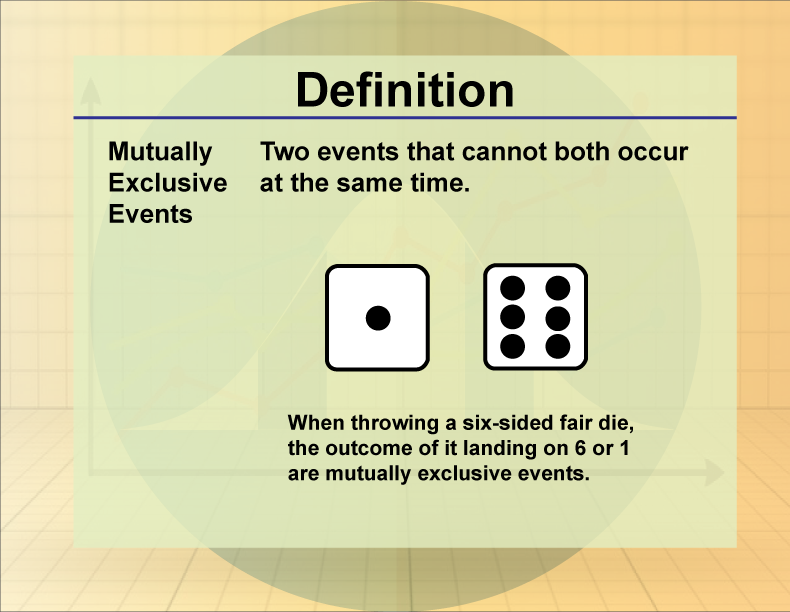
At its core, mutual exclusivity describes a relationship between events where the occurrence of one event definitively precludes the simultaneous occurrence of another. In simpler terms, if event A happens, event B cannot happen at the same time, and vice-versa. They are distinct and non-overlapping outcomes in a given trial or observation.
Definition and Core Principles
Formally, two events, A and B, are mutually exclusive (or disjoint) if they cannot occur at the same time. This means that the probability of both events occurring simultaneously is zero, often expressed in probability theory as P(A and B) = 0. Visually, if you represent these events as sets in a Venn diagram, their circles would not intersect; there would be no shared region between them.
Consider a simple experiment: flipping a fair coin.
-
Event A: Getting a “Heads.”
-
Event B: Getting a “Tails.”
If you flip the coin once, you will either get a Head or a Tail. You cannot get both simultaneously. Therefore, “getting a Heads” and “getting a Tails” are mutually exclusive events. The outcome of one immediately rules out the other for that single trial.
Illustrative Examples from a Tech Perspective
To bring this concept closer to the tech world, let’s consider a few scenarios:
-
Software Status: A software application can be either “running” or “stopped” at any given moment. It cannot be both simultaneously. These are mutually exclusive states.
-
User Authentication: When a user attempts to log in, their authentication attempt can result in either “successful login” or “failed login.” These two outcomes are mutually exclusive for that single attempt.
-
Data Classification: In a binary classification problem (common in AI), a data point is classified into one of two categories, say “spam” or “not spam.” A single email cannot be both spam and not spam simultaneously, making these classification outcomes mutually exclusive.
The critical takeaway is that mutual exclusivity is about simultaneous occurrence within a single defined context or trial.
Distinguishing from Independent Events
It’s crucial not to confuse mutually exclusive events with independent events, a common pitfall.
-
Mutually Exclusive Events: Cannot happen at the same time (e.g., a coin being heads AND tails on one flip). Knowing one occurred means the other did not.
-
Independent Events: The occurrence of one event does not affect the probability of the other event occurring (e.g., the outcome of the first coin flip and the outcome of the second coin flip). Knowing one occurred provides no information about the likelihood of the other.
For instance, two consecutive coin flips are independent events; the first outcome doesn’t change the probability of the second. However, “getting heads on the first flip” and “getting tails on the first flip” are mutually exclusive for that single flip. Understanding this distinction is paramount in designing statistical models and interpreting data, especially in complex tech systems where events can be both dependent and exclusive, or independent and non-exclusive.
Why Mutual Exclusivity Matters in Tech and Data Science
The principle of mutual exclusivity is not just an academic nicety; it’s a foundational building block for logical reasoning, system design, and data interpretation across various tech domains. Its implications ripple through machine learning, data analytics, software engineering, and cybersecurity.
In Machine Learning and AI
Machine learning models, particularly classification algorithms, heavily rely on the concept of mutual exclusivity.
-
Classification Tasks: In a multi-class classification problem (e.g., classifying an image as a cat, dog, or bird), a single image must be assigned to one and only one category. The model’s output probabilities for each class sum to one, implicitly assuming that these classes are mutually exclusive. If an image could simultaneously be a “cat” and a “dog” in the context of the model’s output, the entire framework would collapse.
-
Feature Engineering: When creating features for a model, engineers often derive mutually exclusive categories from continuous data (e.g., “age group 0-18,” “age group 19-65,” “age group 66+”). This ensures that each data point unambiguously falls into one bucket, preventing ambiguity and improving model clarity and performance.
-
Model Evaluation: Metrics like accuracy, precision, and recall are calculated based on predictions that assume mutually exclusive outcomes. A “true positive” cannot also be a “false positive” for the same instance.
Data Analysis and Interpretation
For data analysts, understanding mutual exclusivity is critical for drawing correct conclusions from datasets.
-
Survey Analysis: If a survey asks respondents to select their primary operating system, the options “Windows,” “macOS,” and “Linux” are usually treated as mutually exclusive. This allows analysts to calculate distinct proportions without overlap. If respondents could select multiple “primary” systems, the analysis would need a different approach.
-
A/B Testing: When comparing two versions of a webpage (A and B), a user is typically exposed to one or the other. Being exposed to A and being exposed to B are mutually exclusive events for a single user’s session in a well-designed A/B test. This ensures that observed differences in conversion rates can be attributed cleanly to either A or B.
-
Segmentation: Segmenting user bases into distinct groups (e.g., “new users,” “active users,” “dormant users”) often involves creating mutually exclusive categories to understand user behavior without double-counting or ambiguity.
Software Development and Testing
In software engineering, mutual exclusivity translates into predictable system states and robust error handling.
-
State Machines: Many software systems are designed using state machines, where the system can only be in one state at any given time (e.g., “loading,” “ready,” “error”). These states are inherently mutually exclusive.
-
Concurrency Control: In multi-threaded programming, mechanisms like mutexes (short for mutual exclusion) are used to ensure that only one thread can access a shared resource at a time, preventing race conditions and data corruption. This is a direct application of the mutual exclusivity principle.
-
Error Handling: Defining mutually exclusive error codes or exception types helps developers precisely identify and address specific issues. An operation cannot fail due to “network timeout” and “invalid input” simultaneously in the context of a single error return.
Practical Applications and Scenarios in Tech
Beyond the theoretical underpinnings, mutual exclusivity finds concrete expression in various practical tech applications, driving efficiency, accuracy, and security.
Building Robust Classification Models
In fields like computer vision, natural language processing (NLP), and fraud detection, mutual exclusivity is fundamental for building reliable classification models.
-
Image Recognition: A model classifying an image of an animal will predict it as a “cat,” “dog,” “elephant,” etc., where these outcomes are distinct. The model isn’t designed to say an image is 30% cat and 70% dog if the actual labels are discrete. The softmax activation function commonly used in neural networks outputs probabilities that sum to 1, reinforcing the mutually exclusive nature of the predicted classes.
-
Spam Detection: An email is either “spam” or “not spam.” While a model might output a probability score, the final decision assigns it to one category, assuming the categories are mutually exclusive.
-
Medical Diagnostics (AI-assisted): AI models assisting in diagnosing diseases often output a probability distribution across mutually exclusive disease categories. A patient either has Disease X or Disease Y; they cannot have both if the diseases are defined as distinct conditions.
Designing User Experience (UX) Flows
UX designers leverage mutual exclusivity to create intuitive and unambiguous user interfaces and interaction flows.
-
Radio Buttons vs. Checkboxes: A classic example is the choice between radio buttons and checkboxes. Radio buttons enforce mutual exclusivity (select only one option), while checkboxes allow multiple selections (non-mutually exclusive). Understanding when to use which ensures the user’s intent is correctly captured.
-
Wizard-style Workflows: In multi-step forms or configuration wizards, users often proceed through mutually exclusive paths. For instance, selecting “individual account” might present different subsequent fields than selecting “business account.”
-
Modal Dialogs: A modal dialog typically requires the user to interact with it before continuing with the main application, effectively creating a mutually exclusive state where either the dialog is active, or the main application is.
Cybersecurity and Anomaly Detection
In cybersecurity, identifying distinct and mutually exclusive threat categories is vital for effective defense.
-
Intrusion Detection Systems (IDS): An IDS might classify an event as a “brute-force attack,” “SQL injection attempt,” or “normal traffic.” These classifications, for a given event, are often mutually exclusive, allowing security analysts to prioritize and respond appropriately.
-
Malware Classification: Malware samples are often classified into mutually exclusive families (e.g., “ransomware,” “trojan,” “worm”). This categorization helps in understanding attack vectors and developing specific countermeasures.
-
Access Control: A user’s access privilege for a specific resource is usually mutually exclusive (e.g., “read-only,” “read-write,” “no access”). They cannot simultaneously have read-only and read-write access for the same resource.
Resource Allocation and System Design
The principle extends to how tech systems manage and allocate resources, preventing conflicts and ensuring stability.
-
Cloud Computing: When provisioning virtual machines, a physical CPU core can be allocated to only one VM at a time (in a strictly dedicated sense, ignoring hyperthreading and time-sharing for this illustration). This is a form of mutual exclusivity in resource partitioning.
-
Database Transactions: In concurrent database operations, a lock mechanism ensures that only one transaction can modify a specific data record at a time, preventing conflicting updates and maintaining data integrity. This is a classic application of mutual exclusion.
Common Misconceptions and Pitfalls
Despite its apparent simplicity, mutual exclusivity is often misunderstood or misapplied, leading to flawed analyses and inefficient system designs.
Confusing Mutual Exclusivity with Independence
As highlighted earlier, this is arguably the most common mistake.
-
Example in Tech: Assuming that a user not clicking an ad (Event A) means they are unlikely to convert on the website (Event B) implies a relationship beyond mere independence. If clicking and not clicking are mutually exclusive, that’s fine. But to then assume conversion is independent of ad clicks would be incorrect if the ad influences conversion. The critical error is when events that are clearly dependent are treated as independent, or vice-versa, because of a superficial understanding of their mutual exclusivity.
-
Impact: Incorrectly assuming independence when events are dependent (or vice versa) can lead to models that underestimate risk, misallocate resources, or misinterpret user behavior, resulting in poor product decisions or security vulnerabilities.
Overlooking the Contextual Nature
Mutual exclusivity is always defined within a specific context or trial. Events that are mutually exclusive in one context may not be in another.
-
Example in Tech: “User is logged in” and “User is viewing homepage” are not mutually exclusive. A logged-in user can certainly view the homepage. However, “User is logged in” and “User is logged out” are mutually exclusive for a single session at a given moment. The key is to clearly define the experiment or observation.
-
Impact: Failing to define the context precisely can lead to ambiguous data definitions, incorrect logic in conditional statements within code, or errors in designing state transitions in software.
Implications of Incorrect Assumptions in Data Models
Building a machine learning model or conducting data analysis with incorrect assumptions about mutual exclusivity can have severe consequences.
-
Overlapping Categories: If classification categories are assumed to be mutually exclusive when they are not, the model might struggle to learn accurate boundaries, leading to lower performance metrics, misclassifications, and poor predictive power. For instance, if a product can simultaneously belong to “Electronics” and “Home Goods,” but the model is forced into a single, mutually exclusive classification, it loses information.
-
Flawed Statistical Tests: Many statistical tests and probability calculations (e.g., the addition rule for probabilities of mutually exclusive events: P(A or B) = P(A) + P(B)) rely on this assumption. If the assumption is violated, the results of these tests become invalid.
-
Resource Management: In system design, if two processes are assumed to be mutually exclusive in their need for a critical resource but are not, it can lead to deadlocks, resource contention, and system instability.

Conclusion
The concept of mutually exclusive events in statistics is far more than an abstract mathematical definition; it is a fundamental pillar supporting the logical structure and analytical rigor essential for success in the tech industry. From training robust AI models and analyzing complex datasets to engineering resilient software systems and fortifying cybersecurity defenses, understanding and correctly applying mutual exclusivity is indispensable.
For tech professionals—whether data scientists, machine learning engineers, software developers, or cybersecurity analysts—a deep grasp of this principle ensures clarity in data interpretation, precision in algorithmic design, and foresight in system architecture. By diligently identifying and leveraging mutually exclusive relationships, we can build more reliable, efficient, and intelligent technologies that drive innovation and solve real-world problems. Embracing this core statistical concept is not just about academic correctness; it’s about engineering excellence in the digital age.
aViewFromTheCave is a participant in the Amazon Services LLC Associates Program, an affiliate advertising program designed to provide a means for sites to earn advertising fees by advertising and linking to Amazon.com. Amazon, the Amazon logo, AmazonSupply, and the AmazonSupply logo are trademarks of Amazon.com, Inc. or its affiliates. As an Amazon Associate we earn affiliate commissions from qualifying purchases.