
The pursuit of speed has been a defining characteristic of human technological advancement. From the first steam locomotives to the digital bits racing through fiber-optic cables, our history is a narrative of shrinking the world by moving faster. However, few milestones in engineering are as evocative or technically demanding as “supersonic speed.”
To travel at supersonic speed is to outpace sound itself. It is a threshold where the laws of aerodynamics change, where air behaves less like a fluid and more like a solid wall, and where the engineering challenges shift from simple propulsion to complex thermal management and acoustic mitigation. In the modern era, supersonic technology is undergoing a renaissance, driven by breakthroughs in materials science, computational fluid dynamics, and a renewed interest in high-speed commercial travel.
The Fundamentals of Supersonic Velocity and Aero-Engineering
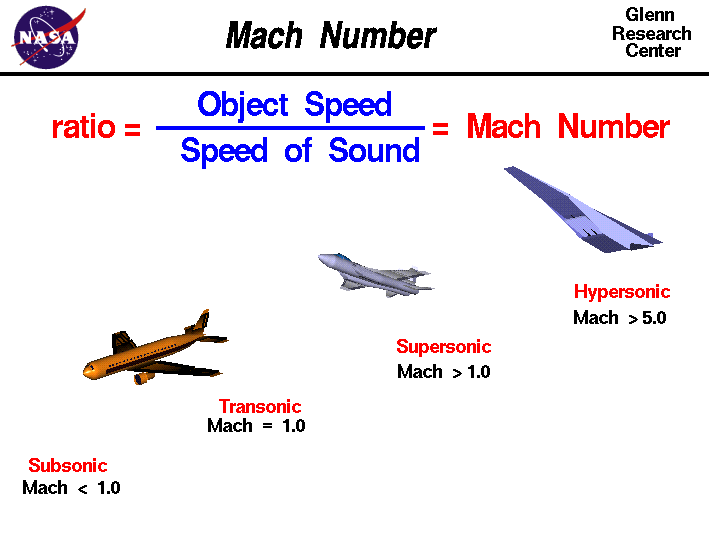
At its core, supersonic speed is defined as any speed that exceeds the speed of sound through a medium—typically air. This threshold is known as Mach 1. Named after the Austrian physicist Ernst Mach, the Mach number is a ratio of the object’s speed to the speed of sound in the surrounding medium.
Understanding the Mach Scale
The speed of sound is not a fixed constant; it varies based on temperature and atmospheric pressure. At sea level and a standard temperature of 15°C (59°F), sound travels at approximately 761 mph (1,225 km/h). As an aircraft climbs into the thinner, colder air of the stratosphere, the speed of sound decreases. Therefore, an aircraft at 35,000 feet reaches Mach 1 at a lower absolute speed than it would at sea level. Engineers categorize speeds into four distinct regimes:
-
Subsonic: Below Mach 0.8 (Standard commercial flight).
-
Transonic: Mach 0.8 to 1.2 (Where airflow over parts of the wing may be supersonic while the craft is not).
-
Supersonic: Mach 1.2 to 5.0.
-
Hypersonic: Above Mach 5.0.
The Physics of the “Sound Barrier”
When an object moves through the air, it creates pressure waves that travel away from it at the speed of sound—much like the ripples created by a pebble dropped in a pond. When the object reaches the speed of sound, these pressure waves can no longer get out of the way of each other. They “pile up” in front of the aircraft, forming a single, massive shockwave. This phenomenon creates a sudden increase in drag and physical stress on the airframe, which early aviators dubbed the “sound barrier.” Breaking this barrier requires specialized tech: pointed nose cones, swept-back wings to delay shockwave formation, and incredibly powerful propulsion systems.
Advanced Materials and Thermal Management
One of the most significant tech hurdles in supersonic flight is heat. As an aircraft pushes through the air at Mach 2 or higher, the friction (aerodynamic heating) can raise the temperature of the airframe to hundreds of degrees Fahrenheit. The legendary Concorde, for example, would actually stretch by several inches during flight due to the thermal expansion of its aluminum skin. Modern supersonic tech relies on advanced composites, titanium alloys, and ceramic-matrix composites that maintain structural integrity at high temperatures while remaining lightweight enough to allow for efficient flight.
The Evolution of Propulsion: From Afterburners to Variable Cycle Engines
To maintain supersonic speeds, an aircraft requires a propulsion system capable of generating massive thrust while remaining efficient enough to carry a viable payload. The transition from subsonic to supersonic propulsion represents one of the greatest leaps in mechanical engineering.
The Role of the Afterburner
Most military supersonic jets utilize afterburners. This technology involves injecting raw fuel directly into the exhaust stream of a jet engine. The fuel ignites with the remaining oxygen, providing a massive boost in thrust. However, afterburners are notoriously “thirsty,” consuming fuel at an unsustainable rate for long-range commercial travel. This was the primary economic downfall of early supersonic transports (SSTs); they simply couldn’t carry enough fuel to make the trips profitable for anyone but the wealthiest travelers.
Turbofans vs. Turbojets
Standard commercial airliners use “high-bypass turbofans,” which are efficient and quiet but struggle to reach supersonic speeds because their large front fans create too much drag. Supersonic tech traditionally relied on “turbojets” or “low-bypass turbofans,” which move a smaller volume of air at much higher velocities. The challenge for the next generation of tech is creating “Variable Cycle Engines.” These are “smart” engines that can behave like an efficient turbofan during takeoff and subsonic cruise but reconfigure their internal airflow to behave like a high-performance turbojet when it is time to go supersonic.

Scramjets and the Hypersonic Frontier
At the bleeding edge of propulsion tech are Scramjets (Supersonic Combustion Ramjets). Unlike traditional jet engines that use rotating blades to compress air, a scramjet uses the high forward speed of the vehicle to compress the incoming air. There are no moving parts; the air moves through the engine at supersonic speeds, fuel is injected, and combustion occurs in milliseconds. This tech is currently the focus of global research for Mach 5+ travel, promising the ability to cross the Atlantic in under an hour.
NASA, Boom, and the “Quiet” Supersonic Revolution
The greatest barrier to the widespread adoption of supersonic tech hasn’t been speed or heat—it has been noise. When an aircraft breaks the sound barrier, the resulting shockwaves reach the ground as a “sonic boom,” a thunderous clap that can shatter windows and disturb entire communities. Because of this, supersonic flight over land was banned by the FAA in 1973.
The X-59 QueSST Project
NASA is currently spearheading the X-59 Quiet SuperSonic Technology (QueSST) mission. This experimental aircraft is designed with a long, slender nose and a highly specific aerodynamic shape to prevent shockwaves from coalescing. Instead of a “boom,” the X-59 aims to produce a “sonic thump”—a sound no louder than a car door closing. This technological breakthrough is essential for changing international regulations and allowing supersonic travel over populated landmasses.
Commercial Ambitions: Boom Supersonic
While NASA handles the experimental research, private tech companies like Boom Supersonic are working on the commercial application. Their flagship project, the Overture, is designed to be the world’s fastest airliner, capable of running on 100% Sustainable Aviation Fuel (SAF). By utilizing modern carbon-fiber composites and advanced software-driven engine designs, Boom aims to make supersonic travel not just a luxury for the elite, but a sustainable standard for global business.
Digital Simulation and the Death of the Wind Tunnel
A major reason for the current acceleration in supersonic tech is the advancement of Computational Fluid Dynamics (CFD). In the 1960s, engineers had to build hundreds of physical models and test them in expensive wind tunnels. Today, supercomputers can simulate millions of airflow variables in a virtual environment. This “digital twin” technology allows engineers to optimize the shape of a wing or the intake of an engine with a level of precision that was physically impossible fifty years ago.
The Intersection of AI and Supersonic Flight Control
Flying at twice the speed of sound leaves very little room for human error. The atmospheric conditions change rapidly, and the aerodynamic center of the aircraft shifts as it transitions through the sound barrier. Consequently, supersonic tech is increasingly reliant on sophisticated AI and automated flight control systems.
Fly-by-Wire and Autonomy
Modern supersonic aircraft utilize advanced “fly-by-wire” systems. These systems replace traditional manual cables with an electronic interface. As the pilot moves the stick, an onboard computer interprets the intent and adjusts the control surfaces hundreds of times per second to maintain stability. AI algorithms are now being integrated into these systems to predict turbulence and adjust the aircraft’s geometry in real-time, ensuring a smooth ride for passengers even at Mach 2.
AI in Design Optimization
AI is also revolutionizing the design phase. Generative design tools can iterate through thousands of structural configurations to find the lightest possible frame that can withstand supersonic stresses. By feeding the AI data on thermal loads and pressure distributions, engineers can “evolve” parts that are stronger and more efficient than anything a human designer could draft from scratch.

Conclusion: The Future of Global Connectivity
Supersonic speed is more than just a metric of velocity; it is a technological frontier that challenges our understanding of physics, materials, and environmental impact. While the first era of supersonic travel, led by the Concorde, was a triumph of 20th-century grit, the new era is being built on 21st-century intelligence.
Through the integration of “quiet” aerodynamics, sustainable fuels, and AI-driven design, we are on the cusp of a world where “far away” is a concept of the past. As we refine the tech to move faster than sound without the environmental and acoustic costs of the past, the global economy and human connection will be fundamentally transformed. The sound barrier was once a wall; today, it is a gateway to the next great leap in human mobility.
aViewFromTheCave is a participant in the Amazon Services LLC Associates Program, an affiliate advertising program designed to provide a means for sites to earn advertising fees by advertising and linking to Amazon.com. Amazon, the Amazon logo, AmazonSupply, and the AmazonSupply logo are trademarks of Amazon.com, Inc. or its affiliates. As an Amazon Associate we earn affiliate commissions from qualifying purchases.