
In the digital age, the simple observation of the sun crossing the horizon has been transformed into a sophisticated data point. For developers, hardware engineers, and UI/UX designers, understanding “what is the sun rise and set times” is less about looking at the sky and more about querying high-precision algorithms and global positioning APIs. Whether it is an iPhone shifting into Dark Mode, a smart home adjusting its lighting, or a solar farm optimizing its panel tilt, the calculation of solar events is a cornerstone of modern situational awareness in technology.
Calculating these times requires a blend of spherical trigonometry, orbital mechanics, and atmospheric physics. This article explores the technical framework that allows software to predict these events with millisecond accuracy across any coordinate on the globe.
The Computational Physics of Solar Tracking
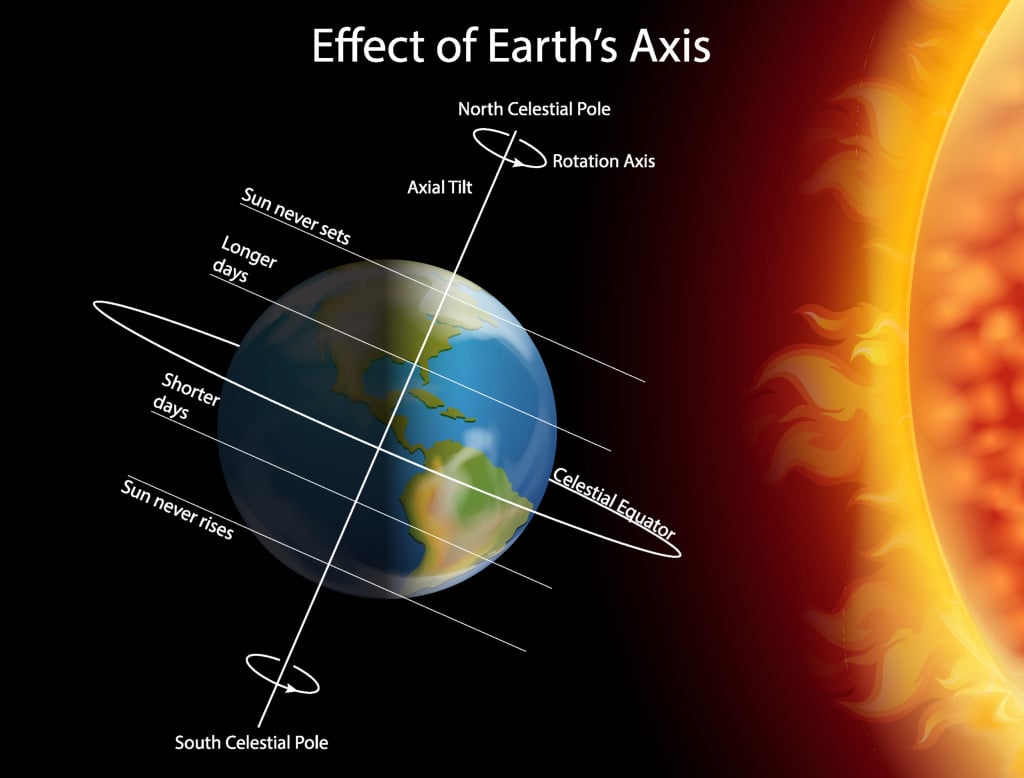
To a computer, the sun does not “rise.” Instead, a specific set of coordinates—latitude and longitude—reaches a point in its rotation where the solar disk’s upper limb becomes visible over the horizon, accounting for atmospheric refraction. The technology behind this relies on the Solar Position Algorithm (SPA), a complex mathematical model that accounts for the Earth’s elliptical orbit and its axial tilt.
Spherical Trigonometry and Orbital Mechanics
The foundation of any solar calculation software is spherical trigonometry. Because the Earth is roughly an oblate spheroid, developers must use the Julian Day—a continuous count of days since a fixed starting point—to determine the Earth’s exact position in its 365.25-day journey around the sun.
The software must calculate the “Solar Declination” and the “Equation of Time.” The declination represents the angle between the rays of the sun and the plane of the Earth’s equator. Meanwhile, the Equation of Time compensates for the fact that the Earth’s orbit is not a perfect circle, and its rotational speed varies slightly. Without these two variables, a digital clock attempting to predict sunset could be off by as much as 16 minutes.
The Equation of Time: Correcting for Earth’s Elliptical Orbit
In software engineering, “Solar Time” and “Clock Time” are rarely the same. Most solar APIs utilize the Equation of Time to bridge this gap. This formula accounts for the eccentricity of the Earth’s orbit and the obliquity of the ecliptic. For a developer building a weather app or an astronomical tool, this correction is vital. It ensures that the “Solar Noon” (the moment the sun is at its highest point) aligns correctly with the user’s local time zone and daylight savings adjustments.
Engineering Precision: How Software Calculates Solar Events
While the math provides a theoretical framework, the actual implementation in code requires handling environmental variables that can distort data. Modern tech stacks do not just look at the sun’s center; they look at the “apparent” position.
Latitudinal and Longitudinal Inputs
Every device with a GPS chip provides the primary inputs for solar calculations: latitude, longitude, and elevation. High-altitude locations see the sun earlier and lose it later than those at sea level. Modern APIs like the Google Maps Platform or OpenWeatherMap include elevation data in their solar packets to ensure that a user on a mountain peak receives a different sunset time than a user in the valley below.
Atmospheric Refraction and the “Apparent” Sunrise
The most significant technical hurdle in calculating “what is the sun rise and set times” is atmospheric refraction. The Earth’s atmosphere acts like a lens, bending light as it passes through different densities of air. This means that when we “see” the sun touch the horizon, it is actually about 0.83 degrees below it.
Developers must hard-code this refraction constant into their algorithms. Standard astronomical software defines sunrise when the center of the sun is 50 arcminutes (0.833 degrees) below the horizon. This includes 34 arcminutes for refraction and 16 arcminutes for the sun’s semi-diameter. For high-precision tech, such as satellite tracking or military-grade sensors, these constants may even change based on local temperature and pressure data fetched in real-time.
Integrating Solar Data: APIs and Developers
Most modern software applications do not calculate these values from scratch. Instead, they rely on a robust ecosystem of APIs (Application Programming Interfaces) that serve solar data as JSON or XML packets.
Popular Solar and Weather APIs
For web and mobile developers, services like Sunrise-Sunset.org, Solarized, and the Navy Oceanography Portal provide free and paid endpoints. A typical API request looks like a simple GET request containing the user’s coordinates. The response returns a standardized ISO 8601 timestamp for sunrise, sunset, civil twilight, nautical twilight, and astronomical twilight.
These different “twilight” phases are essential for different tech niches. Digital security companies use “civil twilight” to trigger outdoor camera night-vision modes, while astronomical software for telescopes relies on “astronomical twilight,” the point at which the sky is dark enough for deep-space observation.
Real-time Data vs. Predictive Tables
There are two primary ways tech handles solar data: real-time computation and pre-computed look-up tables. Embedded systems with low processing power, such as simple outdoor light timers, often use look-up tables stored in non-volatile memory. In contrast, cloud-based platforms compute the values on the fly to account for the exact micro-second of the current year, ensuring maximum accuracy for time-sensitive operations like high-frequency trading or satellite handovers.
Practical Applications in the Modern Tech Stack
The “sunrise and sunset” data point is a silent driver behind many of the features we take for granted in contemporary technology.
Smart Home Automation and IoT
In the Internet of Things (IoT) ecosystem, solar timing is the ultimate trigger. Smart blinds (like those from Lutron or IKEA) use solar data to determine when to close to prevent heat gain in a “smart green home.” Philips Hue and other smart lighting systems use “offset triggers,” allowing a user to set lights to turn on “20 minutes before sunset.” This requires the local hub to constantly update its internal solar calendar via the home’s Wi-Fi connection.
Energy Management and Solar Grid Optimization
The renewable energy sector is perhaps the most significant consumer of high-precision solar data. Solar tracking systems use software to physically move photovoltaic panels throughout the day. By knowing the exact “Azimuth” (the sun’s horizontal position) and “Elevation” (the sun’s vertical position), the software maximizes the “Angle of Incidence,” ensuring the panels capture the maximum possible photons. This isn’t just about sunrise and sunset; it’s about the continuous trajectory calculated in real-time.
Digital Imaging and Photography Apps
Apps like “The Photographer’s Ephemeris” or “PhotoPills” have built entire business models around solar data. These tools use augmented reality (AR) to overlay the sun’s path on a smartphone’s camera view. This allows cinematographers to plan the “Golden Hour”—that short window of soft light just after sunrise or before sunset. The tech involves syncing the phone’s gyroscope, magnetometer, and GPS with a solar position algorithm to project the sun’s future path with pinpoint accuracy.
The Future of Solar Calculation in Autonomous Systems
As we move toward a more autonomous world, the reliance on solar data will only increase. We are moving beyond simple apps and toward systems that perceive the world through light and data.
Satellite Navigation and Space Tech
For satellites in Low Earth Orbit (LEO), the “sunrise” happens 15 to 16 times a day. Software managing these satellites must calculate “eclipse periods”—times when the satellite is in the Earth’s shadow and must rely on battery power rather than solar panels. The algorithms used here are the most advanced in the world, accounting for the “umbra” and “penumbra” (the shadows cast by Earth) to prevent power failure.
Autonomous Vehicles and Visual Perception
Self-driving cars use solar data to calibrate their visual sensors. Direct sunlight hitting a LiDAR or camera sensor at a low angle (during sunrise or sunset) can cause “dazzle,” leading to sensor blindness. Future autonomous driving stacks are integrating solar position data to proactively adjust sensor gain or switch to alternative sensing modalities (like radar or ultrasonic) when the sun is at a problematic angle in the sky.
Dark Mode and User Health
On the consumer tech side, “Circadian Tech” is a growing trend. Operating systems like macOS, Windows, and Android use sunset data to trigger blue light filters. By reducing blue light exposure after sunset, software aims to align digital usage with the human circadian rhythm. This feature is a direct application of solar timing data fetched through the OS’s location services, illustrating how a simple astronomical event is leveraged to improve digital wellness.
In conclusion, “what is the sun rise and set times” is a question that sits at the intersection of ancient astronomy and cutting-edge software engineering. It is a vital metric that powers our smart devices, optimizes our energy grids, and protects our digital security. As our technology becomes more integrated with the natural environment, the precision and accessibility of solar data will continue to be a fundamental requirement for the next generation of digital innovation.
aViewFromTheCave is a participant in the Amazon Services LLC Associates Program, an affiliate advertising program designed to provide a means for sites to earn advertising fees by advertising and linking to Amazon.com. Amazon, the Amazon logo, AmazonSupply, and the AmazonSupply logo are trademarks of Amazon.com, Inc. or its affiliates. As an Amazon Associate we earn affiliate commissions from qualifying purchases.