
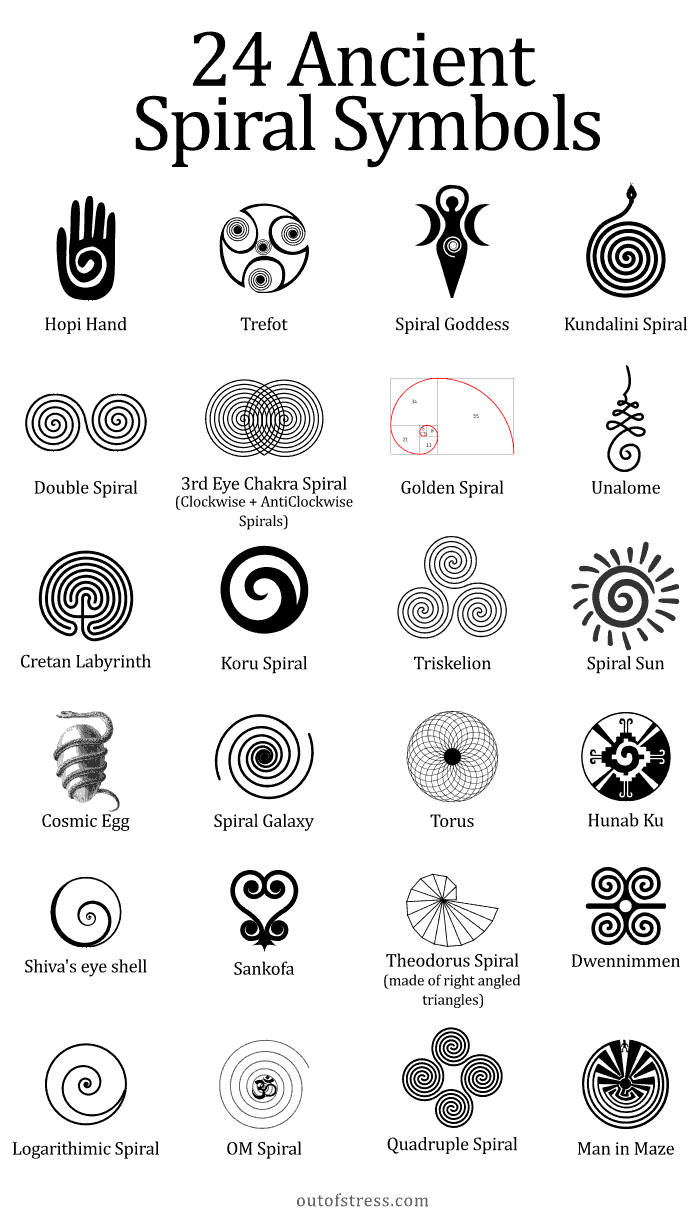
In the visual language of commerce, symbols are the shorthand of values, aspirations, and promises. Among the most ancient and evocative of these symbols is the spiral. From the prehistoric petroglyphs of Newgrange to the structural integrity of DNA, the spiral is a fundamental pattern of the universe. In the context of brand strategy and corporate identity, however, the spiral takes on a more calculated role. It is a sophisticated tool used to communicate growth, evolution, and a harmonious relationship between a company and its audience.
To understand what a spiral symbolizes in the modern marketplace, one must look past its aesthetic appeal and examine the psychological and strategic intent behind its use. For a brand, a spiral is rarely just a shape; it is a narrative of progression.
The Psychology of the Spiral: Evolution, Growth, and Continuity
At its core, the spiral represents a journey. Unlike a circle, which suggests a closed loop or a repetitive cycle, the spiral implies movement toward a specific destination or an expansion outward from a central core. This distinction is critical for brands that want to position themselves as forward-thinking or transformative.
Growth and Scalability
For a startup or a tech-oriented brand, the spiral is the ultimate symbol of scalability. It visualizes the process of starting small—at the epicenter of an idea—and expanding outward into the global marketplace. This “outward spiral” suggests a brand that is not static. It tells the consumer that the company is constantly evolving, innovating, and reaching new heights. In brand strategy, this is often used to reassure investors and customers that the company has a trajectory of long-term growth rather than a finite peak.
Continuity and the Customer Lifecycle
While a straight line represents a beginning and an end, the spiral represents continuity. In the modern “subscription economy” and “experience economy,” brands are moving away from transactional relationships toward lifetime customer value. The spiral symbolizes this ongoing engagement. It suggests that while the customer may move through different phases of their relationship with the brand, they remain connected to the core values of the company. It represents a “flywheel” effect—where each rotation builds momentum, making the brand stronger and more influential over time.
Innovation and Rebirth
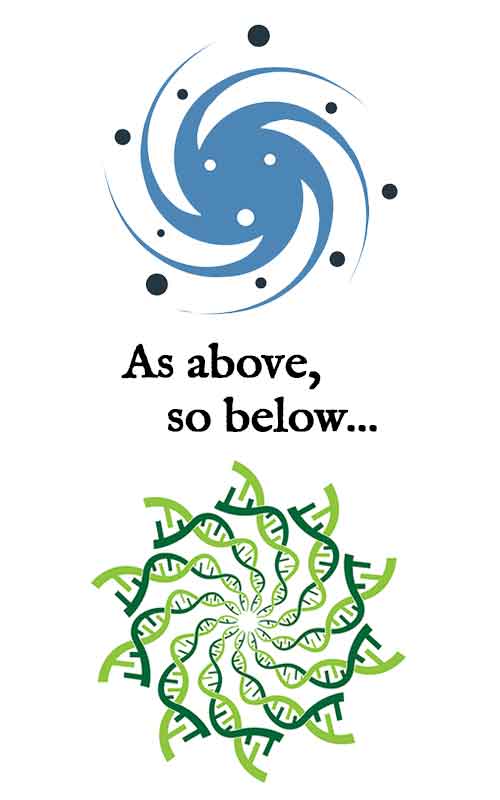
The spiral is also the symbol of the “creative spark.” Because it mimics the patterns found in storms, galaxies, and whirlpools, it carries an inherent energy. Brands that use spiral motifs often want to be perceived as dynamic and energetic. In the pharmaceutical or biotech industries, the spiral—often mirroring the double helix—symbolizes the very essence of life and the relentless pursuit of scientific breakthrough. It suggests that the brand is at the forefront of discovery, spinning new solutions out of complex problems.
The Fibonacci Spiral: The “Golden Ratio” of Visual Identity
In professional brand design, the spiral is often governed by the Fibonacci sequence and the resulting Golden Ratio (1.618). This mathematical phenomenon, often called “Nature’s Secret Code,” provides a blueprint for aesthetic perfection. When a brand incorporates a spiral based on the Golden Ratio, it is tapping into a deep-seated human preference for proportion and harmony.
Creating Organic Perfection
The Fibonacci spiral is ubiquitous in nature—seen in sunflowers, seashells, and hurricanes. When used in logo design, it creates a sense of “organic perfection.” It suggests that the brand is not artificial or forced, but rather a natural fit for the consumer’s life. Iconic brands like Apple, BP, and Pinterest have utilized the geometry of the Golden Ratio in their visual identities to create shapes that feel inherently “right” to the human eye. This subconscious recognition of natural order builds trust and reduces the friction between the consumer and the brand.
Balance Between Complexity and Simplicity
A spiral is a complex geometric form, yet it can be rendered with extreme minimalism. This duality is highly prized in brand design. A spiral can contain a vast amount of visual information—suggesting depth and layers—while maintaining a clean, recognizable silhouette. This makes it an ideal symbol for companies that deal with complex systems, such as data management, logistics, or financial services, but wish to present a user-friendly, simplified interface to their clients.
Strategic Narratives: The Inward vs. Outward Spiral
In branding, the direction and orientation of a spiral carry distinct meanings. Strategic designers carefully choose the “flow” of the spiral to align with the brand’s specific message.
The Inward Journey: Focus and Mindfulness
An inward-flowing spiral draws the eye toward a center point. This is often used by boutique brands, wellness companies, and personal brands that focus on the individual, introspection, or high-quality craftsmanship. It symbolizes a “deep dive” into a subject or a focus on the core essence of a product. In this context, the spiral represents the brand’s commitment to precision and its focus on the “soul” of its work. It invites the customer to come closer and discover the hidden value within.

The Outward Journey: Expansion and Impact
Conversely, an outward-flowing spiral represents influence, radiation, and impact. This is the hallmark of media companies, telecommunications, and global conglomerates. It symbolizes a brand that broadcasts its message, scales its services, and impacts the world at large. The outward spiral is a symbol of “the bigger picture.” It suggests that the brand’s influence is rippling through the market, touching lives far beyond its point of origin.
The Upward Spiral: Positive Momentum
In the financial and consulting sectors, the “upward spiral” is a common trope. While often visualized in 3D as a helix, it symbolizes the concept of compounding gains and improvement. A brand that utilizes this motif is positioning itself as a catalyst for its clients’ success. It says, “With us, your trajectory is not just linear; it is accelerating.” It is a symbol of optimism and the belief that every cycle of business should lead to a higher state of performance.
Sector-Specific Symbolism: Where the Spiral Thrives
While the spiral is a versatile symbol, it holds specific weight in certain industries where its inherent meanings align perfectly with the sector’s goals.
Technology and AI
In the tech world, the spiral represents the iterative process of software development and the recursive nature of artificial intelligence. It symbolizes the “loop” of learning, where each iteration of an algorithm or a product is informed by the previous one, leading to a more refined and powerful result. For AI startups, the spiral is often used to represent neural networks and the complexity of cognitive processing.
Sustainability and Environmental Branding
The spiral is perhaps the most potent symbol for the “Circular Economy.” As brands move away from a “take-make-waste” model toward sustainability, the spiral represents the recycling and upcycling of resources. It symbolizes a brand that is in harmony with the Earth’s natural cycles. Here, the spiral is a promise of responsibility—a sign that the company’s growth does not come at the expense of the environment but is part of a sustainable, regenerative loop.
Creative Agencies and Design Firms
For firms in the creative sector, the spiral symbolizes the “process.” The journey of an idea—from the chaotic center of a brainstorm to the polished, expansive execution—is perfectly captured by the spiral. It represents the “controlled chaos” of the creative mind and the ability to find order within a spinning world of possibilities.
Implementing the Spiral: Strategic Considerations
Despite its power, using a spiral in a brand identity requires careful strategic execution. If handled poorly, a spiral can signify confusion, instability, or even a “downward spiral” toward failure.
Avoiding Visual Noise
A spiral is a high-energy shape. If a brand already has a complex name or a busy color palette, adding a spiral can lead to visual fatigue. Strategic branding requires a balance; often, the most effective spirals are those that are implied rather than literal. Using negative space to create a spiral effect can provide a more sophisticated and modern feel than a heavy, literal line.
Cultural Sensitivity
In brand strategy, one must also consider the cultural implications of the spiral. In some cultures, the spiral is a sacred symbol representing the path of the sun or the journey of the spirit. A global brand must ensure that its use of the spiral is respectful and does not inadvertently co-opt a symbol with deep religious or indigenous meaning without proper context.
The Role of Color and Motion
The symbolism of a spiral is heavily influenced by its color and the way it is animated in digital spaces. A blue spiral might suggest calm, professional growth, while a red spiral might suggest urgent, high-energy innovation. In the digital age, how a spiral moves on a website or app is just as important as how it looks. A spiral that unfolds smoothly can communicate a brand’s ease of use and transparency, whereas a rapidly spinning spiral might be used to suggest speed and processing power.
Conclusion: The Spiral as a Modern Brand Icon
In the competitive landscape of the 21st century, a brand’s visual identity must do more than just look attractive; it must tell a story. The spiral is a unique symbol because it encapsulates the most important story a brand can tell: the story of evolution.
Whether it is used to denote the mathematical perfection of a product, the sustainable lifecycle of a business model, or the relentless expansion of a tech giant, the spiral remains a primary archetype of progress. For a brand strategist, the spiral is a bridge between the ancient human understanding of growth and the modern requirement for scalable, innovative, and meaningful commercial identities. It is a symbol that doesn’t just sit still—it moves, it grows, and it invites the consumer to join the journey.
aViewFromTheCave is a participant in the Amazon Services LLC Associates Program, an affiliate advertising program designed to provide a means for sites to earn advertising fees by advertising and linking to Amazon.com. Amazon, the Amazon logo, AmazonSupply, and the AmazonSupply logo are trademarks of Amazon.com, Inc. or its affiliates. As an Amazon Associate we earn affiliate commissions from qualifying purchases.