
In the world of personal finance, no question is asked more frequently—or with more underlying anxiety—than “What is the stock market doing?” To the uninitiated, the stock market can appear like a chaotic sea of flashing green and red numbers, governed by incomprehensible algorithms and the whims of billionaires. However, for the serious investor, the movement of the market is a narrative. It is a real-time reflection of global health, corporate innovation, and collective human psychology.
When we ask what the market is doing, we are rarely asking for a specific numerical value of the S&P 500. Instead, we are asking: Is my money safe? Is there an opportunity I’m missing? And what do these fluctuations mean for my long-term financial goals? To answer these questions, we must look beyond the daily headlines and analyze the fundamental forces currently driving the financial ecosystem.
Decoding Market Movements: The Macroeconomic Drivers
The stock market does not exist in a vacuum. It is deeply tethered to the broader economy, and currently, several “macro” factors are exerting outsized influence on stock valuations. Understanding these drivers is the first step in moving from reactive trading to proactive investing.
Interest Rates and the Federal Reserve’s Shadow
Perhaps the most significant influence on what the stock market is doing today is the “cost of money,” otherwise known as interest rates. Central banks, particularly the Federal Reserve in the United States, use interest rates as a lever to control inflation.
When the Fed raises rates, borrowing becomes more expensive for companies and consumers. This typically leads to a “cooling” effect on the market; growth-oriented companies, which often rely on debt to expand, see their valuations compressed. Conversely, when the market senses a “pivot” toward lower rates, stock prices often rally in anticipation of cheaper capital and increased consumer spending. Tracking the Fed’s meetings is essential for any investor trying to understand current market volatility.
Inflation and the Consumer Price Index (CPI)
Inflation is the silent predator of purchasing power, and the stock market reacts violently to its fluctuations. When CPI data suggests that inflation is “stickier” than expected, the market often retreats, fearing that the central bank will keep rates higher for longer.
Investors currently observe “what the market is doing” through the lens of real returns. If the stock market returns 7% in a year, but inflation is at 5%, the real gain is only 2%. This dynamic shifts investor preference toward “value stocks”—companies with solid earnings and dividends—rather than speculative growth stocks that may not see profits for years.
Geopolitical Stability and Supply Chain Fluidity
Modern markets are inextricably linked to global events. Conflicts in energy-producing regions or trade tensions between major economies can create immediate shocks. When the stock market “dips” unexpectedly, it is often a reaction to uncertainty. Markets can price in bad news, but they struggle to price in uncertainty. Therefore, the current state of the market is often a reflection of how stable the world feels to institutional investors at any given moment.
Sector Performance and the Concentration of Gains
To understand what the stock market is doing, one must look under the hood. The market is not a monolith; it is a collection of sectors, and their performance often diverges wildly.
The Dominance of Large-Cap Growth
In recent cycles, a handful of massive companies—often referred to as the “Magnificent Seven”—have accounted for a disproportionate amount of the market’s total gains. When someone says “the market is up,” they might actually mean that five or six tech-adjacent giants are up, while the average “Main Street” stock is flat or declining.
This concentration creates a unique risk. It means that the broader indices (like the S&P 500) are becoming increasingly top-heavy. As a personal finance strategy, it is vital to distinguish between a “healthy” market where many sectors are participating in growth and a “narrow” market where only a few sectors are carrying the weight.
The Shift Toward Defensive Sectors
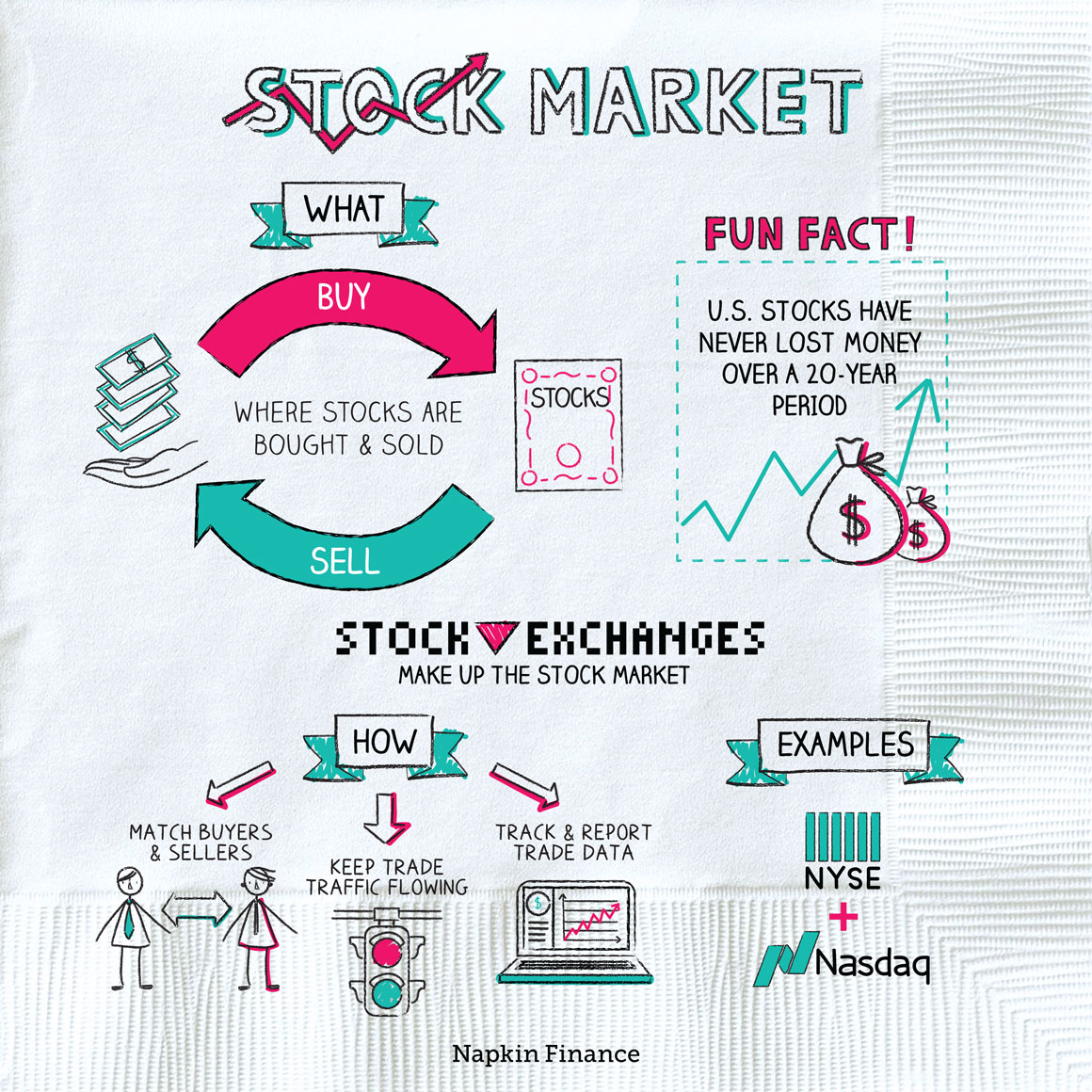
When the economic outlook becomes cloudy, we often see a “rotation” in what the market is doing. Money begins to flow out of high-risk sectors like technology and into “defensive” sectors like consumer staples, utilities, and healthcare. These are companies that provide essential services regardless of the economy’s strength. Observing this rotation provides a clear signal of institutional sentiment; if the big money is moving into utilities, it suggests a lack of confidence in immediate economic expansion.
The Role of Corporate Earnings Season
Four times a year, public companies “pull back the curtain” and reveal their financial health. Earnings season is a critical period for determining market direction. It isn’t just about whether a company made a profit; it’s about their “guidance” for the future. If the stock market is reacting negatively despite positive earnings, it usually means that corporations are warning of a slowdown in the coming months.
Sentiment Analysis: Fear, Greed, and the Retail Investor
Financial markets are driven as much by math as they are by emotion. The collective psychology of millions of participants creates cycles of boom and bust that defy fundamental logic.
Understanding the VIX (The Fear Gauge)
The CBOE Volatility Index, or VIX, is a real-time market index that represents the market’s expectation of 30-day forward-looking volatility. In simple terms, it measures how much “fear” is in the market. When the VIX is high, the stock market is doing something volatile and unpredictable. For the disciplined investor, a high VIX is often a signal of “blood in the streets,” which historically can be an opportunistic time to buy, provided one has the stomach for it.
The Rise of the Retail Trader and Social Media
The landscape of what the stock market is doing has been permanently altered by the democratization of trading. Apps and social media forums have empowered retail investors to move markets in ways previously reserved for hedge funds. “Meme stocks” and retail-driven rallies can cause segments of the market to disconnect from financial reality. While these movements are exciting, they contribute to a “noisy” market environment, making it even more important for long-term investors to focus on fundamentals rather than trending hashtags.
The Impact of Algorithmic and High-Frequency Trading
A significant percentage of daily market volume is now executed by computers. These algorithms react to news headlines and price triggers in milliseconds. This often results in “flash crashes” or rapid spikes that don’t seem to have a clear fundamental cause. Understanding that the market is currently a blend of human emotion and machine logic helps investors stay calm when prices swing wildly for no apparent reason.
Strategic Responses: Navigating the Current Market Environment
Knowing what the stock market is doing is only half the battle; the more important half is knowing what you should do in response. Financial success is rarely about timing the market; it is about “time in the market.”
The Power of Dollar-Cost Averaging (DCA)
When the market is volatile, the best defense is a systematic offense. Dollar-cost averaging—the practice of investing a fixed amount of money at regular intervals—removes the emotional burden of trying to “buy the dip.” By investing consistently, you buy more shares when prices are low and fewer when they are high, effectively lowering your average cost per share over time.
Rebalancing and Diversification
A “doing” market often throws your original asset allocation out of balance. If stocks have had a massive run, they may now represent a larger percentage of your portfolio than you intended, increasing your risk. Periodically selling a portion of your winners to buy underperforming assets (rebalancing) is a proven way to “sell high and buy low” without needing to predict the future.
Maintaining a Long-Term Perspective
The stock market has a 100% track record of recovering from every downturn it has ever faced. While the day-to-day movements can be gut-wrenching, they are usually mere “noise” in the context of a 20- or 30-year investment horizon. The answer to “what is the stock market doing” is almost always: “It is fluctuating in the short term, but generally trending upward in the long term.”
Conclusion: Developing Financial Resilience
The stock market is a complex, living entity that reflects our collective hopes, fears, and innovations. It is doing many things at once: reacting to the Federal Reserve, weighing the impact of new technologies, and processing global political shifts.
For the individual looking to build wealth, the goal shouldn’t be to outsmart the market or predict its next move with perfect accuracy. Instead, the goal is to understand these underlying mechanics so that you can remain rational when others are panicking. By focusing on macroeconomic drivers, sector health, and your own long-term strategy, you can stop worrying about what the market is doing today and start focusing on what your portfolio will become tomorrow. Wealth is not built in the days the market is green; it is built in the discipline you maintain on the days it is red.
aViewFromTheCave is a participant in the Amazon Services LLC Associates Program, an affiliate advertising program designed to provide a means for sites to earn advertising fees by advertising and linking to Amazon.com. Amazon, the Amazon logo, AmazonSupply, and the AmazonSupply logo are trademarks of Amazon.com, Inc. or its affiliates. As an Amazon Associate we earn affiliate commissions from qualifying purchases.