
Purchasing a vehicle is often the second-largest investment a person makes, surpassed only by the purchase of a home. While the sticker price of a car is the focus of many negotiations, the true cost of ownership is often hidden within the complexities of the financing agreement. Understanding how to count car loan interest is not merely an exercise in mathematics; it is a vital skill in personal finance that can save you thousands of dollars over the life of a loan.
When you sign a car loan contract, you are essentially buying money. The interest is the price of that money. However, because interest is calculated over time and applied to a declining balance, simply looking at the annual percentage rate (APR) doesn’t always tell the whole story. To truly master your money, you must understand the mechanics of how interest accrues, how it is amortized, and how your payment behavior influences the total amount you eventually pay back to the lender.
1. The Fundamentals of Car Loan Interest Structures
Before diving into the calculations, it is essential to distinguish between the different ways interest can be structured. In the realm of personal finance, not all loans are created equal. The method by which a lender calculates your interest determines how much of your monthly payment goes toward the actual car versus the bank’s profit.
Simple Interest vs. Precomputed Interest
The vast majority of modern auto loans are “simple interest” loans. With simple interest, the amount of interest you owe is calculated based on the principal balance remaining on the day your payment is due. This is beneficial for the consumer because if you pay early or add extra money to your principal, you pay less interest overall.
Conversely, “precomputed interest” loans calculate the total interest for the entire life of the loan at the very beginning. This amount is then added to the principal to create a total debt. In this scenario, even if you pay the loan off early, you may still be responsible for a significant portion of the interest that was “pre-calculated.” Always verify that your loan is a simple interest loan before signing.
Interest Rate vs. APR (Annual Percentage Rate)
When counting your interest, you will see two different percentages: the interest rate and the APR. The interest rate is the base cost of borrowing the principal. The APR, however, is a more comprehensive figure that includes the interest rate plus any loan fees, documentation charges, or mandatory insurance costs. For the purpose of calculating your daily or monthly interest charges, you generally use the base interest rate, but for comparing the total cost of two different loan offers, the APR is the superior metric.
Fixed vs. Variable Rates
Most car loans offer fixed rates, meaning the interest percentage remains the same throughout the duration of the loan. This provides stability in your financial planning. Variable rates, while rarer in the auto industry, can fluctuate based on market benchmarks. Counting interest on a variable rate requires constant monitoring of financial indices, making it significantly more complex for the average borrower to track accurately.
2. The Step-by-Step Calculation of Car Loan Interest
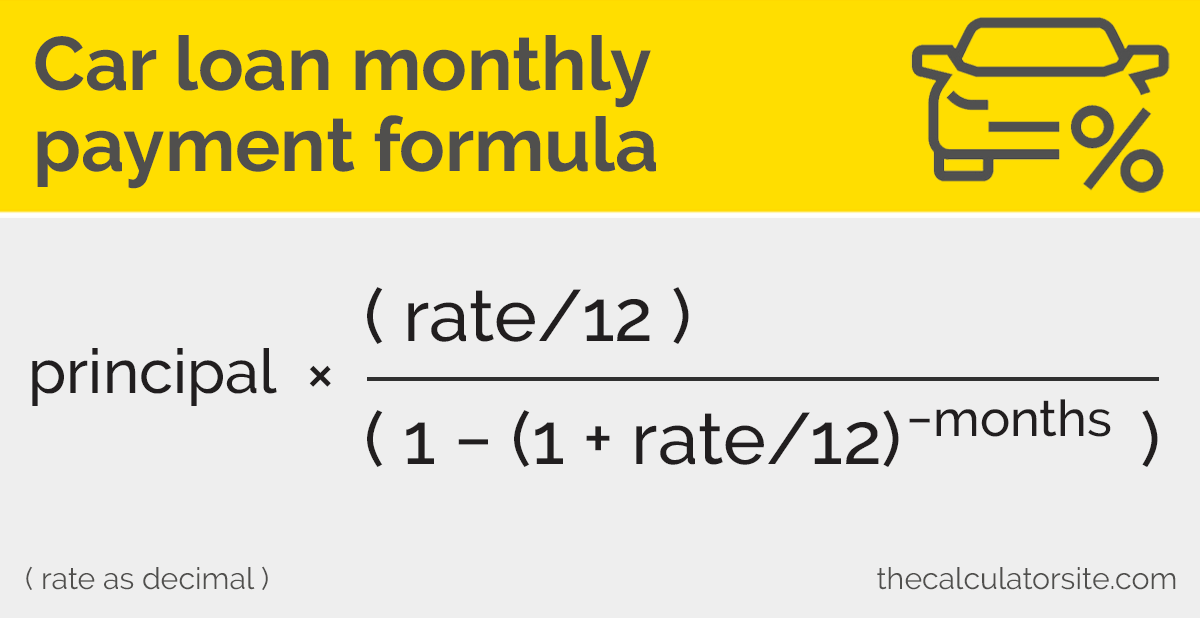
To accurately count car loan interest, you need to understand the concept of the “Monthly Interest Factor.” Because simple interest loans accrue interest daily, the math changes slightly every month as your principal balance decreases.
The Basic Monthly Formula
To find out how much interest you are paying in a specific month, you can use a relatively straightforward formula. First, convert your annual interest rate into a decimal (e.g., 6% becomes 0.06). Then, follow these steps:
- Divide the interest rate by 12 to get your monthly interest rate.
- Multiply that monthly rate by the remaining principal balance.
For example, if you have a $30,000 loan balance at a 6% interest rate:
- 0.06 / 12 = 0.005 (Monthly Rate)
- $30,000 x 0.005 = $150 (Interest for that month)
This means that out of your total monthly payment, the first $150 goes directly to the lender as interest, and the remainder of your payment is applied to reduce the $30,000 principal.
Daily Interest Accrual
For those who want to be even more precise, simple interest car loans actually accrue on a daily basis. To calculate this, divide your annual interest rate by 365. If you have a $30,000 balance at 6%:
- 0.06 / 365 = 0.000164 (Daily Interest Factor)
- $30,000 x 0.000164 = $4.93 (Daily Interest Charge)
This explains why paying your bill a few days early can actually reduce the total interest you pay over the life of the loan. Since the interest is calculated based on the balance on the day the payment is received, a smaller balance (resulting from an earlier payment) yields a smaller interest charge.
Understanding the Amortization Schedule
An amortization schedule is a table that lists every payment you will make over the life of the loan. In the early stages of a car loan, a larger portion of your payment is dedicated to interest because your principal balance is at its highest. As you chip away at the principal, the interest portion of your payment shrinks, and the amount going toward the principal grows. Understanding this “tilting” scale is crucial for anyone looking to optimize their personal finances.

3. Factors That Influence Your Interest Total
Calculating the interest is only half the battle; the other half is understanding the variables that dictate how high that interest will be. In the world of business finance and personal credit, lenders use a risk-based pricing model to determine your rate.
The Impact of Credit Scores
Your credit score is the most significant factor in determining your interest rate. A borrower with a “Prime” score (typically 720 or higher) might qualify for a 4% interest rate, while a “Subprime” borrower might be stuck with 15% or higher. On a $35,000 car over five years, that difference in interest can result in paying over $10,000 more for the exact same vehicle. Monitoring your credit health before applying for a loan is the most effective way to lower your interest “count.”
Loan Term Length
A common trap in car buying is the “monthly payment focus.” A dealer might offer you a lower monthly payment by extending the loan term from 60 months to 84 months. While the monthly budget might feel more comfortable, the total interest count skyrockets. Longer terms usually carry higher interest rates because they represent a higher risk for the lender. Additionally, the interest has more time to compound, leading to a much higher total cost of ownership.
Down Payments and Loan-to-Value (LTV) Ratio
The amount of money you put down upfront directly affects your interest. A larger down payment reduces the “Loan-to-Value” ratio. Lenders view a lower LTV as a safer bet because the borrower has more skin in the game. Consequently, a substantial down payment can often trigger a lower interest rate offer, further reducing the total interest you will count over the years.
4. Strategic Methods to Reduce Your Interest Count
Once you know how to count your interest, the next logical step is learning how to reduce it. Personal finance is not just about tracking numbers; it is about manipulating those numbers to your advantage.
Making Principal-Only Payments
If you have extra cash, applying it specifically to the principal balance is the fastest way to reduce interest. However, you must be careful. Many lenders will simply treat extra money as an early payment for the next month, which doesn’t help you as much with interest reduction. You must specify that the extra funds are a “Principal-Only Payment.” This reduces the base number upon which your daily interest is calculated.
The Bi-Weekly Payment Strategy
Instead of making one monthly payment, consider making half of your payment every two weeks. Because there are 52 weeks in a year, this results in 26 half-payments, which equals 13 full monthly payments per year instead of 12. This extra payment, applied consistently, can shave months off your loan and hundreds—if not thousands—of dollars off your interest count.
Refinancing for a Lower Rate
Interest rates and your credit profile are not static. If you took out a loan when your credit was poor, but you have made on-time payments for a year and your score has improved, you should look into refinancing. By securing a new loan with a lower interest rate to pay off the old one, you effectively reset the interest calculation in your favor. Even a 1% or 2% reduction can result in significant savings.
5. Utilizing Financial Tools for Precision
While manual calculation builds a deep understanding of the mechanics, digital financial tools can provide the precision needed for long-term planning. In the “Money” niche, leveraging technology to manage finances is a hallmark of the savvy investor.
Excel and Google Sheets
Spreadsheets are incredibly powerful for counting car loan interest. Using the =PMT() function, you can determine your monthly payment, and by building a manual table, you can see exactly how much interest you pay each month. This allows you to run “what-if” scenarios, such as “What happens to my total interest if I pay an extra $50 a month?”
Online Amortization Calculators
There are numerous free financial tools available online that provide instant amortization schedules. These are excellent for the “pre-shopping” phase. By plugging in different interest rates and loan terms, you can visualize the total interest cost before you ever step foot on a dealership lot. This transparency prevents “sticker shock” regarding the total cost of the loan.
Mobile Banking and Auto-Pay
Many modern lenders provide an “Interest Paid to Date” metric within their mobile apps. Tracking this number monthly allows you to see the real-time impact of your payments. Furthermore, setting up auto-pay often comes with a small interest rate discount (typically 0.25%). While it sounds small, over a five-year loan on a luxury vehicle, that 0.25% can pay for several tanks of gas or an annual insurance premium.
Conclusion: Empowerment Through Financial Literacy
Counting car loan interest is more than just a mathematical chore; it is an act of financial self-defense. By understanding how interest is calculated, recognizing the difference between APR and interest rates, and knowing how to manipulate the principal balance, you move from being a passive borrower to an active manager of your wealth.
In the landscape of personal finance, every dollar not paid in interest is a dollar that can be redirected toward investing, retirement, or improving your quality of life. Whether you are currently paying off a vehicle or are in the market for a new one, keep these formulas and strategies in mind. The ability to look beyond the monthly payment and see the true cost of the loan is what separates the financially successful from those who struggle under the weight of debt. Control your interest, and you will control your financial future.
aViewFromTheCave is a participant in the Amazon Services LLC Associates Program, an affiliate advertising program designed to provide a means for sites to earn advertising fees by advertising and linking to Amazon.com. Amazon, the Amazon logo, AmazonSupply, and the AmazonSupply logo are trademarks of Amazon.com, Inc. or its affiliates. As an Amazon Associate we earn affiliate commissions from qualifying purchases.