
In the intricate tapestry of global finance, certain acronyms emerge as indispensable beacons, guiding investors, analysts, and economists alike through the ebb and flow of market dynamics. Among these, “SPX” stands as a towering figure, a shorthand for one of the most widely recognized and influential financial benchmarks in the world: the S&P 500 index. Far from just a ticker symbol, the SPX represents a powerful snapshot of the U.S. economy’s health, a crucial tool for performance measurement, and a foundational asset for countless investment strategies. For anyone looking to understand the pulse of American capitalism, deciphering “what is the SPX” is not merely an academic exercise but a fundamental step toward financial literacy and informed decision-making.
At its core, the SPX, or more formally the Standard & Poor’s 500, is a stock market index that tracks the performance of 500 of the largest publicly traded companies in the United States. These aren’t just any 500 companies; they are carefully selected to represent a broad cross-section of major U.S. industries, making the S&P 500 a robust and reliable indicator of the overall health of the U.S. stock market and, by extension, the broader economy. Its significance cannot be overstated; it serves as a primary gauge for investor sentiment, a benchmark against which professional money managers measure their success, and a vehicle through which millions of individual investors gain diversified exposure to the American corporate landscape. Understanding its construction, its purpose, and how one can interact with it financially is paramount for anyone navigating the modern investment world.
Unpacking the S&P 500: A Core Financial Benchmark
The S&P 500 is more than just a list of companies; it’s a meticulously crafted financial instrument designed to provide a comprehensive and accurate reflection of the large-cap segment of the U.S. equity market. Its prominence stems from its broad coverage and the rigorous methodology employed in its construction, which ensures its relevance and reliability as a market indicator.
Beyond the Acronym: Defining the S&P 500
At its heart, the S&P 500 is a market-capitalization-weighted index. This means that companies with larger market values (share price multiplied by the number of shares outstanding) have a greater impact on the index’s movements. This weighting methodology inherently gives more influence to the largest and most successful companies, which often represent significant portions of the nation’s economic output and innovation. Unlike simple averages, market-cap weighting ensures that the index genuinely mirrors the aggregate value and performance of the companies it comprises, providing a truer picture of market trends. The index’s composition is carefully curated to include companies from various sectors, ranging from technology and healthcare to finance and consumer staples, offering a diversified view rather than being overly reliant on any single industry. This sectoral balance further enhances its utility as a holistic economic barometer.
The Role of Standard & Poor’s
The index is maintained by S&P Dow Jones Indices, a joint venture that is a leading provider of investable and benchmark indices globally. Standard & Poor’s, as part of this entity, holds the responsibility for the S&P 500’s methodology, selection, and ongoing maintenance. This includes regular reviews to ensure that the index continues to meet its objective of representing the U.S. large-cap equity market. Their independence and expertise lend significant credibility to the index, making it a trusted standard across the financial world. The S&P team is constantly monitoring the market, making adjustments to the index’s constituents as companies grow, merge, are acquired, or fall below the established criteria, ensuring its continuous relevance and accuracy.
How Companies are Selected
Inclusion in the S&P 500 is not automatic; it is a prestigious achievement for a public company. While the exact criteria can be complex, key considerations typically include:
-
Market Capitalization: Companies must meet a certain minimum market cap, which adjusts over time but generally signifies large-cap status.
-
Liquidity: The company’s stock must be highly liquid, meaning it can be easily bought and sold without significantly impacting its price, ensuring that the index can be easily replicated by investment funds.
-
Public Float: A substantial portion of the company’s shares must be available for public trading, rather than being held by insiders or restricted shareholders.
-
U.S. Domicile: The company must be based in the United States.
-
Profitability: Companies typically need to demonstrate recent positive earnings, specifically cumulative positive earnings over the most recent four consecutive quarters.
-
Sector Representation: While not a strict quota, S&P Dow Jones Indices strives for reasonable balance across GICS (Global Industry Classification Standard) sectors to ensure the index remains a broad market indicator.
These stringent requirements mean that only the most established, robust, and economically significant U.S. companies earn a place in the S&P 500, solidifying its status as a benchmark of corporate excellence and market health.
Why the SPX Matters: A Barometer for the U.S. Economy
The S&P 500’s influence extends far beyond mere market tracking; it functions as a vital economic indicator, providing critical insights into the performance and sentiment of the U.S. financial landscape. Its pervasive presence in financial news and analyses underscores its role as a fundamental yardstick for both micro and macroeconomic trends.
Gauging Market Health and Economic Trends
As the S&P 500 is composed of the largest and most influential American corporations, its collective performance offers a compelling proxy for the overall health and direction of the U.S. economy. When the SPX is rising, it often signals investor confidence in corporate earnings, economic growth, and a positive outlook for the future. Conversely, a declining SPX can indicate concerns about recessions, corporate profitability, or broader systemic risks. Economists and policymakers frequently monitor the index’s movements as a real-time reflection of investor sentiment and a leading indicator of economic shifts. Its diverse constituent companies touch almost every aspect of consumer spending, business investment, and global trade, making its aggregated performance a powerful summary of the nation’s economic vitality.
A Proxy for Large-Cap U.S. Stocks
The S&P 500 represents approximately 80% of the total market capitalization of the U.S. equity market. This staggering proportion means that movements in the SPX largely dictate the overall direction of the American stock market, especially concerning large-cap companies. For investors seeking exposure to established, blue-chip American firms, the S&P 500 serves as an ideal and highly diversified proxy. Rather than trying to pick individual winners among hundreds of potential candidates, investors can gain instant diversification across a broad spectrum of the most successful companies, mitigating the risks associated with single-stock investing while capturing the growth potential of the broader market. This characteristic makes it a go-to benchmark for general market performance.
Benchmarking Investment Performance
One of the S&P 500’s most crucial applications is its role as a benchmark for investment performance. Professional money managers, mutual funds, and even individual investors frequently measure their returns against the SPX. If a fund manager claims to be generating “alpha” (returns above a benchmark), they are often referring to outperforming the S&P 500. This benchmarking function provides a clear, objective standard for evaluating whether an investment strategy is successful or not. For passive investors, simply matching the performance of the S&P 500 is often considered a highly successful outcome, especially given the historical difficulty many active managers face in consistently beating the index after fees. Its pervasive use as a benchmark has also given rise to a vast industry of S&P 500-tracking funds, allowing even small investors to participate in its returns with minimal effort and cost.
Investing in the SPX: Accessibility for Every Investor
While you cannot “buy” the S&P 500 directly as if it were a single stock, gaining exposure to its performance is remarkably accessible for both individual and institutional investors. The financial industry has developed a variety of instruments that allow investors to replicate the index’s returns, offering diversification and often, low costs.
Direct Stock Ownership vs. Index Investing
It’s important to clarify that the S&P 500 is an index, not a company or an individual stock. Therefore, you cannot literally purchase “SPX” shares. Instead, investors gain exposure to the index’s performance through investment products that hold the underlying stocks in the same proportions as the index itself. This concept is fundamental to index investing, which emphasizes tracking a broad market benchmark rather than attempting to pick individual winning stocks. This approach significantly reduces the time, research, and expertise required, making sophisticated market participation available to a much wider audience.
Exchange-Traded Funds (ETFs) Tracking the S&P 500

Exchange-Traded Funds (ETFs) are perhaps the most popular and convenient way for investors to gain exposure to the S&P 500. These funds are designed to track the performance of the index as closely as possible and trade on stock exchanges just like individual stocks. Prominent examples include:
-
SPDR S&P 500 ETF Trust (SPY): One of the oldest and largest ETFs, often seen as the benchmark for S&P 500 performance itself.
-
iShares Core S&P 500 ETF (IVV): Another extremely popular and highly liquid option.
-
Vanguard S&P 500 ETF (VOO): Known for its very low expense ratios, consistent with Vanguard’s philosophy.
ETFs offer several advantages: broad diversification (you effectively own a piece of 500 companies), low expense ratios (management fees), liquidity (you can buy and sell them throughout the trading day), and tax efficiency. They provide an ideal solution for long-term investors looking to capture broad market returns without the complexities of stock picking.
S&P 500 Index Mutual Funds
Before the advent of ETFs, mutual funds were the primary vehicle for index investing. S&P 500 index mutual funds pool money from many investors to buy the stocks in the S&P 500 index. These funds typically have slightly higher expense ratios than ETFs and trade only once per day (at market close), but they offer similar benefits of diversification and professional management for tracking the index. They are particularly popular in employer-sponsored retirement plans like 401(k)s. Examples include Vanguard 500 Index Fund (VFIAX) and Fidelity 500 Index Fund (FXAIX).
Options and Futures on the SPX
For more sophisticated investors and traders, there are also derivatives contracts tied to the S&P 500.
-
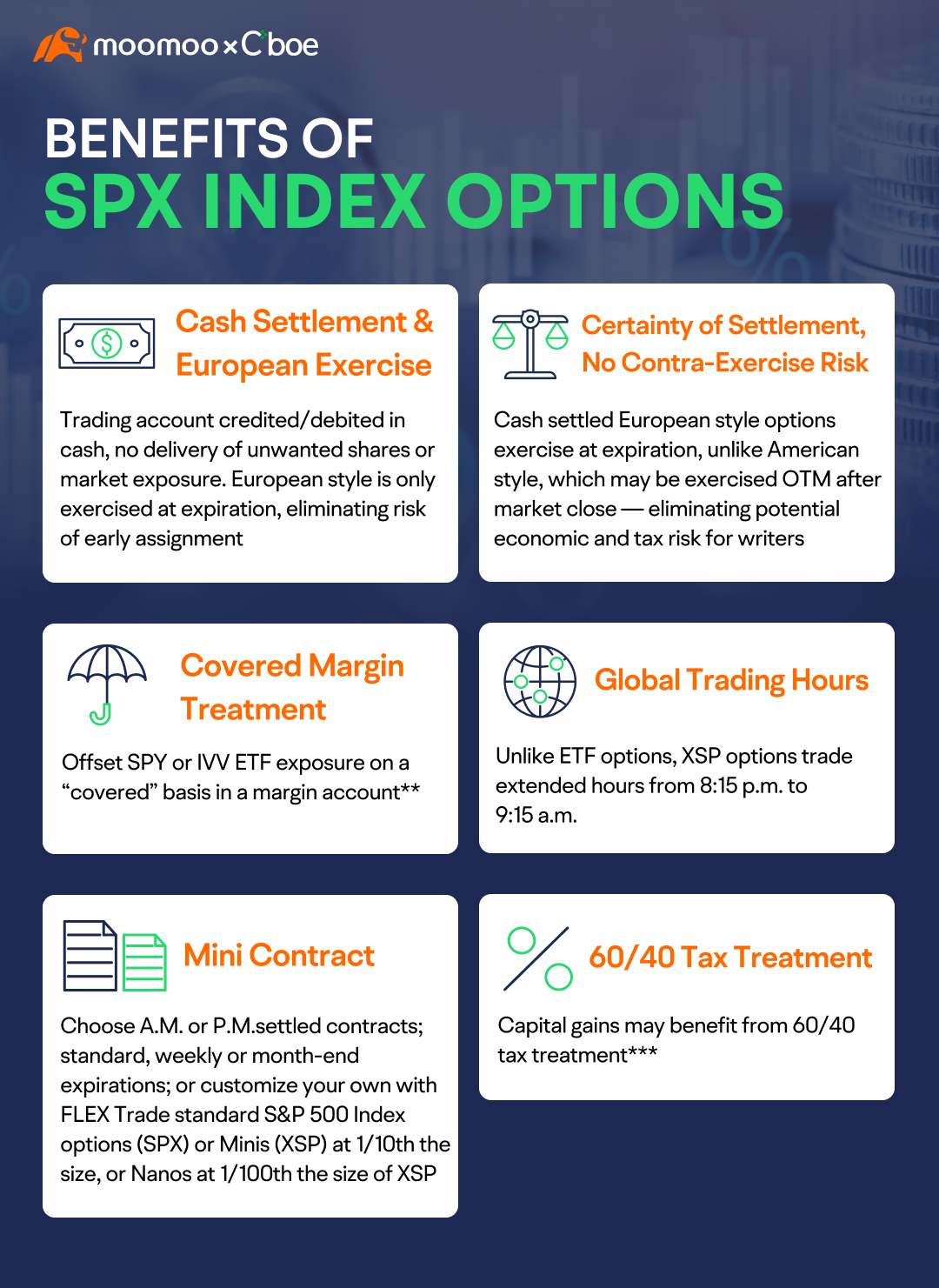
SPX Options: Options contracts on the S&P 500 index allow investors to speculate on the index’s future direction or to hedge existing portfolios. These are cash-settled, European-style options, meaning they can only be exercised at expiration. They offer leverage and can be complex, carrying significant risk.
-
E-mini S&P 500 Futures (ES): Futures contracts are agreements to buy or sell the value of the S&P 500 at a predetermined price on a future date. These are primarily used by institutional investors and experienced traders for hedging, speculation, and arbitrage due to their high leverage and potential for rapid gains or losses.
These advanced instruments require a deep understanding of market mechanics and risk management and are generally not recommended for novice investors.
Historical Performance and Long-Term Value
The S&P 500 has a storied history of delivering significant long-term returns, cementing its reputation as a cornerstone of wealth creation for investors. Its consistent performance over decades showcases the enduring power of capitalism and innovation within the U.S. economy.
The Power of Compounding: A Look at Returns
Historically, the S&P 500 has delivered an average annual return of approximately 10-12% since its inception (including dividends), though specific periods can vary significantly. This long-term average, while never guaranteed for the future, highlights the immense power of compounding. When returns are reinvested, they generate further returns, leading to exponential growth over extended periods. A modest initial investment, consistently added to and left to grow within an S&P 500 tracking fund, can accumulate into a substantial sum over 20, 30, or even 40 years, underscoring its utility as a core component of retirement planning and long-term financial goals. This historical performance is a powerful argument for a disciplined, patient approach to investing.
Navigating Market Volatility: Downturns and Recoveries
While the long-term trend of the S&P 500 has been upward, its journey is rarely smooth. The index experiences periods of significant volatility, including market corrections (declines of 10-20%) and bear markets (declines of 20% or more). Major historical downturns, such as the Dot-Com bust, the 2008 financial crisis, and the initial phase of the COVID-19 pandemic, demonstrate that substantial losses can occur. However, a remarkable characteristic of the S&P 500 has been its resilience and eventual recovery from every major downturn. The U.S. economy and its leading companies have consistently adapted, innovated, and rebounded, ultimately pushing the index to new highs. This track record reinforces the importance of resisting the urge to sell during market panics and maintaining a long-term perspective.
The Importance of a Long-Term Perspective
The S&P 500’s historical data strongly advocates for a long-term investment horizon. Short-term market movements are unpredictable and often driven by sentiment, but over decades, the underlying growth of corporate earnings and economic expansion tends to prevail. Strategies like dollar-cost averaging, where a fixed amount of money is invested regularly regardless of market conditions, allow investors to buy more shares when prices are low and fewer when they are high, smoothing out entry points and harnessing the index’s long-term upward trajectory. For most investors, using the S&P 500 as a core long-term holding provides a solid foundation for achieving financial goals without the stress and often underperforming results of trying to time the market.
Considerations and Criticisms
Despite its widespread acceptance and utility, the S&P 500 is not without its nuances and occasional criticisms. Understanding these limitations is crucial for investors to fully grasp what the index represents and where its insights might be incomplete.
Concentration Risk and Sector Skew
A significant point of discussion regarding the S&P 500 is its market-capitalization weighting. While this methodology accurately reflects the total value of its constituents, it can lead to a heavy concentration in the largest companies. For instance, in recent years, the technology sector and a handful of mega-cap companies (e.g., Apple, Microsoft, Amazon, Google, Nvidia) have come to dominate a substantial portion of the index’s total weight. This means that the performance of these few companies can disproportionately influence the overall index’s returns. While these companies are often global leaders, this concentration can introduce a form of sector skew or individual company risk that some investors might overlook, thinking they have broader diversification than they actually do across all U.S. companies.
Not Fully Representative of All U.S. Businesses
While the S&P 500 represents approximately 80% of the U.S. equity market’s value, it strictly focuses on large-cap companies. This means it does not include thousands of small-cap and mid-cap companies that also contribute significantly to the U.S. economy and offer distinct investment characteristics. Small-cap stocks, for instance, often exhibit higher growth potential (though also higher risk) and can sometimes outperform large caps. Therefore, an investment solely in the S&P 500 provides excellent exposure to the largest segment of the market but does not offer a truly “total market” representation. Investors seeking exposure to smaller companies would need to complement their S&P 500 holdings with other index funds or individual stocks focused on these market segments.

Passive vs. Active Investing Debate
The S&P 500 plays a central role in the ongoing debate between passive and active investing. Its consistent, strong long-term performance makes it an extremely difficult benchmark for most actively managed funds to beat after fees. Proponents of passive investing often point to the S&P 500’s track record as evidence that simply tracking the market via a low-cost index fund is a superior strategy for the majority of investors. This challenges the value proposition of active fund managers who charge higher fees for attempting to “beat the market” but often fail to do so consistently. While active management can certainly deliver alpha in specific circumstances, the S&P 500 serves as a powerful testament to the efficacy and simplicity of a passive, market-tracking approach for long-term wealth accumulation.
In conclusion, the SPX, or S&P 500, is far more than just a financial acronym. It is a meticulously constructed, widely followed, and highly influential index that serves as a vital barometer for the U.S. stock market and its underlying economy. For investors, it offers an accessible, diversified, and historically effective way to participate in the growth of America’s leading companies. While it has its specific characteristics and limitations, understanding “what is the SPX” is a foundational piece of knowledge for anyone serious about navigating the complexities of personal finance and investing in the modern age. Its enduring legacy and continued relevance underscore its indispensable role in the global financial ecosystem.
aViewFromTheCave is a participant in the Amazon Services LLC Associates Program, an affiliate advertising program designed to provide a means for sites to earn advertising fees by advertising and linking to Amazon.com. Amazon, the Amazon logo, AmazonSupply, and the AmazonSupply logo are trademarks of Amazon.com, Inc. or its affiliates. As an Amazon Associate we earn affiliate commissions from qualifying purchases.