
In the realm of modern technology, time is no longer measured merely by the ticking of a second hand or the rhythmic oscillation of a pendulum. As we push the boundaries of quantum computing, high-frequency data transmission, and artificial intelligence, our understanding of “small” has shifted from the millisecond to scales so infinitesimal they defy human intuition. The quest to identify and utilize the smallest measure of time is not just a theoretical pursuit for physicists; it is the cornerstone of the next generation of technological breakthroughs.
From the shutter speed of sensors capturing chemical reactions to the latency requirements of global financial networks, the mastery of time at its most granular level defines the limits of what our tools can achieve. To understand the smallest measure of time, we must look at the intersection of theoretical physics and applied engineering.

The Physics of the Imperceptible: From Milliseconds to Planck Time
To grasp the smallest measures of time, one must first distinguish between what is mathematically possible and what is technologically measurable. In our daily lives, a millisecond (one-thousandth of a second) feels instantaneous—it is the time it takes for a high-speed camera to capture a hummingbird’s wing. However, in the tech sector, a millisecond is a lifetime.
Defining Planck Time: The Universal Limit
The theoretical “smallest” unit of time is known as Planck time. Derived from fundamental physical constants (the speed of light, the gravitational constant, and the Planck constant), Planck time is approximately $5.39 times 10^{-44}$ seconds. In the context of our current understanding of the universe, no duration shorter than this has any physical meaning. At this scale, the laws of General Relativity and quantum mechanics clash, suggesting that time itself may become “chunky” or quantized rather than a smooth, continuous flow. While we are nowhere near building hardware that operates at the Planck scale, it serves as the ultimate “speed limit” for information processing in the universe.
The Zeptosecond and Attosecond: Capturing Sub-Atomic Motion
Moving from the theoretical to the observable, technology has recently reached the “Attosecond” and “Zeptosecond” eras. An attosecond is one-quintillionth of a second ($10^{-18}$ seconds). To put this in perspective, an attosecond is to a second what a second is to about 31.7 billion years. In 2023, the Nobel Prize in Physics was awarded to researchers who developed experimental methods that generate attosecond pulses of light for the study of electron dynamics in matter.
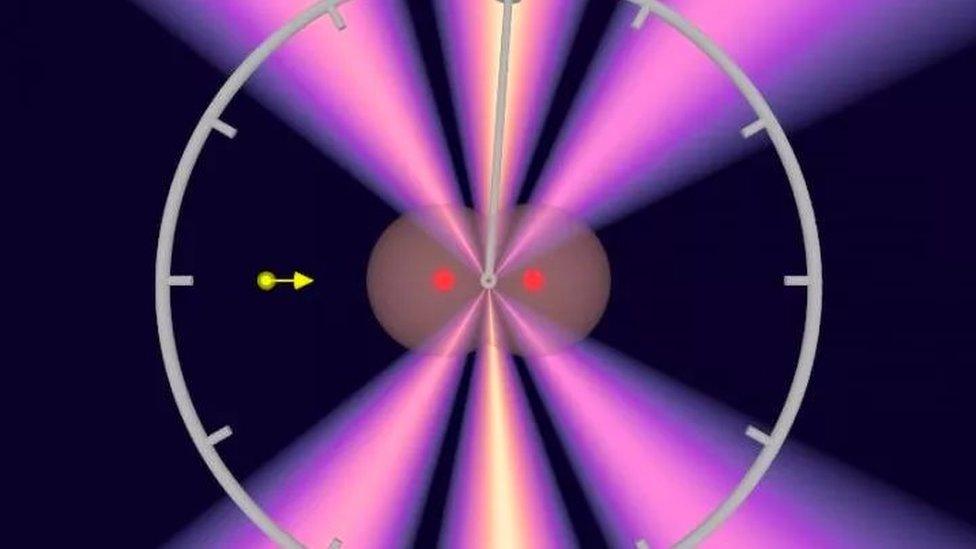
Even smaller is the zeptosecond ($10^{-21}$ seconds). In 2020, German physicists measured the time it takes for a photon to cross a hydrogen molecule, a journey that takes roughly 247 zeptoseconds. This level of precision allows tech developers to visualize the most fundamental processes of nature, paving the way for “lightwave electronics” that could eventually replace traditional silicon-based computing.
Why Precision Matters in Modern Infrastructure
The drive toward these microscopic scales is fueled by a need for synchronization. Our global infrastructure—including power grids, telecommunications, and the Internet of Things (IoT)—relies on the precise coordination of events. If two nodes in a high-speed network are out of sync by even a microsecond, data collisions can occur, leading to system-wide failures. As we move toward 6G and beyond, the tolerance for “time jitter” decreases, making the measurement of tiny time increments a vital component of digital security and reliability.
Computing at the Speed of Light: Latency and Processing Power
In the technology industry, the smallest measure of time is often equated with “latency”—the delay between a command and a response. As processors become faster and algorithms more complex, the struggle to shave nanoseconds off execution times has become a multi-billion-dollar race.
High-Frequency Trading and the Nanosecond Race
Nowhere is the value of a nanosecond ($10^{-9}$ seconds) more apparent than in high-frequency trading (HFT). In this sector, proprietary algorithms execute thousands of trades per second. For these firms, the “smallest measure of time” is the difference between profit and loss. To gain an edge, companies invest in fiber-optic cables laid in the straightest possible lines and utilize Field Programmable Gate Arrays (FPGAs) to process data at hardware speeds. In HFT, “time” is literally a commodity, and the ability to react in the smallest measurable window is the ultimate competitive advantage.
Quantum Computing: Operations in Sub-Atomic Timeframes
Quantum computing introduces a new paradigm for temporal measurement. Unlike classical bits, which switch between 0 and 1 at gigahertz frequencies, quantum bits (qubits) exist in superpositions. The challenge for tech giants like IBM, Google, and IonQ is “decoherence”—the tendency of qubits to lose their quantum state due to environmental interference.
Decoherence happens in microseconds or even nanoseconds. Therefore, the “smallest measure of time” in quantum computing is the window of “gate fidelity”—the time required to perform a logic operation before the quantum information vanishes. Advancing this technology requires sensors that can detect and correct errors at timescales faster than the noise itself, pushing the limits of real-time digital processing.
The Impact of 5G and Edge Computing on Digital Response
For the average user, the smallest relevant measure of time is the “ping” or latency of their connection. With the rollout of 5G and the rise of edge computing, we are seeing a shift from 50-millisecond delays to sub-5-millisecond responses. This is critical for technologies like autonomous vehicles, where a delay of a few milliseconds in “sensing” an obstacle can be the difference between a safe stop and a collision. By moving the “smallest measure of time” for data processing closer to the source (the edge), we enable a level of responsiveness that mimics human neural speed.
Measuring the Unmeasurable: The Evolution of Atomic Clocks
Our ability to harness small increments of time is limited by our ability to measure them. The history of timekeeping is a history of increasing frequency and decreasing error.
From Quartz to Cesium: The History of Timekeeping
For decades, the standard for time has been the Cesium atomic clock. By measuring the vibration frequency of cesium atoms (roughly 9.1 billion cycles per second), scientists defined the “second” with unprecedented accuracy. This technology allowed for the creation of GPS, which requires satellites to have synchronized clocks to within nanoseconds. Without this precision, the triangulation of your position on a smartphone would be off by kilometers.
Optical Lattice Clocks: Losing One Second in 30 Billion Years
The next frontier in time measurement is the optical lattice clock. These devices use lasers to trap atoms and measure vibrations at visible light frequencies, which are much higher than the microwave frequencies used in traditional atomic clocks. These clocks are so precise that they can measure time at the level of $10^{-18}$ seconds.
The technological implication of such precision is profound. It allows for the detection of “geodesic shifts”—the way gravity slows down time (as predicted by Einstein) over a distance of just a few centimeters. In the future, these clocks could be used as sensors to detect underground minerals, predict volcanic eruptions, or navigate deep space with sub-millimeter accuracy.
Deep Space Navigation and the Need for Absolute Accuracy
As we look toward interstellar travel or Mars colonization, our reliance on the smallest measures of time grows. Spacecraft traveling at thousands of miles per hour must perform trajectory corrections with microsecond precision. NASA’s Deep Space Atomic Clock (DSAC) is a miniaturized, ultra-precise clock designed to be integrated into spacecraft, allowing them to navigate autonomously without waiting for signals to travel back and forth to Earth—a process that can take minutes or hours.
The Future of Temporal Tech: AI and Predictive Processing
As we look toward the future, the “smallest measure of time” is becoming a focus for Artificial Intelligence and human-machine interfaces. We are moving toward a world where technology doesn’t just react to time but anticipates it.
Real-time Data Synthesis and AI Response Windows
AI models, particularly those used in generative tasks or real-time translation, are being optimized for “inference latency.” The goal is to reduce the time it takes for a model to process an input and generate an output to a level that feels instantaneous to a human—typically under 100 milliseconds. However, behind the scenes, the AI is performing billions of operations, each taking a fraction of a nanosecond. The efficiency of these “micro-moments” determines the scalability of AI across the globe.
The Biological vs. Digital Time Divide
There is a fascinating gap between human perception and digital reality. The human brain processes visual information in about 13 milliseconds, yet our digital tools are operating a million times faster. The future of tech lies in closing this gap through neural-link interfaces and augmented reality (AR). By mastering the smallest measures of time, developers can create AR overlays that perfectly sync with our eye movements, preventing motion sickness and creating a seamless “blended” reality.
Conclusion: The Endless Pursuit of the Instant
The quest to define and harness the smallest measure of time is a journey into the heart of reality itself. From the theoretical limit of Planck time to the practical application of attosecond lasers and nanosecond-trading algorithms, time is the ultimate frontier of technology.
As we continue to develop faster processors, more accurate clocks, and more responsive AI, we are not just measuring time—we are mastering it. In the high-stakes world of modern tech, the smallest measure of time is the most powerful tool we have, providing the foundation for every innovation that defines our digital age. Whether we are looking at the spin of an electron or the latency of a global network, our ability to slice the second into smaller and smaller pieces is what drives the engine of progress.
aViewFromTheCave is a participant in the Amazon Services LLC Associates Program, an affiliate advertising program designed to provide a means for sites to earn advertising fees by advertising and linking to Amazon.com. Amazon, the Amazon logo, AmazonSupply, and the AmazonSupply logo are trademarks of Amazon.com, Inc. or its affiliates. As an Amazon Associate we earn affiliate commissions from qualifying purchases.