
In the rapidly evolving landscape of technology, performance is often the primary metric of success. We talk about gigahertz, terabytes, and frames per second. However, beneath the surface of every digital interaction, every AI-generated response, and every smartphone app lies a more fundamental physical reality: the consumption of energy. To understand the limits of technology, we must first understand the fundamental unit used to measure it.
The International System of Units (SI) defines the Joule (J) as the standard unit of measurement for energy. While the term “Joule” might seem confined to physics textbooks, it is the invisible currency of the tech industry. From the heat dissipated by a high-end GPU to the battery life of a wearable device, the Joule is the metric that determines the feasibility of our digital future.
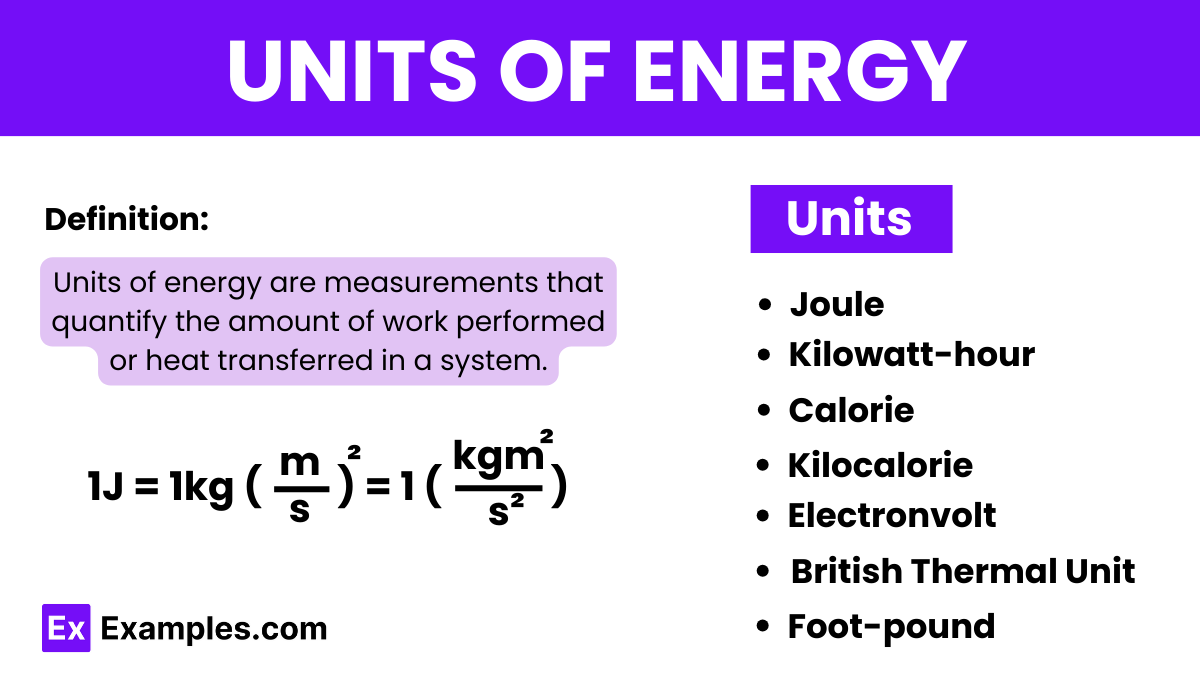
1. The Joule: Defining the Foundation of Modern Technology
To appreciate why the Joule is central to tech, we must first understand its definition. In the SI system, one Joule is defined as the amount of work done when a force of one Newton displaces an object by one meter. In the context of electronics and computing, it is more commonly expressed in terms of electrical power: one Joule is the energy dissipated as heat when an electric current of one ampere passes through a resistance of one ohm for one second.
The Relationship Between Joules and Watts
In the tech world, we frequently encounter the “Watt” (W). It is crucial to distinguish between the two: the Watt is a unit of power (rate of energy transfer), while the Joule is the unit of energy itself. Mathematically, 1 Watt = 1 Joule per second.
When a tech reviewer discusses a smartphone’s 5,000 mAh battery or a laptop’s 100W charging speed, they are discussing the flow and storage of Joules. Understanding this relationship allows engineers to balance performance with thermal constraints. If a processor consumes too many Joules per second (Watts), it generates excess heat, leading to thermal throttling—a common hurdle in modern hardware design.
The Physics of Information
One of the most profound connections in technology is the link between energy and information. Landauer’s Principle suggests that there is a minimum theoretical energy requirement to erase one bit of information: approximately $2.85 times 10^{-21}$ Joules at room temperature. While modern computers are still several orders of magnitude away from this limit, the Joule remains the ultimate benchmark for measuring how close we are to the physical “floor” of computing efficiency.
2. Energy Measurement in Hardware Design and Semiconductor Physics
As we push the boundaries of Moore’s Law, the focus of hardware development has shifted from raw speed to energy efficiency. The Joule is the primary metric used to evaluate “Performance per Watt,” a critical KPI for companies like Intel, NVIDIA, and Apple.
Thermal Design Power (TDP) and Joules
Every piece of high-performance hardware comes with a Thermal Design Power (TDP) rating. This is the maximum amount of heat, measured in Watts (Joules per second), that a cooling system is designed to dissipate under a theoretical load. For instance, a high-end NVIDIA RTX 4090 may have a TDP of 450W. This means that every second the card is running at full capacity, it is converting 450 Joules of electrical energy into thermal energy. Managing these Joules requires sophisticated cooling solutions, such as vapor chambers and liquid cooling, highlighting how energy measurement dictates physical hardware aesthetics and form factors.
Transistor Efficiency and Nanoscale Power Scaling
At the microchip level, the movement of electrons across transistors requires a specific amount of energy. As we move from 7nm to 5nm and now 3nm process nodes, the goal is to reduce the number of Joules required to perform a single logic operation.
“Dennard Scaling” once suggested that as transistors get smaller, their power density remains constant. However, that trend has slowed, leading to the “Dark Silicon” problem, where parts of a chip must remain powered off to prevent the device from melting due to excessive Joule dissipation. Modern tech solves this by using “Joules-aware” scheduling, where software dynamically shifts workloads to the most energy-efficient cores.
3. The Energy Cost of Intelligence: AI and Machine Learning
The rise of Generative AI and Large Language Models (LLMs) has brought the Joule back into the spotlight of global tech discourse. Training a model like GPT-4 or Llama 3 is an incredibly energy-intensive process that can be quantified in billions of Joules.

Training Models and Energy Consumption
Training an AI model involves millions of matrix multiplications across thousands of GPUs. Each of these operations consumes energy. It is estimated that training a state-of-the-art LLM can consume several gigawatt-hours of electricity. To put this in perspective, 1 Gigawatt-hour is equivalent to 3.6 trillion Joules.
Tech giants are now racing to optimize the “Energy per Token.” If a model requires fewer Joules to generate a word of text, it becomes more commercially viable and environmentally sustainable. This has led to the development of specialized AI chips (ASICs) and Tensor Processing Units (TPUs) that are architected specifically to minimize Joule-wastage during the “backpropagation” process of machine learning.
Inference Efficiency and Edge AI
While training happens in massive data centers, “inference”—the act of the AI actually answering a user’s prompt—often happens on local devices. For AI to be integrated into smartphones and IoT devices (Edge AI), the energy cost of a single inference must be extremely low. Tech companies are currently focusing on “Quantization,” a technique that reduces the precision of numbers in a neural network, thereby reducing the number of Joules required for each calculation without significantly sacrificing accuracy.
4. Sustainable Tech: Measuring the Green Footprint of Data
As the digital economy grows, the environmental impact of technology has become a major concern. The SI unit of energy allows for a standardized way to measure and mitigate the carbon footprint of the tech industry.
PUE and Data Center Metrics
Data centers are the backbone of the internet, and they are massive consumers of Joules. To measure efficiency, the industry uses a metric called Power Usage Effectiveness (PUE). PUE is the ratio of the total energy entering the data center divided by the energy used by the actual computing equipment.
A PUE of 1.0 would mean that every Joule entering the facility is being used for computation. In reality, Joules are “wasted” on cooling, lighting, and power distribution. Leading tech firms like Google and Microsoft use AI to manage cooling systems, successfully driving their PUE down to 1.1 or lower, ensuring that the maximum number of Joules is directed toward processing data rather than cooling the room.
Software Optimization and “Joule-Conscious” Coding
Efficiency is not just a hardware problem; it is a software challenge. Inefficient code can cause a processor to stay in a high-power state longer than necessary, draining battery life and wasting energy. Developers are increasingly using “energy profilers” to measure the Joule consumption of specific functions within an app. By optimizing algorithms to complete tasks faster or by using “lazy loading” to reduce unnecessary data processing, developers can significantly reduce the aggregate energy demand of their software across millions of users.
5. Future Horizons: Quantum Computing and the Ultimate Energy Frontier
Looking toward the future, the measurement of energy will become even more complex and critical as we venture into quantum computing and neuromorphic engineering.
Cryogenic Energy Costs
Quantum computers often require temperatures near absolute zero to maintain “qubit” stability. The energy required to maintain these cryogenic environments is immense. In this field, the Joule is used to measure the “cooling power” required versus the “computational output.” For quantum tech to become practical, researchers must find ways to increase the number of operations performed per Joule of cooling energy expended.
Neuromorphic Computing: Mimicking the Brain
The human brain is the most energy-efficient “computer” known, performing complex tasks using roughly 20 Watts (20 Joules per second). Traditional silicon-based AI requires thousands of times more energy to perform similar tasks. Tech startups are now developing neuromorphic chips that mimic the brain’s “spike-based” communication. These chips only consume Joules when a neuron fires, rather than drawing a constant current. This “event-driven” architecture could lead to a thousand-fold increase in energy efficiency, redefining the relationship between energy and intelligence.

Conclusion: Why the Joule is the Metric of Progress
While we often measure tech progress by the speed of our internet or the resolution of our screens, the most honest metric of technological maturity is energy efficiency. The Joule—the SI unit for energy—provides the universal language for this assessment.
As we move deeper into the age of AI and ubiquitous computing, the goal is no longer just to build more powerful machines, but to build more efficient ones. By mastering the measurement and management of the Joule, the tech industry can continue to innovate while addressing the urgent needs of global sustainability. Whether it’s a transistor at the 2-nanometer scale or a data center spanning several acres, the Joule remains the fundamental unit that defines what is possible in our digital world.
aViewFromTheCave is a participant in the Amazon Services LLC Associates Program, an affiliate advertising program designed to provide a means for sites to earn advertising fees by advertising and linking to Amazon.com. Amazon, the Amazon logo, AmazonSupply, and the AmazonSupply logo are trademarks of Amazon.com, Inc. or its affiliates. As an Amazon Associate we earn affiliate commissions from qualifying purchases.