
In an increasingly digital world, where students juggle demanding academic schedules, extracurricular activities, and vibrant social lives, the need for effective organizational tools has never been greater. Amidst a plethora of productivity applications, the Saturn app has emerged as a specialized solution designed to centralize and streamline the student experience. It stands out not merely as another calendar or task manager, but as a comprehensive digital ecosystem tailored specifically for high school and college students, aiming to transform how they manage their time, connect with peers, and stay informed about their academic institution’s pulse.
Core Features and Functionality: Enhancing Student Life
Saturn’s primary appeal lies in its robust suite of features engineered to address the multifaceted challenges of student life. By integrating various organizational and social elements, the app provides a cohesive platform that minimizes the need for students to navigate between multiple disjointed tools.
Class Schedules and Time Management
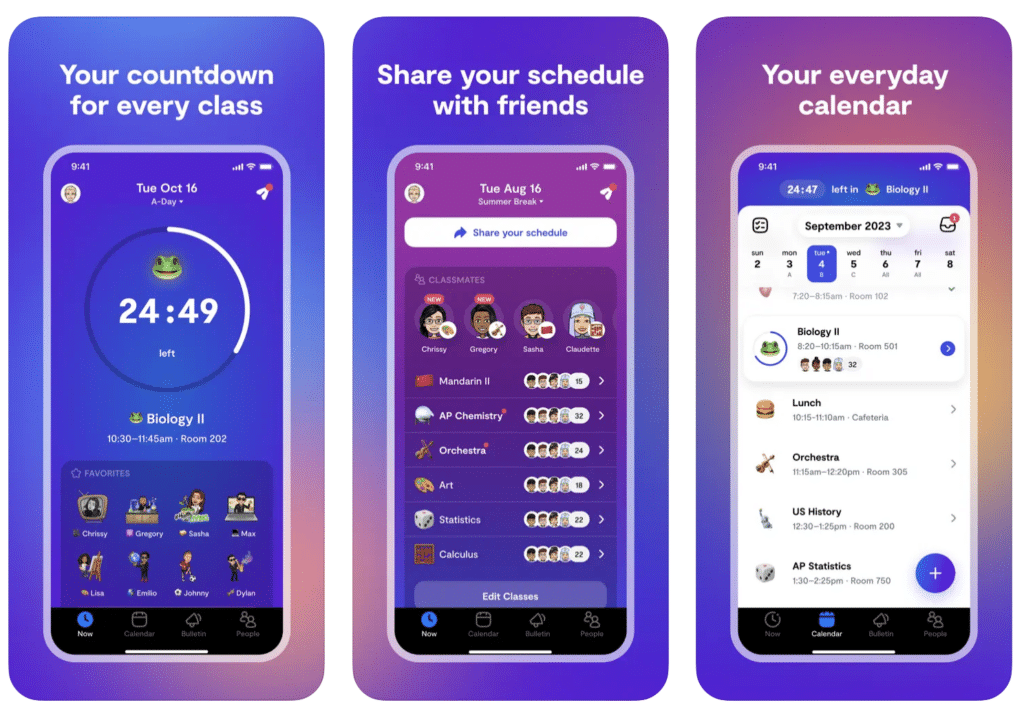
At the heart of Saturn’s utility is its intuitive scheduling system. Students can input their class schedules, often by simply selecting their school and courses, allowing the app to automatically populate their daily and weekly itineraries. This feature goes beyond basic calendaring by providing dynamic views that adapt to different bell schedules, block systems, and even personalized timetables. Users benefit from a clear, visual representation of their academic commitments, complete with precise class timings, room numbers, and instructor information, ensuring they are always aware of their next academic obligation. The app often integrates with real-time school data, where available, to provide updates on schedule changes or special events, ensuring accuracy and reducing confusion.
Social Integration and Peer Collaboration
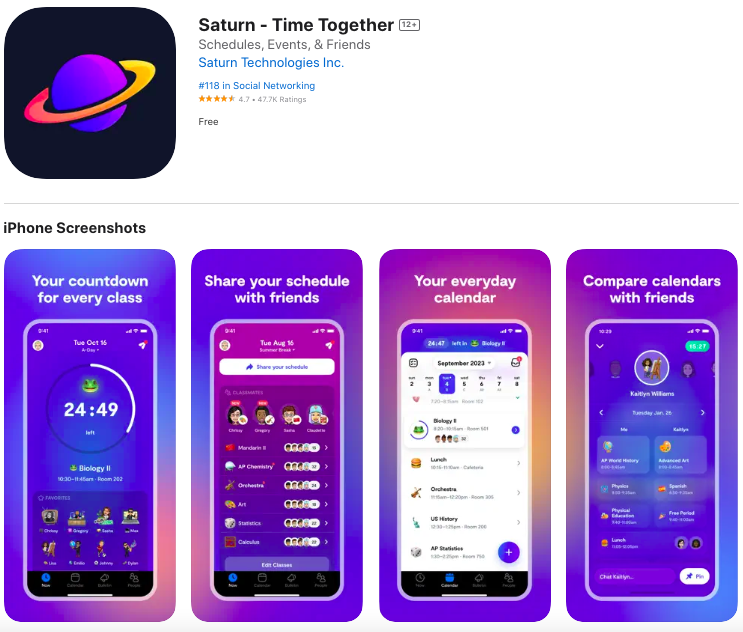
Recognizing that academic success is often intertwined with social support, Saturn incorporates powerful social features. Students can connect with classmates, share schedules, and even identify mutual free periods for study groups or social meetups. The app facilitates communication through integrated chat functionalities, allowing students to create group chats for specific classes or projects, fostering a sense of community and enabling collaborative learning. This peer-to-peer connectivity helps students build support networks, exchange notes, clarify assignments, and coordinate activities, all within a secure and student-focused environment. This integration moves beyond simple messaging, embedding social interaction directly into the organizational framework of student life.
Event Discovery and School Activities
Beyond academics, student life is rich with extracurriculars, social events, and school announcements. Saturn acts as a centralized hub for discovering and tracking these activities. The app aggregates information about sports events, club meetings, dances, assemblies, and other school-wide happenings, presenting them in an easily digestible feed. Students can browse upcoming events, view details, RSVP if required, and seamlessly add them to their personal in-app calendar. Timely notifications ensure that students don’t miss out on important opportunities or announcements, thereby promoting engagement in the broader school community and enriching their overall educational experience.
Task Management and Reminders
Complementing its scheduling capabilities, Saturn includes a comprehensive task management system. Students can input assignments, homework due dates, project deadlines, and other tasks directly into the app. These tasks can be linked to specific classes or events, providing contextual reminders. The system supports personalized notifications, allowing students to set timely alerts for impending deadlines, helping them prioritize their workload and avoid last-minute rushes. This integrated approach ensures that academic responsibilities are always front and center, empowering students to stay organized and manage their academic workload effectively.
The Technology Behind Saturn: User Experience and Platform Design
The seamless functionality and engaging nature of the Saturn app are underpinned by thoughtful technological design and development choices, focusing on robust architecture, intuitive interfaces, and stringent security protocols.
Intuitive User Interface and User Experience (UI/UX)
A cornerstone of Saturn’s appeal is its meticulously designed user interface and user experience. The app prioritizes clarity, simplicity, and ease of navigation, ensuring that even technology novices can quickly become proficient. Its clean, modern aesthetic employs a mobile-first design philosophy, recognizing that most students primarily interact with their devices on the go. Visual hierarchies, consistent iconography, and streamlined workflows minimize cognitive load, allowing students to access information and manage tasks efficiently. Personalization options, such as customizable themes and notification preferences, further enhance user satisfaction, making the app feel uniquely tailored to individual needs. Accessibility considerations are also integrated, aiming to ensure that the app is usable by a diverse student population, including those with visual or auditory impairments.
Cross-Platform Availability and Synchronization
To cater to the diverse device ecosystem students operate within, Saturn is typically developed for both major mobile operating systems: iOS and Android. This cross-platform availability ensures a broad reach. Crucially, the app leverages a robust cloud-based infrastructure to facilitate seamless data synchronization across all user devices. Whether a student updates their schedule on a tablet, adds a task on their phone, or checks an event on a web portal (if available), the information is instantly and consistently reflected across all platforms. This real-time synchronization is critical for maintaining accurate schedules and task lists, preventing data discrepancies, and ensuring that students always have access to the most current information, irrespective of the device they are using.
Data Infrastructure and Scalability

The underlying data infrastructure of Saturn is engineered for high performance, reliability, and scalability. Utilizing modern cloud service providers (e.g., AWS, Google Cloud Platform, Azure), the app’s backend is capable of handling vast amounts of user data and concurrent user traffic, particularly during peak academic periods. Database architectures are optimized for rapid data retrieval and storage, ensuring quick loading times and responsiveness. Furthermore, the system is designed to scale dynamically, meaning it can efficiently manage fluctuations in user demand without compromising performance. Potential API integrations with school-specific Learning Management Systems (LMS) or student information systems (SIS) further enhance its technical sophistication, allowing for automated data imports and more profound institutional connectivity, although such integrations would depend on individual school partnerships.
Security and Privacy Measures
Given the sensitive nature of student data, digital security and privacy are paramount for Saturn. The app employs industry-standard security protocols to protect user information. Data transmission between the app and its servers is typically encrypted using technologies like TLS/SSL to prevent eavesdropping and data tampering. Data at rest (stored on servers) is also encrypted. Strong authentication mechanisms, including multi-factor authentication (MFA) options, are often available to protect user accounts from unauthorized access. Furthermore, the app adheres to relevant data privacy regulations, such as COPPA (Children’s Online Privacy Protection Act) in the US, FERPA (Family Educational Rights and Privacy Act) for educational records, and GDPR (General Data Protection Regulation) in Europe, ensuring that student data is collected, processed, and stored responsibly and ethically. Users are generally given granular control over what information they share and with whom, reinforcing their privacy rights.
Target Audience and Impact: Revolutionizing Student Productivity
Saturn’s design and technological implementation are squarely aimed at serving the unique needs of a specific demographic, creating a significant positive impact on their academic and social lives.
Addressing the Digital Native’s Needs
The primary target audience for Saturn comprises high school and college students, a generation often referred to as “digital natives.” These individuals have grown up with technology deeply embedded in their daily lives and expect sophisticated, intuitive digital tools to manage various aspects of their existence. Saturn caters directly to this expectation by offering an integrated, mobile-first solution that feels familiar and natural. It replaces fragmented approaches—like paper planners, separate calendar apps, and generic messaging platforms—with a unified digital experience that resonates with how modern students interact with information and peers.
Fostering Engagement and Reducing Overwhelm
By centralizing schedules, tasks, and social connections, Saturn significantly reduces the cognitive load associated with managing a busy student life. The app’s technological framework ensures that students have a clear, real-time overview of their commitments, helping to prevent missed assignments, forgotten events, or scheduling conflicts. This systematic organization empowers students to feel more in control of their time and responsibilities, thereby reducing stress and academic anxiety. The ability to easily discover and engage with school events also promotes a more holistic educational experience, encouraging participation beyond the classroom.
The Ecosystem Advantage
Saturn’s most profound impact stems from its creation of an integrated ecosystem. Rather than offering isolated features, it weaves academic planning, social interaction, and event discovery into a single, coherent platform. This synergistic approach means that students don’t just manage their classes; they manage their entire student life. The technological advantage here is the seamless flow of information between these different facets – a class schedule is linked to assignments, which can be discussed in a class-specific chat, and social events can be easily added without leaving the app. This comprehensive integration not only streamlines organization but also fosters a stronger sense of belonging and connectivity within the school community, leveraging technology to build more engaged and productive student populations.
Looking Ahead: The Evolution of Saturn and Future Trends in Ed-Tech
The rapid pace of technological innovation means that platforms like Saturn must continuously evolve to remain relevant and effective. The future of the app and the broader ed-tech landscape hints at increasingly intelligent and interconnected solutions.
Potential Technological Enhancements
Future iterations of Saturn could incorporate advanced technologies such as Artificial Intelligence (AI) and machine learning. AI algorithms might offer personalized learning recommendations based on a student’s schedule and academic performance, suggesting relevant resources or study groups. Smart scheduling features could leverage AI to optimize a student’s free time for productivity or social activities. Deeper, more sophisticated integrations with existing Learning Management Systems (LMS) like Canvas, Blackboard, or Google Classroom are also a strong possibility, allowing for automated assignment syncing, grade tracking, and direct access to course materials within the Saturn interface. Enhanced analytics for individual users, offering insights into their time management or study habits, could also empower students with data-driven self-improvement tools. More futuristic developments might even explore augmented reality (AR) for interactive campus navigation or virtual study environments.
Competitive Landscape and Innovation
The ed-tech market is dynamic, with numerous general productivity apps and specialized student tools vying for attention. Saturn differentiates itself through its focused, student-centric design and its robust integration of social and academic life. To maintain this edge, continuous innovation in UI/UX, feature sets, and underlying technology is paramount. This includes adopting new mobile OS features, enhancing backend efficiency, and prioritizing user feedback in the development lifecycle. The ability to quickly iterate and adapt to emerging student needs and technological advancements will be key to its sustained success in a competitive environment.
The Future of Student Digital Tools
The trend in digital tools for students is undeniably moving towards more integrated, intelligent, and personalized digital assistants. Students expect platforms that not only help them organize but also anticipate their needs, facilitate connections, and support their overall well-being. Saturn’s trajectory aligns with this vision, aiming to be more than just an organizational app—it strives to be a comprehensive digital companion for the student journey. As educational institutions continue to embrace digital transformation, platforms like Saturn will play an increasingly vital role in empowering the next generation of learners, providing them with the technological tools necessary to navigate the complexities of modern education and thrive in their academic and social lives.
aViewFromTheCave is a participant in the Amazon Services LLC Associates Program, an affiliate advertising program designed to provide a means for sites to earn advertising fees by advertising and linking to Amazon.com. Amazon, the Amazon logo, AmazonSupply, and the AmazonSupply logo are trademarks of Amazon.com, Inc. or its affiliates. As an Amazon Associate we earn affiliate commissions from qualifying purchases.