
The S&P 500 is often cited as the definitive barometer for the health of the United States stock market and, by extension, the broader global economy. Comprising 500 of the largest publicly traded companies in the U.S., it represents approximately 80% of the total market capitalization of the American equity market. For investors, financial analysts, and personal finance enthusiasts, the question of “what is the record high for the S&P 500” is more than just a search for a numerical value; it is an inquiry into the momentum of wealth creation, the stability of corporate earnings, and the psychological state of the investing public.
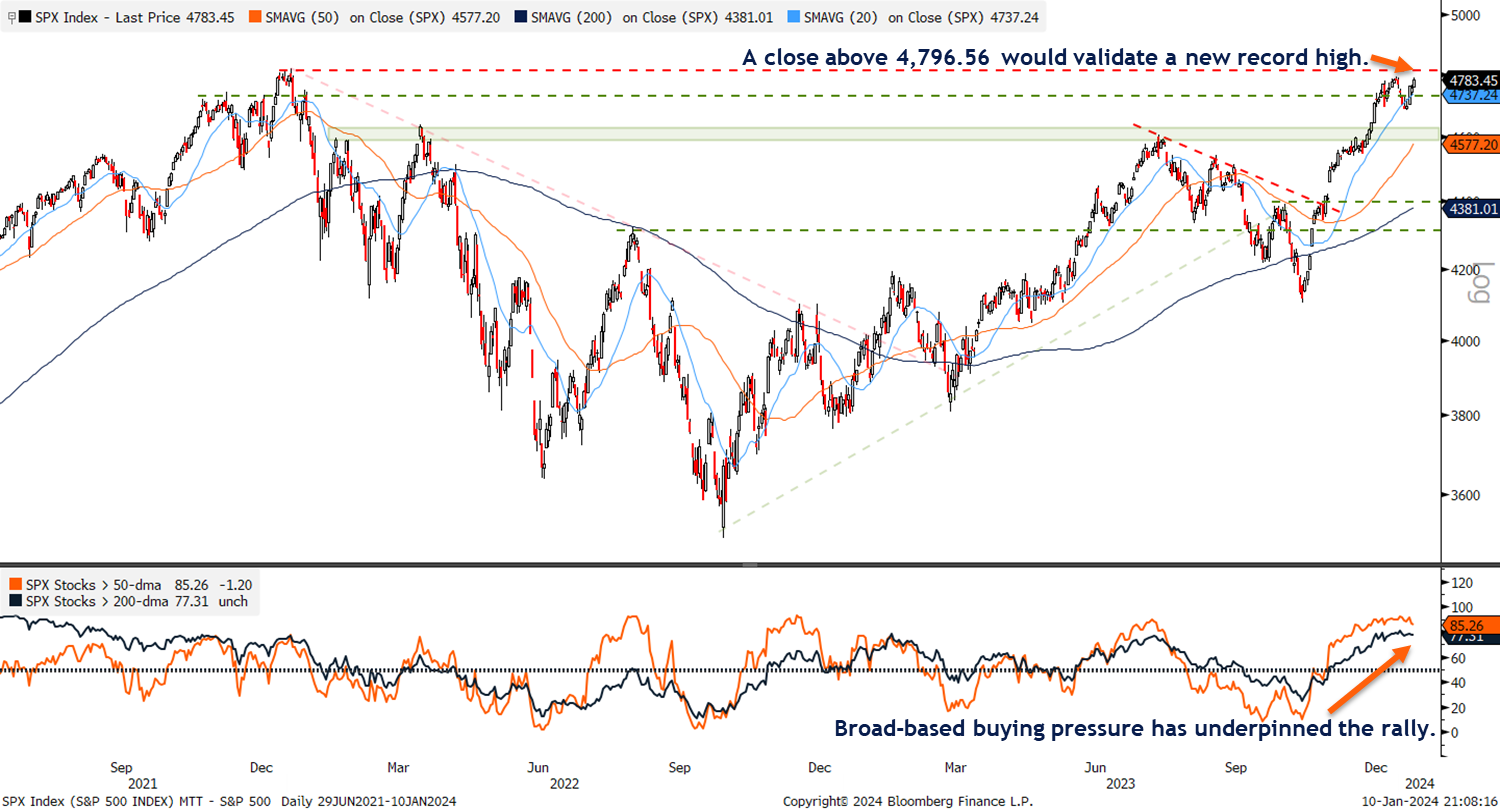
As of the current market cycle in 2024, the S&P 500 has reached unprecedented levels, consistently breaking through previous ceilings. To understand the current record high, one must look at the convergence of technological innovation, shifting monetary policies, and the resilience of corporate profit margins.
Understanding the Significance of Record Highs in the Stock Market
A record high, or an “all-time high” (ATH), occurs when the index closes at a price level it has never reached before in its history. While hitting a new high often triggers headlines and excitement, its significance is multi-faceted, influencing everything from individual retirement accounts to institutional investment strategies.
Market Sentiment and Investor Psychology
Psychologically, record highs serve as a double-edged sword. For some, a new peak is a signal of a robust, healthy economy, encouraging “Fear Of Missing Out” (FOMO) and driving further capital into the market. For others, it triggers “height phobia,” where investors fear that the market is overextended and due for a correction.
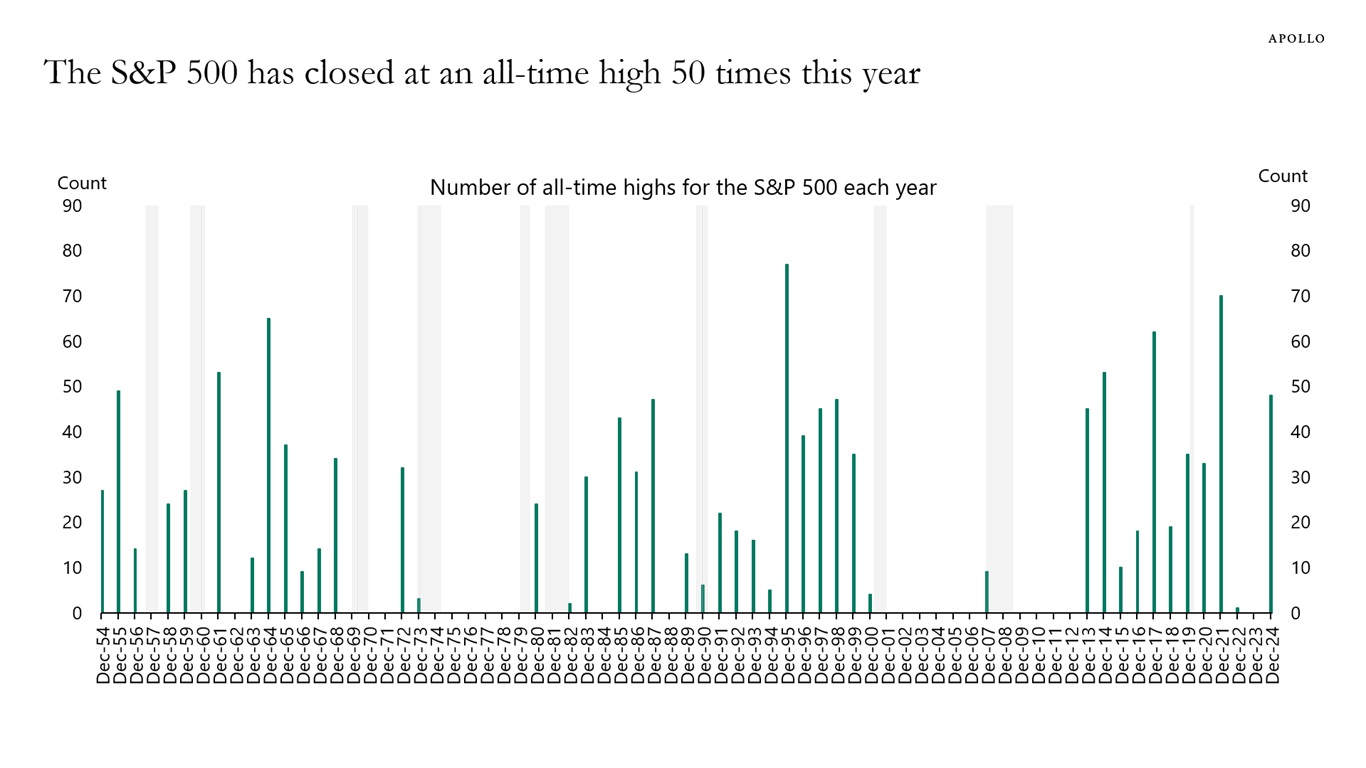
However, historical data suggests that record highs are not necessarily harbingers of doom. In fact, record highs often cluster. When the S&P 500 breaks a record, it frequently goes on to break several more in quick succession. This momentum is a hallmark of a secular bull market. Understanding that a record high is often a sign of strength rather than an immediate signal to sell is a fundamental concept in sophisticated personal finance and long-term investing.
The Role of Market Capitalization Weighting
The S&P 500 is a float-adjusted market-capitalization-weighted index. This means that the largest companies have a disproportionate impact on the index’s performance. In recent years, the record highs have been driven significantly by a handful of mega-cap technology stocks, often referred to as the “Magnificent Seven.”
When these titans—including Apple, Microsoft, Alphabet, Amazon, Nvidia, Meta, and Tesla—perform well, they can lift the entire index to record heights even if the remaining 493 stocks are stagnant. This concentration of power means that the record high of the S&P 500 is often a reflection of the global dominance of American technology and innovation.
Historical Milestones and the Evolution of the S&P 500
To appreciate where the S&P 500 stands today, we must look at the journey it took to get here. The index was introduced in its current form in 1957, though its predecessors date back further. Its history is a timeline of the American economic story, marked by periods of explosive growth and sobering contractions.
From 1,000 to 5,000: A Timeline of Growth
The climb of the S&P 500 is a testament to the long-term compounding of corporate value. It took the index decades to reach the 1,000-point milestone, which it finally achieved in February 1998 during the height of the dot-com boom. The journey to 2,000 took another 16 years, with the index crossing that threshold in August 2014, following the long recovery from the 2008 Financial Crisis.
The pace of growth accelerated significantly thereafter. The S&P 500 hit 3,000 in July 2019 and 4,000 in April 2021, fueled by the rapid digital transformation and unprecedented fiscal stimulus during the COVID-19 pandemic. In early 2024, the index achieved the monumental 5,000-point milestone. Each of these “round number” records serves as a psychological benchmark for the investing community, reinforcing the long-term upward trajectory of the equity markets.
Recovering from Drawdowns
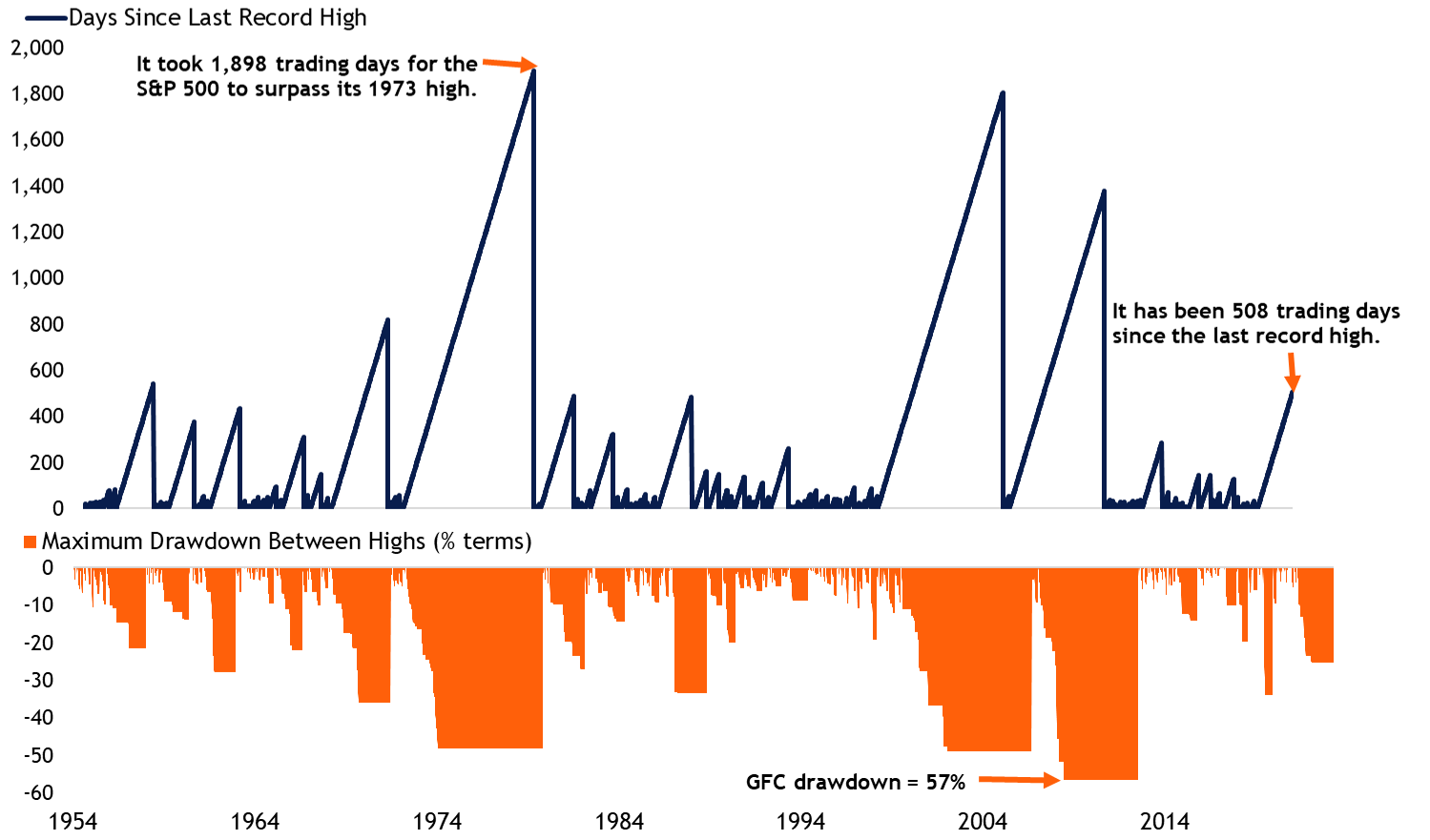
The path to record highs is rarely a straight line. Every peak has been followed by a valley. The “lost decade” of the 2000s saw the index struggle with the aftermath of the tech bubble and the Great Recession. More recently, in 2022, the index entered a bear market, dropping over 20% due to soaring inflation and rising interest rates.
The ability of the S&P 500 to recover from these drawdowns and eventually set new record highs is the cornerstone of the “buy and hold” investment philosophy. For the disciplined investor, the record high is a reward for weathering the volatility of the years prior.
Primary Drivers Behind the Current Record Highs
What exactly is pushing the S&P 500 to its current record levels? It is rarely a single factor but rather a “perfect storm” of economic conditions that align to drive asset prices upward.
Corporate Earnings and Profitability
At its core, the stock market is a reflection of corporate profits. In the current era, S&P 500 companies have demonstrated remarkable earnings resilience. Despite concerns about inflation and supply chain disruptions, many large-cap firms have maintained high margins by leveraging pricing power and improving operational efficiency through technology. When companies earn more per share (EPS), the index naturally trends higher, as investors are willing to pay more for a piece of those growing profits.
The Artificial Intelligence Revolution
The most potent driver of the recent record highs has undoubtedly been the explosion of interest and investment in Artificial Intelligence (AI). Companies like Nvidia, which provides the hardware necessary for AI processing, have seen their valuations skyrocket, dragging the entire index upward. This is not merely speculative fervor; it is a bet on a massive leap in productivity across all sectors of the economy. Investors are pricing in the future value of AI-driven automation, data analysis, and software development, viewing it as the next great industrial revolution.
Interest Rates and Federal Reserve Policy
The relationship between the S&P 500 and the Federal Reserve is critical. Traditionally, rising interest rates are a headwind for stocks because they increase the cost of borrowing and make fixed-income investments like bonds more attractive. However, the recent record highs have occurred even as the Fed maintained higher rates to combat inflation. This suggests that the market believes the “Goldilocks scenario”—where inflation cools without a major recession (a “soft landing”)—is the most likely outcome. The anticipation of eventual rate cuts further fuels the fire, as lower rates typically lead to higher equity valuations.
Investment Strategies for an All-Time High Market
Navigating the S&P 500 when it is at a record high requires a blend of discipline, perspective, and strategic planning. For personal finance management, the approach should vary based on individual goals and time horizons.
The Risk of Buying the Peak vs. Dollar-Cost Averaging
A common dilemma for investors is whether to put money into the market when it is at an all-time high. History shows that waiting for a “dip” can often be more costly than simply participating in the market. Missing out on the best performing days of the market—which often occur near record highs—can significantly diminish long-term returns.
The most effective strategy for most individuals is Dollar-Cost Averaging (DCA). By investing a fixed amount of money at regular intervals, regardless of the index’s price, an investor naturally buys more shares when prices are lower and fewer when they are at record highs. This mitigates the risk of “timing the market” poorly and ensures consistent participation in the market’s growth.
Portfolio Rebalancing and Risk Management
When the S&P 500 reaches a record high, it can cause an investor’s portfolio to become “top-heavy” in equities. If your target allocation was 60% stocks and 40% bonds, a major run-up in the S&P 500 might push your stock exposure to 70% or 75%. This increases your risk profile beyond your original intent.
Record highs are an excellent time to rebalance. Selling a portion of your winning stock positions and moving the proceeds into underperforming asset classes (like bonds or international equities) allows you to “sell high” and maintain your desired risk level. This disciplined approach ensures that a sudden market correction doesn’t derail your financial plan.
Focusing on Quality and Valuation
While the index as a whole may be at a record high, not every stock within the index is expensive. Savvy investors often look for “pockets of value”—sectors or companies that have not participated as fully in the rally. This might include defensive sectors like consumer staples or healthcare, which provide stability if the broader market experiences a pullback. Analyzing Price-to-Earnings (P/E) ratios relative to historical averages can help determine if the current record high is supported by fundamentals or if it is entering bubble territory.
The Future Outlook: Can the Momentum Sustain?
As the S&P 500 continues to test new boundaries, the question of sustainability looms large. The future performance of the index will likely depend on three key pillars: the continued growth of AI applications, the stability of the global geopolitical landscape, and the trajectory of consumer spending.
While valuations in certain sectors appear stretched, the underlying strength of the American corporate sector remains formidable. Technological advancement is not a fleeting trend but a fundamental shift in how value is created. For the long-term investor, the specific number of the record high is less important than the enduring reality that the S&P 500 has, over every 20-year period in history, provided positive returns.
The record high of the S&P 500 is a milestone of progress. It represents the collective ingenuity of 500 of the world’s most influential companies and the capital of millions of investors working in tandem. Whether the index is at 5,000, 6,000, or beyond, the principles of sound investing—diversification, consistency, and a long-term perspective—remain the most reliable tools for navigating the peaks and valleys of the financial markets.
aViewFromTheCave is a participant in the Amazon Services LLC Associates Program, an affiliate advertising program designed to provide a means for sites to earn advertising fees by advertising and linking to Amazon.com. Amazon, the Amazon logo, AmazonSupply, and the AmazonSupply logo are trademarks of Amazon.com, Inc. or its affiliates. As an Amazon Associate we earn affiliate commissions from qualifying purchases.