
For millions of Americans planning for retirement, the Roth IRA stands out as a powerful savings vehicle, revered for its unique tax advantages. Yet, a common question often arises: “What is the rate of return on a Roth IRA?” The answer, while seemingly straightforward, is actually multifaceted, as a Roth IRA isn’t an investment itself but rather a container for investments. Unlike a savings account with a fixed interest rate, the performance of your Roth IRA is entirely dependent on the investment choices you make within it, coupled with market conditions and your time horizon.
Understanding the potential returns of a Roth IRA is crucial for effective long-term financial planning. It’s about demystifying the interplay between investment decisions, market dynamics, and the inherent tax benefits that make this account so attractive. This article will delve into the factors that determine your Roth IRA’s rate of return, explore typical historical performance, and provide actionable insights into how you can potentially maximize its growth over time. By the end, you’ll have a clearer picture of what you can realistically expect and how to steer your Roth IRA towards a robust retirement future.
Understanding Roth IRA Basics and Its Tax Advantages
Before discussing returns, it’s essential to grasp the fundamental nature of a Roth IRA and the significant tax benefits it offers, as these directly influence its overall value proposition.
What is a Roth IRA?
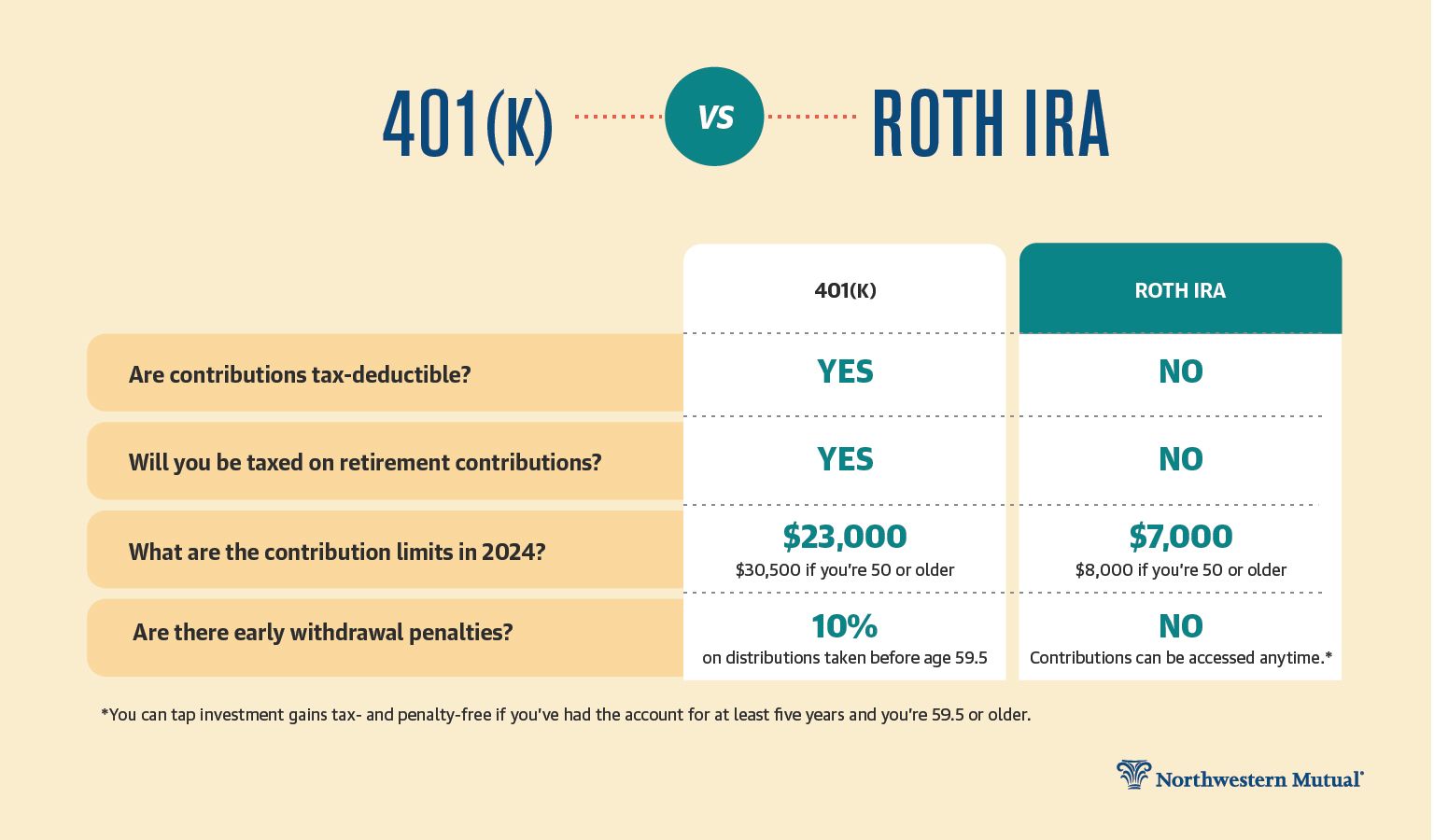
A Roth IRA is an individual retirement account that allows qualified withdrawals to be tax-free in retirement. Unlike a Traditional IRA, contributions to a Roth IRA are made with after-tax dollars. This means you don’t get an upfront tax deduction in the year you contribute. However, this upfront tax hit is a small price to pay for the tremendous benefit of tax-free growth and withdrawals later on.
There are specific eligibility requirements for contributing to a Roth IRA, primarily related to your modified adjusted gross income (MAGI). For instance, in 2024, individuals with MAGI below a certain threshold can contribute the maximum amount ($7,000, or $8,000 if aged 50 or older), while those above a higher threshold may be phased out or ineligible. These limits are subject to change annually, so it’s always wise to check the latest IRS guidelines. The “backdoor Roth” strategy can sometimes allow higher earners to bypass these income limitations, but it involves a conversion from a Traditional IRA and warrants careful consideration of tax implications.
The Power of Tax-Free Growth and Withdrawals
The true magic of a Roth IRA lies in its tax-exempt growth and qualified withdrawals. Once your contributions are in the account, any earnings generated by your investments—be it from stocks, bonds, mutual funds, or ETFs—grow completely tax-free. When you reach age 59½ and have held the Roth IRA for at least five years (known as the “5-year rule”), all qualified distributions, including both your original contributions and all accumulated earnings, are entirely free from federal income tax. Some states also follow this rule.
This tax-free status is a monumental advantage, particularly for those who anticipate being in a higher tax bracket during retirement than they are today. Imagine decades of compound interest working its magic, potentially transforming a modest sum into a substantial nest egg, all without ever owing a penny in taxes on the gains when you withdraw. This contrasts sharply with a Traditional IRA or 401(k), where withdrawals in retirement are typically taxed as ordinary income, diminishing the net value of your savings. The tax-free nature of qualified distributions is, in effect, a significant boost to your net rate of return, making every percentage point of investment growth more valuable.
Factors Influencing Your Roth IRA’s Rate of Return
Since a Roth IRA is an investment account and not an investment in itself, its rate of return is dictated by a multitude of factors, primarily stemming from the investment choices you make and the broader economic landscape.
Investment Choices: The Core Driver
The most significant determinant of your Roth IRA’s return is the type of investments you hold within it.
-
Stocks (Equities): Historically, stocks have offered the highest long-term returns compared to other asset classes, albeit with higher volatility. You can invest in individual company stocks, or more commonly, through diversified vehicles like Exchange-Traded Funds (ETFs) and Mutual Funds. These funds can track broad market indexes (e.g., S&P 500 index funds) or focus on specific sectors, geographies, or investment styles. An S&P 500 index fund, for example, aims to mirror the performance of the 500 largest U.S. companies.
-
Bonds: Bonds are debt instruments that generally offer lower returns than stocks but also come with lower risk. They provide regular interest payments and a return of principal at maturity. Bonds can be a good choice for diversification, capital preservation, or for those nearing retirement who want to reduce portfolio volatility.
-
Real Estate (REITs): Real Estate Investment Trusts (REITs) are companies that own, operate, or finance income-producing real estate. They allow investors to gain exposure to real estate without directly owning physical property. REITs can offer competitive returns and diversification benefits.
-
Money Market Accounts/CDs: These are very low-risk options that offer modest returns, typically just above inflation. While suitable for emergency funds, they are generally not recommended for long-term growth within a retirement account due to their limited growth potential.
A well-diversified portfolio, combining different asset classes in proportions that align with your risk tolerance and time horizon, is key to optimizing returns while managing risk.
Market Performance and Economic Cycles
Even the best investment choices are subject to the broader market and economic environment.
-
Bull and Bear Markets: During a “bull market,” characterized by rising stock prices and investor confidence, your Roth IRA investments are likely to see significant appreciation. Conversely, a “bear market,” marked by declining prices, can lead to temporary losses.
-
Economic Factors: Interest rates, inflation, geopolitical events, and overall economic growth all influence corporate earnings and asset prices, thereby impacting your portfolio’s performance. While these factors are beyond your control, understanding their potential influence helps in setting realistic expectations and staying disciplined during downturns. The key is to maintain a long-term perspective and avoid making rash decisions based on short-term market fluctuations.
Time Horizon and Compounding
The longer your money stays invested, the more opportunity it has to grow through the power of compounding. Compounding is the process where the returns you earn on your investments also start earning returns themselves. This exponential growth is often referred to as “interest on interest” and is a cornerstone of long-term wealth creation. An investor who starts saving early, even with smaller contributions, can often accumulate more than someone who starts later with larger contributions, purely due to the extra years of compounding. For example, $7,000 invested annually at an average 8% return for 30 years grows to over $790,000, but for 40 years it grows to over $1.9 million.
Fees and Expenses
Every dollar paid in fees is a dollar that doesn’t compound in your account.
-
Expense Ratios: Mutual funds and ETFs charge an expense ratio, which is an annual fee expressed as a percentage of your investment. A fund with a 1.0% expense ratio will yield 1% less per year than an otherwise identical fund with no fees. While 1% may seem small, over decades, it can erode a substantial portion of your potential returns. Low-cost index funds and ETFs often have expense ratios well under 0.20%.
-
Brokerage Fees: Some brokerages may charge commissions for buying or selling certain investments, although many platforms now offer commission-free trading for a wide range of assets.
-
Advisory Fees: If you use a financial advisor, they might charge an asset under management (AUM) fee (e.g., 1% annually) or a flat fee. While a good advisor can add significant value, it’s important to understand how their fees impact your net returns.

Minimizing fees is a straightforward way to directly boost your net rate of return.
Typical (Historical) Roth IRA Rates of Return
Given the variables involved, there’s no single “typical” rate of return for a Roth IRA. However, by looking at historical market performance and common investment strategies, we can establish a realistic range of expectations.
Average Stock Market Returns as a Benchmark
Since many Roth IRA investors allocate a significant portion of their portfolios to stocks or stock-based funds for long-term growth, the historical performance of major stock market indexes serves as a crucial benchmark.
-
S&P 500: Over the past few decades, the S&P 500 index (representing large U.S. companies) has generated an average annual return of approximately 10-12% before inflation, including dividends, over very long periods (e.g., 30+ years). After accounting for inflation, real returns have typically been in the 7-8% range. This historical average is often used as a baseline for aggressive, stock-heavy portfolios.
-
Diversified Portfolios: A more balanced portfolio, perhaps with 60% stocks and 40% bonds, would generally have lower historical returns than an all-stock portfolio but also less volatility. Such portfolios might historically average 6-8% annually, again before inflation.
It’s vital to remember that these are averages over long periods and encompass significant upswings and downturns.
Reality vs. Expectations: No Guarantees
While historical data provides valuable context, it’s critical to understand that “past performance is not indicative of future results.” The market is inherently unpredictable in the short term.
-
Volatility: In any given year, your Roth IRA’s return could be significantly higher (e.g., +20% or more) or significantly lower (e.g., -20% or worse) than the long-term average. These fluctuations are normal.
-
Range of Returns: Depending on your asset allocation, your Roth IRA could see returns ranging from 1-3% in a very conservative, bond/cash-heavy portfolio to 8-10%+ in a more aggressive, stock-heavy portfolio over a multi-decade period. The lower end represents capital preservation, while the higher end aims for substantial growth.
The key to navigating this uncertainty is setting realistic expectations and focusing on your long-term financial goals rather than short-term market noise.
Personalized Returns
Ultimately, your Roth IRA’s rate of return will be unique to you. It’s not a generic number but a reflection of your individual investment strategy, risk tolerance, and consistent execution.
-
Your Strategy: Are you a passive investor using index funds, or an active stock picker? Do you rebalance regularly? Your approach directly impacts your outcomes.
-
Your Behavior: Emotional decisions during market downturns, such as selling investments at a loss, can severely depress your long-term returns. Staying invested through volatility is often the most challenging, yet rewarding, strategy.
For those who feel overwhelmed by investment decisions, seeking guidance from a qualified financial advisor can be invaluable. An advisor can help you craft a personalized investment strategy within your Roth IRA that aligns with your specific goals, risk tolerance, and time horizon, potentially leading to better-informed decisions and improved long-term results.
Maximizing Your Roth IRA’s Potential Return
While you cannot control the market, you can certainly influence your Roth IRA’s rate of return through smart, disciplined financial practices.
Strategic Asset Allocation and Diversification
The foundation of a high-performing Roth IRA lies in thoughtful asset allocation and robust diversification.
-
Match Risk Tolerance: Your portfolio’s mix of stocks, bonds, and other assets should align with your personal risk tolerance and time horizon. Younger investors with a long time until retirement can generally afford to take on more risk (higher stock allocation) for potentially higher returns. As retirement approaches, a gradual shift towards more conservative assets can help preserve capital.
-
Diversify Across Assets: Don’t put all your eggs in one basket. Diversify across different sectors, company sizes, and geographies. For example, instead of just investing in one tech stock, invest in a broad S&P 500 index fund, which provides exposure to 500 different companies across various industries. This reduces the impact of any single investment’s poor performance.
-
Rebalancing: Periodically reviewing and rebalancing your portfolio ensures that your asset allocation remains consistent with your target. If stocks have performed exceptionally well, your portfolio might become “stock-heavy.” Rebalancing involves selling some of the outperforming assets and buying more of the underperforming ones to restore your original target percentages. This is a disciplined way to “buy low and sell high” and manage risk.
Consistent Contributions and Early Start
The single most impactful action you can take to maximize your Roth IRA’s return is to contribute consistently, especially starting early.
-
Leverage Dollar-Cost Averaging: By contributing a fixed amount regularly (e.g., monthly), you practice dollar-cost averaging. This means you buy more shares when prices are low and fewer when prices are high, averaging out your purchase price over time and reducing the risk of investing a lump sum at an inopportune moment.
-
Maximize Contributions: Aim to contribute the maximum allowable amount each year if your financial situation permits. Every dollar contributed and invested early has more time to compound, leading to substantially larger balances over the long run. The power of compounding is truly astounding when given decades to work.
Minimizing Fees
As discussed, fees are a silent killer of returns. Actively choose investments with low expense ratios.
-
Low-Cost Index Funds and ETFs: These are typically passively managed funds designed to track a market index, and they usually have significantly lower expense ratios compared to actively managed funds. Over the long run, the difference in fees can translate into tens or even hundreds of thousands of dollars in your pocket.
-
Understand Advisor Fees: If you work with an advisor, ensure you understand their fee structure and the value they provide. Compare their fees to industry averages and consider fee-only fiduciaries who are legally obligated to act in your best interest.
Regular Portfolio Review and Adjustments
Your Roth IRA shouldn’t be a “set it and forget it” account, although passive investing is a valid strategy.
-
Annual Check-ups: At least once a year, review your portfolio’s performance, your asset allocation, and your financial goals.
-
Adjust to Life Changes: Major life events—marriage, children, a new job, a home purchase—can all necessitate adjustments to your investment strategy, risk tolerance, or contribution amounts. Ensure your Roth IRA continues to align with your evolving circumstances.
-
Stay Informed: Keep a general eye on economic trends and market conditions, but avoid making emotional, knee-jerk reactions to daily news. A long-term, strategic approach is key to success.

Conclusion
The question “What is the rate of return on a Roth IRA?” doesn’t have a single, definitive answer because a Roth IRA is an investment vehicle, not a specific investment. Its performance is a direct reflection of the underlying investments you choose, the prevailing market conditions, and the duration your money remains invested. Historically, a well-diversified Roth IRA portfolio heavily invested in stocks or broad market index funds has delivered average annual returns in the range of 7-10% (or more) over long periods, prior to inflation.
However, these figures are historical averages and are not guaranteed for the future. The true power of a Roth IRA stems from its unique tax-free growth and tax-free withdrawals in retirement, which significantly enhance the net return on your investments. By making informed investment choices, embracing strategic asset allocation and diversification, starting early with consistent contributions, minimizing fees, and regularly reviewing your portfolio, you can proactively influence and potentially maximize the rate of return on your Roth IRA. Ultimately, a Roth IRA offers an incredible opportunity for long-term wealth creation, providing a secure and tax-efficient pathway to a comfortable retirement.
aViewFromTheCave is a participant in the Amazon Services LLC Associates Program, an affiliate advertising program designed to provide a means for sites to earn advertising fees by advertising and linking to Amazon.com. Amazon, the Amazon logo, AmazonSupply, and the AmazonSupply logo are trademarks of Amazon.com, Inc. or its affiliates. As an Amazon Associate we earn affiliate commissions from qualifying purchases.