
For over a decade, the Minecraft wolf remained a monochromatic icon of the game’s survival experience. Since its introduction in 2011, every player was familiar with the singular, pale-gray texture that defined the “tameable dog” mechanic. However, with the release of the “Armored Paw” update (Versions 1.20.5 and 1.20.6), Mojang Studios implemented a significant technical overhaul of the wolf entity. This update transitioned the wolf from a single-texture entity to a biome-dependent variant system, introducing nine distinct skins based on the environment in which the wolf spawns.
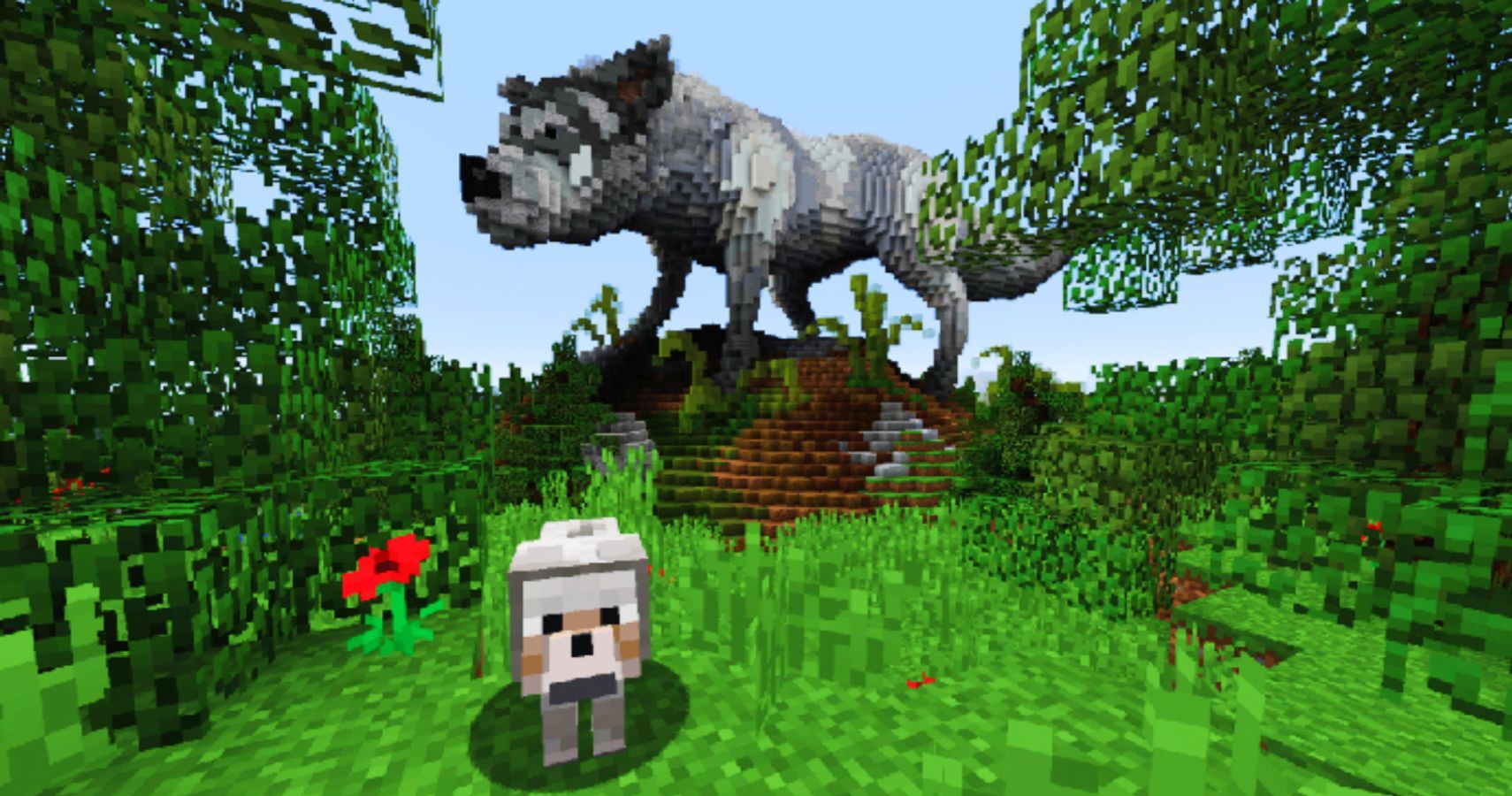
This architectural shift in the game’s code has created a new hierarchy of rarity. Players and technical collectors now seek out specific variants that are geographically isolated or tied to uncommon biome generation. Determining the “rarest” wolf requires an analysis of biome distribution, spawn rates, and the technical parameters of the Minecraft world-generation engine.
Analyzing the Nine Wolf Variants and Their Biome Mapping
The implementation of wolf variants is more than a visual aesthetic; it is a demonstration of how Minecraft uses biome tags to dictate entity properties. Each variant is hard-coded to specific climate zones, requiring players to traverse thousands of blocks to complete a full collection.
The Common and Uncommon Variants
Most players will first encounter the Pale Wolf, which is the legacy texture now restricted to the standard Taiga biome. Because Taigas are one of the most common biomes in the game’s Overworld, the Pale Wolf remains the baseline. Following this are the Woods Wolf (found in Forest biomes) and the Ashen Wolf (found in Snowy Taiga biomes). These are relatively easy to locate due to the high frequency of these biome types in standard world seeds.
Mid-tier rarity variants include the Black Wolf, which spawns in Old Growth Pine Taigas, and the Chestnut Wolf, found in Old Growth Spruce Taigas. These biomes are rarer than standard forests but follow predictable generation patterns. Similarly, the Rusty Wolf (Sparse Jungle) and the Spotted Wolf (Savanna Plateau) require specific climate conditions—specifically high temperature and humidity—but are not considered technically “rare” by veteran explorers.
The Geographic Outliers
The Striped Wolf is where the technical rarity begins to spike. This variant is found exclusively in the Wooded Badlands biome. Badlands (formerly Mesas) are rare “warm” biomes that occupy a small percentage of the total world map. Furthermore, the Wooded Badlands variant is a sub-biome, often requiring specific elevation and proximity to water to generate, making the Striped Wolf a significant find for any technical player.
The Snowy Wolf: The Pinnacle of Rarity
While the Striped Wolf is difficult to find, the Snowy Wolf holds the title of the rarest wolf in Minecraft. Its rarity is a result of a “perfect storm” of biome generation rules, spawn pack sizes, and environmental constraints.
The Grove Biome Constraint
The Snowy Wolf spawns exclusively in the Grove biome. Introduced in the 1.18 “Caves & Cliffs” update, the Grove is a technical mountain sub-biome. It generates on the slopes of mountains, typically between the base and the frozen peaks. Because mountain biomes themselves are less common than flatland biomes, and because the Grove occupies a specific “band” of elevation, the total surface area where a Snowy Wolf can physically spawn is significantly lower than that of any other variant.
Solitary Spawning Mechanics
A critical technical factor that separates the Snowy Wolf from its peers is its pack size. Most wolf variants in Minecraft spawn in packs of four. This increases the player’s chances of spotting them from a distance or finding at least one individual even if several despawn or encounter environmental hazards.
The Snowy Wolf, however, is programmed to be a solitary hunter. It frequently spawns alone. From a probability standpoint, if a player enters a Grove biome, the engine only needs to fail a single spawn check for the wolf to be absent. In contrast, in a Forest biome, the engine makes multiple checks for a pack, making the Snowy Wolf statistically much more elusive.

Camouflage and Environmental Hazards
Beyond the raw code, the Snowy Wolf is rare due to “effective visibility.” Its texture is a stark, bright white designed to blend in with the Powder Snow and blocks of Snow found in the Grove. For a player flying over with Elytra or scouting from a distance, the Snowy Wolf is technically the hardest to render and identify against its backdrop. Furthermore, Groves are often filled with Powder Snow pits; if a wolf spawns and immediately falls into a trap, it may perish before the player ever detects its presence, further increasing its perceived rarity.
Technical Strategies for Locating Rare Variants
For players operating on a technical level, finding the rarest wolves involves more than just wandering. It requires an understanding of how Minecraft handles “Entity Spawning” and “Chunk Loading.”
Biome Finding Tools and Logic
To find a Snowy Wolf or a Striped Wolf, technical players often utilize external mapping tools or the in-game /locate biome command (if cheats are enabled). These tools analyze the seed’s noise maps to identify the exact coordinates of a Grove or Wooded Badlands. Without these tools, finding a Snowy Wolf can take dozens of real-world hours, as mountain ranges do not always include a Grove sub-biome.
Optimizing Spawn Rates
Wolves are “Passive Mobs” (though they become neutral/hostile if attacked). In Minecraft’s technical architecture, passive mobs have a much lower spawn cap than hostile mobs. If a player is trying to find a Snowy Wolf in a Grove, they should ensure that they are clearing out other animals in the area. By reducing the number of sheep, rabbits, or cows in the vicinity, the player frees up the “mob cap,” allowing the game engine more opportunities to attempt a wolf spawn during a chunk tick.
The Role of Breeding in Technical Collection
Once a single Snowy Wolf is found, the technical rarity is mitigated by the game’s breeding mechanics. In Minecraft, the offspring of two wolves will inherit the variant of the parents. If you breed two Snowy Wolves, you get a Snowy Wolf. More interestingly, if you breed two different variants, the offspring has a 50/50 chance of inheriting either parent’s skin. This allows players to “farm” rare variants once a single breeding pair is established, shifting the challenge from “finding” to “logistics.”
The Wolf Armor Mechanic: A Technical Supplement
The same update that introduced these variants also introduced Wolf Armor, a new layer of software interaction for pet entities. This mechanic adds a technical utility to the hunt for rare wolves.
Armadillos and Scutes
Wolf armor is crafted from Scutes dropped by Armadillos, a mob found in the Savanna and Badlands biomes. This creates a technical loop: to protect your rare Snowy Wolf, you must travel to the warm biomes where the Striped or Spotted wolves live. The armor functions similarly to player armor but is specifically tuned to mitigate explosion damage and basic attacks.
Durability and Repair Systems
From a data perspective, Wolf Armor does not have traditional durability. Instead, it shows visible cracks as it takes damage. It can be repaired using Scutes while the wolf is wearing it. This adds a “maintenance” requirement to owning rare variants. For a player who has spent hours locating a Snowy Wolf, the technical addition of armor is a vital safeguard against the game’s high-variance environmental risks (such as Creepers or fall damage).
The Evolution of Entity Diversity in Minecraft
The move toward wolf variants represents a broader trend in Minecraft’s development philosophy: increasing the technical complexity of the Overworld to encourage exploration. By tying the “Snowy Wolf” to the “Grove” biome, the developers have created a reason for players to engage with the mountain generation mechanics.

The Impact on the “Technical” Community
For the technical Minecraft community—those who build massive automated farms and data-driven bases—the rare wolf variants provide a new “collection” meta. Collecting all nine wolves is now a standard milestone for end-game players, comparable to finding all armor trims or collecting every type of tropical fish.
The Snowy Wolf remains the “trophy” of this collection. Its existence in the code as a solitary, biome-locked entity makes it a mark of prestige. Whether you are a casual player stumbling upon a Grove or a technical expert utilizing seed-map coordinates, the hunt for the Snowy Wolf is a masterclass in how Minecraft uses environmental variables to create rarity, value, and adventure within its digital landscape.
aViewFromTheCave is a participant in the Amazon Services LLC Associates Program, an affiliate advertising program designed to provide a means for sites to earn advertising fees by advertising and linking to Amazon.com. Amazon, the Amazon logo, AmazonSupply, and the AmazonSupply logo are trademarks of Amazon.com, Inc. or its affiliates. As an Amazon Associate we earn affiliate commissions from qualifying purchases.