
In the landscape of alternative investments, few assets have seen a more meteoric rise in valuation and cultural significance than the humble trading card. Once dismissed as mere hobbyist paraphernalia or childhood relics, rare cards have matured into a sophisticated asset class, rivaling fine art, vintage watches, and rare coins in terms of return on investment (ROI) and market stability. To ask what the rarest card in the world is requires more than a simple identification of a single piece of cardboard; it requires an exploration into the economics of scarcity, the psychology of branding, and the financial structures that support multi-million dollar transactions for physical assets.
Today, the “rarest” card is often defined by its intersection of historical importance, limited print run, and perfect preservation. Whether in the realm of sports memorabilia or gaming collectibles, these items represent a unique niche where nostalgia meets high-stakes finance.
The Economics of Scarcity: Why Cards Become High-Value Assets
At its core, the value of a rare card is driven by the fundamental economic principle of supply and demand. However, in the high-end collectibles market, this principle is augmented by “artificial scarcity” and “verified condition.” For a card to transcend the boundary between a toy and a financial instrument, it must possess a pedigree that is verifiable and a supply that is functionally non-existent.
Supply vs. Demand in Collectible Markets
In traditional equity markets, value is often tied to earnings reports and growth projections. In the card market, value is tied to the “Pop Report”—the population report provided by grading companies. A card might have a total print run of 100, but if only one specimen has survived in “Gem Mint” condition, that specific card becomes a 1-of-1 asset.
Demand is fueled by a generation of investors who grew up with these brands (like Pokémon or Major League Baseball) and now possess the disposable income to reclaim pieces of their childhood as diversified assets. When high-net-worth individuals enter a market with a finite supply, the price floor rises exponentially. This has led to the emergence of “Blue Chip” cards—assets that have shown consistent growth over decades, regardless of broader economic downturns.
The Role of Grading and Provenance
The financialization of cards would not be possible without third-party authentication and grading services such as PSA (Professional Sports Authenticator), BGS (Beckett Grading Services), and SGC. These institutions provide a standardized “condition grade” on a scale of 1 to 10.
A single grade point can represent a valuation difference of hundreds of thousands of dollars. For example, a card graded a PSA 9 might sell for $50,000, while the same card in a PSA 10 could fetch over $500,000. This precision allows investors to treat cards like fungible commodities to an extent, though the unique provenance—the history of who owned the card and where it has been—can still add a “story premium” to the final hammer price at auction.
The Crown Jewels: Identifying the World’s Rarest Cards
When identifying the rarest card in the world, the answer depends on whether one looks at historical sports artifacts, gaming icons, or modern “manufactured” rarities. Several cards stand at the apex of the market, each representing a different facet of high-end investing.
The T206 Honus Wagner (Sports)
Often referred to as the “Mona Lisa of Baseball Cards,” the T206 Honus Wagner is the gold standard of rare collectibles. Produced between 1909 and 1911 by the American Tobacco Company, the card was pulled from production early. The most widely accepted theory is that Wagner, a non-smoker, did not want his image used to promote tobacco to children, though some argue it was a dispute over compensation.
Only about 50 to 75 copies are known to exist. In August 2022, a SGC 2 (Good condition) copy of this card sold for $7.25 million in a private sale. Its rarity is compounded by its age; as a century-old artifact, its survival is a fluke of history, making it a “hard asset” that behaves more like a museum-quality painting than a trading card.
The Pokémon Illustrator (Gaming)
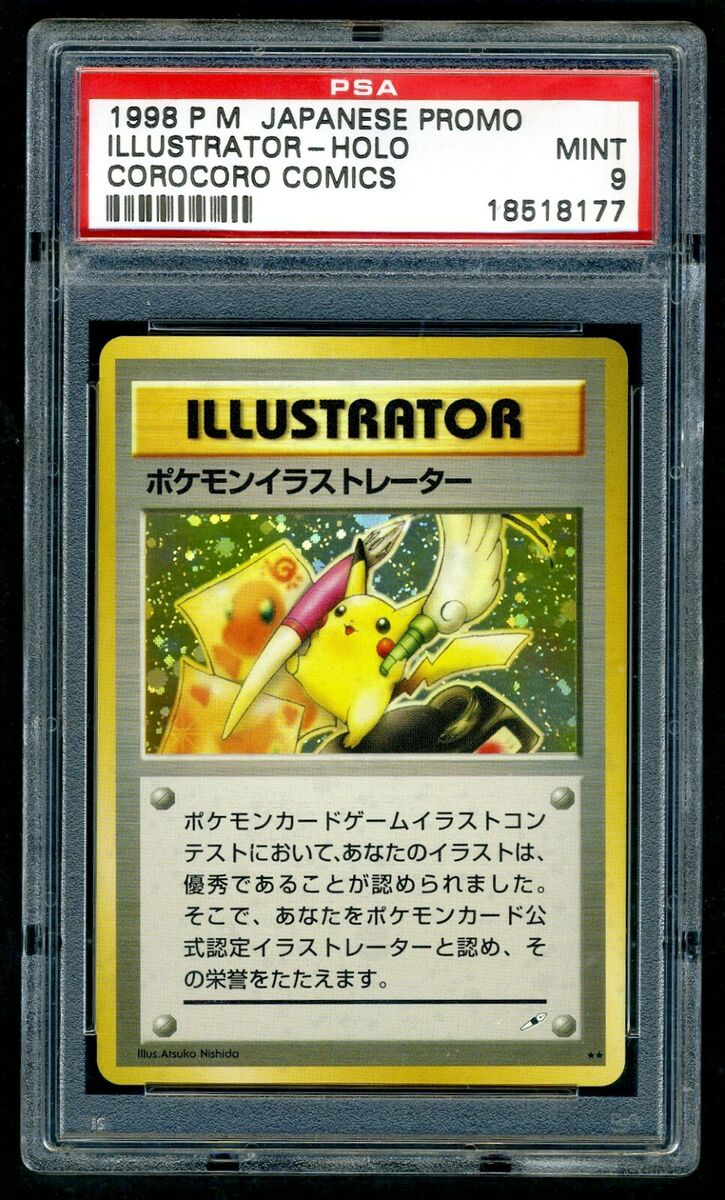
In the realm of “TGC” (Trading Card Games), the Pokémon Illustrator card holds the record for the highest price ever paid for a trading card. Unlike cards found in booster packs, the Illustrator card was a prize awarded to winners of an illustration contest in 1997 and 1998 held by CoroCoro Comic in Japan. Only 39 copies were originally distributed, and it is estimated that fewer than 10 remain in top-tier condition.
In 2022, social media personality and investor Logan Paul purchased a PSA 10 (Gem Mint) Pokémon Illustrator card for $5.275 million. This transaction signaled a paradigm shift in the market, proving that gaming cards—once considered a secondary market—had reached parity with traditional sports legends. From a brand perspective, Pokémon is the highest-grossing media franchise in history, providing a massive, global base of demand that ensures the Illustrator card remains a liquid and highly sought-after asset.

The “One Ring” 1-of-1 (Niche Markets)
A recent development in the card market is the “1-of-1” manufactured rarity. In 2023, Magic: The Gathering (published by Wizards of the Coast) released a special Lord of the Rings-themed set that included a single, serialized copy of “The One Ring.” This was the first time a major gaming company had intentionally created a singular, unique card within a mass-market product.
The card was eventually found and sold to the musician Post Malone for a reported $2 million. This event showcased a new trend in the industry: “Chase Cards” designed specifically to drive investment and media attention. While purists argue these lack the historical weight of a Wagner, they represent a high-alpha opportunity for investors who can navigate the hype cycles of modern releases.
Investing in Alternative Assets: Risks and Rewards
As rare cards move into the portfolios of serious investors, it is essential to analyze them through a financial lens. Like any high-reward asset, they come with specific risks that differ from traditional stocks or bonds.
Liquidity and Market Volatility
One of the primary challenges of rare card investing is liquidity. Unlike a share of Apple stock, which can be sold instantly at market price, a $5 million card requires a specific buyer, an auction house, or a private broker to move. The sales process can take months, and the seller must often pay a commission (typically 10-20%) to the auction house.
Market volatility is also a factor. During the 2020-2021 period, the card market saw an unprecedented “boom,” with prices for mid-tier cards inflating by 500% or more. This was followed by a market correction as interest rates rose and “stimulus” money exited the system. However, the “Blue Chip” end of the market—the Wagners and the Illustrators—remained remarkably resilient, proving that true rarity acts as a hedge against inflation and broader market swings.
Storage, Insurance, and Maintenance
For an investor holding a seven-figure asset, physical security is a major concern. High-value cards are rarely kept in a home office; they are housed in climate-controlled vaults, often managed by companies like PWCC or the grading houses themselves. These facilities offer professional-grade security and insurance against fire, theft, and natural disasters.
Furthermore, the physical integrity of the card must be maintained. Fluctuations in humidity or exposure to UV light can degrade the card’s surface, potentially lowering its grade and wiping out millions in value. This makes the “cost of carry” for rare cards higher than that of digital assets or equities.
The Future of the Rare Card Market
The trajectory of the rare card market suggests a continued integration with digital finance and global wealth management. We are moving away from a world where cards are just for collectors and into a world where they are viewed as legitimate financial instruments.
Fractional Ownership and Digital Integration
One of the most significant innovations in the card space is fractional ownership. Platforms like Rally and Otis allow investors to buy “shares” of a high-value card. For instance, instead of needing $7 million to buy a Honus Wagner, an investor can buy $100 worth of shares in that specific card. This democratizes the market and provides liquidity to an otherwise illiquid asset class.
Additionally, the rise of “Digital Twins”—using NFTs to represent ownership of a physical card stored in a vault—is streamlining the trading process. This allows for near-instant settlement of trades without the need to ship a fragile, multi-million dollar item across the world.
Emerging Trends in Global Collecting
While the market has historically been dominated by the United States and Japan, we are seeing a surge in interest from the Middle East and China. As global wealth increases, the demand for “portable wealth”—assets that hold high value in a small physical footprint—grows. A rare card is essentially a concentrated store of value that can be transported in a pocket, making it an attractive option for international diversification.
In conclusion, the rarest card in the world is not merely a piece of printed paper; it is a convergence of history, brand power, and extreme scarcity. Whether it is a turn-of-the-century baseball icon or a modern gaming miracle, these cards have cemented their place in the financial world. For the astute investor, they represent a unique opportunity to hedge against traditional markets while participating in the growth of some of the world’s most enduring cultural brands. As the market matures, the definition of rarity will continue to evolve, but the premium placed on the unique and the preserved will remain a constant in the world of high-finance collectibles.
aViewFromTheCave is a participant in the Amazon Services LLC Associates Program, an affiliate advertising program designed to provide a means for sites to earn advertising fees by advertising and linking to Amazon.com. Amazon, the Amazon logo, AmazonSupply, and the AmazonSupply logo are trademarks of Amazon.com, Inc. or its affiliates. As an Amazon Associate we earn affiliate commissions from qualifying purchases.